



Gangnam
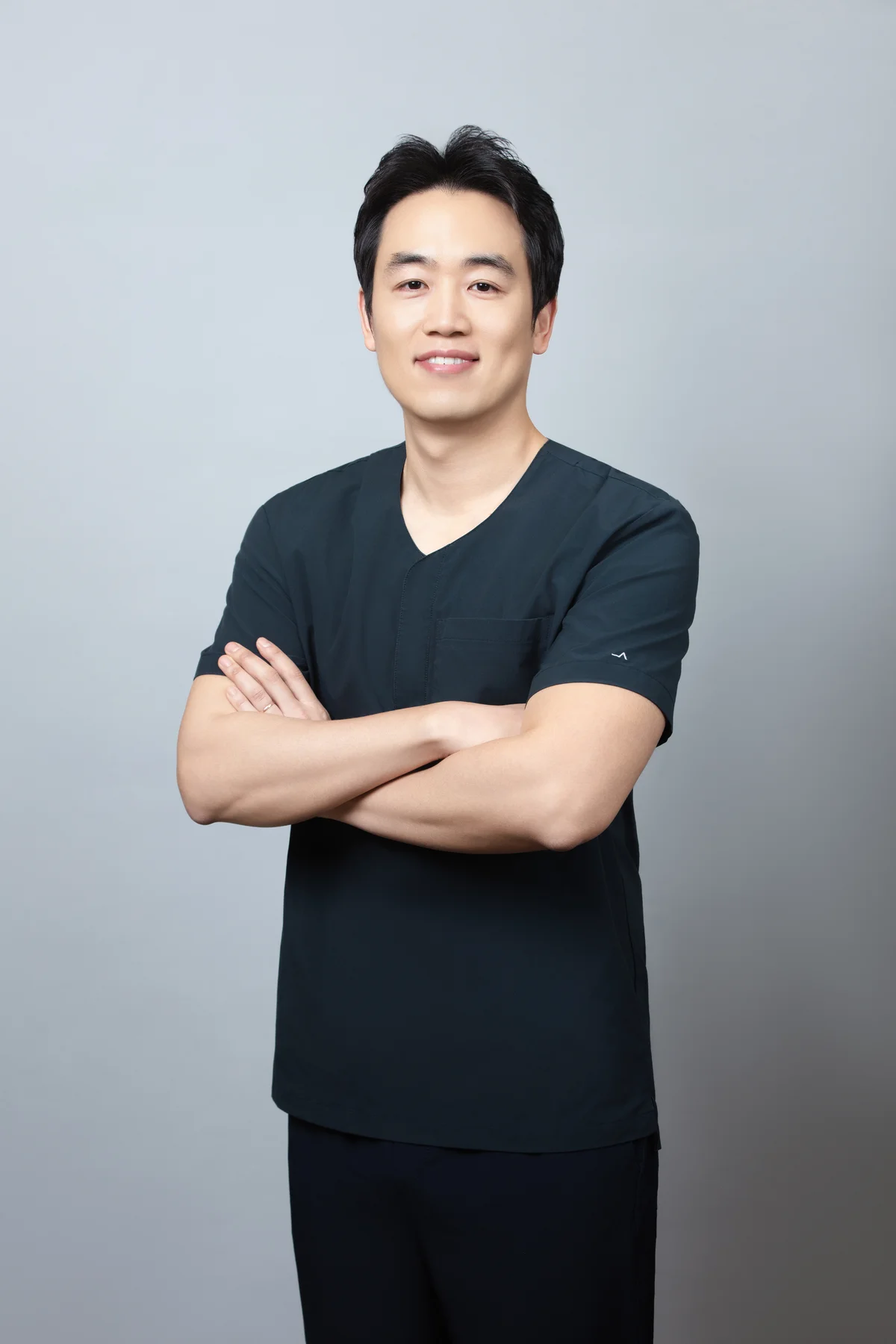
Dr. Yoon-Gon Ryu
Aesthetic Medicine Specialist
Flagship clinic · KOL for leading lifting & regenerative devices · Featured in Authority Magazine (2026)


Reberry Clinic offers laser dark spot removal in Korea for international and local patients seeking clearer, more even-toned skin. Our pigment-targeted laser therapy addresses stubborn hyperpigmentation, sunspots, age spots, melasma and facial redness using medical-grade systems calibrated to each skin type. Energy is tuned to be absorbed by melanin so excess pigment is fragmented while surrounding skin is protected, which is why most patients see visible fading with little to no downtime. Treatment is performed by the clinic’s doctors with English-speaking support across three Seoul-area locations (Gangnam, Myeongdong, Incheon Airport), so it fits both residents and travellers on a short Seoul trip.
Dark spot removal at Reberry Clinic uses pigment-selective picosecond and Q-switched lasers to break down excess melanin behind sunspots, age spots and melasma, so the body clears it over the following weeks. Most courses run several short sessions about two weeks apart, with little to no downtime and a clearer, more even tone built gradually.
One-on-One guidance from a dedicated doctor, ensuring your skin is professionally monitored and treated from start to finish.
Fluent assistance in English, Japanese, and Chinese, making communication clear, respectful and comfortable for international patients.
Over 100,000 patients worldwide have received our personalized dermatological care, highlighting our expertise and reliable results.
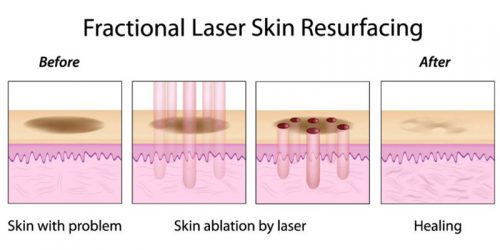
Laser dark spot removal is a non-invasive procedure that reduces unwanted pigmentation and restores a more even skin tone. A pigment-selective laser delivers a concentrated beam of light that is preferentially absorbed by melanin, the pigment responsible for sunspots, age spots, freckles, post-inflammatory marks and the patchy pigment of melasma. The light energy fragments these melanin clusters into tiny particles without ablating or wounding the surface, so the procedure targets discolouration while sparing healthy surrounding skin.
Once the pigment is broken up, the body’s own immune and lymphatic systems gradually clear the fragments over the following weeks. Because pigment sits at different depths, treatment is usually staged across several short sessions roughly two weeks apart, with the wavelength and energy adjusted to your concern. This makes laser treatment well suited to a range of pigment problems and to the deeper Asian skin phototypes commonly treated at our clinic, where settings are kept conservative to lower the risk of rebound pigmentation.
Treatment at Reberry Clinic is consultation-led: the clinic’s doctors assess your pigment type, depth and skin tone before recommending a plan, with English-speaking support for international patients across three Seoul-area locations.
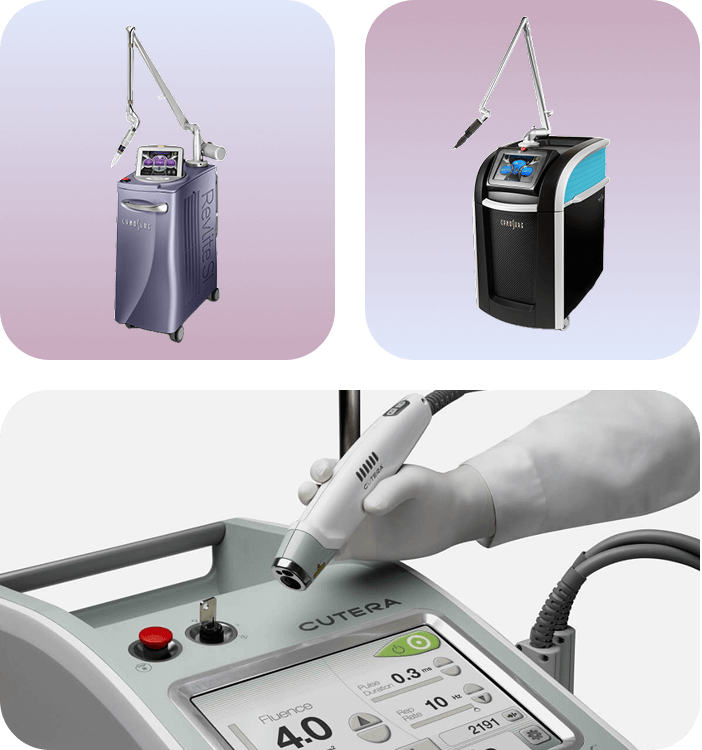
Laser dark spot removal works by delivering highly focused light energy that is selectively absorbed by melanin, the pigment behind dark spots and discolouration. At Reberry Clinic the laser platform is chosen to match your concern: picosecond lasers (such as 532-nm, 755-nm alexandrite and 1064-nm wavelengths) emit ultra-short pulses measured in trillionths of a second, while Q-switched and toning modes use nanosecond pulses for diffuse or deeper pigment such as melasma. Each wavelength is optimised for melanin absorption so it breaks down pigment efficiently while leaving surrounding healthy tissue intact.
Picosecond pulses rely on a strong photomechanical (photoacoustic) effect: the pulse is so brief that it shatters melanin into very fine particles with minimal heat spread, which can mean fewer sessions and a lower risk of post-inflammatory hyperpigmentation than older nanosecond devices, an important advantage in darker Asian skin. Integrated or contact cooling protects the epidermis before and after each pulse to keep the procedure comfortable. The clinic’s doctors select the device, wavelength and energy for your specific pigment type and skin tone during consultation rather than applying a one-size-fits-all setting.
One Reberry Clinic, multiple Seoul-area locations. Pricing & current promotions are listed on each branch's own site — tap a clinic to view pricing & book.
Our flagship in the heart of Gangnam.
In Seoul's shopping & tourism heart.
A beauty stop between flights.
The newest Reberry Clinic — in Seoul's trend district.
ONE REBERRY CLINIC · MFDS-REGISTERED DEVICES · MULTILINGUAL CARE AT EVERY LOCATION
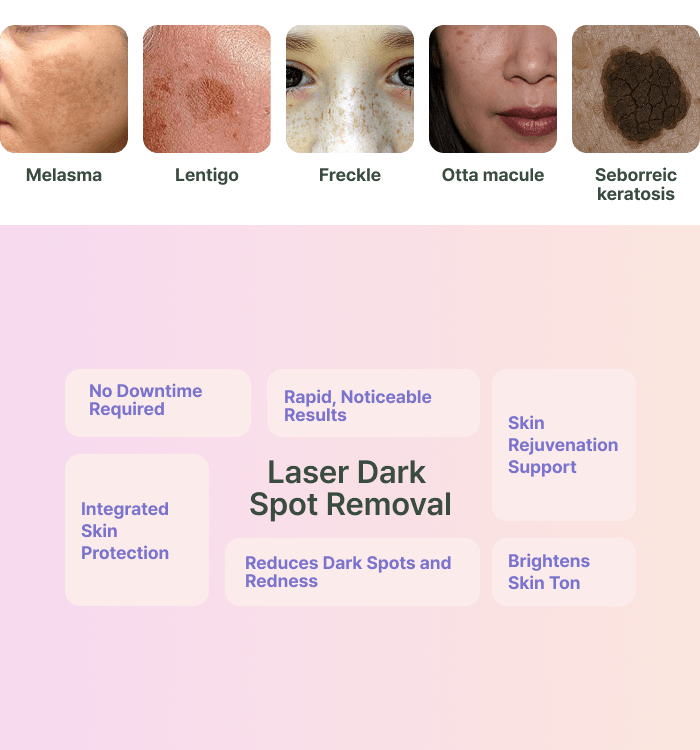

We offer all of our skin rejuvenation treatments from three convenient locations in Seoul: Myeongdong Branch, a city center near popular tourist spots, Incheon Airport Branch, just minutes from the terminals and ideal for travelers seeking quick, accessible care, and Gangnam Branch, located in Seoul’s upscale district, perfect for those looking to combine premium care with shopping and dining.
We make sure that our price is fair and transparent for everyone. No matter whether you are local or from abroad, there are no hidden fees or differences based on where you are from.
We use advanced FDA-cleared machines to make sure you get outstanding results without the high prices that often come with luxury care.
We offer one-on-one consultations with our head doctor to ensure you receive expert advice, personalized care, and a high level of trust.
We offer personalized, top-quality dermatological care at prices that compete with other clinics, so you get the best without overspending.
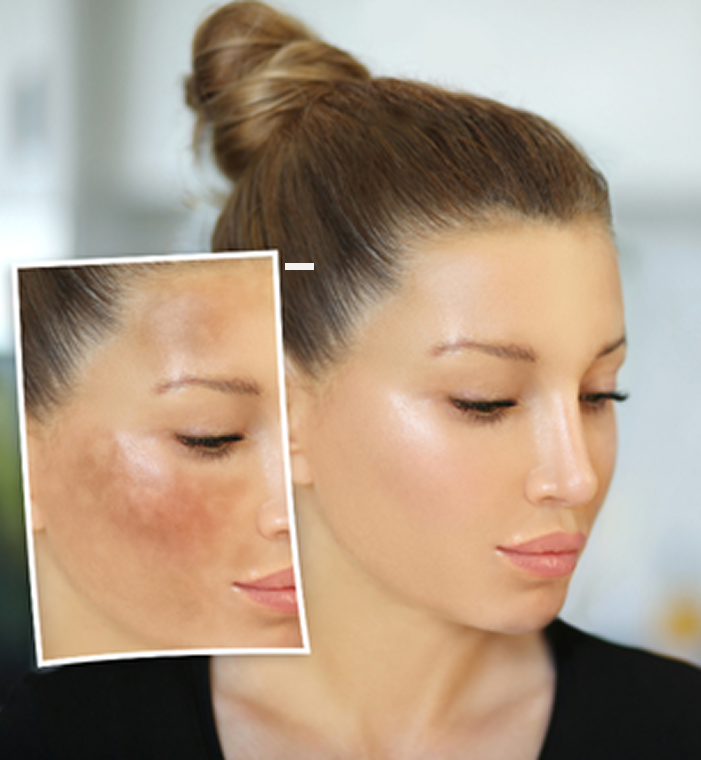
At Reberry Clinic, before-and-after photos for dark spot removal reflect individual treatment plans tailored to each person’s pigment type, depth and skin tone. Typical changes include lighter sunspots and age spots, more even tone and softened melasma over a course of sessions. Results vary from person to person depending on the pigment type, skin tone, sun exposure and number of sessions, and are not guaranteed; a consultation is the best way to understand what laser treatment can realistically achieve for your skin. New spots can still form with sun exposure, so daily sunscreen is part of every plan.
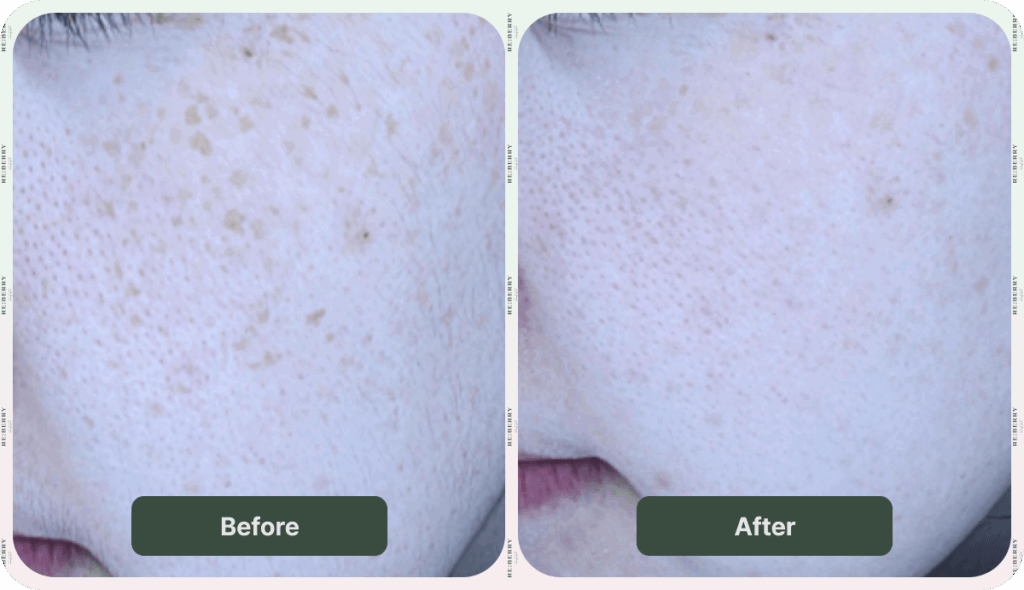
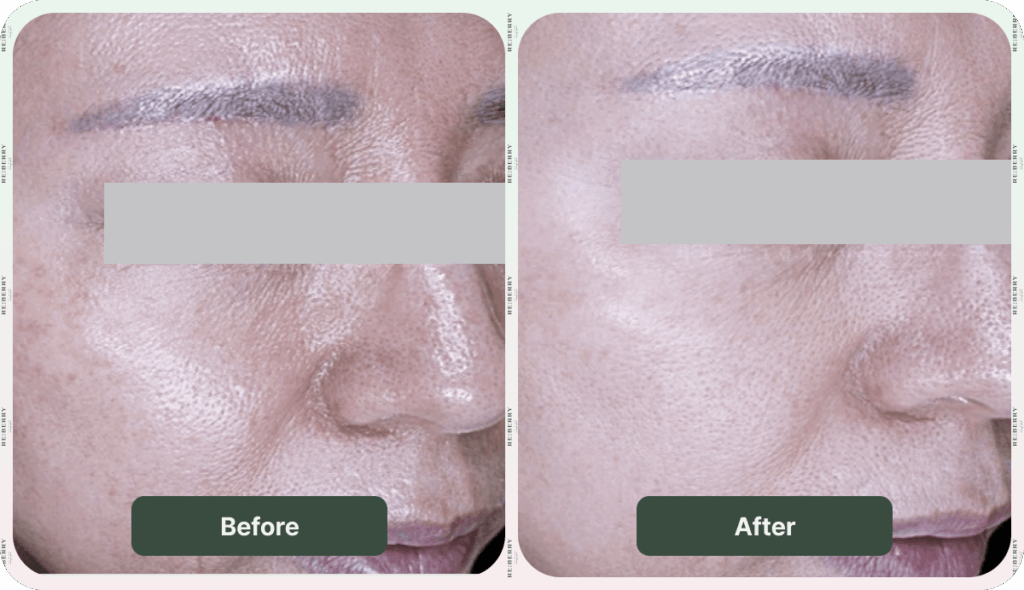
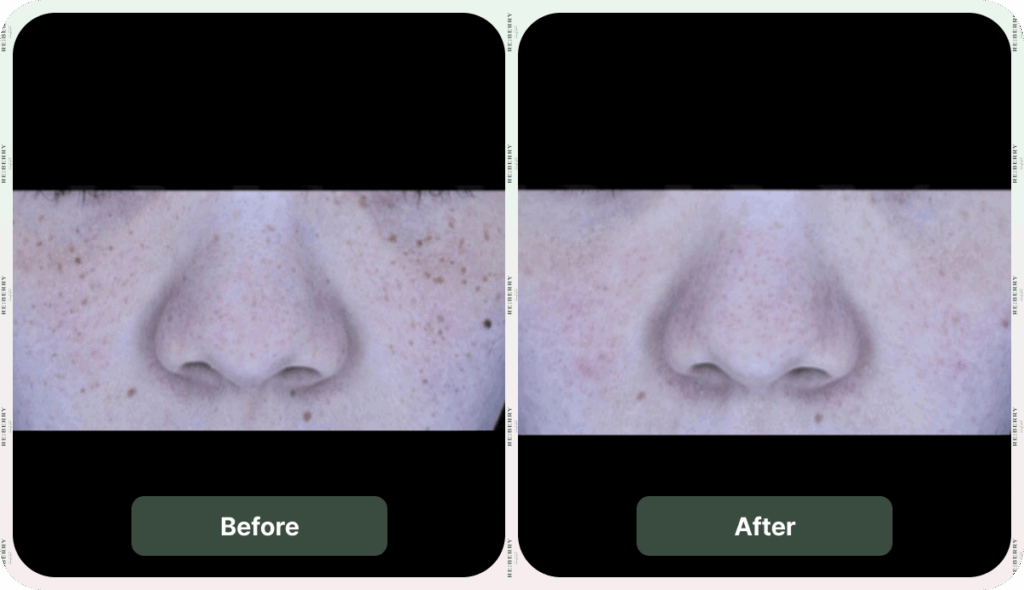
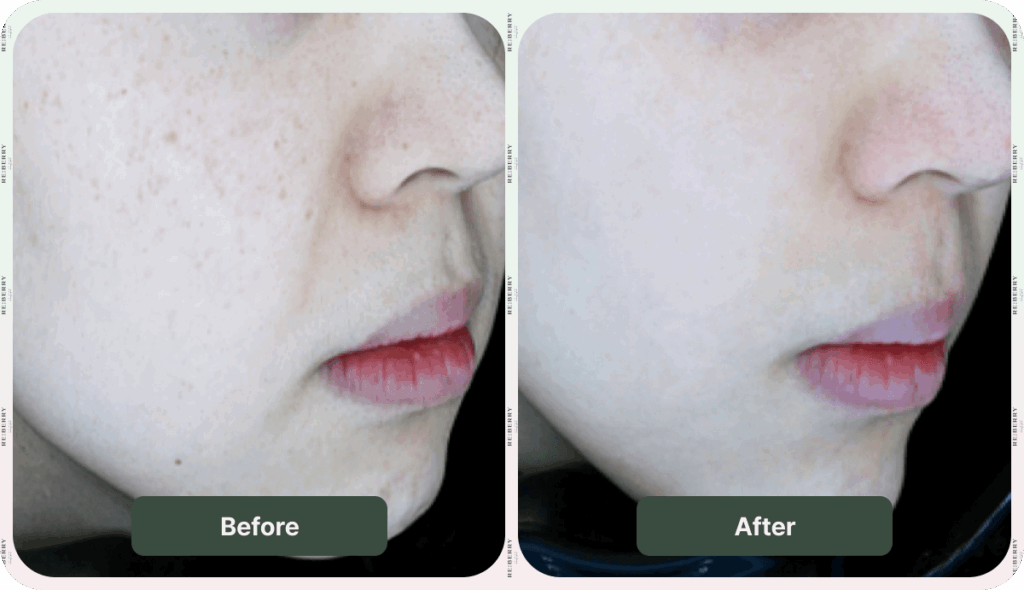
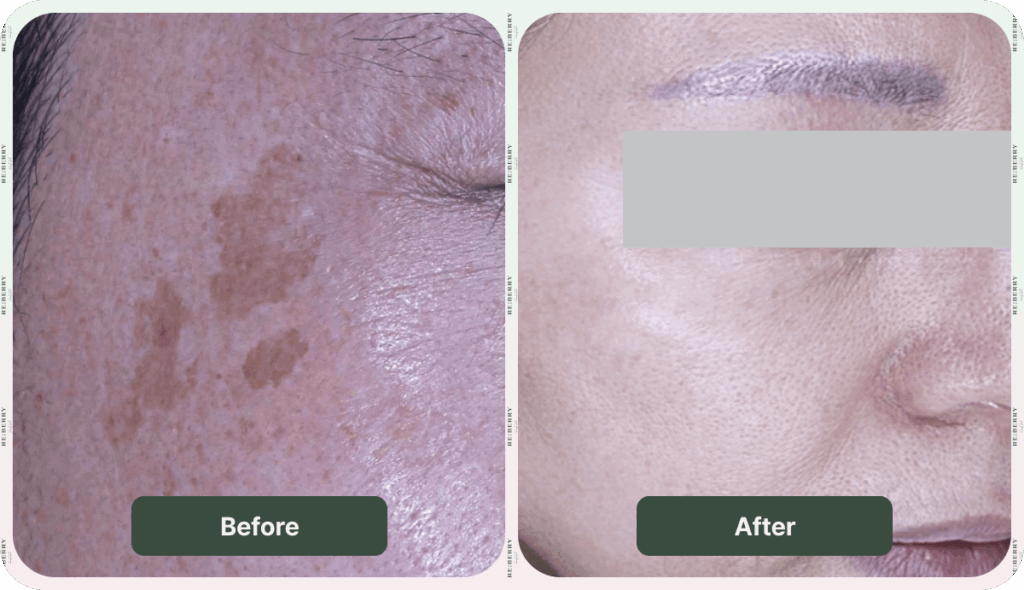
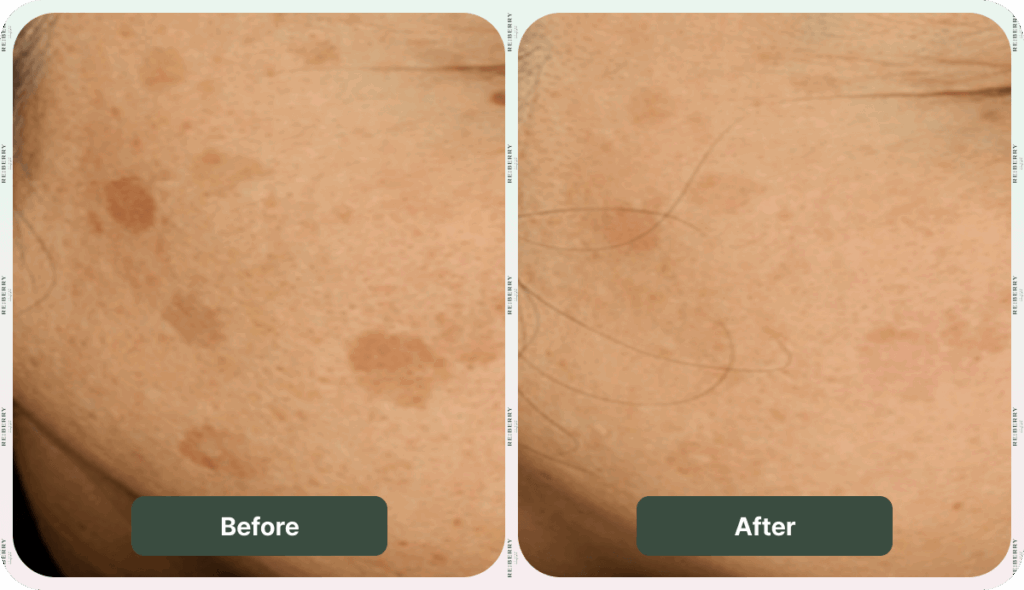
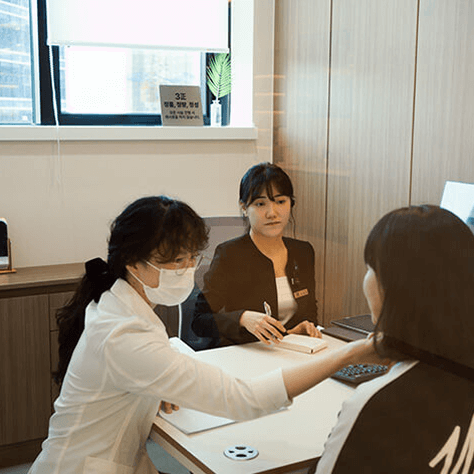
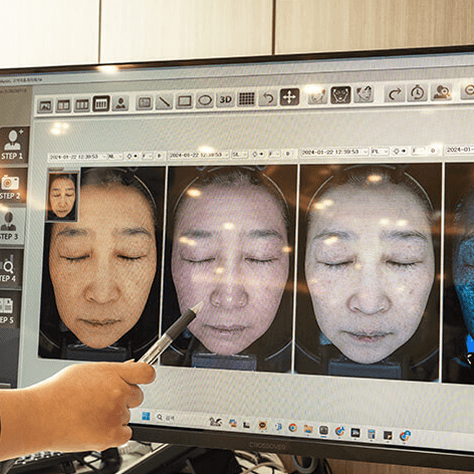
Your laser dark spot removal treatment journey begins with a personalized one-on-one consultation at Reberry Clinic. During this appointment, our specialist will assess your skin, discuss your specific concerns, such as pigmentation, sunspots, or redness, and explain how our advanced technology, like Picosure, RevLite SI, and Excel V, works to target these issues precisely. You will have the opportunity to ask any questions you have. By the end of the consultation, you will receive a customized treatment plan designed to achieve the best possible results for your skin.
Laser sessions are typically scheduled every two weeks, and each session lasts approximately 5 to 10 minutes, depending on the size of the area being treated. The procedure is designed for convenience and minimal discomfort, often described as a mild sensation (rated 2–3 out of 10 on the pain scale), so no anesthesia is required. During your session, our doctor will use advanced laser equipment to accurately treat pigmentation and vascular issues based on the treatment plan, all while ensuring your comfort.
You may begin to notice an improvement in the skin tone after the very first session, with dark spots and redness appearing lighter. Over subsequent treatments, you’ll see cumulative improvements as stubborn pigmentation continues to fade and your skin looks brighter. The results develop naturally, session by session, for a revitalized complexion.
To preserve your clearer, more radiant skin, occasional maintenance sessions may be recommended according to your needs and skin type. These follow-up treatments help ensure your skin remains even-toned and luminous with a radiant complexion in the long run.


Dark spot laser removal, laser toning and chemical peels all fade pigmentation by different mechanisms and suit different pigment types — here is how they compare.
| Dark Spot Laser Removal | Laser Toning | Chemical Peel | |
|---|---|---|---|
| Energy / mechanism | Pigment-selective picosecond or Q-switched laser shatters melanin in discrete spots | Low-fluence Q-switched laser passes gently lighten diffuse pigment | Acid solution exfoliates the upper skin layers to shed pigment |
| Best for | Defined sunspots, age spots, freckles and post-inflammatory marks | Diffuse pigment and melasma; overall brightening | Superficial pigment, dullness and uneven texture |
| Pain / comfort | Mild snapping sensation with cooling; short sessions | Very mild warmth; among the gentlest options | Mild tingling or stinging during application |
| Downtime | Minimal; redness for hours, spots flake over 1-2 weeks | Little to none; possible mild redness | Light flaking or peeling for a few days |
| Results timeline | Initial fading 1-2 weeks; fuller results 4-6 weeks | Gradual brightening over multiple sessions | Brighter tone within days to weeks |
| Sessions | Several sessions about 2 weeks apart | A course of regular sessions; ongoing for melasma | A series of peels spaced 2-4 weeks apart |
| Skin-tone suitability | Wide range incl. deeper Asian tones with conservative settings | Well suited to darker tones and melasma-prone skin | Depends on peel depth; lighter peels safer for darker skin |
Pigment-selective laser treatment of dark spots is supported by controlled clinical research, much of it in Asian skin. In a randomized, assessor-blinded trial of 60 melasma patients with Fitzpatrick skin types III to IV, three sessions of a non-fractional picosecond Nd:YAG (1064-nm) or picosecond alexandrite (755-nm) laser were compared with twice-daily 2% hydroquinone cream over 12 weeks, with the picosecond lasers producing meaningful reductions in the Melasma Area and Severity Index. For discrete sunspots, a randomized split-face study found a single 532-nm picosecond laser pass cleared solar lentigines effectively, and a separate evaluator-blinded study of 30 paired lesions in Asian patients showed both KTP 532-nm and alexandrite 755-nm picosecond lasers significantly improved luminance from baseline (p < 0.001). In Korean melasma patients, a prospective randomized controlled trial combining low-fluence 1064-nm Q-switched Nd:YAG toning with intense pulsed light reduced the partial MASI score by roughly 47% at 1 month and 50% at 2 months after the final session, while a retrospective analysis of picosecond 755-nm alexandrite treatment in Asians and a 2026 meta-analysis support good efficacy with a relatively low rate of post-inflammatory hyperpigmentation, the safety concern most relevant to deeper skin tones treated at our clinic.
Laser dark spot removal is a non-invasive treatment that uses pigment-selective light to fade sunspots, age spots, freckles and melasma. The laser is absorbed by melanin and fragments it, so your body clears the pigment over weeks for a more even tone. See our dark spot removal page for details and consultation booking.
Reberry Clinic uses pigment-selective picosecond lasers (532-nm, 755-nm and 1064-nm wavelengths) for crisp spots and Q-switched or toning modes for diffuse pigment like melasma. The clinic’s doctors choose the device and wavelength to match your pigment type and skin tone, which is why this is consultation-led rather than a single fixed protocol for everyone.
Good candidates have sunspots, age spots, freckles, post-inflammatory marks or melasma and realistic expectations about gradual fading. Picosecond technology suits a wide range of skin tones, including deeper Asian phototypes, when settings are kept conservative. A laser treatment consultation confirms which pigment you have and whether laser is the right approach for your skin.
Most patients describe laser dark spot removal as a mild sensation, often rated about 2 to 3 out of 10, similar to a light rubber-band snap. Sessions are short, usually 5 to 10 minutes, and integrated or contact cooling protects and soothes the skin during treatment. Topical numbing is available for sensitive areas, so anaesthesia is generally not required.
Downtime is minimal. You may have mild redness or slight warmth for a few hours, and treated spots can darken and flake over about 1 to 2 weeks before clearing. Most people return to normal activities the same day. This makes laser treatment convenient for international patients being treated during a short stay in Seoul.
You may notice an improvement in tone within 1 to 2 weeks of the first session, as superficial pigment lifts. Significant, even fading of stubborn spots typically takes 4 to 6 weeks and several sessions, since deeper pigment clears gradually. Melasma in particular responds slowly and needs a patient, conservative course rather than aggressive single treatments.
Most pigment concerns need a course of several sessions spaced roughly two weeks apart, rather than a single visit. Simple sunspots may clear in a few sessions, while melasma and deeper pigment usually take more. The clinic’s doctor sets your session count after assessing your pigment type, depth and skin tone during the initial consultation.
Cleared spots can stay faded for a long time, but laser treatment does not make skin immune to new pigment. Sun exposure, hormones and heat can trigger fresh spots, so daily sunscreen and occasional maintenance sessions protect your results. Melasma especially tends to recur without ongoing sun protection and a maintenance plan tailored to your skin.
Treated spots usually stay lighter, but new pigmentation can still develop with UV exposure, hormonal changes or heat, so laser treatment is not a permanent block on future spots. Daily broad-spectrum sunscreen, sun-smart habits and our skin-care guidance are essential. Maintenance sessions are scheduled as needed to keep your tone even over time.
Yes, when the device and energy are matched to your skin tone. Picosecond lasers carry a lower risk of post-inflammatory hyperpigmentation than older nanosecond devices, making them well suited to deeper Asian phototypes. The clinic’s doctors keep settings conservative and stage sessions. A consultation confirms the safest laser treatment plan for your specific skin type.
Yes, it is often combined with hydrating or regenerative treatments, but the sequence must be planned by the clinic’s doctor. Pairing pigment lasers with barrier-supporting treatments such as Rejuran Healer or skin boosters can aid recovery, while spacing aggressive treatments apart reduces the chance of irritation or rebound pigment in sensitive or melasma-prone skin.
Laser dark spot removal uses higher-energy pigment-selective pulses to target discrete spots like sunspots and age spots, while toning uses gentle, low-fluence passes to gradually lighten diffuse pigment such as melasma. Many plans combine both. The right balance depends on your pigment type, which the clinic’s doctor assesses during a consultation for laser treatment.
Ordinary dark spots, such as sunspots and age spots, are usually well-defined and respond fairly quickly to laser. Melasma is a chronic, hormone- and heat-sensitive condition with deeper, patchy pigment that fades slowly and can rebound if treated too aggressively. Both are managed differently, so accurate diagnosis at consultation guides the safest energy and session plan for you.
Side effects are usually mild and temporary: redness, slight swelling, a coffee-ground darkening of spots before they flake, and brief sensitivity. The main risk in darker skin is temporary post-inflammatory hyperpigmentation, which conservative picosecond settings help reduce. The clinic’s doctor reviews your history and skin type beforehand and may avoid treatment over active infections or recent sun exposure.
Aftercare is simple but important: apply daily broad-spectrum sunscreen, avoid direct sun, keep skin gently moisturised and do not pick at flaking spots. Avoid saunas, intense heat and harsh actives for a few days. Diligent sun protection is the single most important step for protecting your results and preventing new pigment from forming.
Laser dark spot removal needs little downtime, so a session fits a short visit, though full results need a staged course over weeks. We can plan an initial session and advise on follow-up from abroad or maintenance on return trips. Reberry Clinic offers English-speaking support and three Seoul-area locations, including one at Incheon Airport, convenient for arrival or departure.
Dark spot laser removal, laser toning and chemical peels all fade pigmentation by different mechanisms and suit different pigment types — here is how they compare.
| Dark Spot Laser Removal | Laser Toning | Chemical Peel | |
|---|---|---|---|
| Energy / mechanism | Pigment-selective picosecond or Q-switched laser shatters melanin in discrete spots | Low-fluence Q-switched laser passes gently lighten diffuse pigment | Acid solution exfoliates the upper skin layers to shed pigment |
| Best for | Defined sunspots, age spots, freckles and post-inflammatory marks | Diffuse pigment and melasma; overall brightening | Superficial pigment, dullness and uneven texture |
| Pain / comfort | Mild snapping sensation with cooling; short sessions | Very mild warmth; among the gentlest options | Mild tingling or stinging during application |
| Downtime | Minimal; redness for hours, spots flake over 1-2 weeks | Little to none; possible mild redness | Light flaking or peeling for a few days |
| Results timeline | Initial fading 1-2 weeks; fuller results 4-6 weeks | Gradual brightening over multiple sessions | Brighter tone within days to weeks |
| Sessions | Several sessions about 2 weeks apart | A course of regular sessions; ongoing for melasma | A series of peels spaced 2-4 weeks apart |
| Skin-tone suitability | Wide range incl. deeper Asian tones with conservative settings | Well suited to darker tones and melasma-prone skin | Depends on peel depth; lighter peels safer for darker skin |
Real verified reviews from our Google Business Profile, across all Reberry Clinic locations.
PULLED LIVE FROM GOOGLE · GANGNAM · MYEONGDONG · INCHEON AIRPORT
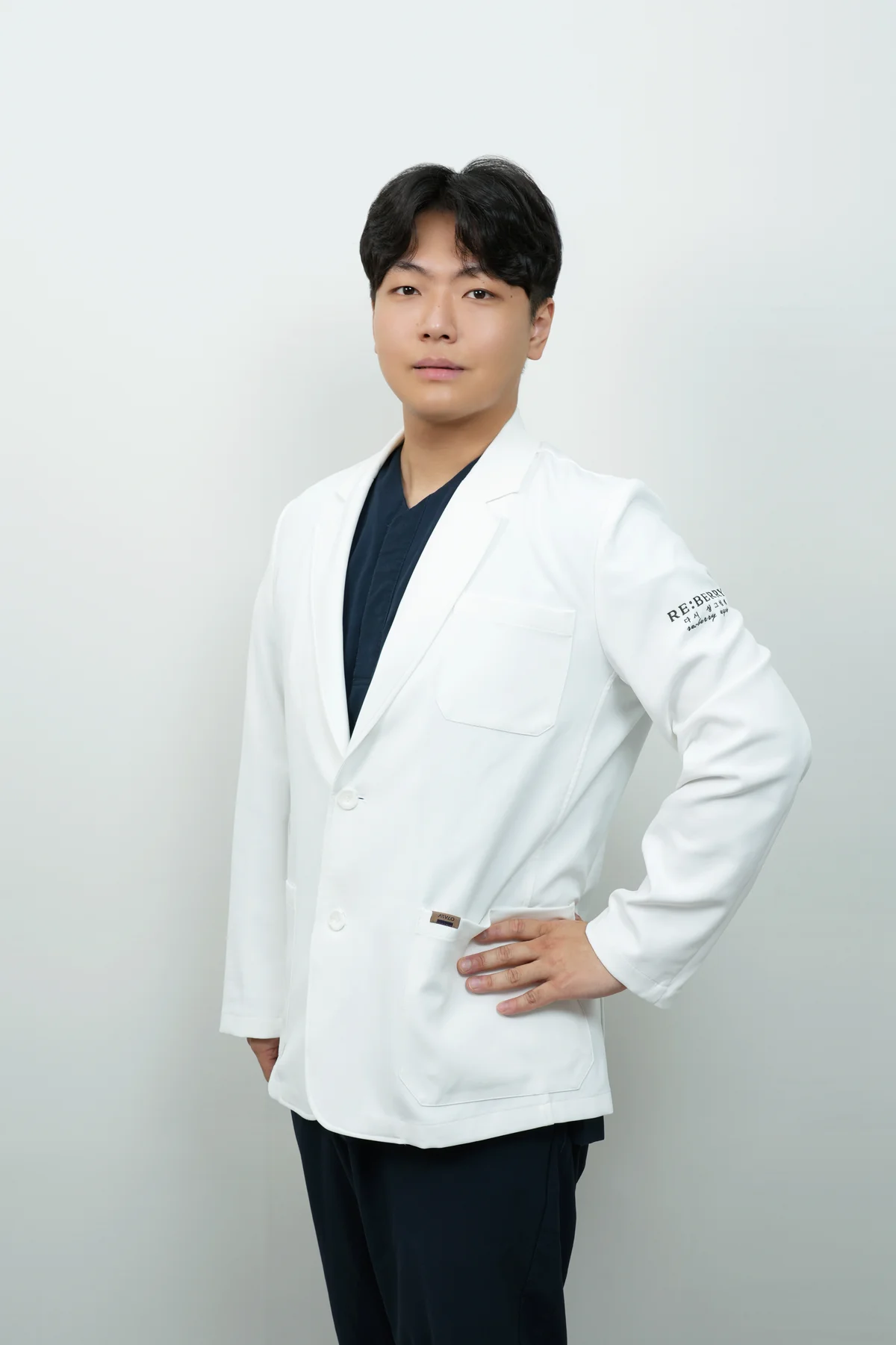
Your treatment is planned and performed by experienced, MFDS-registered doctors across our Seoul-area clinics, with multilingual support for international patients.
Flagship clinic · KOL for leading lifting & regenerative devices · Featured in Authority Magazine (2026)
Multilingual tourist care beside Myeongdong Cathedral
Fast, effective care 20 minutes from the terminals
Published studies related to this treatment area. Individual results vary; consult a physician for personal advice.
Schedule your consultation today and discover the difference Korean expertise makes.