

Choose Juvelook if your goal is building firmness, refining texture and adding subtle skin density, because it is a PDLLA collagen stimulator that prompts your own collagen over months. Choose Rejuran if your priority is repairing skin quality, calming and hydrating with polynucleotide regeneration. They work by different mechanisms, suit different concerns, and are often sequenced together rather than treated as rivals.
If you are comparing injectable skin boosters in Seoul, two names dominate the conversation: Juvelook and Rejuran. Both are delivered by fine injections, both improve skin from within rather than sitting on the surface, and both have become popular with international patients looking for natural-looking results. Yet they are built on completely different science. One stimulates your skin to make new collagen; the other delivers a regenerative molecule that repairs and conditions the skin. That distinction is the single most useful thing to understand before a consultation.
This guide compares the two treatments side by side, explains the biology behind each in plain language, and walks through candidacy, the session experience, downtime, results and the qualitative factors that shape cost. It closes with the long-tail questions international patients actually search before booking a skin booster in Korea, so you arrive at your consultation already knowing which differences matter for your skin and your travel timeline.
Two Different Mechanisms, One Shared Goal
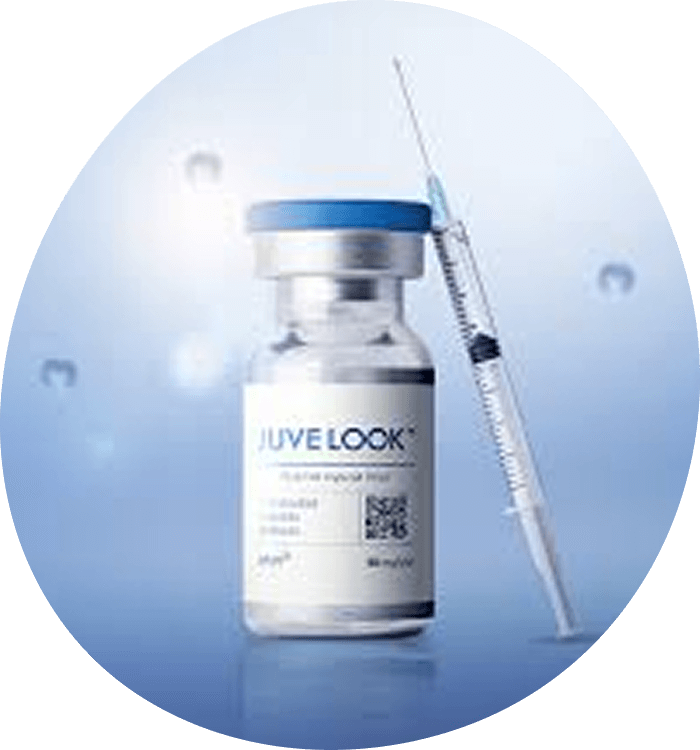
The core distinction is what each injectable does once it is in the skin. Juvelook is a PDLLA collagen stimulator, made from poly-D,L-lactic acid microparticles. It does not add lasting volume by itself; instead it acts as a biostimulator, prompting your fibroblasts to gradually produce new collagen over the weeks and months after treatment. The visible improvement therefore builds slowly, as your own tissue responds, rather than appearing the moment the needle leaves the skin.
Rejuran takes a regenerative route. It is based on polynucleotides (PN), purified DNA fragments derived from salmon, which are highly biocompatible with human skin. Rather than primarily stimulating dense new collagen the way a biostimulator does, polynucleotides are understood to support skin repair, hydration and a calmer, healthier skin environment. People often describe the goal of Rejuran as improving overall skin quality and resilience, especially for tired, irritated or thin-feeling skin.
Both treatments share an honest limit worth stating plainly. Each works with your own biology over time, so neither is an instant filler and neither replaces a surgical lift or removes significant sagging. They are tools for improving skin quality, firmness and texture when expectations are realistic and matched to the right concern. Understanding that they are complementary regenerative approaches, not competitors, is a productive frame for the comparison that follows.
Side-by-Side Comparison
The table below summarizes the practical differences patients ask about most, so you can scan the contrast at a glance. Individual results vary with age, skin condition, the area treated and the protocol a clinician chooses, so read these rows as general guidance rather than fixed outcomes. Your own plan is confirmed in person after a skin assessment at the clinic.
| Factor | Juvelook | Rejuran |
|---|---|---|
| Core ingredient | PDLLA (poly-D,L-lactic acid) collagen stimulator | Polynucleotides (PN) derived from purified salmon DNA |
| Main mechanism | Biostimulation: prompts your own new collagen over months | Regeneration: supports skin repair, hydration and resilience |
| Well suited to | Firmness, density, fine texture and overall skin support | Skin quality, dryness, fragile or irritated skin, fine lines |
| Onset of results | Gradual; clearer over several weeks to a few months | Gradual; skin condition improves over a course of sessions |
| Typical course | Often a short series, spaced a few weeks apart | Commonly a series, spaced a few weeks apart |
| Sensation | Fine injections, usually after numbing cream | Fine injections, usually after numbing cream |
| Downtime | Minimal; brief redness, swelling or small bumps | Minimal; brief redness, swelling or small bumps |
| Duration of effect | Effect develops and is maintained periodically | Effect maintained with periodic sessions |
What Each Treatment Targets
Because the two injectables behave differently, they tend to suit different concerns. Juvelook’s strength is structural support: as a PDLLA collagen stimulator it gradually improves firmness, skin density and fine texture, which appeals to people who feel their skin has become thinner, looser or less resilient with age. The effect is subtle and cumulative rather than a single dramatic change, and it builds as your own collagen forms over the months following a treatment course.
Rejuran is more about skin quality and repair. Its polynucleotide base is commonly chosen for skin that feels dry, fragile, dull or easily irritated, and for fine lines where the goal is healthier, more hydrated, more resilient skin rather than added structure. People drawn to Rejuran often want their complexion to look calmer and more conditioned, and they value a regenerative approach that focuses on the skin’s overall health.
Neither injectable performs the role of a filler, a thread or an energy-based lifting device. For volume loss a clinician might discuss hyaluronic acid injectable fillers or a hybrid volumizer; for more pronounced sagging they may raise a thread lift or energy devices. Mapping your specific concern to the matching tool is exactly what a consultation is for, and it is far more useful than asking which booster is generally stronger.
How the Treatments Work Under the Skin
Both treatments improve skin from the inside, but through distinct biology. Juvelook works as a biostimulator: its PDLLA microparticles create a controlled, gentle signal in the dermis that recruits cells and prompts fibroblasts to lay down fresh collagen over time. This is a gradual biological process rather than an instant mechanical change, which is why the meaningful improvement in firmness and density trails the appointment by weeks to months instead of appearing the same day.
Rejuran’s polynucleotides act differently. These purified DNA fragments are highly compatible with skin tissue and are understood to support the skin’s own repair processes, helping to hydrate, soothe and improve the skin environment. The emphasis is on regeneration and conditioning rather than on driving dense new structural collagen, which is why Rejuran is so often associated with improving overall skin quality and resilience rather than with adding firmness or density.
This difference in mechanism explains why clinicians often see the two as complementary rather than interchangeable. One builds structural support through collagen stimulation; the other conditions and repairs the skin itself. Understanding the underlying biology makes the practical differences in goals, candidacy and sequencing far easier to anticipate, and it reframes the choice from a contest into a question of what your skin most needs right now.
It also explains why neither result is instant. Both collagen synthesis and skin regeneration are biological processes that unfold over weeks, so visible change tends to follow a course of sessions rather than a single visit. That gradual arc is normal and expected, and it is the reason clinicians frame both treatments around realistic timelines and a planned series rather than a single dramatic before-and-after moment.
Who Is and Isn’t a Good Candidate
Good candidates for either treatment generally want to improve skin quality or firmness without surgery and accept a gradual, cumulative result. People who feel their skin has become thinner, drier, duller or less resilient often consider these boosters a sensible step. Juvelook tends to attract those focused on density and firmness, while Rejuran appeals to those whose main concern is skin repair, hydration and resilience. Realistic expectations matter, because both work with your biology over time.
Some people need extra caution or a different route. Anyone with an active skin infection, inflammation or a recent procedure in the treatment area should disclose it, and those who are pregnant or breastfeeding, or who have certain medical conditions or known sensitivities, should raise this so the clinician can advise. A known allergy to any component is important to mention; for Rejuran, its salmon-derived origin is part of that conversation. Your clinician reviews medical history to confirm suitability.
The checklist below frames the conversation. It is a starting point for your consultation, not a substitute for a professional assessment, since the right answer depends on your skin in person and on the concern you most want to address.
- Mainly want firmness, skin density and refined texture: a PDLLA collagen stimulator such as Juvelook is worth discussing.
- Mainly want skin repair, hydration and resilience for dry or fragile skin: polynucleotide-based Rejuran may suit you better.
- Prefer a gradual, cumulative result over an instant change: both fit that expectation when planned as a course.
- Have an active skin infection, are pregnant or breastfeeding, or have relevant allergies or conditions: raise this early so the clinician can advise safely.
The Session Experience, Step by Step
A visit for either treatment follows a broadly similar shape. It begins with a consultation and skin analysis so the clinician can understand your concern, confirm candidacy and explain the plan, including how many sessions may suit your goal. The skin is then cleansed, and a topical numbing cream is usually applied to keep the fine injections comfortable. The clinician selects the appropriate technique and injection pattern for your area before starting.
During treatment, the product is delivered through fine needles into the targeted layer of the skin, often across a series of small injection points in the treatment area. The clinician works methodically, and the session typically takes roughly 30 to 60 minutes depending on the area covered and the protocol. Because Juvelook and Rejuran are delivered by similar injection techniques, the in-chair experience feels comparable even though the products and their goals differ.
Afterward, the skin is soothed and protected, and the clinician applies or recommends moisturizer and sunscreen and outlines aftercare. Most people leave able to resume normal activities, perhaps with some minor redness or small bumps that settle over the next day or two. Because settings, depth and the number of points vary from person to person, the exact details are decided on the day rather than fixed in advance, which is why a personal assessment matters.
Downtime, Aftercare and the Recovery Timeline
Both treatments are designed for minimal downtime, which is a large part of their appeal for travelers on a tight itinerary. After either treatment, most people return to daily activities promptly, though it is common to see mild redness, slight swelling, small bumps at injection points or minor bruising. These typically settle within a few days as the skin calms, and the clinic will advise on when makeup and your usual routine can resume.
In the days that follow, a gentle approach helps. Keep the skin clean and moisturized, use sunscreen diligently, and it is commonly advised to avoid saunas, very hot showers, vigorous exercise and aggressive skincare actives for a short period while the skin recovers. Avoid pressing or massaging the area unless your clinician specifically instructs otherwise. These are general comfort measures rather than strict medical rules, and the clinic tailors them to you and the treatment used.
Whichever treatment you choose, the clinic’s own aftercare instructions take priority over anything general, because they are tailored to your skin and the protocol used. If anything feels unusual, such as prolonged swelling, persistent discomfort, lumps that do not settle or any reaction you did not expect, contact the clinic promptly so they can advise. Following the guidance closely is the simplest way to support a smooth recovery and protect your result.
When Results Appear and How Long They Last
Results from both treatments are gradual, because each works with your own biology rather than producing an instant change. With Juvelook, firmness, density and texture improve over several weeks to a few months as new collagen forms, and because it is often done as a short series the effect tends to accumulate across sessions rather than peaking after one appointment. Patience is part of the experience, and that gradual arc is expected.
Rejuran also builds over a course. As the polynucleotides support skin repair and hydration, many people notice their skin condition, smoothness and resilience improving across the series of sessions rather than after a single visit. The emphasis is on cumulative improvement in skin quality, so a representative result is judged after completing the recommended course rather than immediately.
How long any result holds depends on factors largely outside the treatment itself: your age, baseline skin condition, sun exposure, skincare habits and lifestyle all play a part, which is why periodic maintenance is commonly discussed for both. Diligent sun protection and a consistent routine help preserve the improvement. A clinician can give you a more realistic, personalized estimate after evaluating your skin, rather than a single number that applies to everyone.
Scientific evidence
Peer-reviewed studies support the idea that both PDLLA biostimulation and polynucleotide regeneration produce measurable skin improvement, though by different mechanisms. For PDLLA, laboratory and animal work shows that poly-lactic-acid biostimulators increase collagen synthesis through fibroblast activation and macrophage modulation rather than through simple filling. One mechanistic study found that poly-L-lactic acid increased collagen gene expression and synthesis in cultured dermal fibroblasts via the TGF-beta/Smad signaling pathway, providing a biological basis for the gradual firming patients experience.
Clinical work on PDLLA specifically is encouraging. A preliminary study of combined PDLLA and non-cross-linked hyaluronic acid reported improvements in skin rejuvenation measures, and a broader literature review of poly-D,L-lactic acid in dermatology concluded that PDLLA can enhance skin elasticity and firmness, reduce the appearance of wrinkles and support tissue regeneration. These findings align with the slow, collagen-driven timeline patients experience with Juvelook, where change builds over weeks to months rather than appearing at once.
For polynucleotides relevant to Rejuran, a systematic review of polynucleotides in aesthetic medicine summarized evidence that PN injections are associated with improvements in skin elasticity, texture, hydration and fine wrinkles, with a generally favorable tolerability profile across studies. Randomized comparative trials in delicate areas such as crow’s feet have likewise reported meaningful improvement, supporting the regenerative, skin-conditioning role attributed to Rejuran. None of these studies describe a permanent result or a fixed outcome that applies to everyone; they describe gradual, individual improvement consistent with realistic expectations.
Lee KWA, Chan LKW, Hung LC, et al. Poly-D,L-lactic Acid (PDLLA) Application in Dermatology: A Literature Review. Skin Research and Technology. 2024;30(9):e70069. doi:10.1111/srt.70069
Seo SB, Park H, Jo JY, et al. Skin rejuvenation effect of the combined PDLLA and non cross-linked hyaluronic acid: A preliminary study. Journal of Cosmetic Dermatology. 2024;23(8):2654-2661. doi:10.1111/jocd.16085
Lampridou S, Tsilika K, Tsiogka A, et al. The Effectiveness of Polynucleotides in Esthetic Medicine: A Systematic Review. Journal of Cosmetic Dermatology. 2025;24(2):e16721. doi:10.1111/jocd.16721
Combining, Sequencing and What Affects Cost
These treatments are not mutually exclusive, and many clinicians see them as complementary. Because Juvelook builds structural collagen while Rejuran conditions and repairs the skin, some patients use them in a planned sequence rather than choosing only one, for example supporting firmness and density with one approach while improving skin quality and hydration with the other. Any combination should be planned and spaced by a qualified clinician, who will consider your skin type, history and recovery preferences before recommending intervals.
Depending on your goals, a clinician might also mention other supportive options, such as glass-skin treatments for radiance or hyaluronic acid injectable fillers where genuine volume loss is the issue. The aim is to map your priorities to the right approach at the right time, not to layer every available treatment at once. A thoughtful, staged plan generally serves the skin better than doing everything in a single visit.
On cost, prices are confirmed during consultation rather than assumed, and several qualitative factors influence them. The number of sessions in your course, the size and number of areas treated, the specific protocol chosen, and any combination with other treatments all affect the total. Because plans are individualized, a transparent quote after your assessment is more reliable than any generic figure you might see online, and it lets you weigh a course realistically against your goals.
Common misconceptions to clear up
A frequent misconception is that Juvelook and Rejuran are interchangeable because both are injectable boosters. They are not. Juvelook is a collagen stimulator that builds structural support, while Rejuran is a polynucleotide that conditions and repairs skin quality, so choosing between them is about your concern rather than picking a stronger product. Treating them as the same treatment leads to mismatched expectations and disappointment that better information would prevent.
Another misunderstanding is expecting an immediate, filler-like change. Neither treatment fills lines or restores volume on the spot; both work gradually with your own biology, so the meaningful improvement appears over a course rather than after one visit. People who anticipate an instant result often misjudge the treatment early, when in fact a more useful assessment comes weeks later once collagen or skin repair has had time to develop.
A third misconception is that more is automatically better, or that combining everything at once accelerates results. In practice, a measured, well-spaced plan tends to serve the skin more reliably than aggressive stacking, and a clinician decides intervals based on your skin and recovery. Clearing up these misconceptions before a consultation helps you ask sharper questions and judge whether either treatment genuinely fits your goals.
Planning Treatment in Seoul as an International Patient
Seoul is a practical place to consider these treatments, partly because clinics are used to visitors and partly because logistics can be aligned with a trip. Reberry Clinic supports international patients with multilingual staff (English, Korean, Thai, Japanese and Chinese), which makes consultations, candidacy questions and aftercare instructions far easier to follow when you are away from home and want to understand exactly what is happening to your skin.
The clinic operates three Seoul-area locations (Gangnam, Myeongdong and Incheon Airport), so you can often choose the branch that suits your route, whether that means a central Seoul visit or a stop tied to your arrival or departure. During your consultation the clinic’s doctors review your concerns, explain realistic expectations for each option, and outline any pre-care or aftercare steps relevant to your travel dates so the plan fits your itinerary.
If you are planning a short stay, it helps to think about timing in advance. Because both Juvelook and Rejuran are usually delivered as a course, a single trip may cover one or two sessions, with the gradual results continuing to develop after you return home and any remaining sessions arranged on a later visit. Sharing your travel window with the clinic early lets the team suggest a realistic plan rather than compressing treatments into a schedule that does not suit your skin.
Influencers with Reberry



















Planning a visit? A short consultation can clarify whether PDLLA collagen stimulation with Juvelook, polynucleotide regeneration with Rejuran, or a thoughtfully sequenced combination suits your skin goals and travel schedule. Our multilingual team at Reberry Clinic is happy to walk you through the options, candidacy and aftercare before you decide.
Frequently Asked Questions
What is the main difference between Juvelook and Rejuran in Korea?
The core ingredient and mechanism differ. Juvelook is a PDLLA collagen stimulator that prompts your own collagen for firmness and density over months. Rejuran uses polynucleotides from purified salmon DNA to support skin repair, hydration and resilience. Juvelook builds structure; Rejuran conditions skin quality. They are often sequenced rather than seen as rivals.
Is Juvelook or Rejuran better for firming and skin density?
Juvelook is usually the more relevant option for firmness and density, because as a PDLLA collagen stimulator it prompts your fibroblasts to build new collagen gradually. Rejuran focuses more on skin repair and hydration than on added structure. If your main goal is firmer, denser-feeling skin, discuss Juvelook at Reberry Clinic in Seoul.
Is Juvelook or Rejuran better for dry, tired or fragile skin?
Rejuran is commonly chosen for dry, dull, tired or fragile skin, because its polynucleotide base is associated with skin repair, hydration and resilience. Juvelook leans more toward firmness and density than conditioning. If healthier, calmer, more hydrated skin is your priority, Rejuran is usually the more relevant treatment to discuss at Reberry Clinic.
Does Juvelook or Rejuran hurt more?
Comfort is broadly similar, since both are delivered by fine injections, usually after a numbing cream. Sensation varies by person, area and technique, with some bony or delicate zones feeling more sensitive. Clinics work methodically and can pace the session to keep it manageable. Tell the clinic if you find injections difficult so they can support your comfort.
How many sessions of Juvelook or Rejuran will I need?
Both are typically planned as a short course of sessions spaced a few weeks apart, rather than a single appointment, so the regenerative effect can build gradually. The exact number depends on your skin and goals. You can review Juvelook details and confirm a personalized schedule during a consultation at Reberry Clinic in Seoul.
Is there downtime after Juvelook or Rejuran?
Both are designed for minimal downtime. Most people resume daily activities promptly, though mild redness, slight swelling, small bumps at injection points or minor bruising are common and usually settle within a few days. Follow the clinic’s aftercare, keep the skin gentle, and contact Reberry Clinic if anything feels unusual or does not settle as expected.
How long do results from Juvelook and Rejuran last?
Results do not last forever, because skin keeps aging naturally. Juvelook firmness builds over weeks to months and is maintained periodically; Rejuran skin-quality improvements accumulate over a course and are also maintained with periodic sessions. How long any effect holds depends on age, skin condition, sun exposure and skincare habits.
Can I combine Juvelook and Rejuran, or should I choose one?
You do not have to choose only one. Because Juvelook builds collagen while Rejuran conditions and repairs skin, some patients use them in a planned sequence. Any combination should be spaced by a qualified clinician. At Reberry Clinic, the doctors can outline whether one treatment, a combination, or another option such as injectable fillers suits your goals.
Can I have Juvelook or Rejuran during a short trip to Seoul?
Often yes, with some planning, since both are low-downtime. A short stay may cover one or two sessions, with the gradual results continuing after you return home and any remaining sessions arranged on a later visit. Sharing your travel dates with Reberry Clinic early helps the team plan a realistic course around your itinerary.
How much do Juvelook and Rejuran cost in Korea?
Prices are confirmed during consultation rather than assumed, because plans are individualized. The number of sessions in your course, the size and number of areas, the protocol chosen and any combination with other treatments all affect the total. A transparent quote after your skin assessment at Reberry Clinic is more reliable than any generic online figure.
Is Juvelook a filler or a collagen stimulator?
Juvelook is a PDLLA collagen stimulator, not a traditional volumizing filler. Its poly-D,L-lactic acid microparticles prompt your own fibroblasts to produce new collagen over time, so the firmness and density build gradually rather than appearing instantly. For genuine volume loss, a clinician may instead discuss hyaluronic acid injectable fillers at Reberry Clinic.
What is Rejuran made from, and is it safe for sensitive skin?
Rejuran is based on polynucleotides, purified DNA fragments derived from salmon that are highly compatible with human skin and associated with repair and hydration. Because of its salmon origin, mention any seafood or fish allergy during consultation. A clinician reviews your skin and history to confirm suitability before recommending a course at Reberry Clinic.
Which treatment is better for fine lines and skin texture?
Both can help fine texture, but in different ways. Rejuran’s polynucleotides target skin quality, hydration and fine lines through repair, while Juvelook improves texture and firmness through gradual collagen building. The better choice depends on whether your skin needs conditioning or structural support, which a consultation at Reberry Clinic in Seoul can clarify for your goals.
How soon will I see results after one session?
Neither is instant. After one session you may notice subtle early changes, but the meaningful improvement builds across a course as collagen forms with Juvelook or as skin repair accumulates with Rejuran. Most people judge results after completing the recommended series rather than after a single visit, so realistic timing expectations help you assess progress fairly.
Can I wear makeup after Juvelook or Rejuran?
Many clinics advise waiting a short period before applying makeup so injection points can settle, since mild redness or small bumps are common at first. The exact timing depends on your skin and the protocol used. Always follow the specific aftercare guidance Reberry Clinic gives you, and keep the area gentle while it recovers over the first day or two.
Do Juvelook or Rejuran replace a facelift or threads?
No. Both are skin boosters that improve quality, firmness or texture from within, so they do not remove significant sagging the way surgery can. For more pronounced laxity, a clinician may discuss a thread lift or energy-based lifting instead, and may combine approaches in a staged plan during your consultation in Seoul.
How should I prepare before a Juvelook or Rejuran appointment?
Arrive with clean skin and tell the clinic about recent procedures, active skin conditions, pregnancy, breastfeeding, relevant allergies or any medications affecting bruising or bleeding, since these affect candidacy and safety. Avoiding harsh actives shortly before may be advised. A consultation at Reberry Clinic confirms the right pre-care for your skin and outlines what to expect on the day.