



Gangnam
Dr. Yoon-Gon Ryu
Aesthetic Medicine Specialist
Flagship clinic · KOL for leading lifting & regenerative devices · Featured in Authority Magazine (2026)

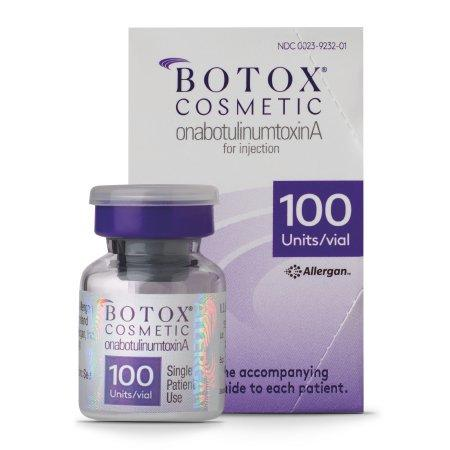
Botulinum toxin injected across 15 to 20 sites per sole blocks the nerve signal to overactive eccrine sweat glands, easing plantar sweating for roughly 4 to 6 months.
Sole hyperhidrosis is treated with botulinum toxin injected across the sweaty area of each foot, blocking the acetylcholine signal that drives overactive sweat glands. Dryness usually begins within about a week and lasts roughly 4 to 6 months. At our Gangnam (Seoul) location, comfort measures make the plantar injections tolerable.
One-on-One guidance from a dedicated doctor, ensuring your skin is professionally monitored and treated from start to finish.
Fluent assistance in English, Japanese, and Chinese, making communication clear, respectful and comfortable for international patients.
Over 100,000 patients worldwide have received our personalized dermatological care, highlighting our expertise and reliable results.
Sole hyperhidrosis, or plantar hyperhidrosis, is excessive sweating of the soles of the feet beyond what the body needs to cool itself. It can leave feet slippery in sandals, cause odour and skin maceration, and affect confidence at work or the gym. Botulinum toxin treatment targets the root of the problem: it temporarily blocks the chemical messenger (acetylcholine) that tells the eccrine sweat glands to produce sweat, so the treated area stays markedly drier.
Treatment starts with mapping. Doctors often use Minor’s starch-iodine test, painting a 2% iodine solution on the sole and dusting it with starch so active sweat turns dark purple, revealing exactly where to inject. A fine needle then delivers small amounts of toxin across roughly 15 to 20 points per sole, spaced about 1 to 2 cm apart, so the whole sweaty zone is covered.
At Reberry Clinic, plantar hyperhidrosis care is consultation-led and delivered at our Gangnam (Seoul) location on Gangnam-daero, about 2 minutes from Gangnam Station exit 10, by Dr. Yoongon Ryu and the clinic’s doctors. Because the sole is sensitive, comfort is planned in advance, and international patients are supported in English throughout.
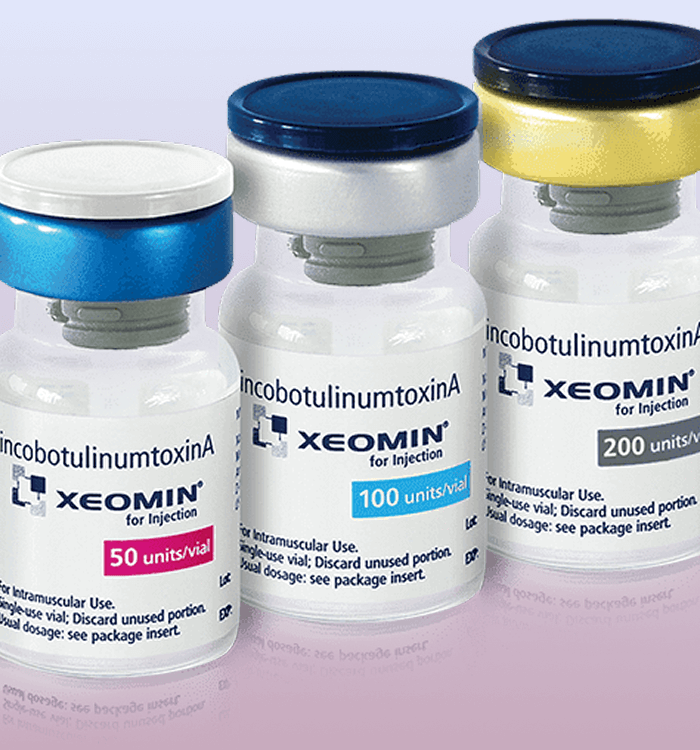
Eccrine sweat glands are switched on by acetylcholine released from tiny cholinergic nerve endings in the skin. Botulinum toxin type A binds to those nerve endings and blocks acetylcholine release, so the signal to sweat never reaches the gland. The effect is local and temporary: only the injected zone is affected, and as nerve endings regenerate over a few months, sweating gradually returns and the treatment can be repeated. Because the sole is densely innervated by the posterior tibial, sural, and peroneal nerves, plantar injections are more sensitive than underarm treatment, so the clinic’s doctors plan comfort carefully, using a very fine needle and options such as ice, vibration, topical numbing, or an ankle-level nerve block where appropriate. Only a generic botulinum toxin type A is used, dosed and diluted for even coverage across the mapped area; the clinic does not advertise specific toxin product brands.
One Reberry Clinic, multiple Seoul-area locations. Pricing & current promotions are listed on each branch's own site — tap a clinic to view pricing & book.
Our flagship in the heart of Gangnam.
In Seoul's shopping & tourism heart.
A beauty stop between flights.
The newest Reberry Clinic — in Seoul's trend district.
ONE REBERRY CLINIC · MFDS-REGISTERED DEVICES · MULTILINGUAL CARE AT EVERY LOCATION

Doctors confirm plantar hyperhidrosis and often run Minor’s starch-iodine test, which turns active sweat dark purple to map the exact area needing the roughly 15 to 20 injection points per sole.
Because the sole is sensitive, 1 or more comfort options are prepared, such as ice, vibration, topical numbing, or an ankle-level nerve block for the posterior tibial and sural nerves.
A fine needle delivers small amounts of botulinum toxin across the mapped points, spaced about 1 to 2 cm apart, so the whole overactive area of each foot is evenly covered.
The toxin blocks acetylcholine at the sweat glands, and most people notice clear dryness within about 1 week, with the full effect settling over roughly 2 weeks.
Results last roughly 4 to 6 months on average; when sweating returns, the treatment can simply be repeated, and your doctor reviews dose and coverage each time.
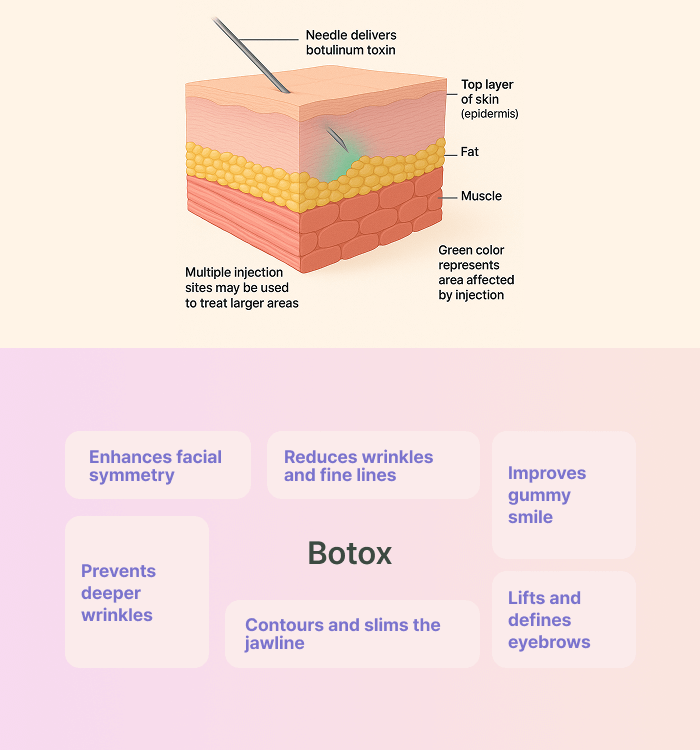
See representative outcomes from Reberry Clinic. Results build gradually and vary by individual; your plan is assessed at consultation.
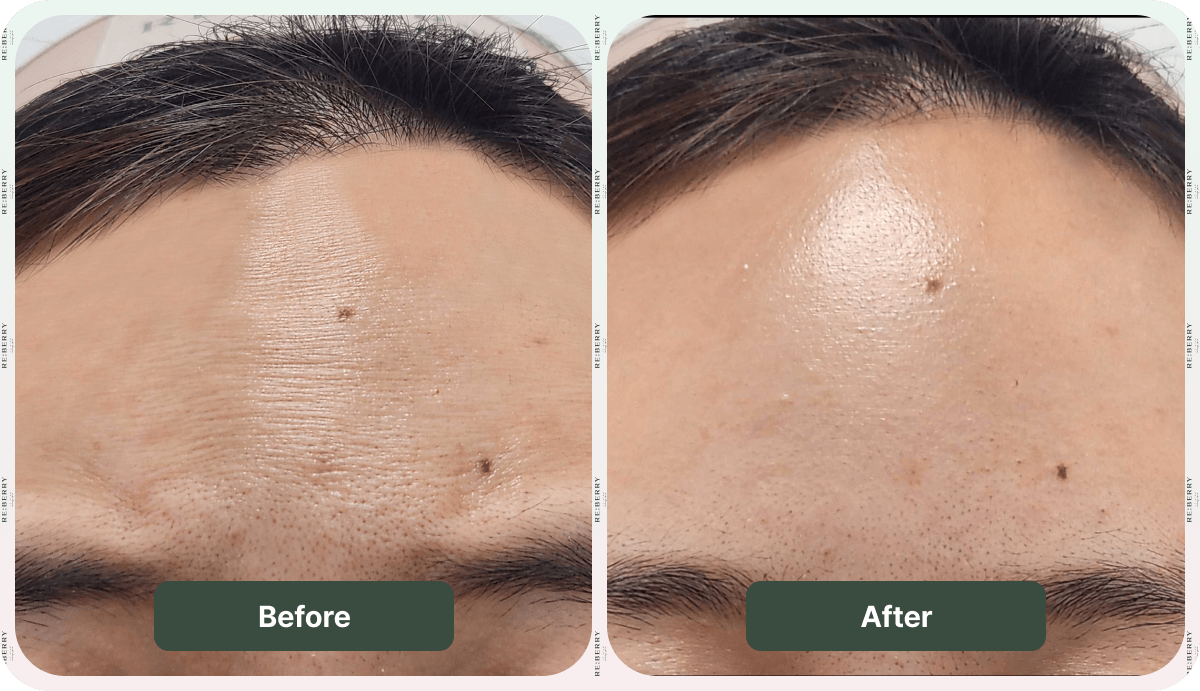
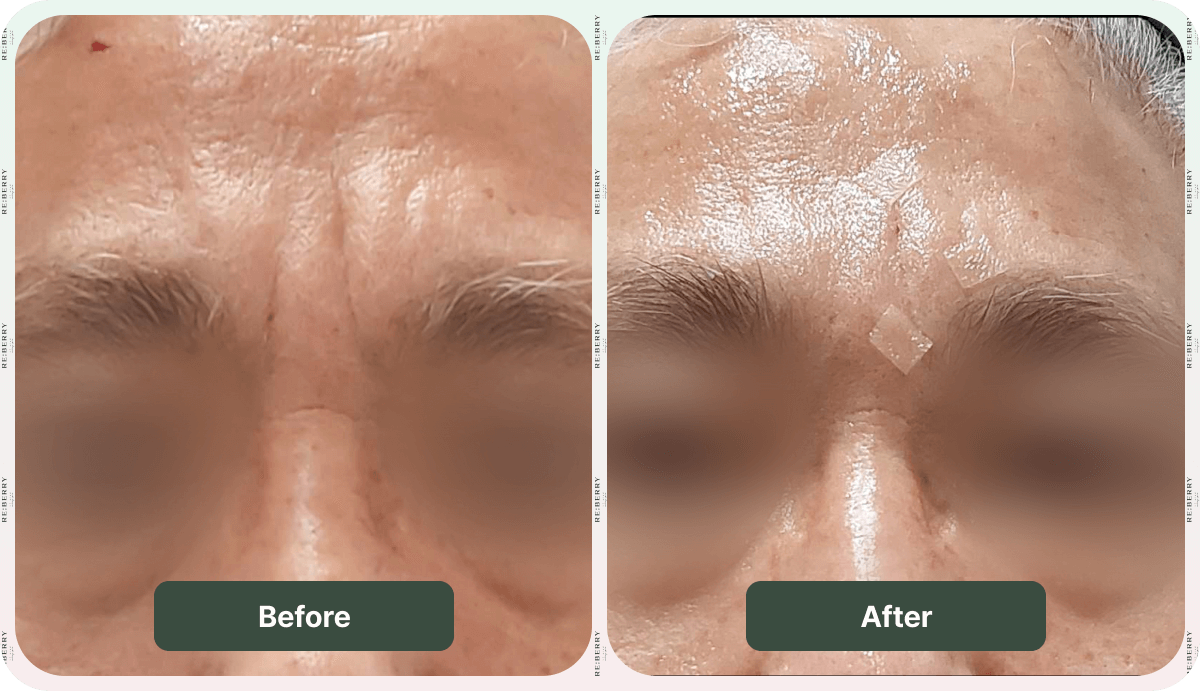
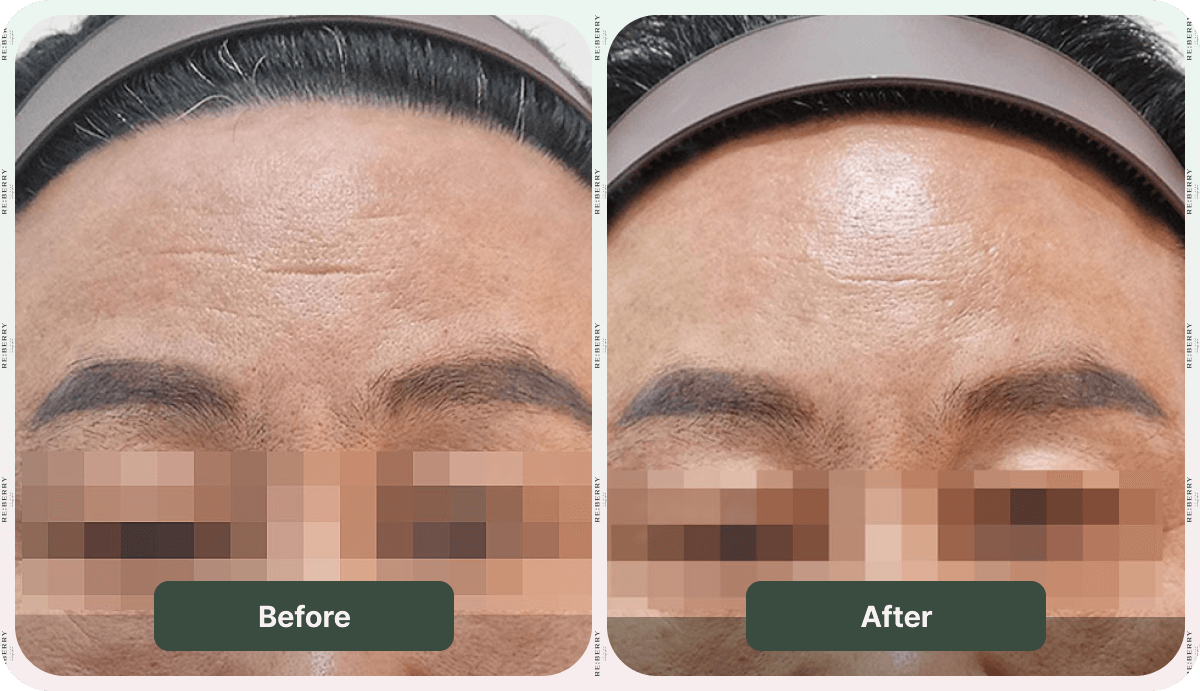
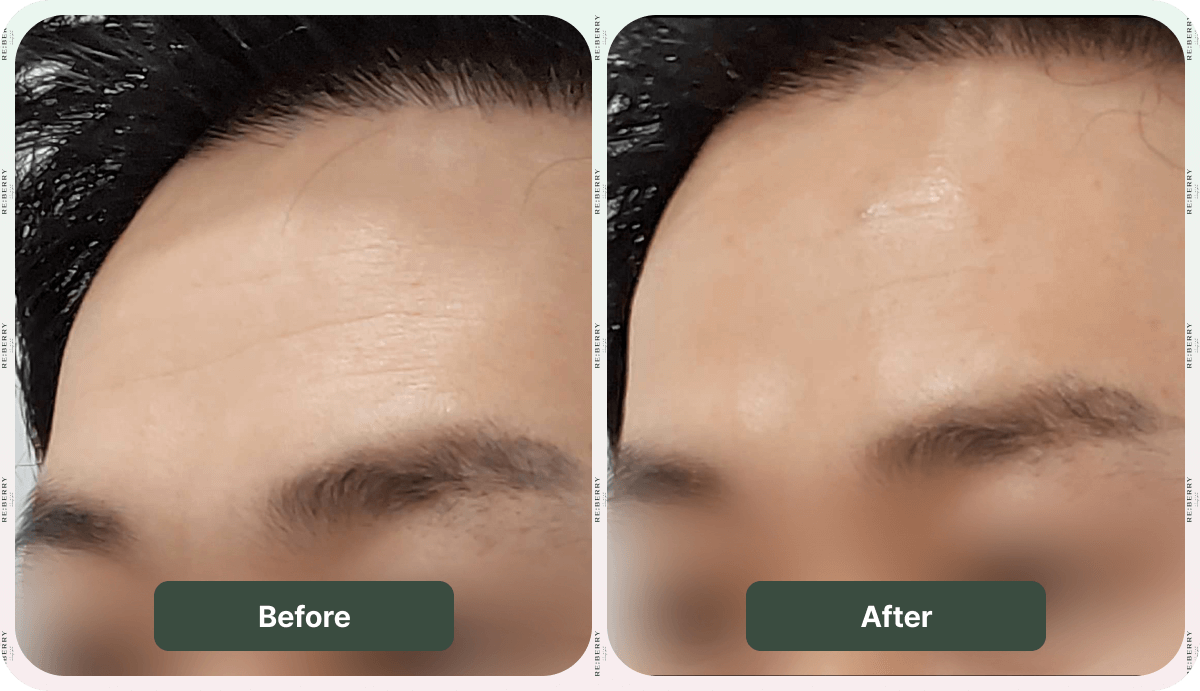
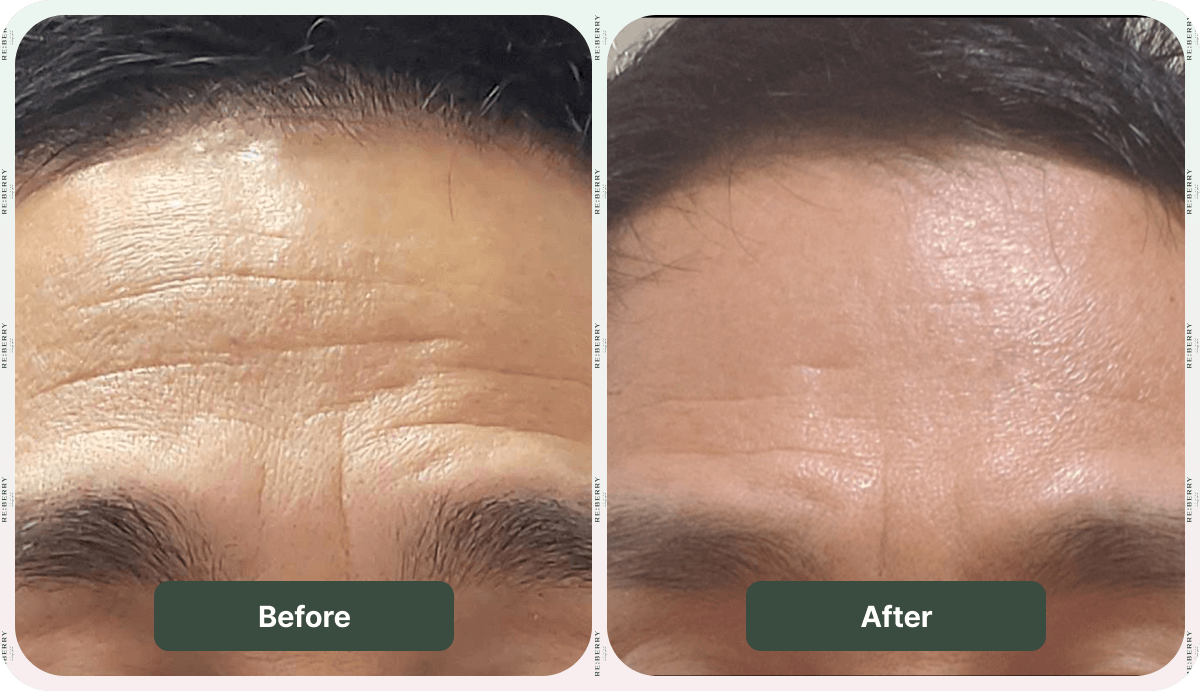
At our Gangnam (Seoul) location, the clinic’s doctors confirm plantar hyperhidrosis, review your history, and explain dose, coverage, and cost transparently in English.
After mapping and comfort measures, the injections across both soles usually take about 20 to 30 minutes in total.
The active injecting is brief; most of the visit is preparation, mapping, and aftercare guidance.
Dryness typically begins within about 1 week and settles fully by around 2 weeks, lasting roughly 4 to 6 months.
As the effect fades over months, treatment can be repeated; avoiding foot massage or heat for the first day helps the toxin settle where it was placed.



Botulinum toxin type A blocks acetylcholine, the chemical that tells your sweat glands to work, so the treated sole stays much drier. Small amounts are injected across roughly 15 to 20 mapped points per foot. You can read more on our botox injection page.
Results typically last roughly 4 to 6 months per treatment, sometimes longer, because the effect fades only as blocked nerve endings gradually regenerate. When sweating returns, the injections can simply be repeated. Your doctor reviews dose and coverage each time to keep results consistent.
Most people notice clearly drier soles within about 1 week, with the full effect settling by around 2 weeks. Onset is gradual because the toxin needs time to block the sweat-gland signal. If any area still sweats, a short review lets your doctor top it up.
The sole is sensitive because it is richly supplied by nerves, so plantar injections feel more than underarm ones. To keep it tolerable, the clinic’s doctors use a very fine needle plus comfort measures such as ice, vibration, topical numbing, or an ankle-level nerve block where appropriate.
Minor’s starch-iodine test maps exactly where you sweat. Doctors paint a 2% iodine solution on the sole, dust it with starch, and active sweat turns dark purple, revealing the zone to inject. This targets the toxin precisely and helps confirm improvement afterwards.
Typically about 15 to 20 injection points per sole, spaced roughly 1 to 2 cm apart, so the whole overactive area is covered evenly. The exact number depends on how large your sweaty zone is on the map. Both feet are usually treated in the same short session.
Downtime is minimal for most people, though soles may feel tender for a day or two. It helps to avoid long walks, foot massage, and heat for the first 24 hours. You can review general aftercare on our injection treatment page.
Temporary mild weakness or fatigue in the small foot muscles is uncommon and short-lived when it happens, usually resolving within a few weeks. Careful dosing and placement reduce this risk. Your doctor tailors the dose to control sweating while keeping foot function comfortable.
A generic botulinum toxin type A is used, diluted and dosed for even coverage across your mapped area. In line with Korean advertising rules, the clinic does not promote specific toxin product brand names on its pages, but your doctor discusses the details with you at consultation.
Yes, the same botulinum toxin approach treats excessive underarm and palm sweating, using the same signal-blocking mechanism. Many patients treat more than one area in a plan. You can explore related options on our botox injection page and discuss priorities at consultation.
Cost is consultation-led and depends mainly on the dose needed to cover your mapped sweat area and whether one or both feet are treated. Because it is repeated a few times a year, plan for a cycle rather than one figure. Your doctor confirms your individual cost transparently in English.
Most adults with moderate to severe idiopathic plantar sweating that persists despite antiperspirants are suitable. A consultation rules out contraindications like neuromuscular conditions or pregnancy, often confirming the diagnosis with the starch-iodine test first. You can start on our botox injection page.
Botulinum toxin blocks the sweat signal for months from one short session, while prescription antiperspirants and iontophoresis need continuous use to keep working. Many people use antiperspirants for maintenance between injection cycles. Your doctor helps you combine options to suit your lifestyle and budget.
Botulinum toxin for hyperhidrosis is widely used and generally well tolerated when dosed and placed by trained doctors. The most common effect is short-lived injection-site tenderness. A consultation screens for contraindications. You can learn about our broader injectable care on our injection treatment page.
Sole hyperhidrosis treatment is provided at our Gangnam (Seoul) location on Gangnam-daero, about 2 minutes from Gangnam Station exit 10, with Dr. Yoongon Ryu and the clinic’s doctors. English-speaking staff support international patients. You can also see the clinic overview on our botox injection page.
One short visit is usually enough, so even 1 to 2 days in Seoul works for many travellers, allowing a consultation and the injections. Because results build over about a week, you do not need to stay to see the effect. Our English-speaking team helps coordinate timing around your trip.
Yes, flying the same day or the next day is generally fine, since this is a non-surgical treatment with minimal downtime. It simply helps to avoid heavy walking and foot massage for the first 24 hours. If any area needs a review, our team can advise remotely once you are home.
| Botulinum Toxin Injection | Prescription Antiperspirants | Iontophoresis | |
|---|---|---|---|
| Mechanism | Blocks the nerve signal to sweat glands | Aluminium salts plug sweat ducts topically | Mild electrical current run through water reduces gland activity |
| Best for | Moderate to severe plantar sweating wanting months of relief | Mild sweating or maintenance between treatments | Those preferring an at-home, needle-free routine |
| Onset | Dryness within about 1 week | Days to weeks with nightly use | Gradual over several weekly sessions |
| Duration of effect | Roughly 4 to 6 months per treatment | Only while used regularly | Requires ongoing maintenance sessions |
| Comfort | Sensitive on the sole; managed with numbing or nerve block | Can sting or irritate the skin | Tingling during sessions, generally well tolerated |
| Cost pattern | Per-session, dose-dependent; repeated a few times a year | Low ongoing product cost | Device or clinic sessions over time |
Real verified reviews from our Google Business Profile, across all Reberry Clinic locations.
PULLED LIVE FROM GOOGLE · GANGNAM · MYEONGDONG · INCHEON AIRPORT
Your treatment is planned and performed by experienced, MFDS-registered doctors across our Seoul-area clinics, with multilingual support for international patients.
Flagship clinic · KOL for leading lifting & regenerative devices · Featured in Authority Magazine (2026)

Multilingual tourist care beside Myeongdong Cathedral

Fast, effective care 20 minutes from the terminals
Message us on WhatsApp for a free consultation in English about botulinum toxin for sole hyperhidrosis at our Gangnam, Seoul location.