


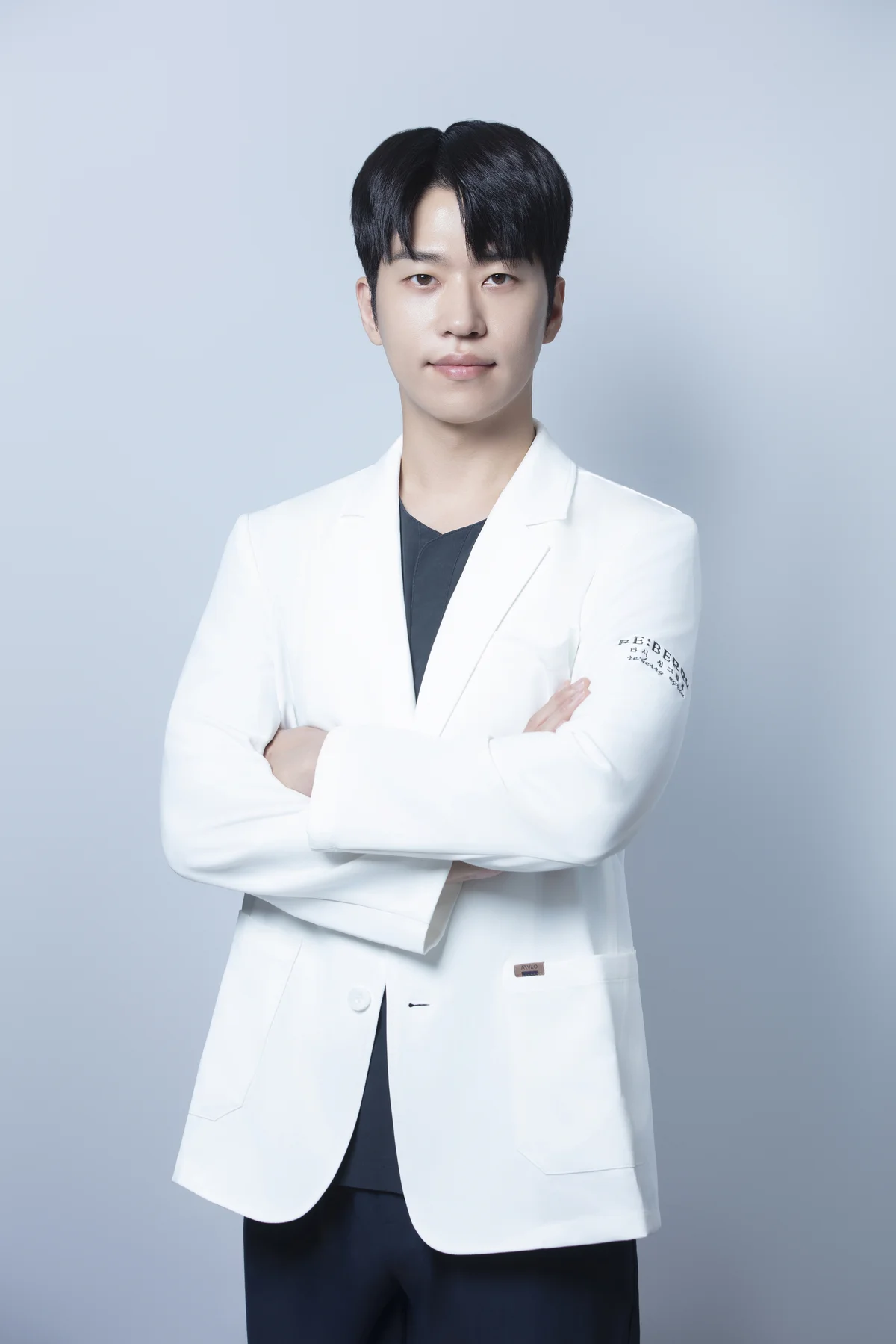
Gangnam
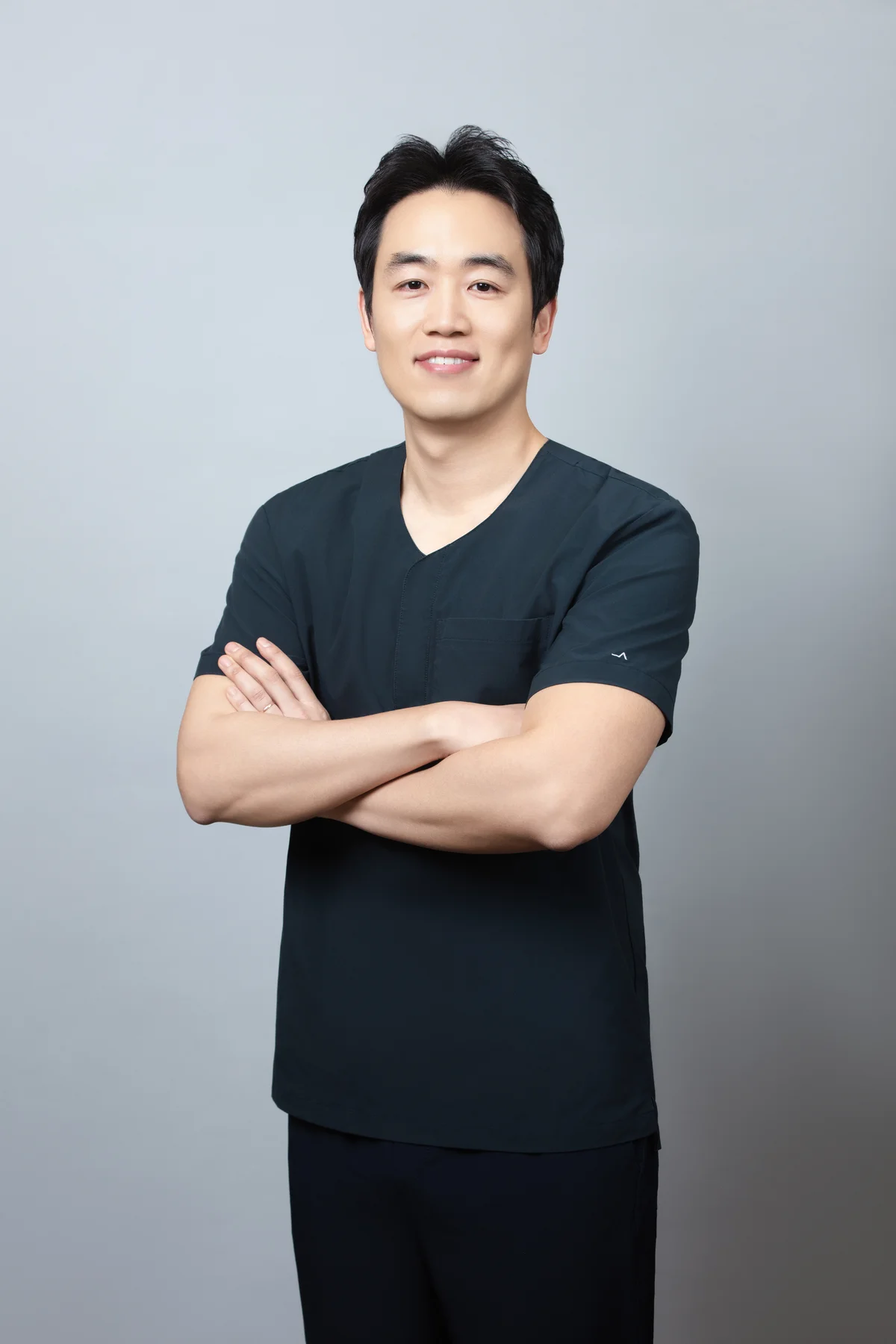
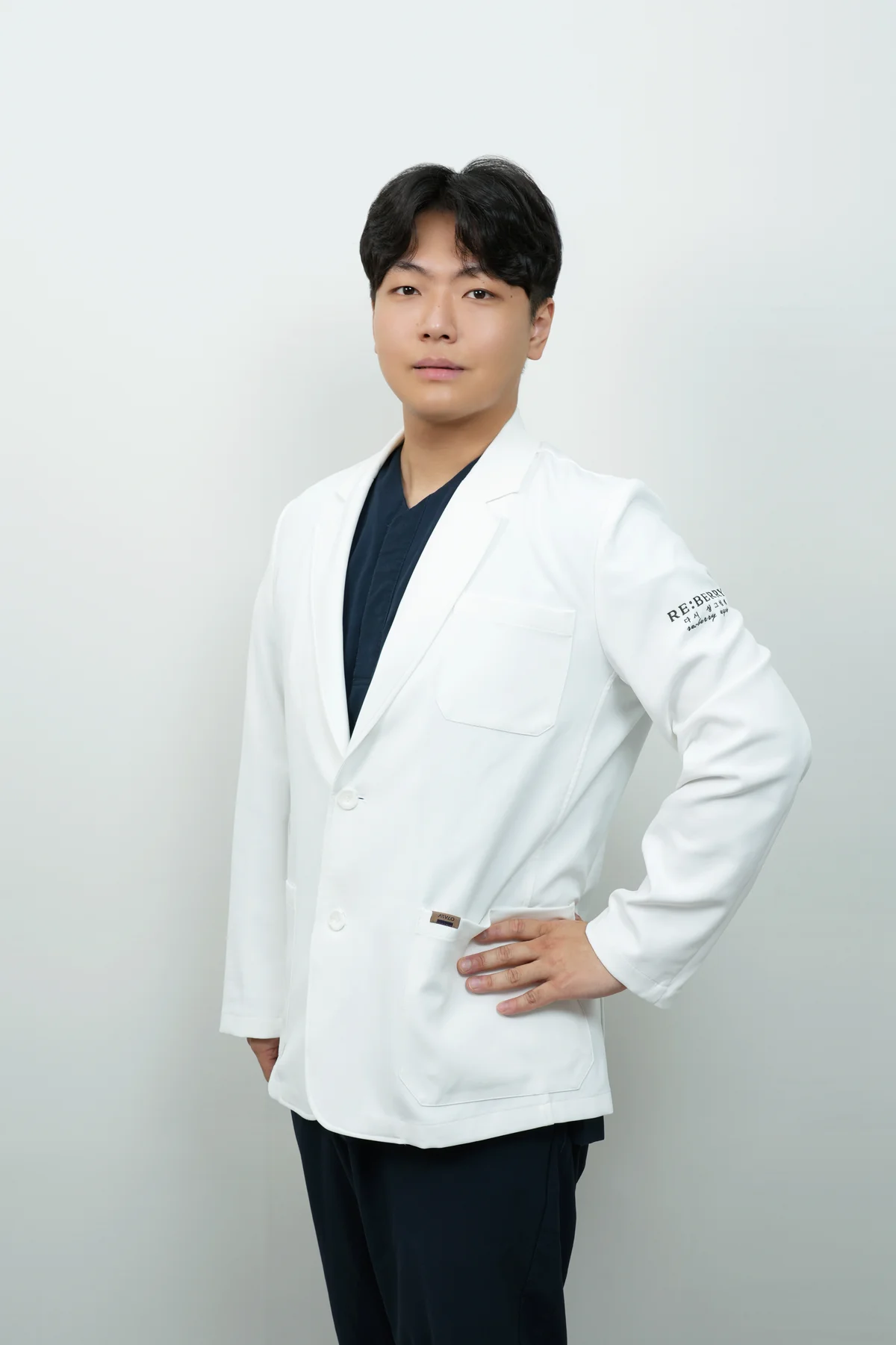
Dr. Yoon-Gon Ryu
Aesthetic Medicine Specialist
Flagship clinic · KOL for leading lifting & regenerative devices · Featured in Authority Magazine (2026)

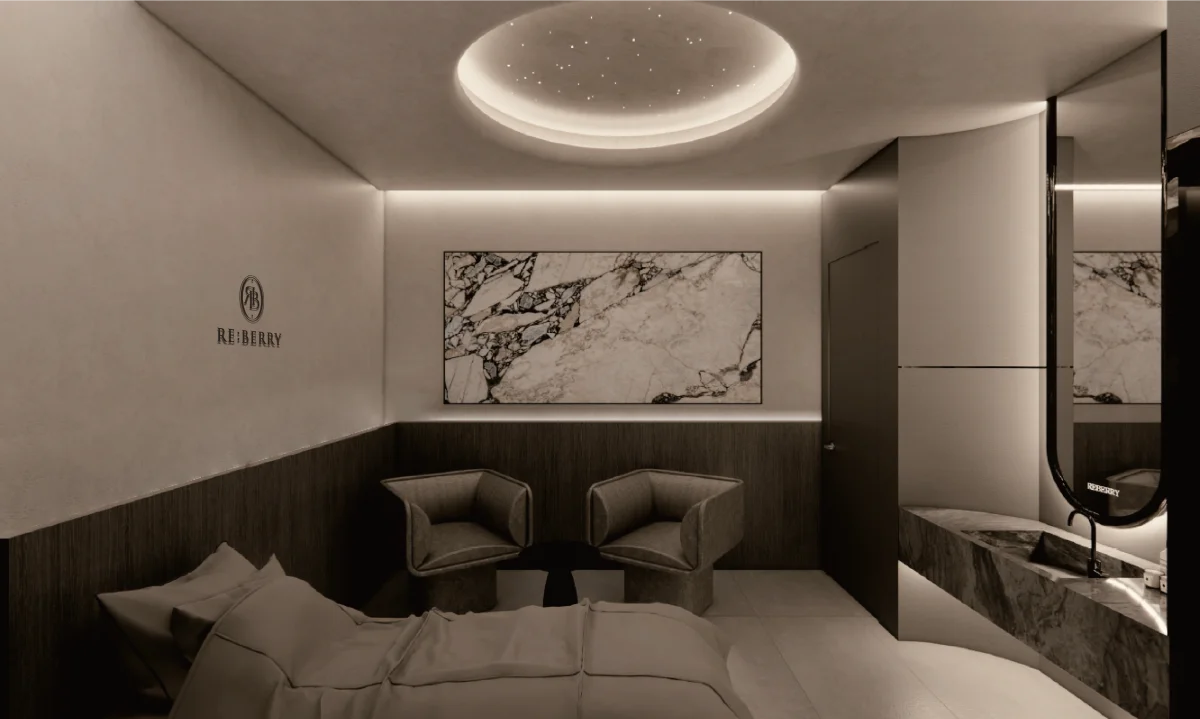
Titanium lifting fires 3 diode wavelengths (755/810/1064nm) together to heat the dermis gradually, encouraging collagen firming over a short series of 2 to 3 sessions.
Titanium lifting in Myeongdong, Seoul is a non-surgical treatment using an Alma Soprano Titanium triple-wavelength diode laser (755/810/1064nm) that heats the dermis to encourage gradual collagen firming for mild to moderate laxity. Delivered over a short series with minimal downtime, it is offered at our Myeongdong (Seoul) location under Dr. Seung Jae Baek, Medical Director.
One-on-One guidance from a dedicated doctor, ensuring your skin is professionally monitored and treated from start to finish.
Fluent assistance in English, Japanese, and Chinese, making communication clear, respectful and comfortable for international patients.
Over 100,000 patients worldwide have received our personalized dermatological care, highlighting our expertise and reliable results.
Titanium lifting is a non-surgical skin-firming treatment that uses an Alma Soprano Titanium triple-wavelength diode laser. It fires 3 wavelengths, 755, 810 and 1064nm, simultaneously, delivering controlled heat to different dermal depths while the surface stays cooled for comfort. That gentle, layered heating encourages the skin to remodel collagen gradually, which is why titanium lifting suits mild to moderate laxity rather than heavy sagging.
Because the approach is cumulative rather than aggressive, titanium lifting is usually delivered as a short series of 2 to 3 sessions spaced a few weeks apart, with firming building over the following weeks. It is popular with international patients who want a comfortable, downtime-light option that fits around a Seoul trip. Common target zones include the lower face, jawline and neck.
At our Myeongdong (Seoul) location, 5, Myeongdong 10-gil, Jung-gu (about 5 minutes from Myeongdong Station), titanium lifting is consultation-led. Dr. Seung Jae Baek, Medical Director, and the clinic’s doctors assess your skin, map suitable zones, and explain the plan in English for patients visiting Seoul, Korea.
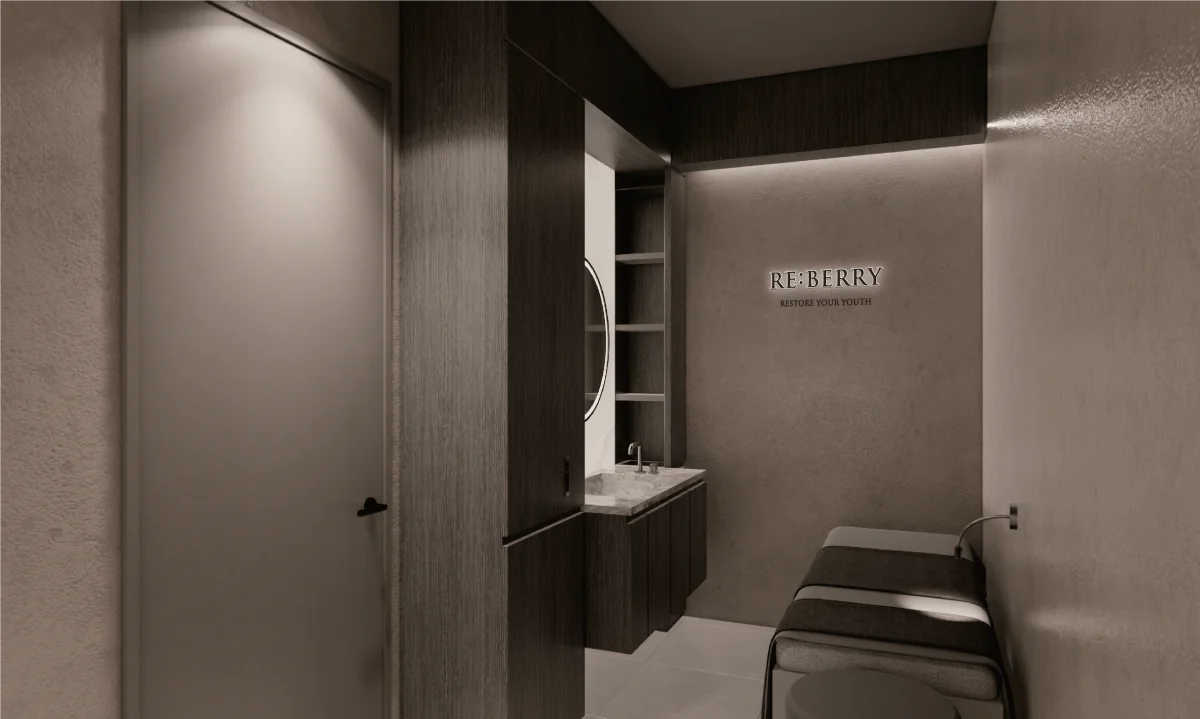
The Alma Soprano Titanium platform combines 3 diode wavelengths, 755, 810 and 1064nm, in a single handpiece. Each wavelength penetrates to a slightly different depth, so firing them together spreads heat across multiple layers of the dermis at once, while contact cooling protects the skin surface. Rather than one high-intensity pulse, the device uses a gradual, in-motion heating technique that raises tissue temperature steadily, which is gentler and encourages controlled collagen remodeling. Because the stimulus is mild and cumulative, results build over roughly 8 to 12 weeks and typically improve across a series of 2 to 3 sessions. This is a diode-laser modality and should not be confused with ultrasound or radiofrequency lifting, which use entirely different energy. The clinic’s doctors calibrate wavelength balance, fluence and passes to your skin type and laxity, pacing sessions about 3 to 4 weeks apart so the tissue is not over-heated.
One Reberry Clinic, multiple Seoul-area locations. Pricing & current promotions are listed on each branch's own site — tap a clinic to view pricing & book.
Our flagship in the heart of Gangnam.
In Seoul's shopping & tourism heart.
A beauty stop between flights.
The newest Reberry Clinic — in Seoul's trend district.
ONE REBERRY CLINIC · MFDS-REGISTERED DEVICES · MULTILINGUAL CARE AT EVERY LOCATION
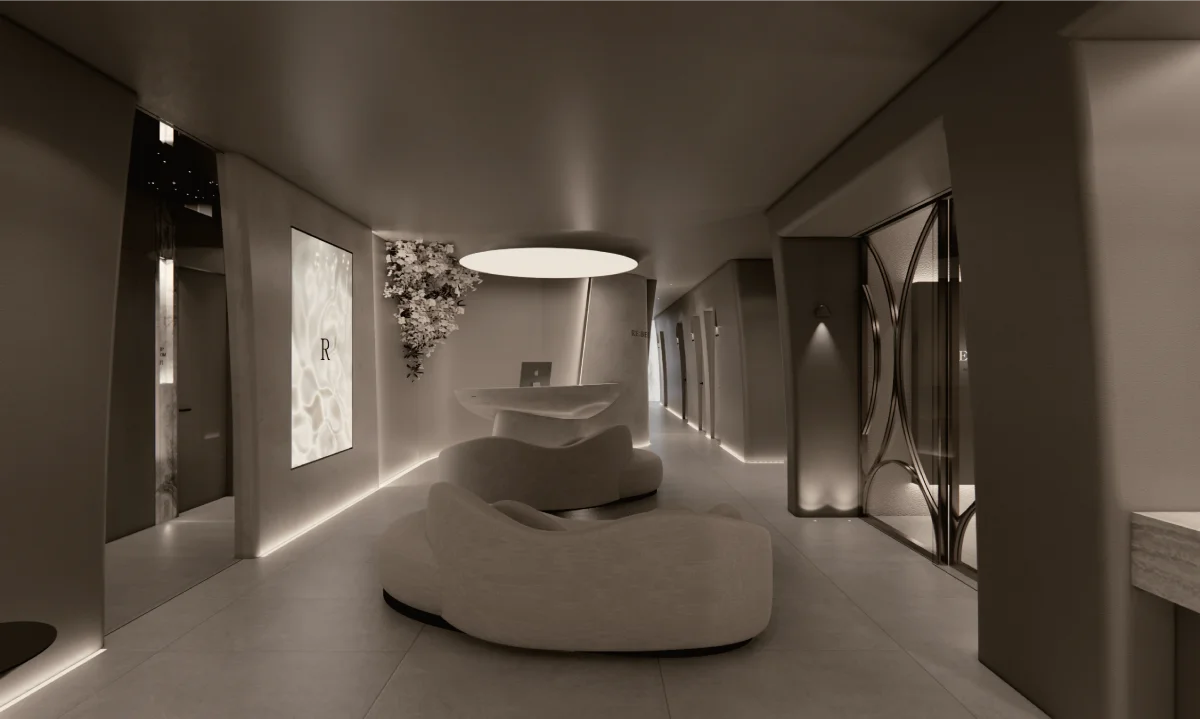
Your doctor maps the 2 to 3 zones to treat, then the skin is cleansed and a cooling contact tip is prepared for comfort.
The handpiece fires 755, 810 and 1064nm together in motion, spreading heat across dermal layers while cooling protects the surface.
Tissue temperature rises steadily over the pass rather than in one spike, which is gentler and encourages controlled collagen remodeling.
The controlled heating signals fibroblasts to form new collagen over the following 8 to 12 weeks, firming the treated zones gradually.
Most plans use 2 to 3 sessions spaced 3 to 4 weeks apart so firming accumulates without over-stressing the skin.
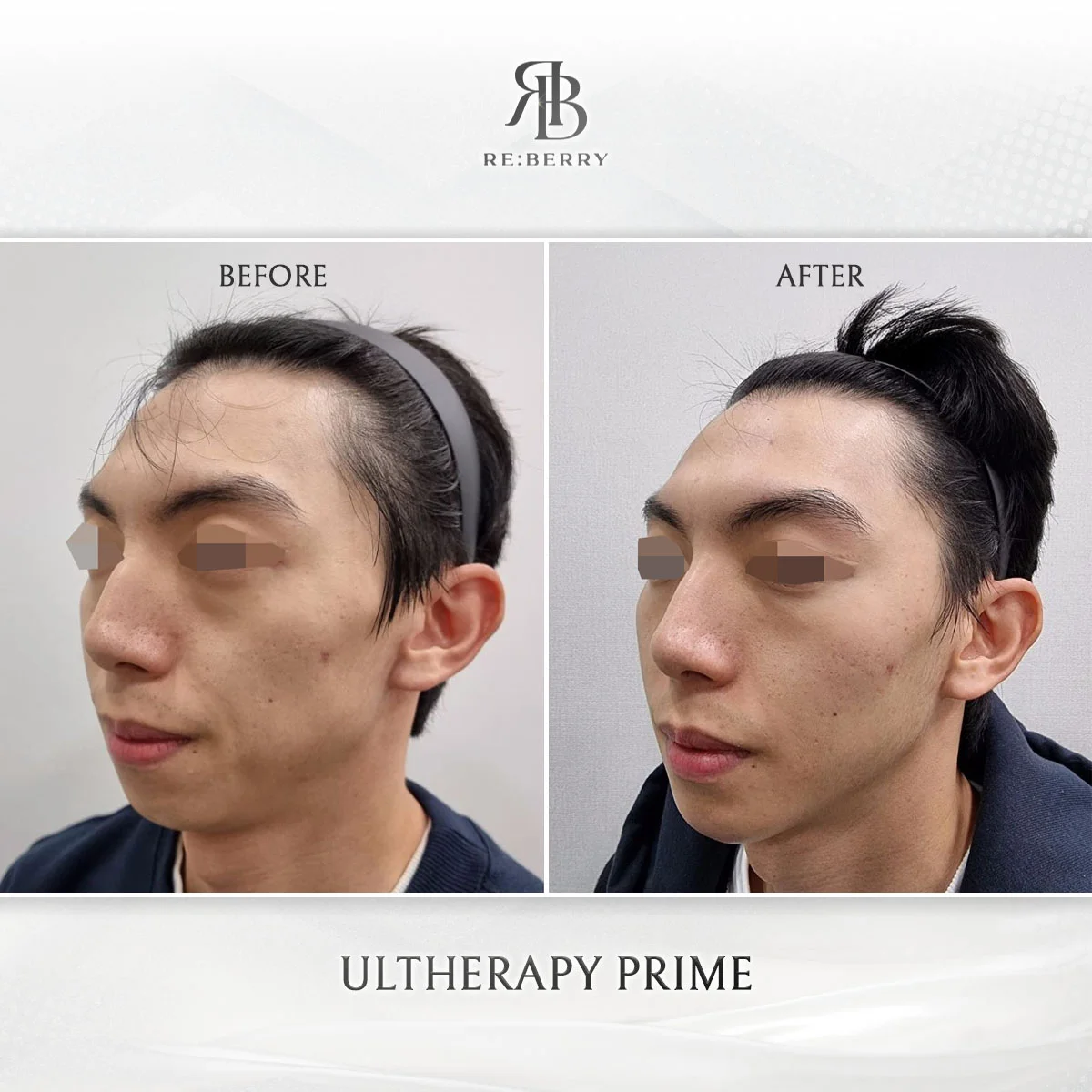
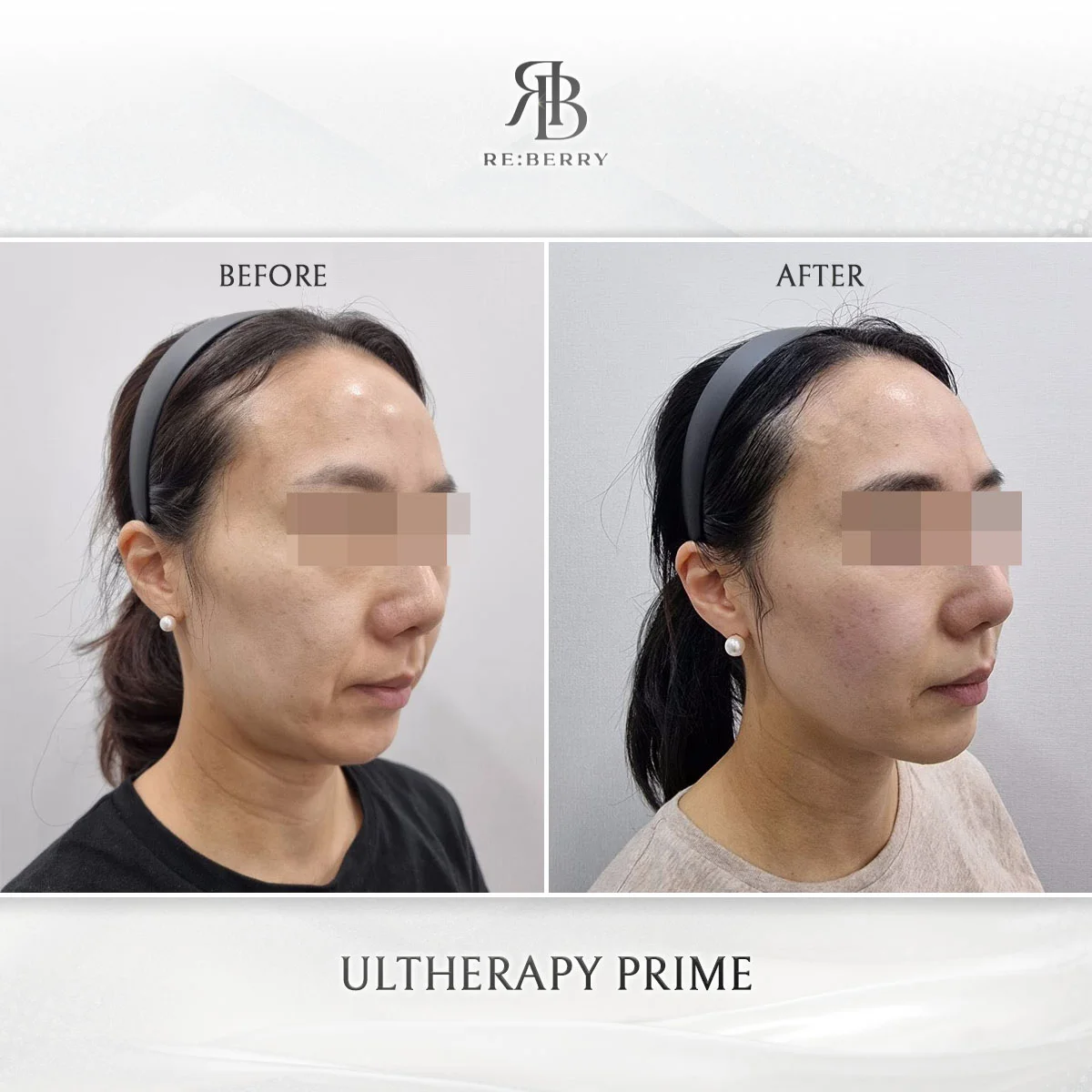
See representative outcomes from Reberry Clinic. Results build gradually and vary by individual; your plan is assessed at consultation.
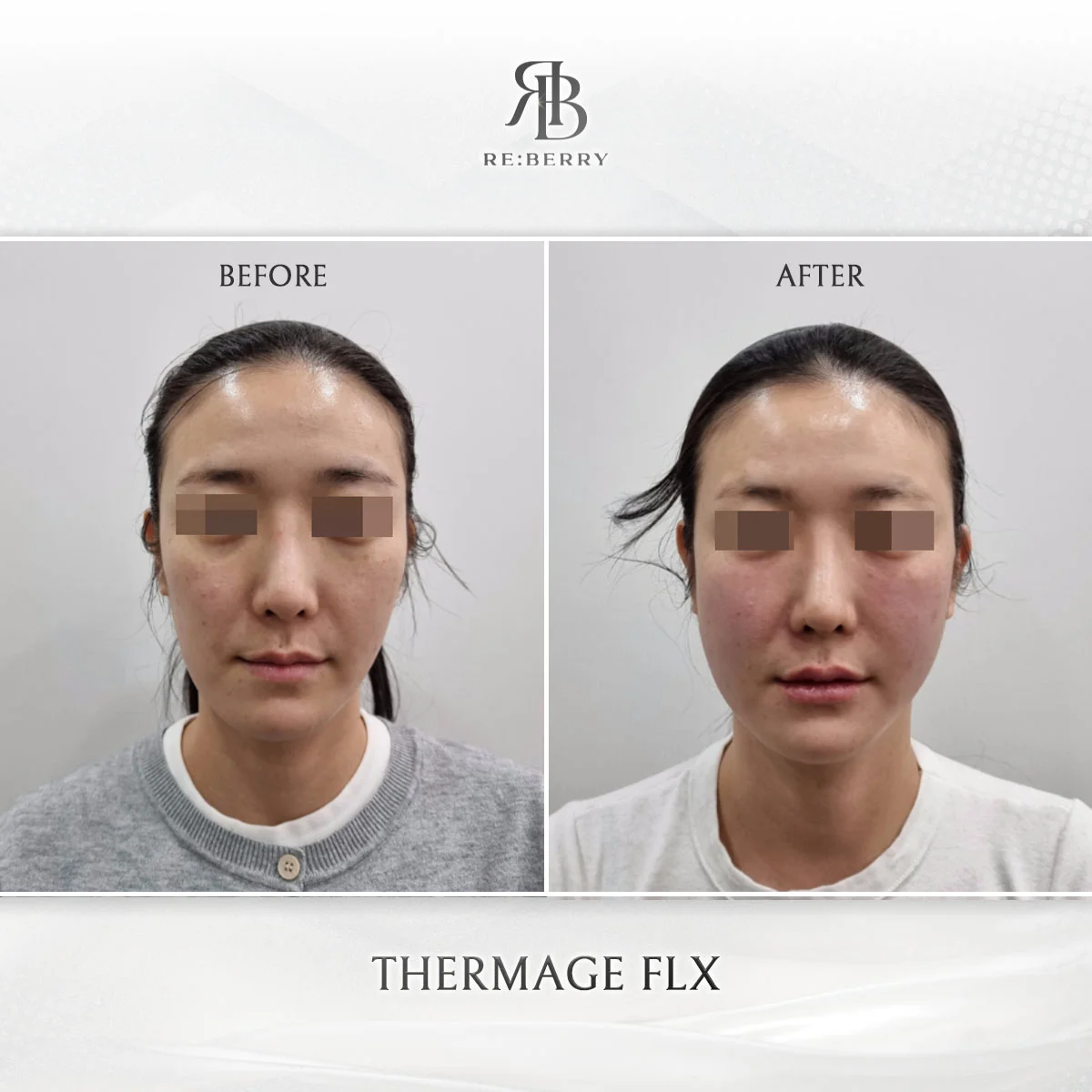
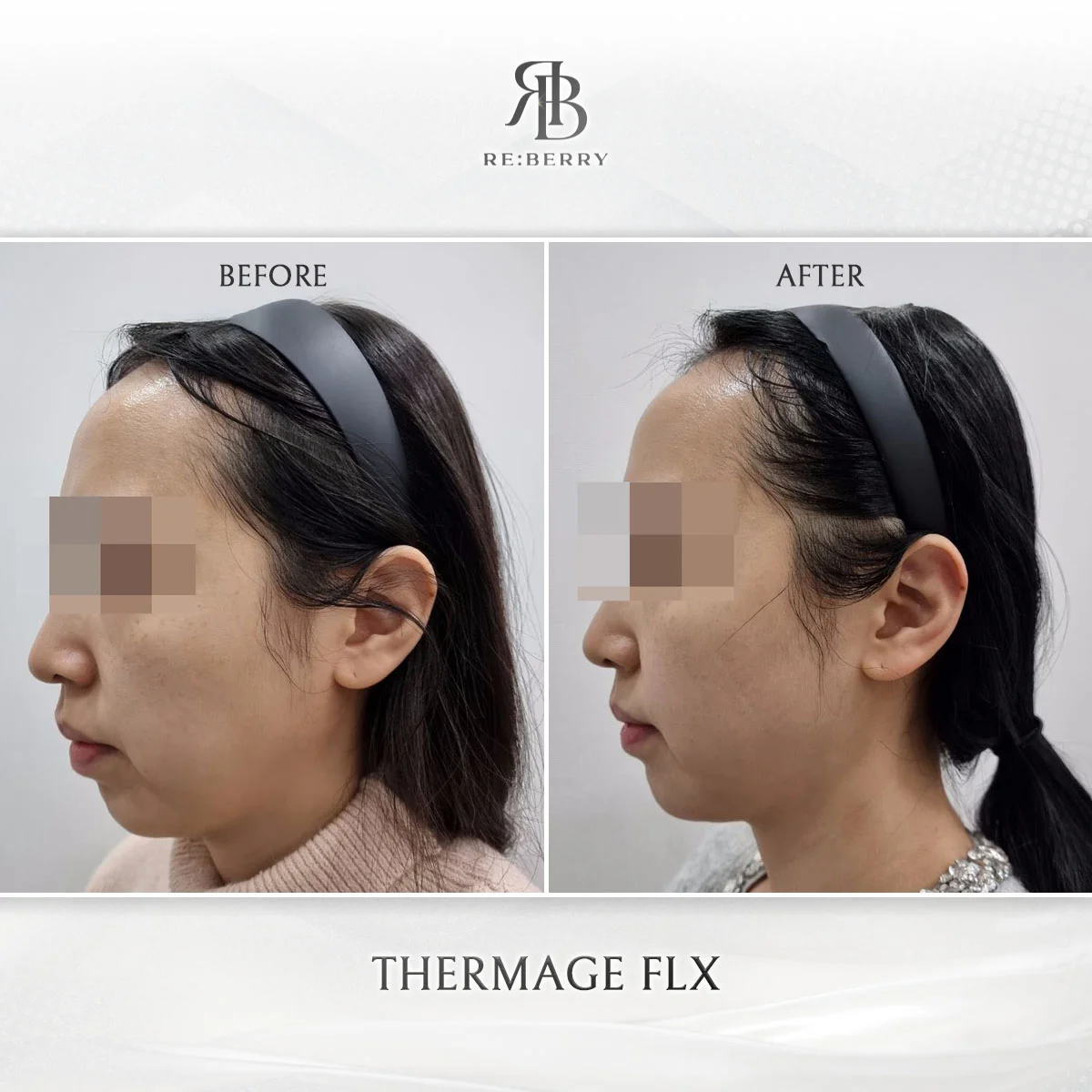
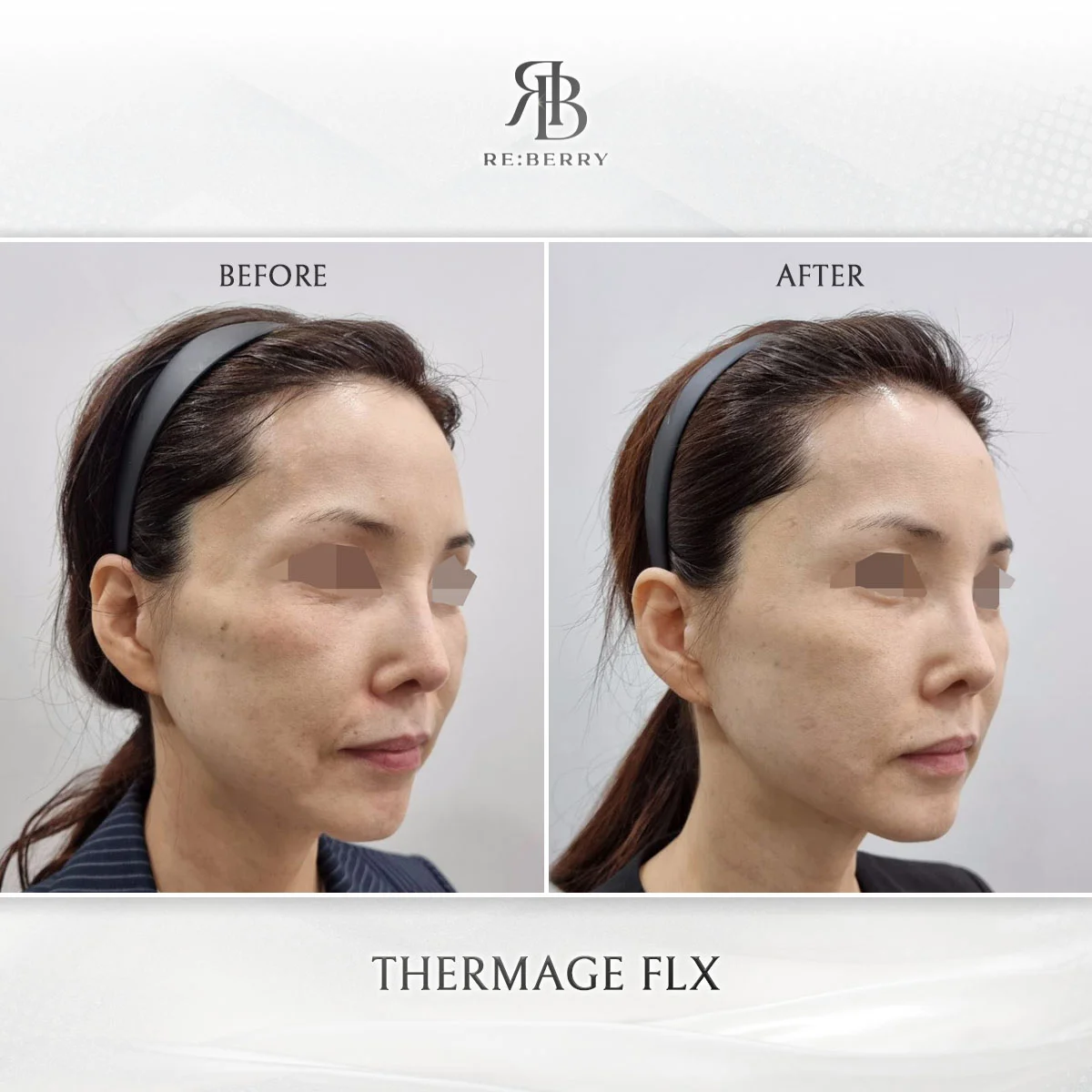
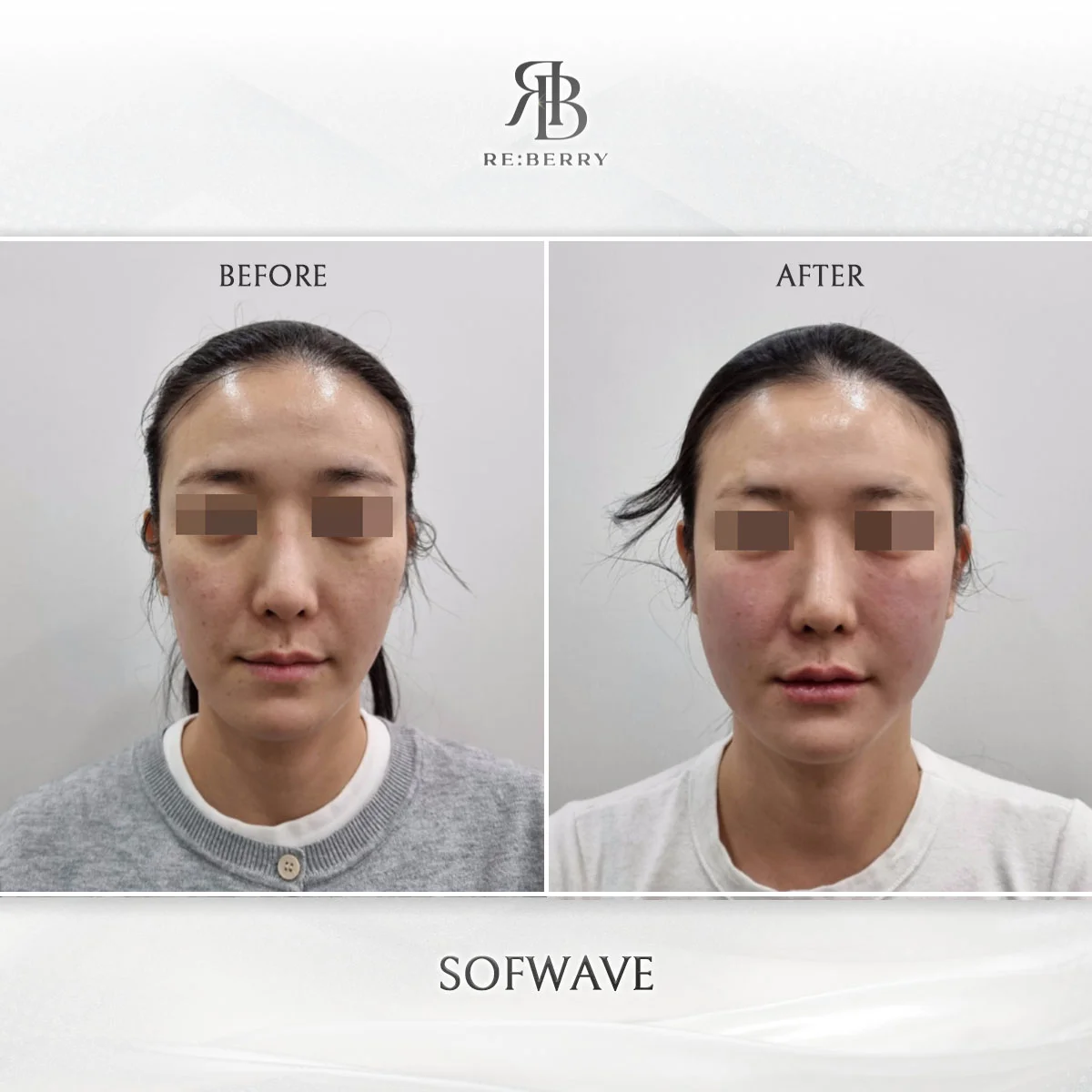
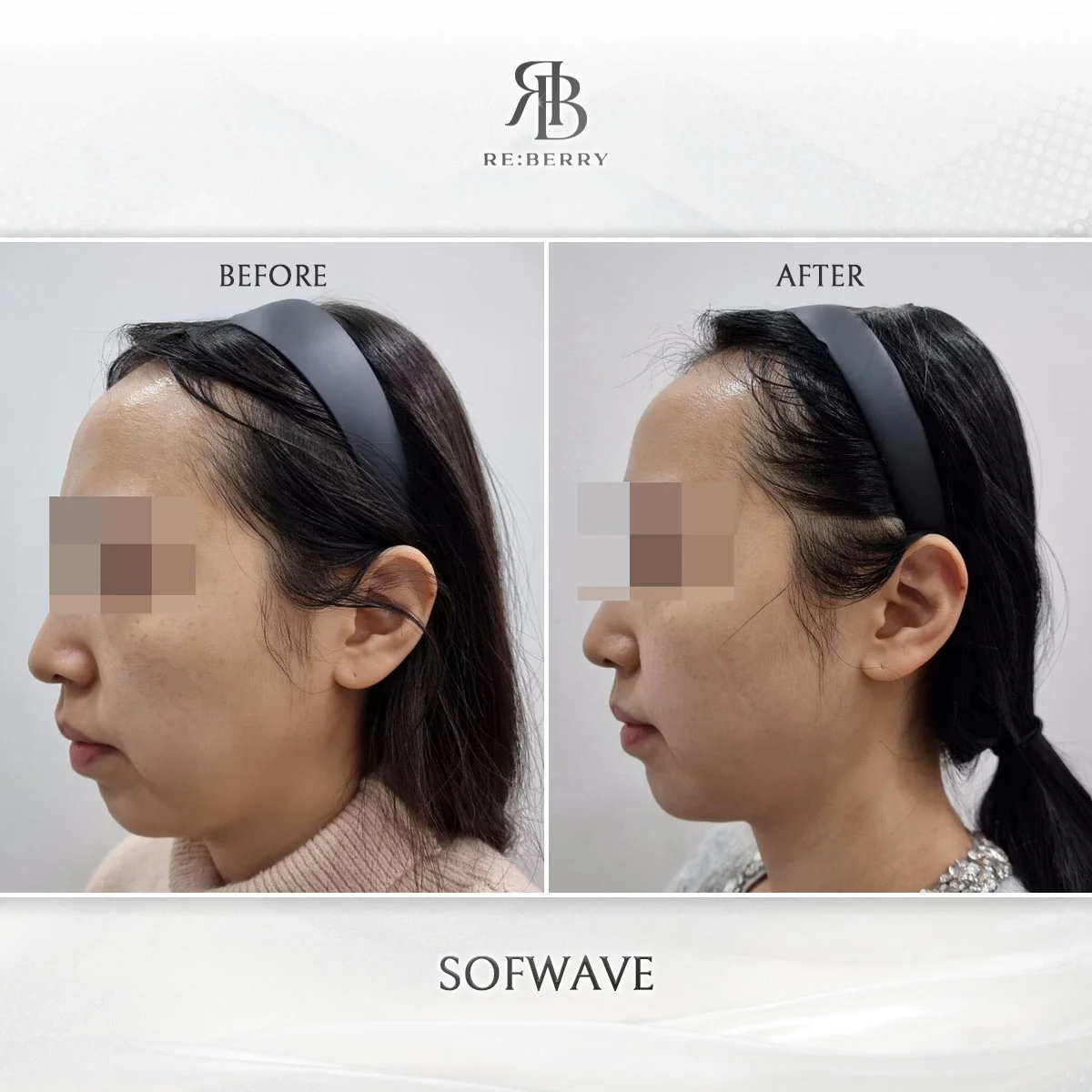
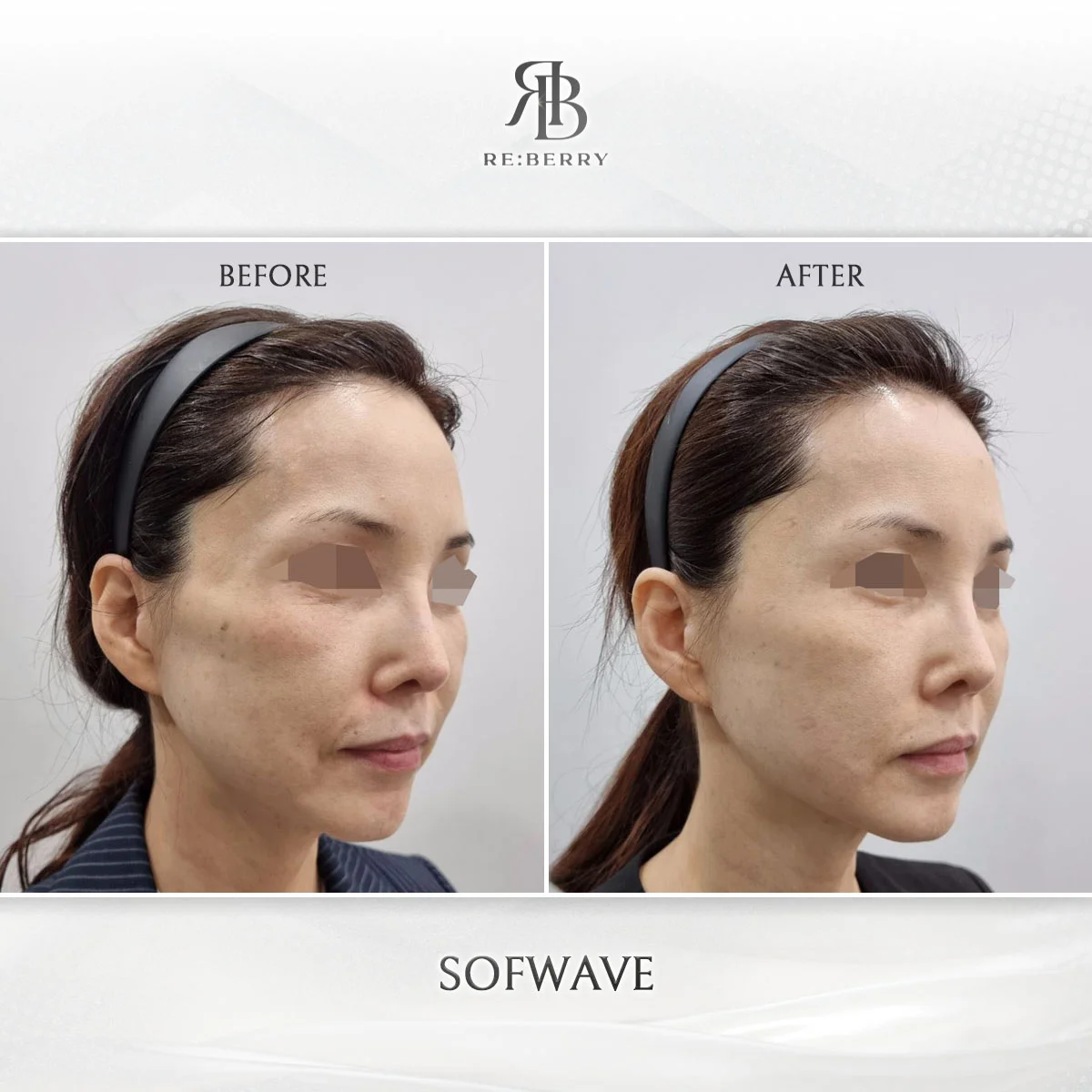
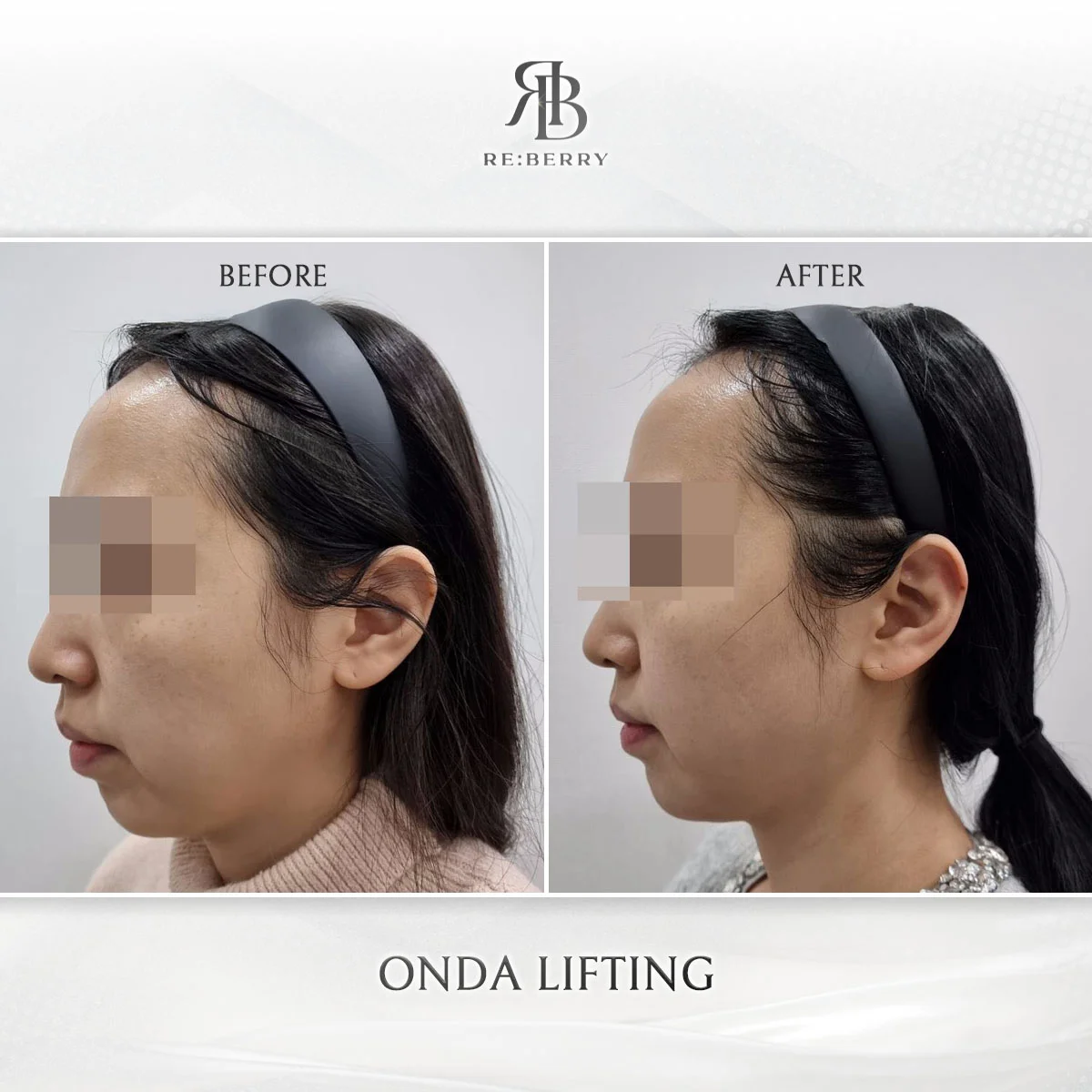
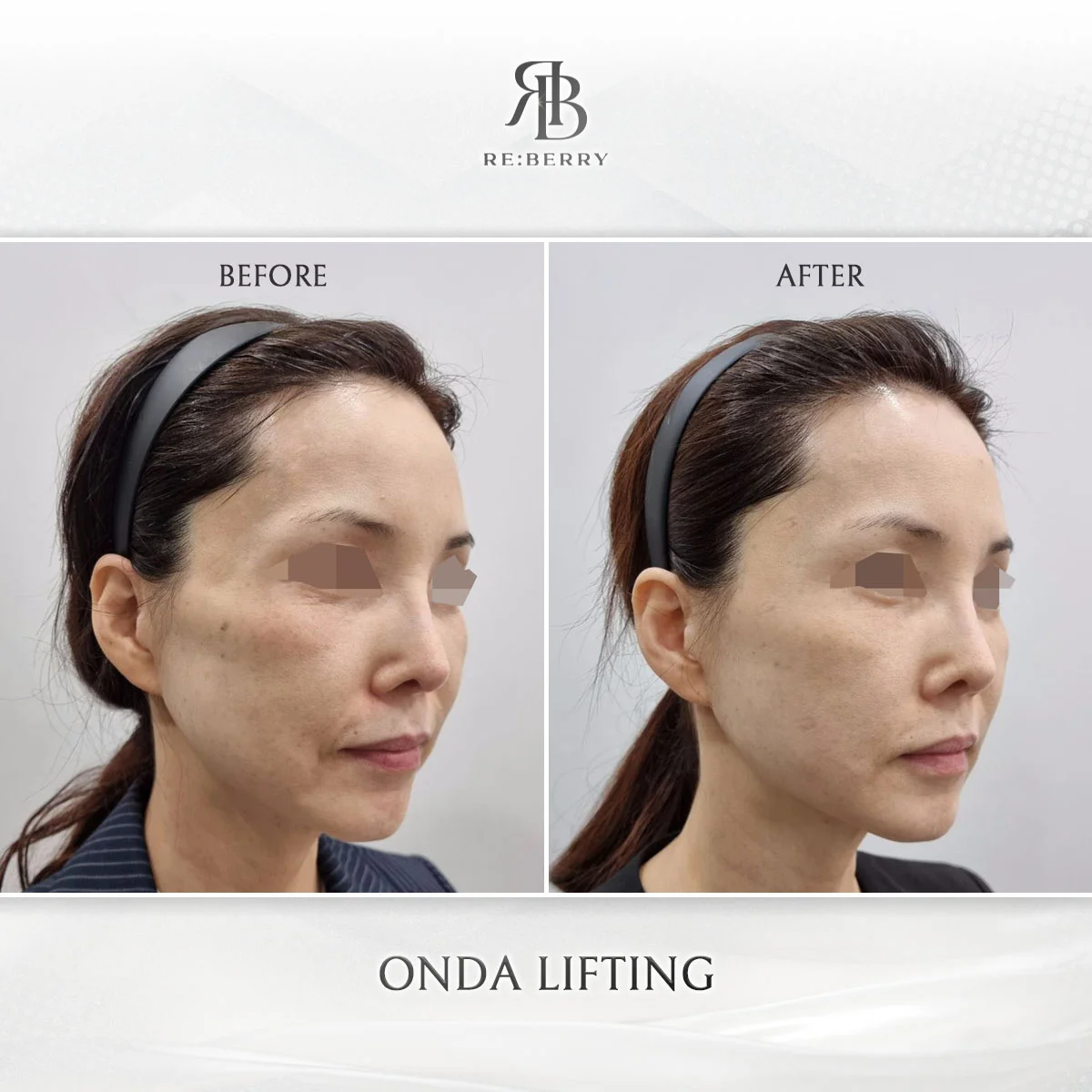
The clinic’s doctors assess your skin laxity, map suitable zones, and explain whether titanium lifting fits your goals, in English, at our Myeongdong location.
A session usually takes about 20 to 40 minutes depending on the number of zones, and surface cooling keeps the warm sensation comfortable.
Titanium lifting runs as a short course of 2 to 3 sessions spaced about 3 to 4 weeks apart, rather than a single visit.
Firming builds gradually over roughly 8 to 12 weeks as collagen remodels, and your doctor reviews progress to refine the plan.
Results are not permanent, so many patients plan maintenance once or twice a year, alongside daily sunscreen and a gentle skincare routine.
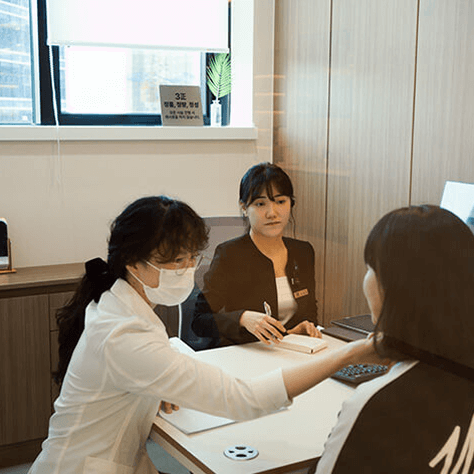
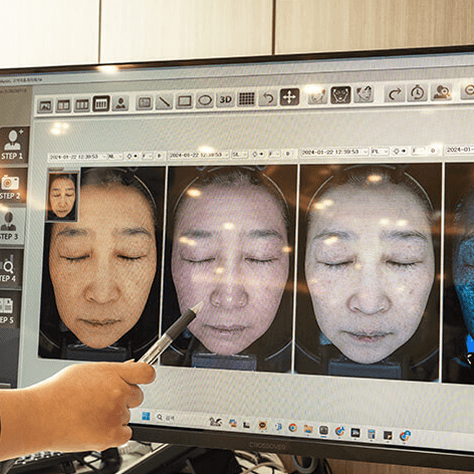
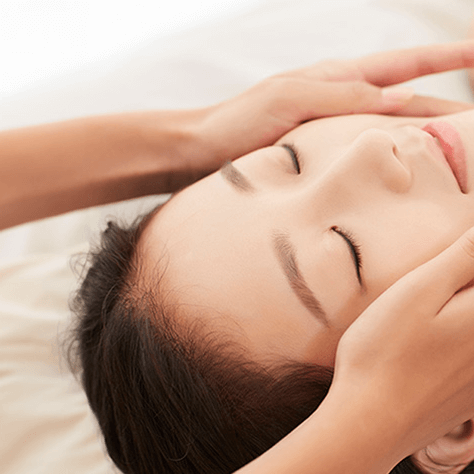
Titanium lifting is a non-surgical treatment using an Alma Soprano Titanium triple-wavelength diode laser (755/810/1064nm) that heats the dermis gradually to encourage collagen firming for mild to moderate laxity. It is delivered over a short series with minimal downtime. Learn more on our titanium lifting page.
The device fires 3 diode wavelengths together, heating different dermal layers steadily while cooling the surface, which signals fibroblasts to form new collagen over about 8 to 12 weeks. Because the heating is gradual and cumulative, firming builds across the series rather than appearing immediately after one pass, making it comfortable and downtime-light.
No, titanium lifting is a diode-laser treatment, which is different energy from ultrasound or radiofrequency. Ultherapy Prime uses micro-focused ultrasound at deeper SMAS layers, while Thermage FLX uses radiofrequency. Your doctor explains which energy suits your laxity and goals during the consultation.
Adults with mild to moderate facial or neck laxity who want a gradual, comfortable option are usually suitable. A consultation confirms fit, and for pronounced sagging your doctor may suggest a deeper approach such as non-surgical face lifting. Titanium lifting is not designed for heavy, advanced laxity.
Most plans use a short series of 2 to 3 sessions spaced about 3 to 4 weeks apart, because firming builds gradually rather than in one visit. The exact number depends on your laxity and response, which your doctor reviews between sessions to keep the plan matched to your skin.
Most patients describe titanium lifting as a warm, tolerable sensation rather than painful, because the surface is cooled continuously while the diode laser heats deeper. Comfort is a priority, and your doctor adjusts settings if needed. You can review the treatment feel on our titanium lifting page beforehand.
Downtime is usually minimal, with possible mild redness that settles within hours, because titanium lifting is non-ablative. Most patients resume normal activities the same day, including light makeup once redness eases. Your doctor gives tailored aftercare, especially if multiple zones were treated in one session.
Visible firming typically builds gradually over about 8 to 12 weeks as collagen remodels, and continues improving across the series. You may notice a subtle tightening sooner, but the meaningful change is cumulative. Your doctor reviews progress between sessions so expectations stay realistic and the plan stays on track.
Results can hold for many months, but they are not permanent because skin keeps aging naturally over time. Many patients plan maintenance sessions once or twice a year to sustain firmness. Pairing titanium lifting with a supportive skin care routine and sun protection helps results last.
Yes, for deeper laxity your doctor may combine titanium lifting with ultrasound or radiofrequency firming, sequenced so the skin is not over-stressed. It also pairs well with hydration and boosters. Any combination is planned only when it genuinely supports your goals, and your doctor explains the sequence at consultation.
Titanium lifting is widely performed and generally considered safe when a trained doctor matches settings to your skin type and laxity. A consultation reduces risks such as temporary redness or, rarely, uneven response. No procedure is entirely without risk, so honest assessment matters, which your doctor provides before starting your plan.
Your skin tone can influence which settings are safest, since diode lasers interact with pigment. Deeper tones may need adjusted parameters to protect the skin. Your doctor accounts for this at consultation, which is why titanium lifting settings are always personalised rather than applied identically to everyone.
Daily broad-spectrum sunscreen, gentle non-irritating skincare, and avoiding heat sources for a day or so support results and comfort. Because titanium lifting is non-ablative, aftercare is light. A supportive skin care routine helps protect collagen gains between sessions, and your doctor tailors advice to your skin.
You can have titanium lifting at our Myeongdong (Seoul) location, 5, Myeongdong 10-gil, Jung-gu, about 5 minutes from Myeongdong Station. Dr. Seung Jae Baek, Medical Director, oversees care there with full English-language support for international patients visiting Seoul, Korea, so you can plan your treatment with confidence.
For a single session, 1 to 2 days in Seoul is comfortable, allowing a consultation, the treatment, and a short review. Because plans often run 2 to 3 sessions, many international patients begin in Seoul and continue across return visits. Our English-speaking team helps coordinate timing around your travel.
Yes, flying within a day or so is generally fine, since titanium lifting is non-ablative with minimal downtime. Cabin air is drying, so moisturise and protect treated skin from sun during travel. If several zones were treated, your doctor will share any specific aftercare to follow on your way home.
International patients can complete a titanium lifting series across one or more Seoul trips, and the clinic offers remote check-ins in English between visits so progress and planning stay on track. You can continue a supportive skin care routine at home, and your treatment notes are kept on file for continuity.
| Titanium Lifting (Diode Laser) | Ultherapy Prime (MFU) | Thermage FLX (RF) | |
|---|---|---|---|
| Energy / mechanism | Triple-wavelength diode laser (755/810/1064nm), gradual dermal heating | Micro-focused ultrasound to SMAS depths with visualization | Monopolar radiofrequency bulk dermal heating |
| Best for | Mild to moderate laxity wanting a gentle, gradual series | Deeper SMAS-layer lifting and jawline definition | Overall skin firmness and crepey texture |
| Pain / comfort | Warm and generally comfortable with surface cooling | Brief deep pulses, managed with comfort measures | Warming pulses with built-in cooling |
| Downtime | Usually minimal, mild redness possible | Minimal, occasional tenderness | Minimal, temporary redness or swelling |
| Results timeline | Builds over roughly 8 to 12 weeks across the series | Gradual over about 2 to 3 months | Gradual over about 2 to 6 months |
| Sessions | Often a short series of 2 to 3 visits | Frequently one main session, periodic maintenance | Frequently one main session, periodic maintenance |
Real verified reviews from our Google Business Profile, across all Reberry Clinic locations.
PULLED LIVE FROM GOOGLE · GANGNAM · MYEONGDONG · INCHEON AIRPORT
Your treatment is planned and performed by experienced, MFDS-registered doctors across our Seoul-area clinics, with multilingual support for international patients.
Flagship clinic · KOL for leading lifting & regenerative devices · Featured in Authority Magazine (2026)
Multilingual tourist care beside Myeongdong Cathedral
Fast, effective care 20 minutes from the terminals
Message us on WhatsApp for a free consultation in English about titanium lifting at our Myeongdong location.