



Gangnam
Dr. Yoon-Gon Ryu
Aesthetic Medicine Specialist
Flagship clinic · KOL for leading lifting & regenerative devices · Featured in Authority Magazine (2026)

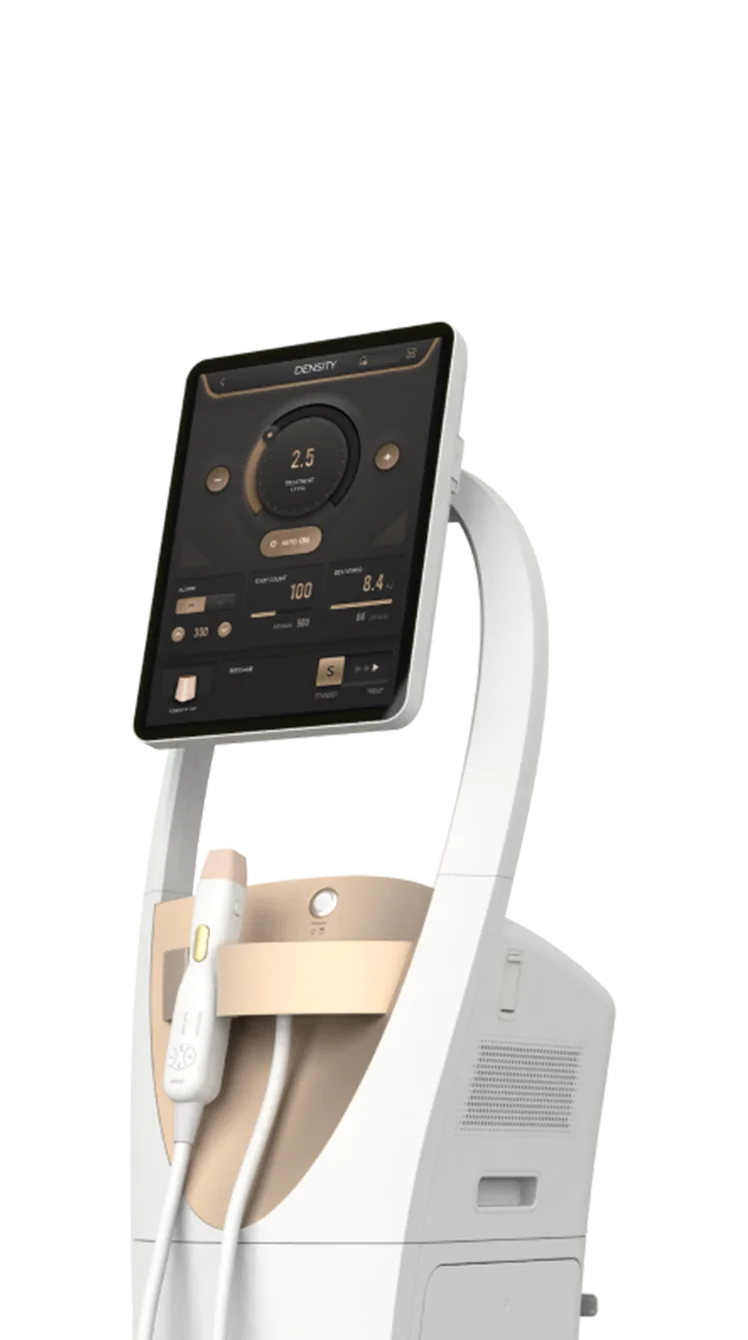
Skin booster cost reflects which of the 3 main types (HA, polynucleotide, PDLLA) you choose, the area treated, and how many of a typical 3-session course you need.
Skin booster cost in Seoul depends on which booster you choose (hyaluronic acid, polynucleotide, or PDLLA), the area treated, and how many sessions your course needs. Because plans are individualised, the clinic’s doctors confirm your cost at consultation. For patients near Hongdae (Hongik Univ.) Station, care is provided across our Seoul locations, easily reached from 홍대입구역, in English.
One-on-One guidance from a dedicated doctor, ensuring your skin is professionally monitored and treated from start to finish.
Fluent assistance in English, Japanese, and Chinese, making communication clear, respectful and comfortable for international patients.
Over 100,000 patients worldwide have received our personalized dermatological care, highlighting our expertise and reliable results.
Skin booster cost near Hongdae is shaped less by a single price tag and more by which type of booster your skin actually needs. The three main families work differently: hyaluronic-acid (HA) boosters mainly hydrate and add glow, polynucleotide (PN) boosters focus on repair and skin-quality signaling, and PDLLA boosters stimulate collagen over time. Because each targets a different goal and uses a different material, they naturally sit at different price points, and a plan that layers more than one costs more than a single type.
The second driver is the course. Most skin boosters work best as a series, commonly around 3 sessions spaced weeks apart, rather than in one visit, so patients usually budget for a course. The area treated matters too: face only versus face plus neck and under-eye changes the volume of product and the time involved, both of which affect the total.
At Reberry Clinic, skin booster care is consultation-led: the clinic’s doctors assess your skin quality first, then recommend the booster type and course and explain the cost transparently in English. For patients searching near Hongdae (Hongik Univ.) Station, care is provided across our Seoul locations (Gangnam, Myeongdong), easily reached from 홍대입구역, so cost can be planned around your travel.
Skin boosters are not one product but a category, and the material chosen is the biggest single cost variable. A hyaluronic-acid booster micro-injects cross-linked or non-cross-linked HA to draw water into the dermis for hydration and glow, and it tends to be the most accessible entry point. A polynucleotide booster uses purified DNA fragments to signal repair and improve skin quality, sitting in a mid-tier position. A PDLLA booster delivers poly-D,L-lactic acid particles that stimulate your own collagen over weeks, and ECM (hADM) options such as Re2o act as a collagen scaffold, both of which are typically higher-tier because of the material and the biological remodeling they drive. Beyond the material, cost scales with the number of vials or amount of product your area needs, how many of a roughly 3-session course you complete, and whether boosters are combined with each other or with energy devices. This is why the clinic’s doctors set a transparent, individualised cost after assessing your skin rather than quoting one fixed figure for everyone.
One Reberry Clinic, multiple Seoul-area locations. Pricing & current promotions are listed on each branch's own site — tap a clinic to view pricing & book.
Our flagship in the heart of Gangnam.
In Seoul's shopping & tourism heart.
A beauty stop between flights.
The newest Reberry Clinic — in Seoul's trend district.
ONE REBERRY CLINIC · MFDS-REGISTERED DEVICES · MULTILINGUAL CARE AT EVERY LOCATION
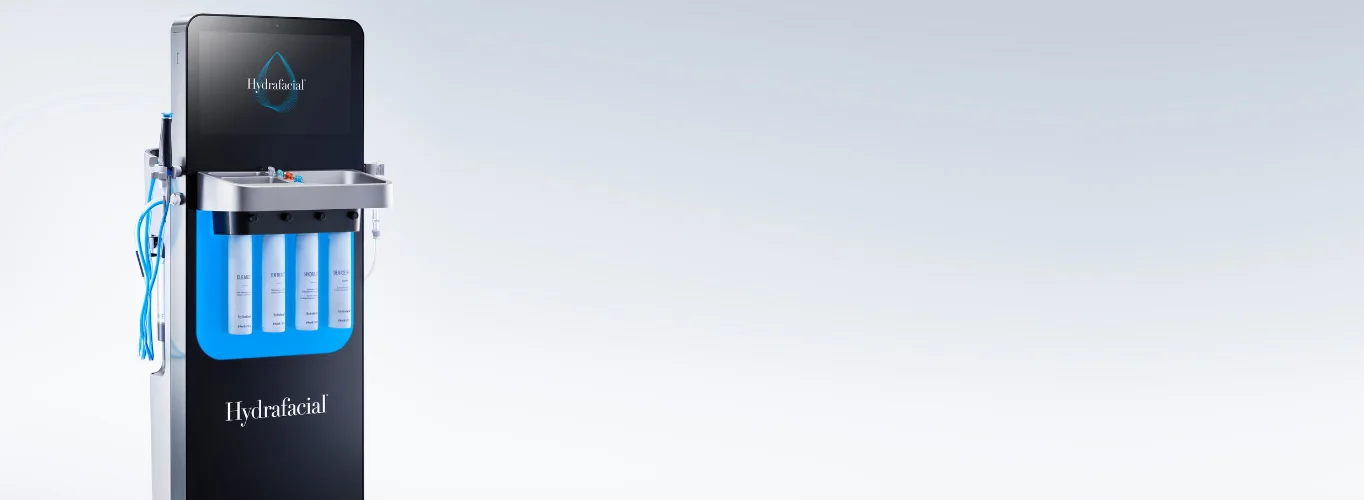
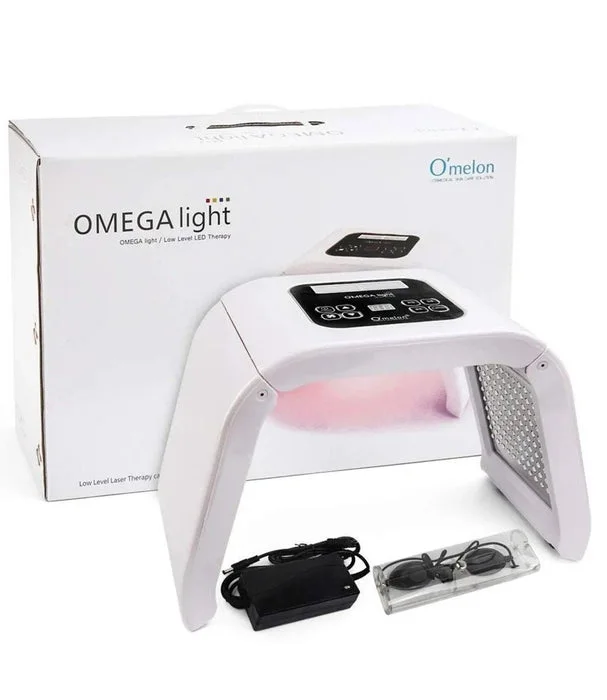
Doctors grade your skin across 4 quality markers (firmness, evenness, texture, glow), which points to the booster type and drives cost.
The plan selects among the 3 families (HA, PN, PDLLA) or an ECM scaffold, and higher-tier materials raise the per-session cost.
Treating 1 area such as the face versus adding neck or under-eye changes the amount of product used, so a larger area raises the total.
Most boosters work as a series of about 3 sessions spaced weeks apart, so cost is usually quoted as a course, not one visit.
After assessment, the clinic’s doctors give you a transparent, individualised cost in English rather than a single fixed price for everyone.

See representative outcomes from Reberry Clinic. Results build gradually and vary by individual; your plan is assessed at consultation.
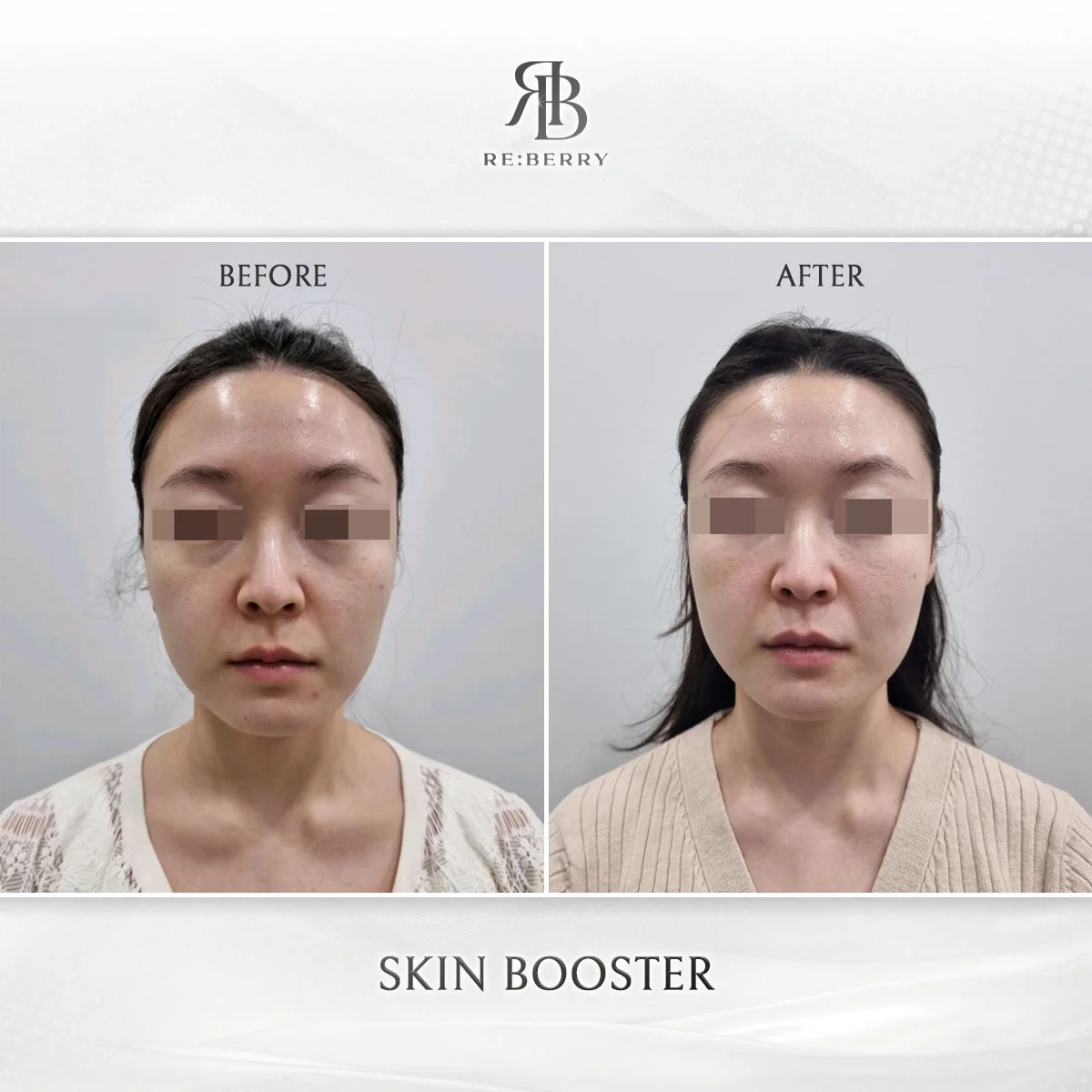
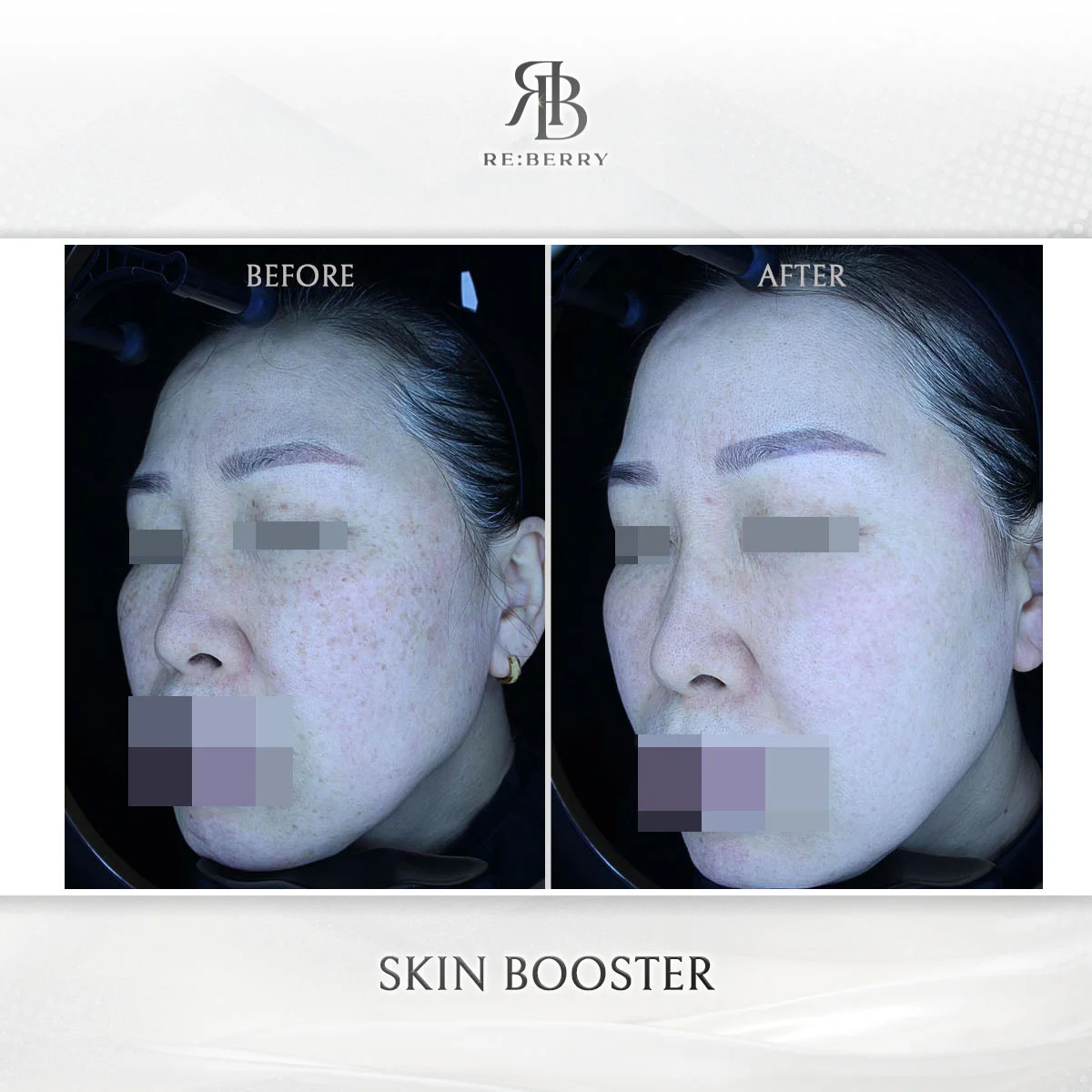
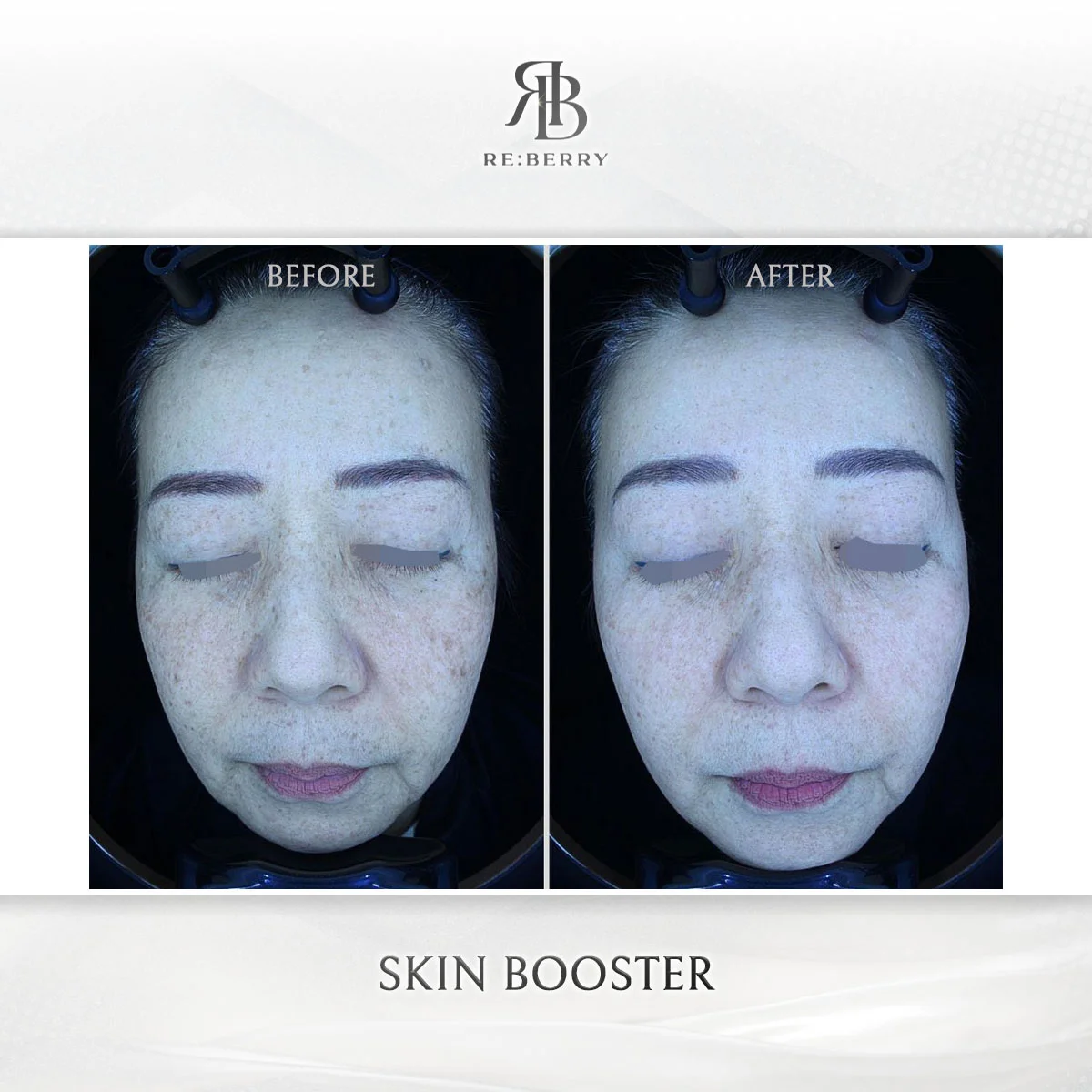
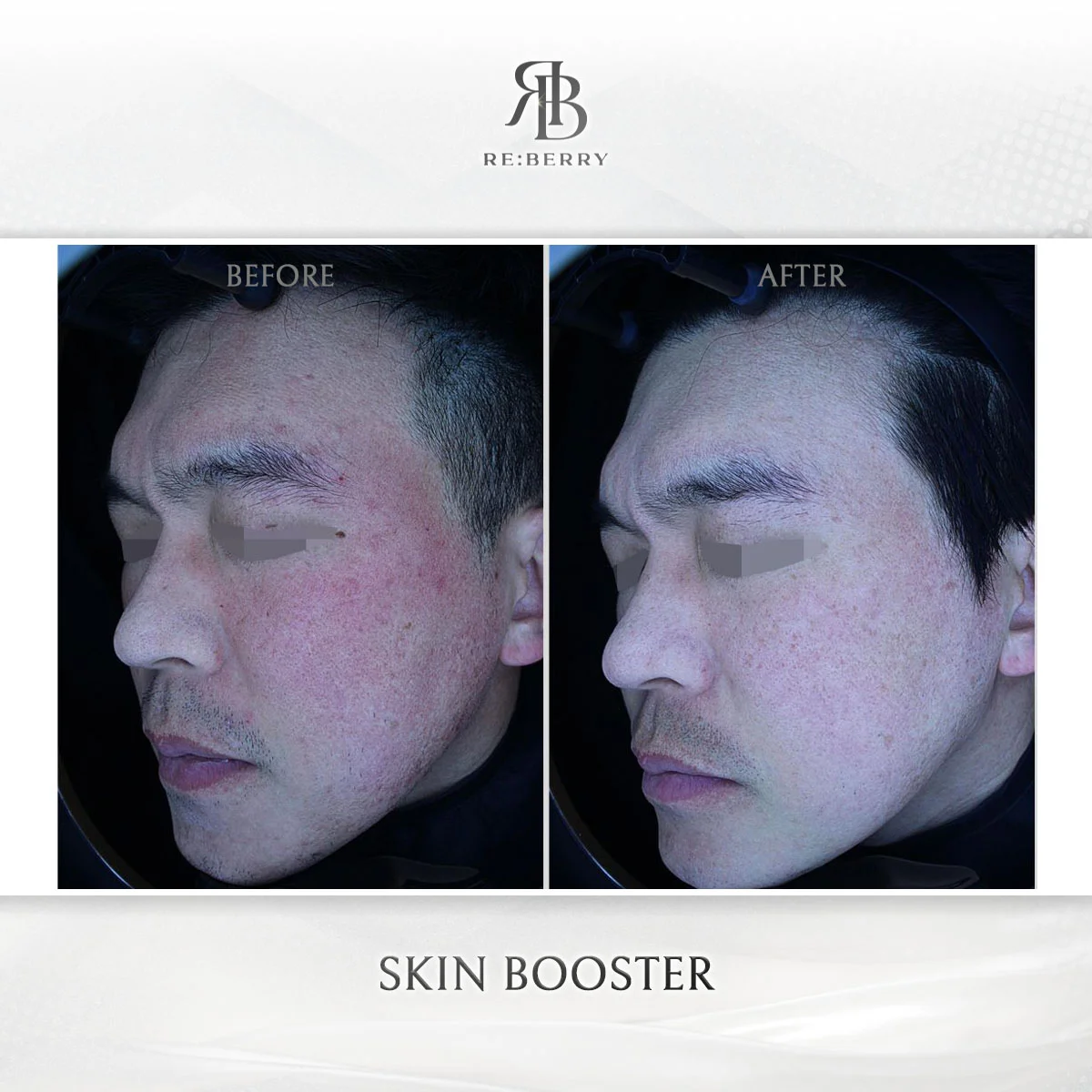
The clinic’s doctors grade your skin quality, recommend the booster type, and explain what drives the cost, in English.
Once a plan is agreed, your first session usually takes about 20 to 40 minutes depending on the booster and area treated.
Skin booster plans run as a course, so cost is mapped across the series rather than billed as a single fixed visit.
Improvement typically builds over several sessions across weeks, and your doctor reviews progress to adjust the plan and cost as needed.
Because effects fade over time, occasional maintenance and good skincare help sustain results, which is factored into long-term planning.



Skin booster cost in Seoul depends on the booster type (HA, PN, or PDLLA), the area treated, and how many of a typical 3-session course you need. Because plans are individualised, the clinic’s doctors confirm your exact cost at consultation. You can start on our glass facial skin page.
Skin boosters are a category with different materials and goals, so two patients rarely need the same plan. A hydration-led HA course costs differently from a collagen-stimulating PDLLA or ECM plan. That is why cost is set after a doctor assesses your skin rather than from a one-size-fits-all menu.
The booster type is usually the biggest factor in your cost. Hydration-led HA boosters tend to be the accessible entry point, polynucleotide sits mid-tier, and PDLLA or ECM options are typically higher tier for the material used. Your skin assessment, done at consultation, drives which family fits and what the course involves.
It depends on your main goal: hydration and glow point to HA, repair and skin quality to polynucleotide, and firmness or density to a PDLLA or ECM booster like Re2o. A consultation grades your skin and recommends the fit. You can compare options on our glass facial skin page first.
Yes, a plan that layers more than one booster type generally costs more because it addresses several skin-quality goals at once, such as hydration plus collagen. However, it is often more efficient over time. Your doctor sequences boosters so the skin is not over-stressed and explains the combined cost transparently at consultation.
Most boosters work best as a series of around 3 sessions spaced weeks apart, though PDLLA and ECM plans may use 2 to 3, so cost is usually planned as a course. The exact number depends on your skin quality and goals, which your doctor reviews and adjusts between visits.
Yes, treating the face only costs differently from adding the neck, under-eye, or decollete, because more area needs more product and time. Your doctor maps the zones at consultation so the amount used, and the cost, matches your goals. You can read about facial options on our glass facial skin page.
Generally yes, PDLLA and ECM (hADM) boosters such as Re2o tend to be higher tier than HA because they stimulate or scaffold collagen rather than mainly hydrating. They target firmness and density. Your doctor explains the difference in goal and cost so you can choose what fits your skin and budget.
Hydration from HA boosters can appear relatively quickly, while polynucleotide and collagen-led boosters build over several sessions across weeks, not after one visit. Your doctor reviews progress between sessions so the plan, and its cost, stays matched to your response and skin quality goals.
Results typically last months and then fade, so boosters are maintained rather than being a one-time fix, which is why maintenance is part of long-term cost planning. Longevity varies by booster type, area, and lifestyle. Your doctor discusses a realistic maintenance schedule and cost at consultation.
Skin boosters are widely performed and generally considered safe when a trained doctor matches the booster type and technique to your skin. A consultation screens for contraindications like active infection or pregnancy. Temporary redness, small bumps, or bruising are the usual effects, which your doctor explains before you commit.
The most common side effects are temporary redness, mild swelling, small bumps, or pinpoint bruising that usually settle within days. Serious reactions are uncommon. Your doctor reviews your medical history and medications beforehand to reduce risk and provides clear aftercare so any minor effects resolve smoothly at home.
Basic aftercare, keeping the area clean, avoiding saunas and heavy makeup for about 24 hours, and using daily sun protection, is essential and inexpensive. A supportive skin care routine helps protect results between sessions. Optional products are discussed transparently as part of planning at consultation.
Patients searching near Hongdae (Hongik Univ.) Station are cared for at our Seoul locations, Gangnam and Myeongdong, both easily reached from 홍대입구역 with full English support. A consultation there covers your booster plan and cost. You can start on our glass facial skin page.
From Hongdae (Hongik Univ.) Station, both our Gangnam and Myeongdong locations are convenient by subway, and our English-speaking team helps you choose based on your schedule. Directions and location facts are confirmed at booking. Message us on WhatsApp and we will match you to the most convenient Seoul location for your booster.
For a single session, 2 to 3 days in Seoul is comfortable, covering a consultation, the treatment, and a short review. Because boosters work best as a course, many international patients begin here and continue on return visits. Our English-speaking team helps coordinate timing and cost around your travel.
International patients can complete a booster course across one or more visits, and the clinic offers remote check-ins in English between trips so the plan and cost stay on track. Your treatment notes are kept on file for continuity. You can continue supportive skin care at home.
| HA Skin Booster | Polynucleotide (PN) Booster | PDLLA / ECM Booster | |
|---|---|---|---|
| Main goal | Hydration and glow | Repair and skin-quality signaling | Collagen stimulation and density |
| Typical tier | Usually the most accessible entry point | Often a mid-tier option | Often a higher tier for the material used |
| Sessions | Commonly a course of 3 or more | Commonly around 3 sessions | Often a short series of 2 to 3 |
| Downtime | Usually minimal, brief bumps | Usually minimal, brief marks | Usually minimal, occasional small bumps |
| Results timeline | Hydration relatively quick | Builds over the course | Builds over weeks as collagen forms |
| Cost factors | Depends on vials and area | Depends on product and sessions | Depends on material and sessions |
Real verified reviews from our Google Business Profile, across all Reberry Clinic locations.
PULLED LIVE FROM GOOGLE · GANGNAM · MYEONGDONG · INCHEON AIRPORT
Your treatment is planned and performed by experienced, MFDS-registered doctors across our Seoul-area clinics, with multilingual support for international patients.
Flagship clinic · KOL for leading lifting & regenerative devices · Featured in Authority Magazine (2026)

Multilingual tourist care beside Myeongdong Cathedral

Fast, effective care 20 minutes from the terminals
Message us on WhatsApp for a free consultation in English about the right skin booster and a transparent, individualised cost plan at our Seoul locations near Hongdae Station.