



Gangnam
Dr. Yoon-Gon Ryu
Aesthetic Medicine Specialist
Flagship clinic · for leading lifting & regenerative devices · Featured in Authority Magazine (2026)


Choosing a good clinic and planning 1 to 2 days for injectables and lifting or 3 to 7 days for laser resurfacing lets your Seoul trip match what your skin actually needs.
To choose a skin-treatment clinic and plan your days in Seoul, Korea, look for a doctor-led clinic with English support and a clear downtime estimate, then match your itinerary to the procedure: about 1 to 2 days for injectables and energy lifting, and 3 to 7 days for ablative laser resurfacing that needs recovery.
One-on-One guidance from a dedicated doctor, ensuring your skin is professionally monitored and treated from start to finish.
Fluent assistance in English, Japanese, and Chinese, making communication clear, respectful and comfortable for international patients.
Over 100,000 patients worldwide have received our personalized dermatological care, highlighting our expertise and reliable results.
Choosing a good skin-treatment clinic in Seoul and planning your days come down to the same question: matching a doctor-led, English-supporting clinic to a realistic itinerary. A clinic worth booking assesses your skin at consultation, tells you the exact downtime of each option, and schedules around your travel dates rather than pushing a fixed package. That transparency is what lets you plan days confidently, because the number you need is set by the procedure, not by a menu.
Once you have a clinic that grades your skin honestly, the day count follows the treatment. Low-downtime treatments such as injectables, collagen-stimulating boosters, and energy-based lifting usually fit into 1 to 2 days, leaving time for a consultation, the session, and a short review before you sightsee or fly. Ablative laser resurfacing and deeper peels need a healing window, so 3 to 7 days lets redness and flaking settle before a long flight. Courses for pigmentation, skin quality, or lifting often run 2 to 4 sessions spaced weeks apart, so many international patients begin in Seoul and finish across return visits.
At Reberry Clinic, itinerary planning is consultation-led, doctor-supervised, and handled in English, with settings adapted for diverse and Asian skin. Care is provided across our Seoul locations (Gangnam, Myeongdong), so a good clinic first checks what your skin needs, then maps it to the days you actually have in Seoul, Korea. You can review the range of options on our skin care page before you plan.
Two things decide a smart plan: the clinic’s judgement and the treatment’s downtime. A good Seoul clinic is doctor-led, offers a real consultation before any procedure, explains cost qualitatively rather than quoting a flat rate blind, and tailors energy settings to your skin tone, which matters because Asian and darker skin carries a higher chance of post-inflammatory pigmentation. Those are the signals to weigh over marketing claims. The day count then follows recovery biology. Injectables and boosters work beneath the surface without breaking the skin barrier, so redness usually settles within hours to a day and 1 to 2 days is enough. Energy-based lifting such as micro-focused ultrasound or radiofrequency stimulates deep collagen with minimal surface disruption, so most patients resume normal activity the same or next day while results build over 2 to 6 months. Ablative fractional laser and deeper peels injure the outer skin layers to trigger renewal, producing redness and flaking that generally need 3 to 7 days before you look travel-ready. Courses of 2 to 4 sessions are staged across trips rather than back-to-back. Because these timelines vary so much, a good clinic estimates your days after assessing the specific plan, not by applying one figure to every patient.
One Reberry Clinic, multiple Seoul-area locations. Pricing & current promotions are listed on each branch's own site — tap a clinic to view pricing & book.
Our flagship in the heart of Gangnam.
In Seoul's shopping & tourism heart.
A beauty stop between flights.
The newest Reberry Clinic — in Seoul's trend district.
ONE REBERRY CLINIC · MFDS-REGISTERED DEVICES · MULTILINGUAL CARE AT EVERY LOCATION
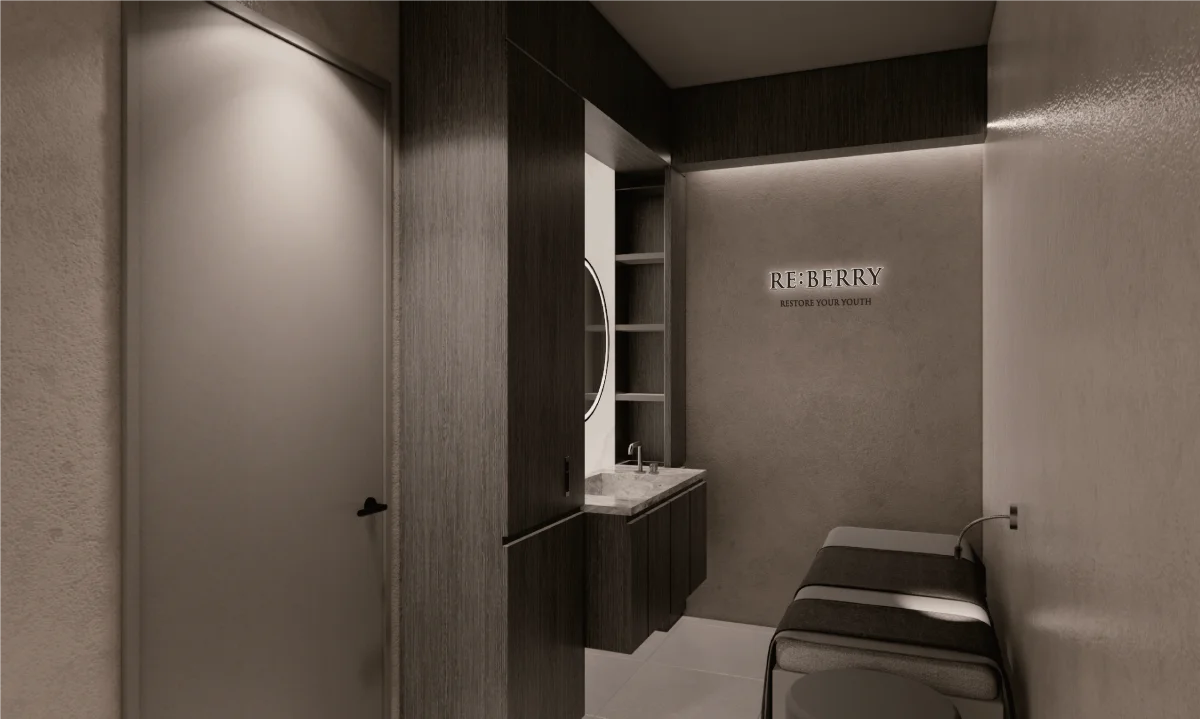

Look for a clinic that runs a real consultation before any procedure and offers English support, so your plan is doctor-led from day 1.
A good clinic tells you the exact downtime per option, from 0 to about 7 days, so you can match your itinerary before booking flights.
For a 2 to 3 day trip choose single-visit options; reserve ablative resurfacing, with 3 to 7 days of healing, for a longer stay.
Place higher-downtime steps early in the trip and keep low-downtime toning or boosters in the final 1 to 2 days before flying.
Session-based plans run 2 to 4 times, weeks apart, so you can begin in Seoul and continue on return trips rather than one long stay.
Before-and-after photos are being updated.
The clinic’s doctors grade your skin in English and map which treatments fit your goals and how many days, from 1 to 7, each needs.
Most non-invasive sessions take about 20 to 60 minutes, so a treatment day usually leaves time for other Seoul plans.
Single treatments are one visit, while courses of 2 to 4 sessions are staged across trips, so your days are mapped to the plan.
Some effects show within days, while collagen and lifting results build over 4 to 12 weeks, which shapes when return visits are scheduled.
A short review before you leave and remote English follow-ups afterward keep the plan on track between visits and after you fly home.



Choose a doctor-led clinic that runs a real consultation, explains each treatment’s downtime clearly, tailors settings to your skin tone, and offers English support. Avoid clinics that promise a flawless outcome or quote a flat price without assessing you. You can review treatment options first on our skin care page before booking.
For most non-invasive treatments, 1 to 2 days is enough since they are single-visit with little downtime, while ablative laser resurfacing needs about 3 to 7 days of healing. The exact number depends on the modalities your consultation selects. A good clinic gives you this estimate before you book flights, so your itinerary matches your plan.
Injectables, HydraFacials, HIFU tightening, and picosecond laser toning are usually single-visit with little to no social downtime, so they fit a 2 to 3 day trip. These suit patients wanting a refresh before an event, such as a HydraFacial, without dedicating extra recovery days in Seoul.
Ablative fractional CO2 resurfacing needs the most, with roughly 3 to 7 days of visible surface healing as skin re-epithelializes. It suits a longer trip or patients happy to begin in Seoul and finish healing at home. Non-ablative laser treatment options generally need far fewer recovery days.
Ask who performs the treatment, whether a doctor consults you first, what the exact downtime is, how settings are adjusted for your skin tone, and how cost is determined. A clinic that answers these clearly and in English, rather than promising perfect results, is a safer choice for an international patient planning a trip.
Usually not fully, because course-based treatments such as polynucleotide boosters or RF microneedling need sessions spaced 2 to 4 weeks apart. Most international patients start the first session in Seoul and continue on return trips. A skin booster course is a common example a clinic stages across visits.
Often yes, because many non-invasive sessions take only 20 to 60 minutes, so a doctor can combine compatible low-downtime treatments within a short visit. A good clinic sequences them so the skin is not over-stressed, keeping higher-downtime steps early and gentler ones nearer your flight home.
HIFU ultrasound tightening usually has minimal downtime, with fewer than 5 percent of patients in clinical work reporting transient redness or swelling, so most return to normal activity the same day. That makes it a strong choice for a short Seoul trip. You can review energy-based ultrasound lifting at consultation.
Flying within about a day is generally fine for most non-invasive skin treatments, since they are surface-sparing to minimally invasive. Ablative laser resurfacing needs a few extra days before travel is comfortable. Cabin air is drying, so moisturise and protect treated skin, and follow the aftercare your doctor provides.
Single treatments may need just one visit, while course-based treatments typically run 2 to 4 sessions spaced weeks apart. The number depends on your skin goals and how your skin responds, which your doctor grades at consultation and reviews between sessions rather than fixing in advance.
Yes, because Asian and darker skin has a higher risk of temporary post-inflammatory pigmentation, so choosing a clinic experienced with your skin tone matters. Such clinics use conservative settings and emphasise sun protection, which can add a day or two of careful aftercare but makes a safer, better-planned schedule.
Some effects, like a HydraFacial glow, appear within days, but collagen-based results from tightening or boosters build gradually over 4 to 12 weeks, so you may leave Seoul before the full effect shows. A good clinic explains which of your chosen treatments give quick versus gradual results at consultation.
For a glow before an event, low-downtime treatments a few days ahead work well, while injectables or boosters benefit from a 1 to 2 week buffer for any minor bruising. Avoid ablative resurfacing close to an event because of its 3 to 7 day healing. Your doctor advises exact timing at consultation.
Downtime is the biggest factor, since it is set by how deeply a treatment works and whether it breaks the skin surface. Non-ablative options need the fewest days and ablative resurfacing the most. Your treatment choice, agreed at consultation, therefore drives your trip length more than the clinic you pick.
International patients can complete a course across one or more visits, and a good clinic offers remote check-ins in English between trips so the plan stays on track. You can continue supportive skin care at home, and your treatment notes are kept on file for continuity across return visits.
How to weigh single-visit treatments, multi-session courses, and ablative laser resurfacing when choosing a clinic and planning your days.
| Single-Visit Treatments | Multi-Session Course | Ablative Laser Resurfacing | |
|---|---|---|---|
| Examples | Injectables, HydraFacial, HIFU, laser toning | Polynucleotide boosters, RF microneedling | Fractional CO2 resurfacing |
| Visits needed | One visit | Several sessions over weeks | One session, longer healing |
| Typical days in Seoul | About 1 to 2 days is comfortable | Start now, continue on return trips | About 3 to 7 days of surface healing |
| Downtime | None to about a day | 24 to 72 hours per session | Redness and flaking for several days |
| What to check at the clinic | That combinations are doctor-sequenced safely | That the interval and course length are explained | That settings suit your skin tone before resurfacing |
| Best for | Short trips and pre-event refresh | Ongoing skin quality and firmness | Texture, scars, deeper resurfacing |
Real verified reviews from our Google Business Profile, across all Reberry Clinic locations.
PULLED LIVE FROM GOOGLE · GANGNAM · MYEONGDONG · INCHEON AIRPORT
Your treatment is planned and performed by experienced, MFDS-registered doctors across our Seoul-area clinics, with multilingual support for international patients.
Flagship clinic · for leading lifting & regenerative devices · Featured in Authority Magazine (2026)

Multilingual tourist care beside Myeongdong Cathedral

Fast, effective care 20 minutes from the terminals
Message us on WhatsApp for a free consultation in English to choose the right treatment and map it to realistic days in Seoul.