



Gangnam
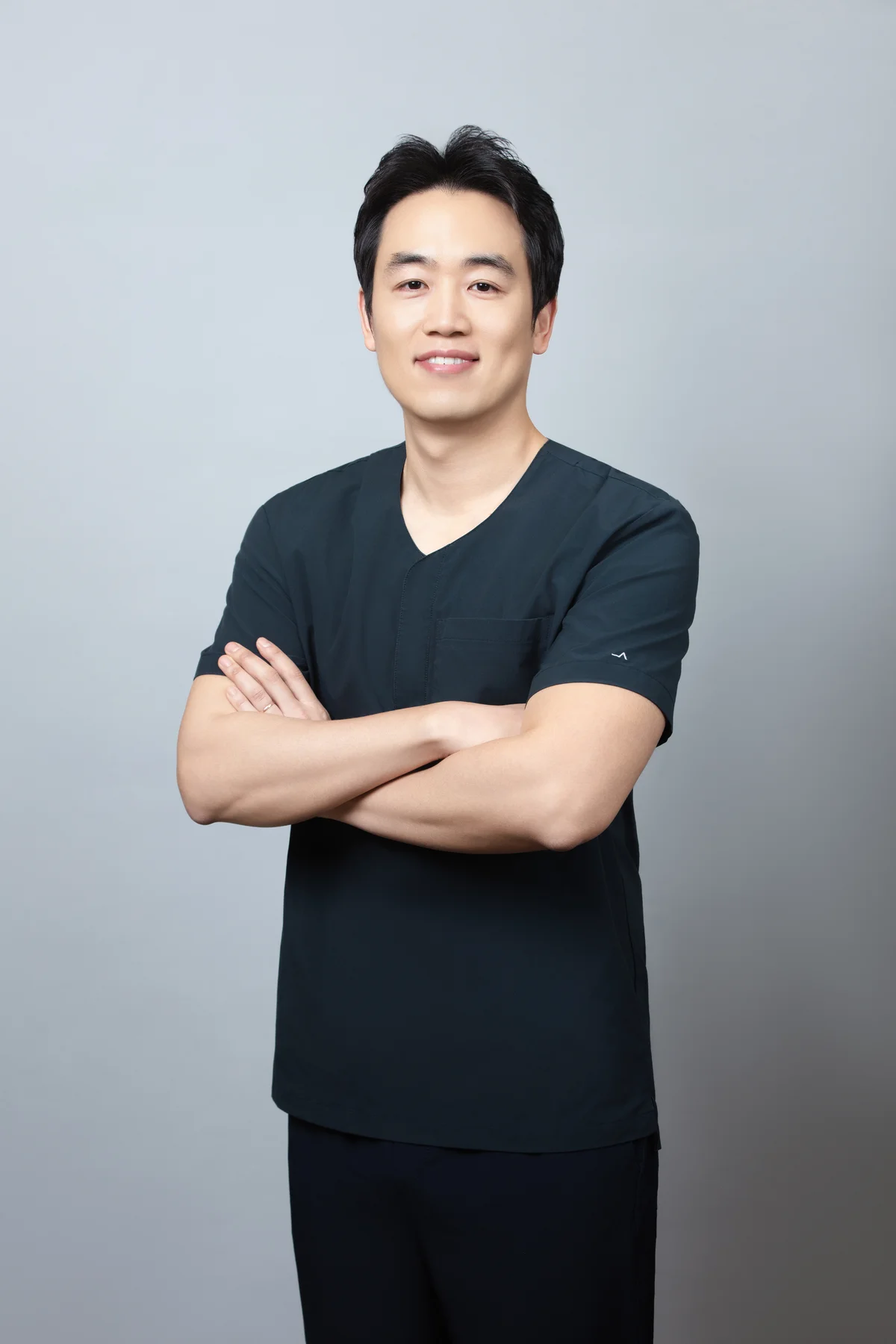
Dr. Yoon-Gon Ryu
Aesthetic Medicine Specialist
Flagship clinic · KOL for leading lifting & regenerative devices · Featured in Authority Magazine (2026)

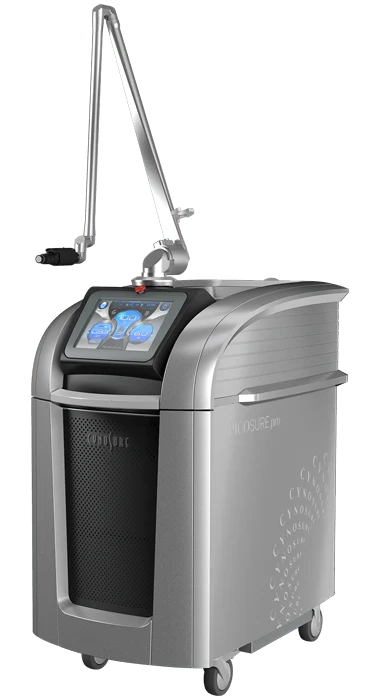
Low-fluence 1064 nm Q-switched Nd:YAG toning is designed for gentle, gradual fading across a series of 5 to 10 sessions with careful energy control.
Laser toning in Korea is generally safe when it uses low-fluence 1064 nm Q-switched Nd:YAG settings, spaced sessions, and a proper diagnosis first. It is not without risk: on melanin-rich skin the main concerns are post-inflammatory hyperpigmentation and, with too much cumulative energy, mottled hypopigmentation. Conservative protocols and an initial consultation keep those risks low.
One-on-One guidance from a dedicated doctor, ensuring your skin is professionally monitored and treated from start to finish.
Fluent assistance in English, Japanese, and Chinese, making communication clear, respectful and comfortable for international patients.
Over 100,000 patients worldwide have received our personalized dermatological care, highlighting our expertise and reliable results.
Laser toning is a gentle, low-fluence laser method that delivers many soft passes to gradually fade melasma, dull tone, and uneven pigment. It typically uses a 1064 nm Q-switched Nd:YAG laser at low energy, so heat stays minimal and the skin is coaxed rather than forced to shed pigment over a series of sessions.
Because energy is deliberately kept low, laser toning suits melasma-prone and Asian skin better than a single high-energy pass, which risks provoking pigment. The trade-off is patience: results build across weeks, not in one visit. This is precisely why it became popular in Korea, where clinics treat a high volume of Fitzpatrick III to V skin.
At Reberry Clinic, laser toning is available at our Seoul locations (Gangnam, Myeongdong) and near Incheon Airport, with English-speaking staff who confirm your pigment type and candidacy before any treatment begins.
Laser toning relies on a 1064 nm wavelength that penetrates deeper and is absorbed by melanin, delivered in nanosecond Q-switched pulses at low fluence, usually with a large 6 to 10 mm spot. The low energy sub-shatters melanin into fine particles that the body clears gradually, instead of the visible frosting seen with high-energy spot removal.
This restraint is the core safety principle: minimal heat means less inflammation, and less inflammation means less risk of triggering new pigment. However, repeated high cumulative energy over many aggressive sessions can deplete melanocytes and cause mottled, guttate hypopigmentation, so a skilled operator balances frequency, fluence, and spacing rather than chasing fast clearance.
One Reberry Clinic, multiple Seoul-area locations. Pricing & current promotions are listed on each branch's own site — tap a clinic to view pricing & book.
Our flagship in the heart of Gangnam.
In Seoul's shopping & tourism heart.
A beauty stop between flights.
The newest Reberry Clinic — in Seoul's trend district.
ONE REBERRY CLINIC · MFDS-REGISTERED DEVICES · MULTILINGUAL CARE AT EVERY LOCATION
The doctor confirms in the 1st visit that your pigment is suited to toning, distinguishing melasma from other marks, before selecting low-fluence settings.
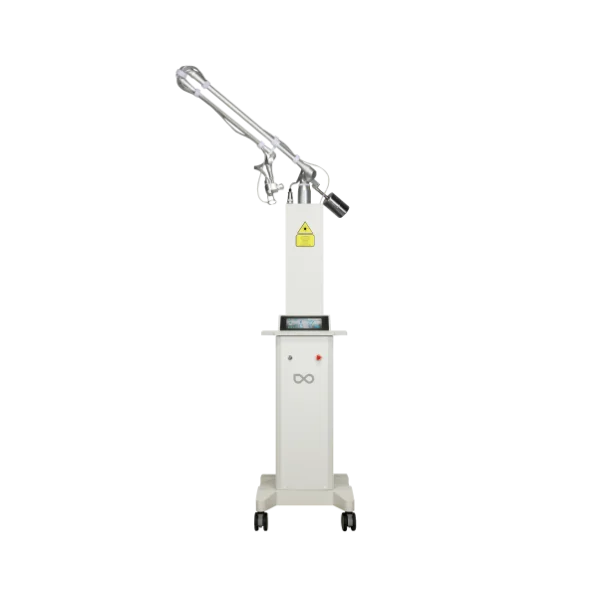
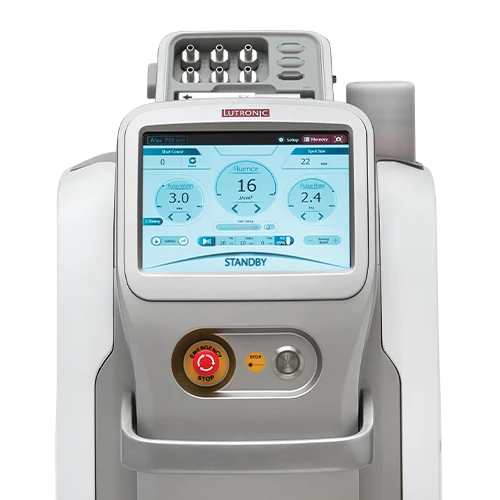
A 1064 nm Q-switched Nd:YAG laser is set to low fluence with a 6 to 10 mm spot to keep heat and inflammation minimal.
Around 8 to 10 gentle passes are applied so melanin breaks into fine particles gradually, avoiding the frosting of high-energy lasers.
Sessions are usually spaced 1 to 2 weeks apart across a series of 5 to 10, limiting cumulative energy on the skin.
Each of the 5 to 10 visits is reviewed for any lightening or rebound, and treatment is paused if mottled hypopigmentation begins to appear.
Daily SPF and gentle skincare run throughout, since sun exposure drives more than 50 percent of melasma relapse.
Reberry Clinic · Prices verified: Oct 2026
| Clinic | Price (KRW) |
|---|---|
| GangnamLaser Toning | from₩100,000 |
| MyeongdongGenesis Toning 1 Session | from₩100,000 |
| Incheon AirportLaser Toning Trial (Revlite or PicoSure, 1 Session) | from₩99,000 |
VAT excluded · Treatment packages differ by clinic — see each clinic page for its full menu · Confirmed after consultation
See representative outcomes from Reberry Clinic. Results build gradually and vary by individual; your plan is assessed at consultation.
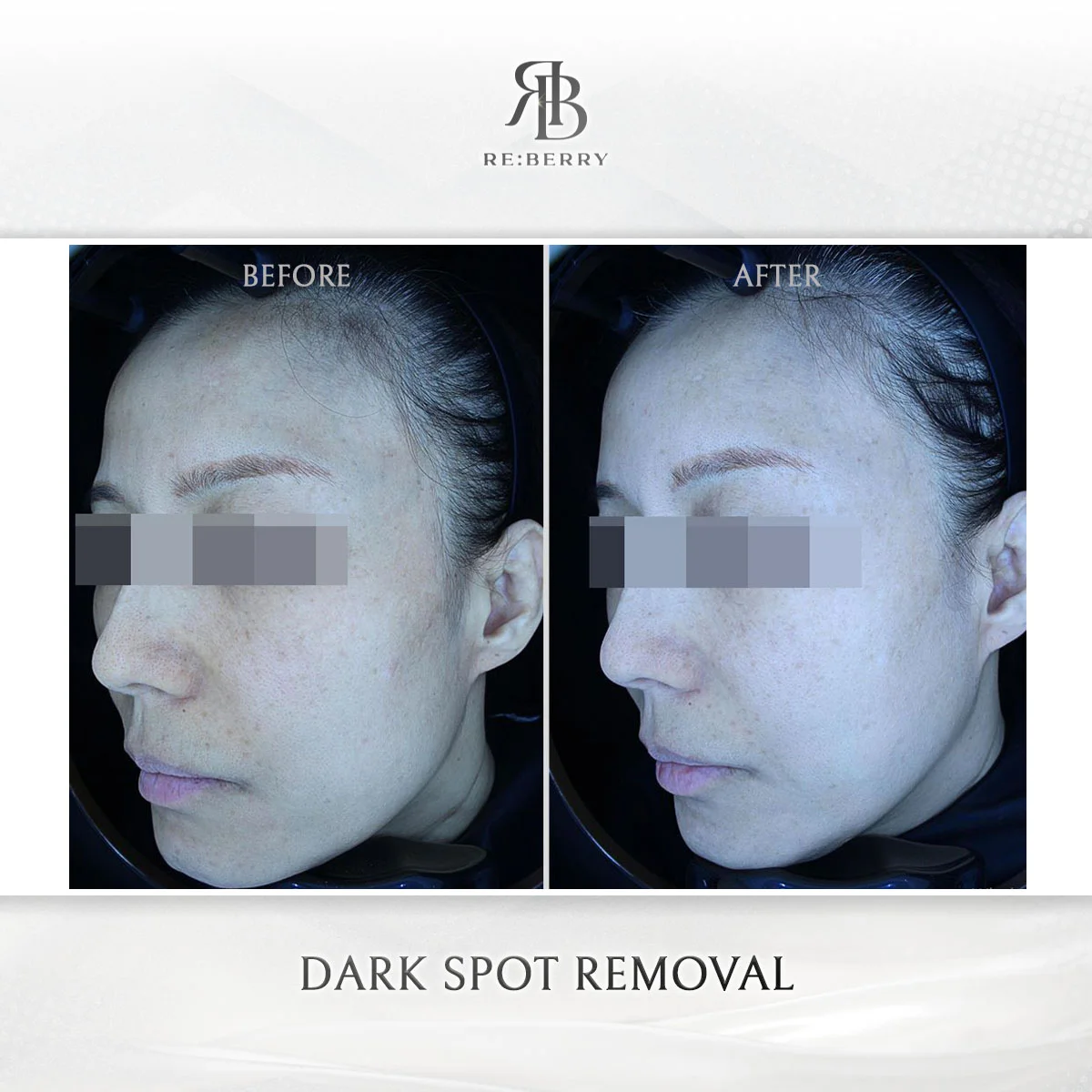
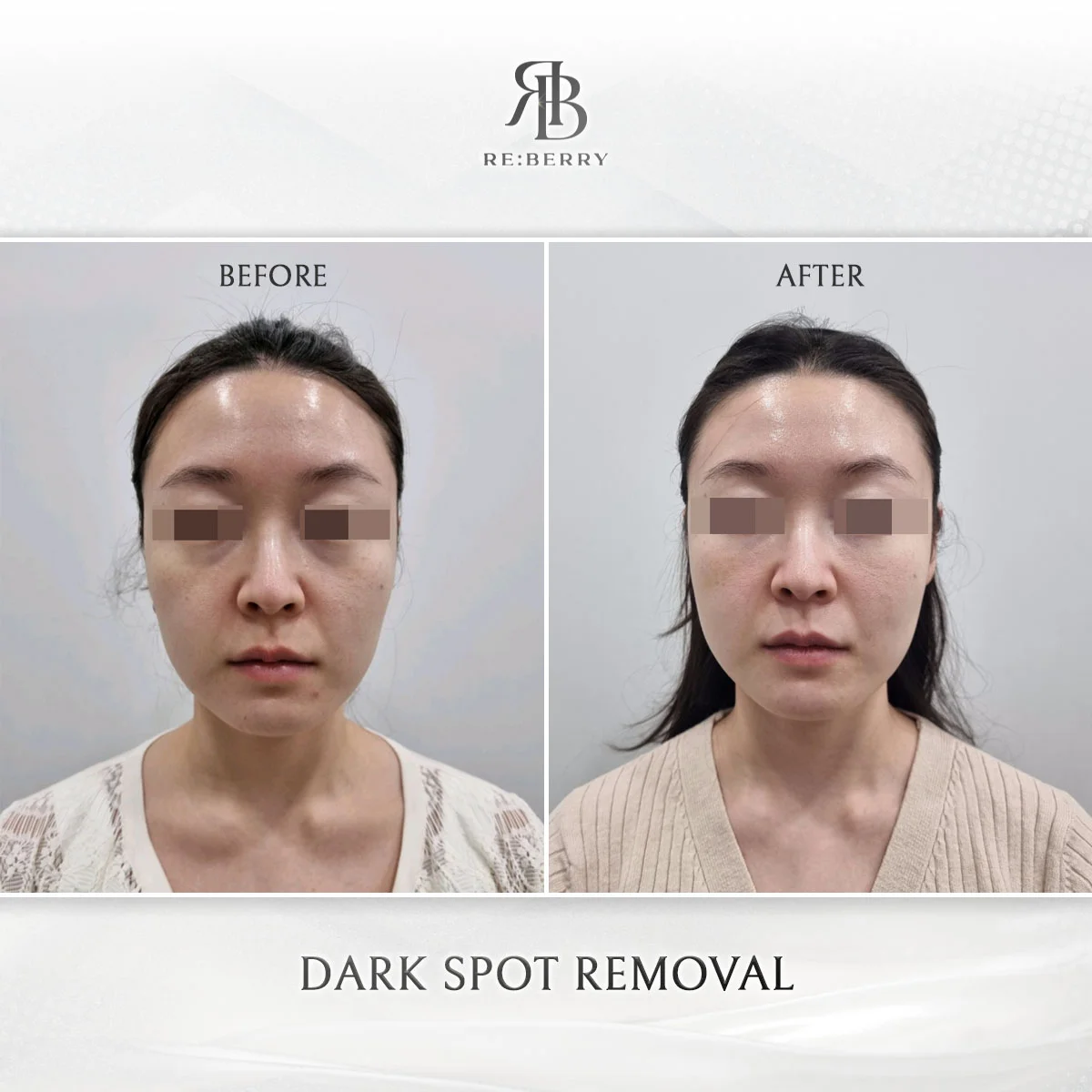
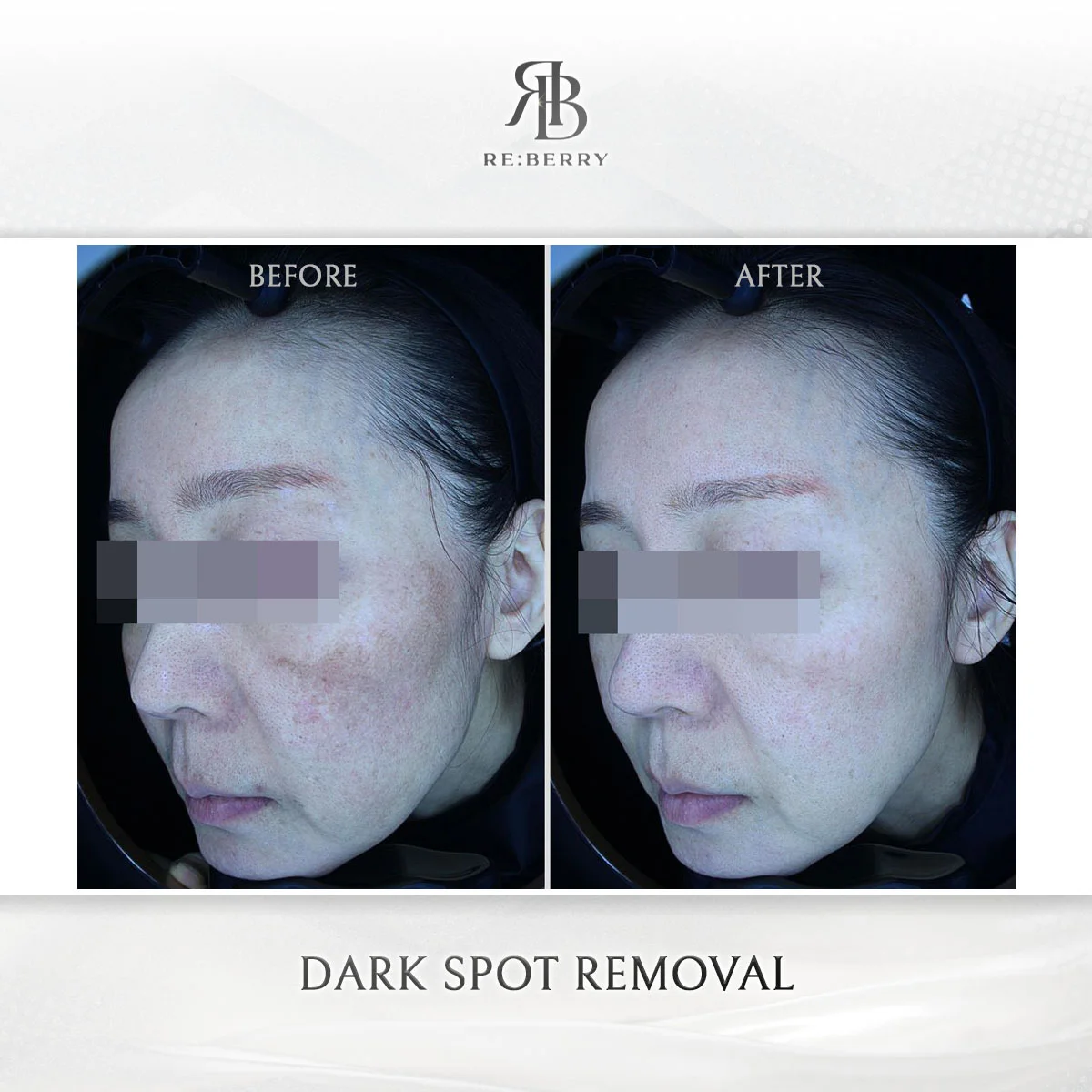
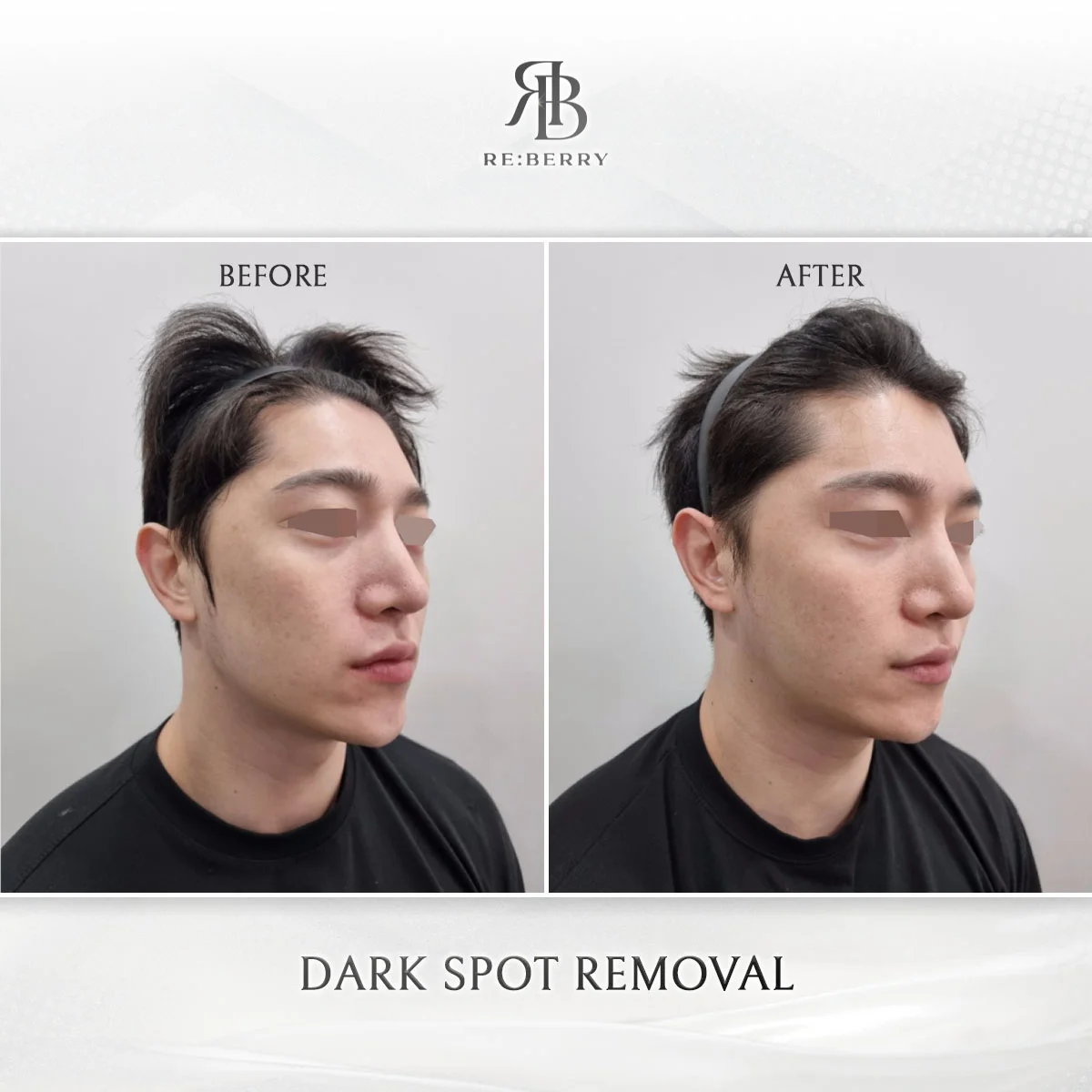
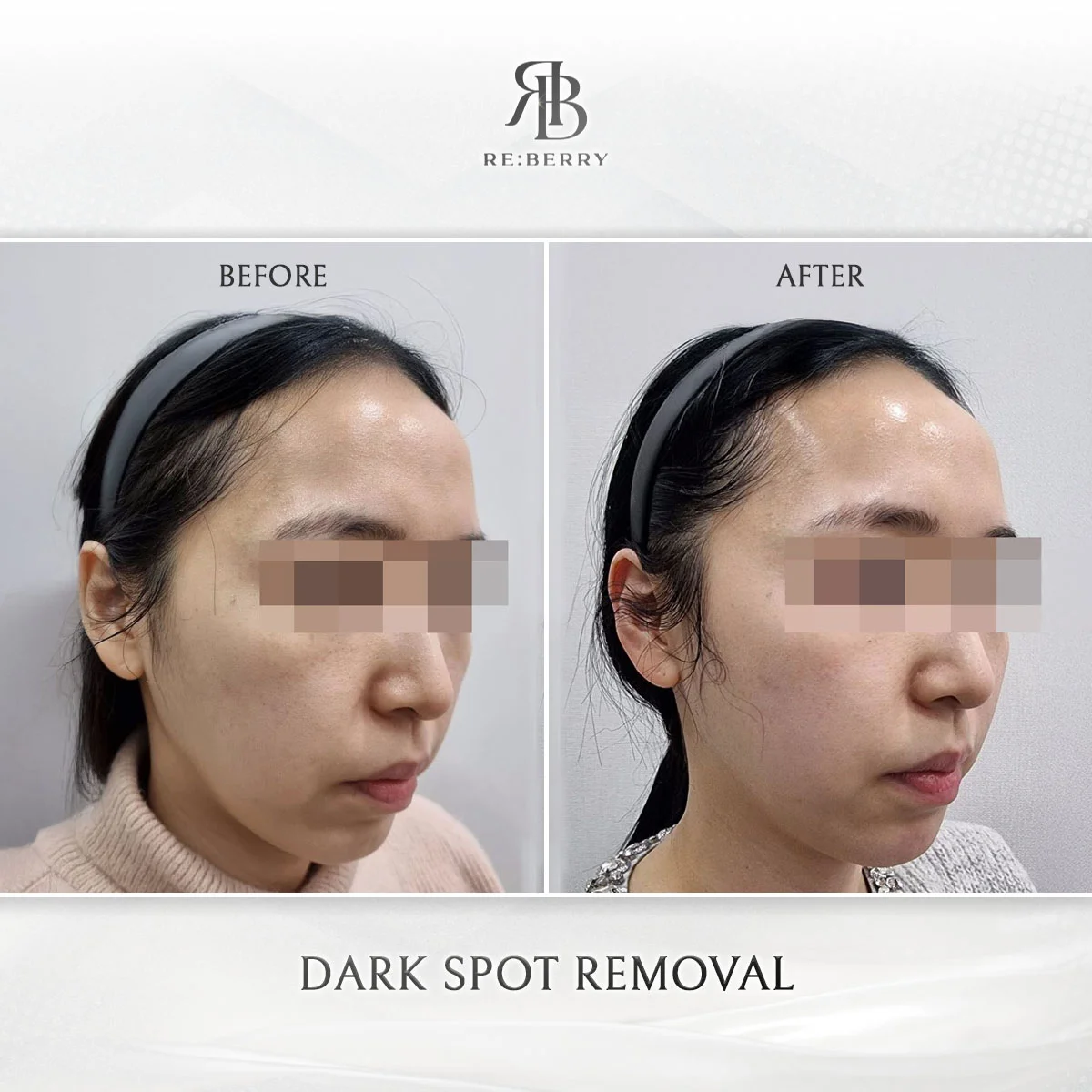
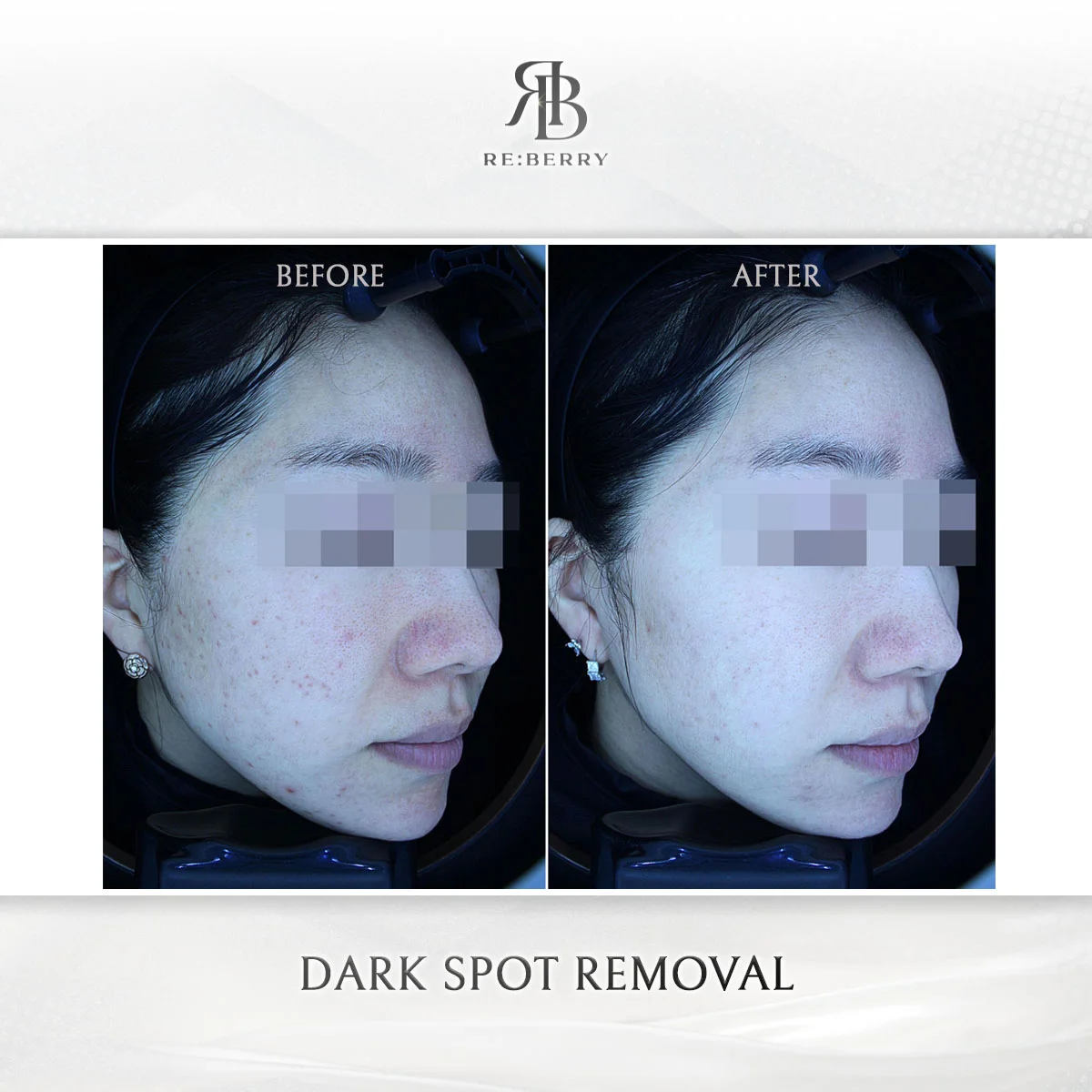
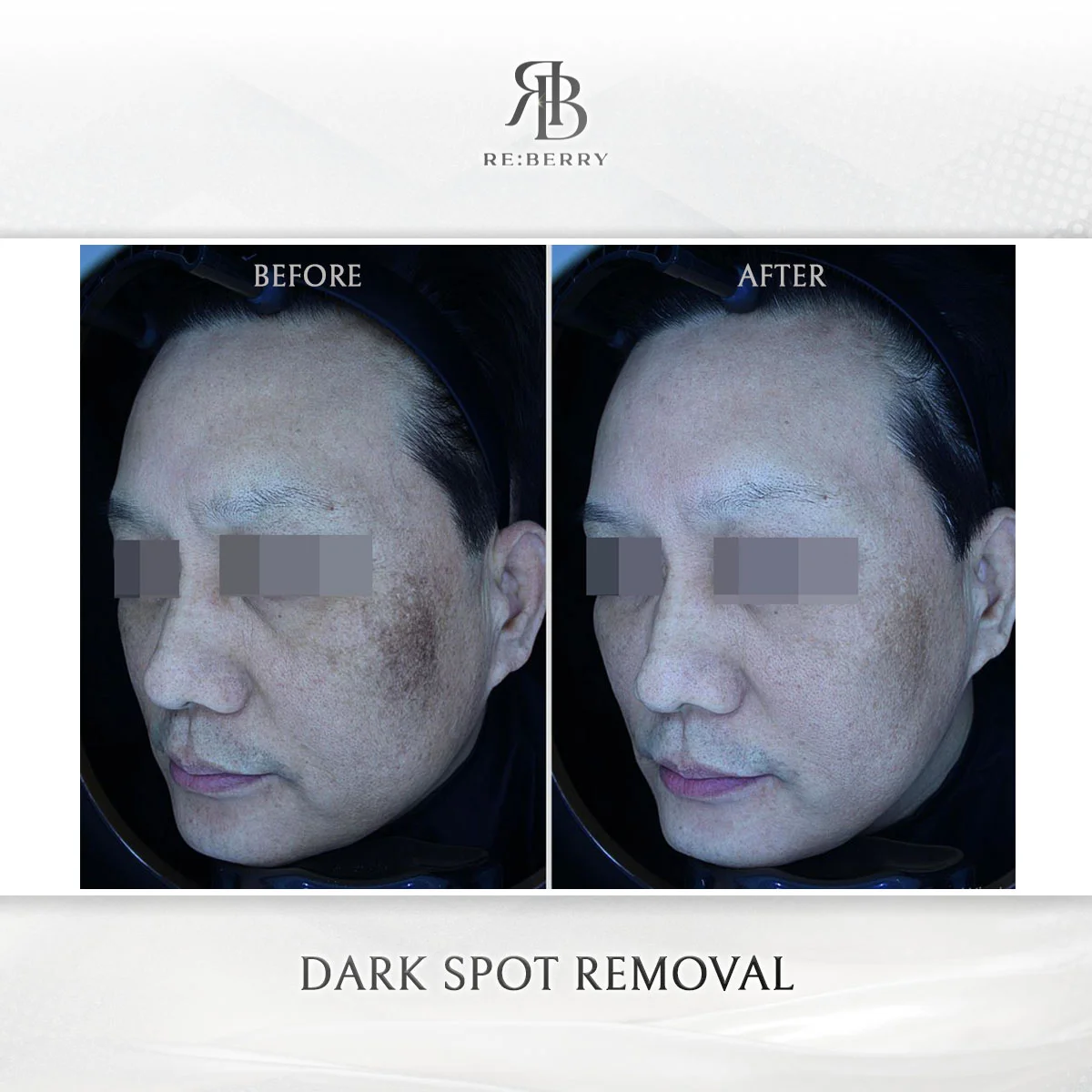
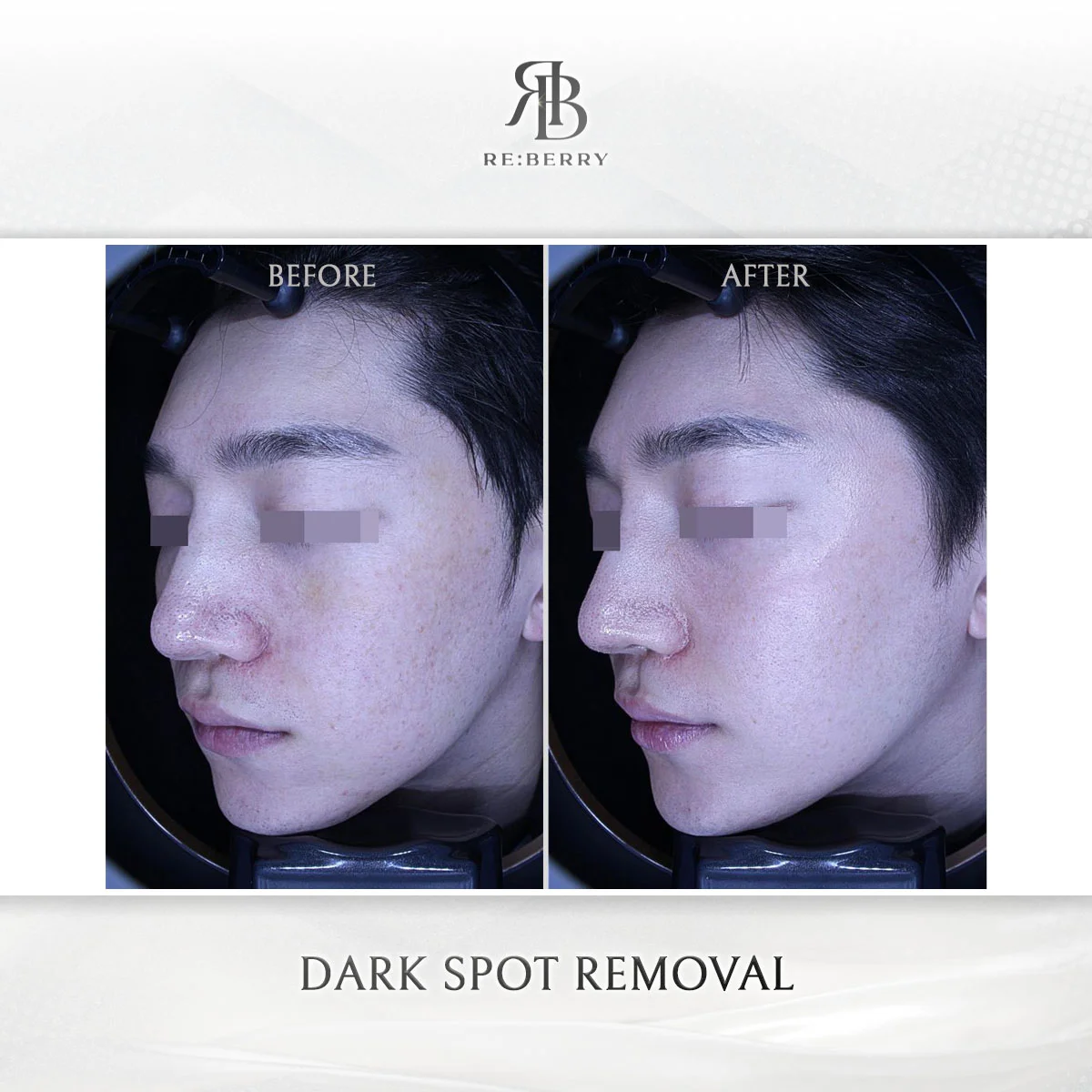
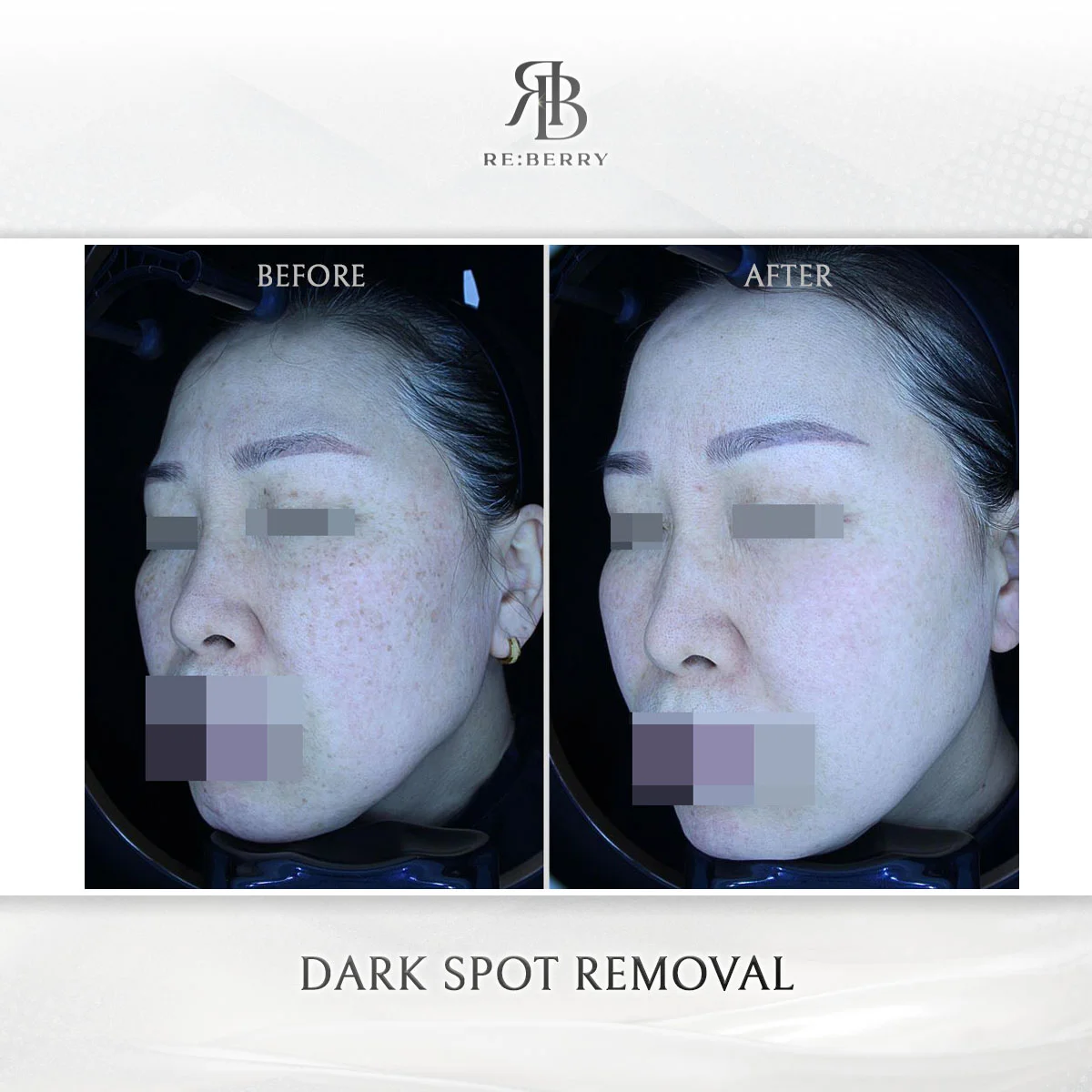
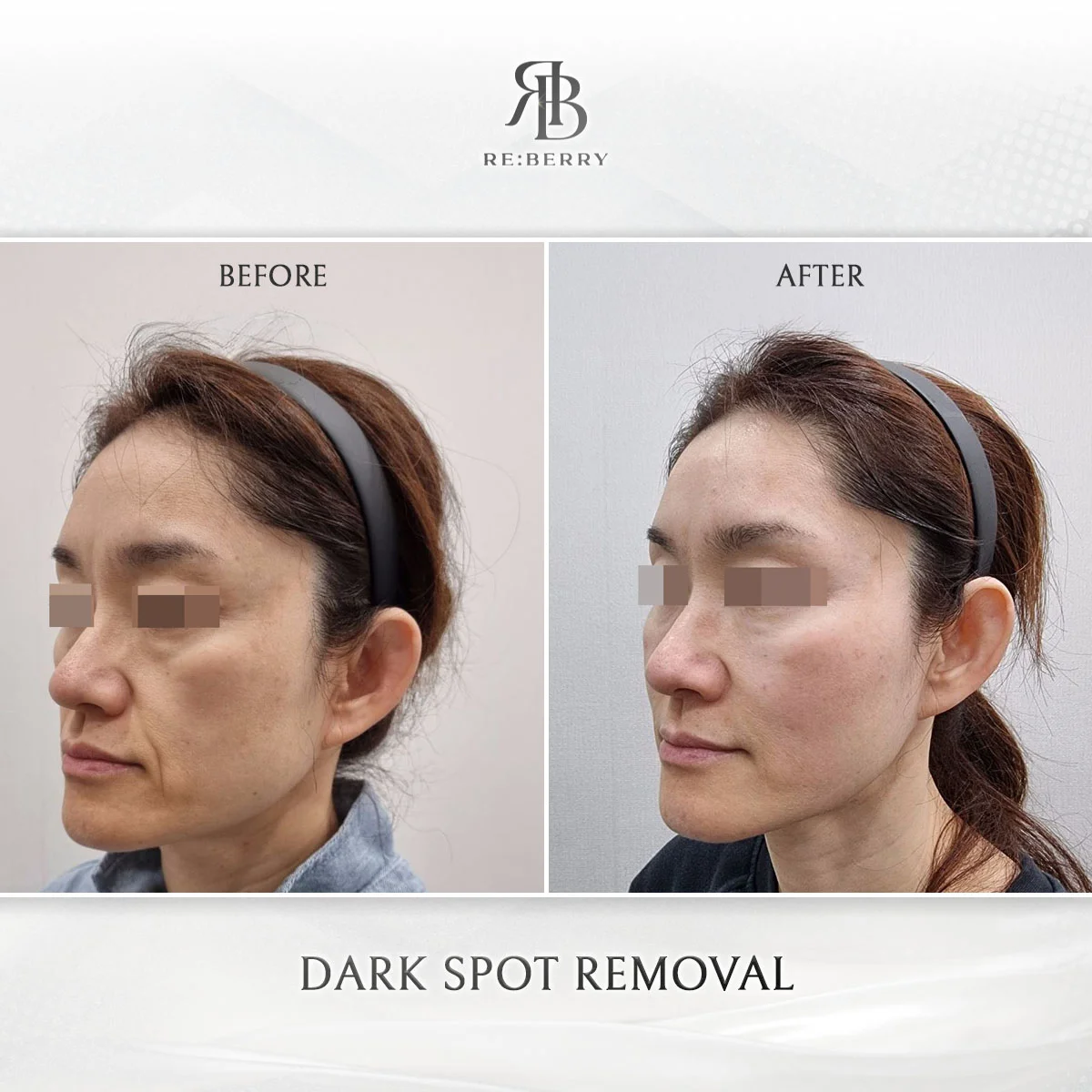
The clinic’s doctor confirms your pigment type suits toning and reviews history, medications, and sun habits before starting.
A session is quick, usually 15 to 20 minutes, with little to no numbing needed because the energy is low.
Sessions are spaced 1 to 2 weeks apart across a series of 5 to 10, depending on your response.
Fading builds gradually over several weeks, with clearest improvement visible after multiple sessions rather than one.
Daily SPF and periodic maintenance help hold results, since melasma can return with sun, heat, or hormones.
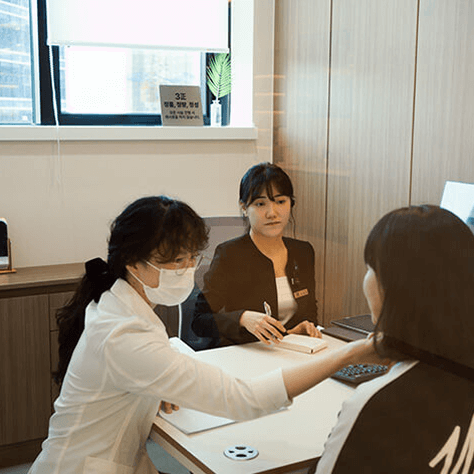
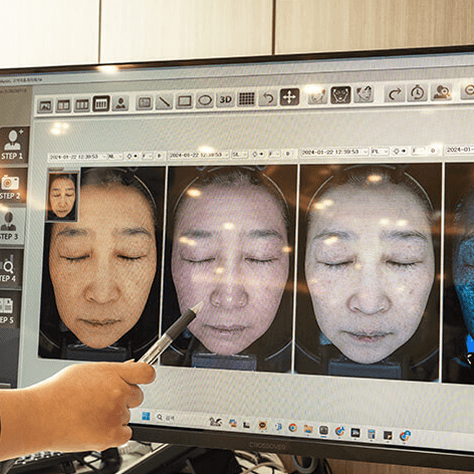

Yes, it is generally safe when it uses low-fluence 1064 nm Q-switched Nd:YAG settings and spaced sessions after a proper diagnosis. No treatment is without risk, so clinics keep energy conservative to limit pigment reactions. See the wider dark spot removal approach for context.
The two main risks are post-inflammatory hyperpigmentation, where skin darkens instead of fading, and mottled hypopigmentation from too much cumulative energy over many aggressive sessions. Both are limited by low fluence, larger spot sizes, spaced visits, and careful monitoring at each appointment on melanin-rich skin.
Most patients feel only a mild warm, tingling sensation because the energy is deliberately low. No numbing is usually needed for a standard toning session. This gentle feel is part of why toning suits sensitive, melasma-prone skin better than high-energy pigment lasers.
Laser toning usually needs a series of 5 to 10 sessions spaced 1 to 2 weeks apart, because it fades pigment gradually rather than in one pass. Your exact number is planned at your consultation based on your pigment and response.
Downtime is minimal, often just a brief flush that settles within hours, so most people return to work and normal activity the same day. Makeup can usually be applied soon after. This low-downtime profile makes toning convenient for busy and traveling patients.
If energy is too high or sessions too frequent, toning can provoke post-inflammatory hyperpigmentation, which is why conservative settings matter. A careful protocol with a patch test and monitoring reduces this. Progress is reviewed each visit so the doctor can slow down at the first sign of rebound.
Laser toning suits Fitzpatrick III to V, melasma-prone, and Asian skin because its low heat limits inflammation. It is one of several laser treatment options, and the doctor confirms whether toning or another method fits your pigment during the consultation.
Improvement is gradual, usually becoming visible after several sessions over a few weeks rather than immediately. Because change is subtle each visit, comparing photos across the series is the clearest way to track how your tone is evening out over time.
Yes, toning is often paired with hydrating or barrier-supporting treatments to improve tolerance and glow. Many patients add a HydraFacial between sessions for gentle exfoliation and hydration, which can complement the gradual pigment fading.
Results can hold with maintenance, but melasma is chronic and pigment may return with sun, heat, or hormones, so this is not a one-time fix. Ongoing daily SPF, gentle skincare, and occasional touch-up sessions keep tone even in the long term.
Daily broad-spectrum sunscreen is essential, since sun exposure drives more than half of melasma relapse. Avoid heat, saunas, and harsh scrubs right after a session. A gentle skin care routine and any prescribed brightening topicals support the skin between visits.
A patch test or a conservative first session is a sensible safety step, particularly on darker skin. Reviewing the response before continuing lets the doctor confirm the settings are appropriate, reducing the chance of an unexpected pigment reaction across the full series.
Yes, laser toning has minimal downtime, so flying the same or next day is usually fine. Bring sunscreen for the journey and airport transfers, and keep treated skin out of direct sun. Care near Incheon Airport is convenient for transit and stopover patients.
The clinic offers English-language follow-up, so you can send progress photos and questions remotely between visits. If your series spans multiple trips, sessions can be scheduled around your travel during your consultation to keep the plan on track.
Cost depends on the number of sessions, the treated area, and whether toning is combined with other care, so there is no single fixed price. A longer melasma series costs more than a short course. A consultation gives a clear estimate for your situation.
Laser toning is offered at Reberry Clinic’s Seoul locations in Gangnam and Myeongdong, and near Incheon Airport for transit patients. All provide English-language support, so international patients can plan a toning series around their stay in Seoul, Korea.
People with an active tan, recent heavy sun exposure, active skin infection, or certain photosensitizing medications should postpone treatment until reviewed. Pregnancy and a keloid history also need discussion. The doctor screens for these at the consultation so the plan stays safe for your skin.
| Laser Toning (Q-switched Nd:YAG) | Pico Toning | Intense Pulsed Light (IPL) | |
|---|---|---|---|
| Mechanism | 1064 nm low-fluence nanosecond pulses, mostly photothermal | Picosecond pulses, mostly photomechanical | Broadband light absorbed by superficial pigment |
| Best for | Melasma, dull tone, darker skin | Stubborn or deeper pigment | Superficial sun spots on lighter tone |
| Main risk on Asian skin | PIH; mottled hypopigmentation with high cumulative energy | Lower heat, still needs care | Higher PIH risk on melasma |
| Downtime | Minimal, brief flush | Minimal to mild | Spots may darken then flake |
| Sessions | Series of 5 to 10 | Often fewer | Series for sun spots |
| Cost context | Varies by session count; set at consultation | Often higher per session | Usually lower per session |
Real verified reviews from our Google Business Profile, across all Reberry Clinic locations.
PULLED LIVE FROM GOOGLE · GANGNAM · MYEONGDONG · INCHEON AIRPORT
Your treatment is planned and performed by experienced, MFDS-registered doctors across our Seoul-area clinics, with multilingual support for international patients.
Flagship clinic · KOL for leading lifting & regenerative devices · Featured in Authority Magazine (2026)
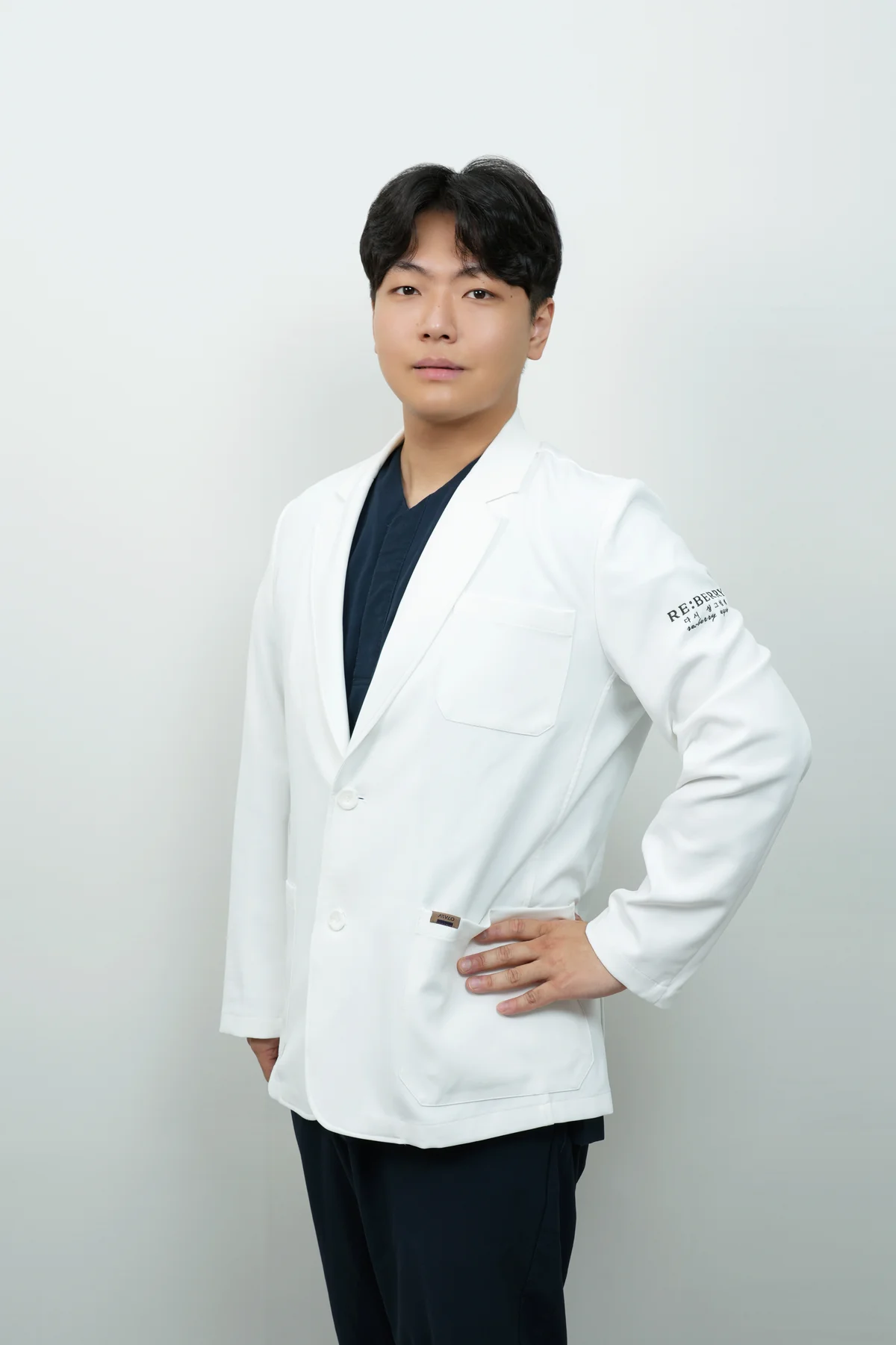
Multilingual tourist care beside Myeongdong Cathedral
Fast, effective care 20 minutes from the terminals
Message us on WhatsApp for a free consultation in English about laser toning safety in Korea.