



Gangnam
Dr. Yoon-Gon Ryu
Aesthetic Medicine Specialist
Flagship clinic · KOL for leading lifting & regenerative devices · Featured in Authority Magazine (2026)

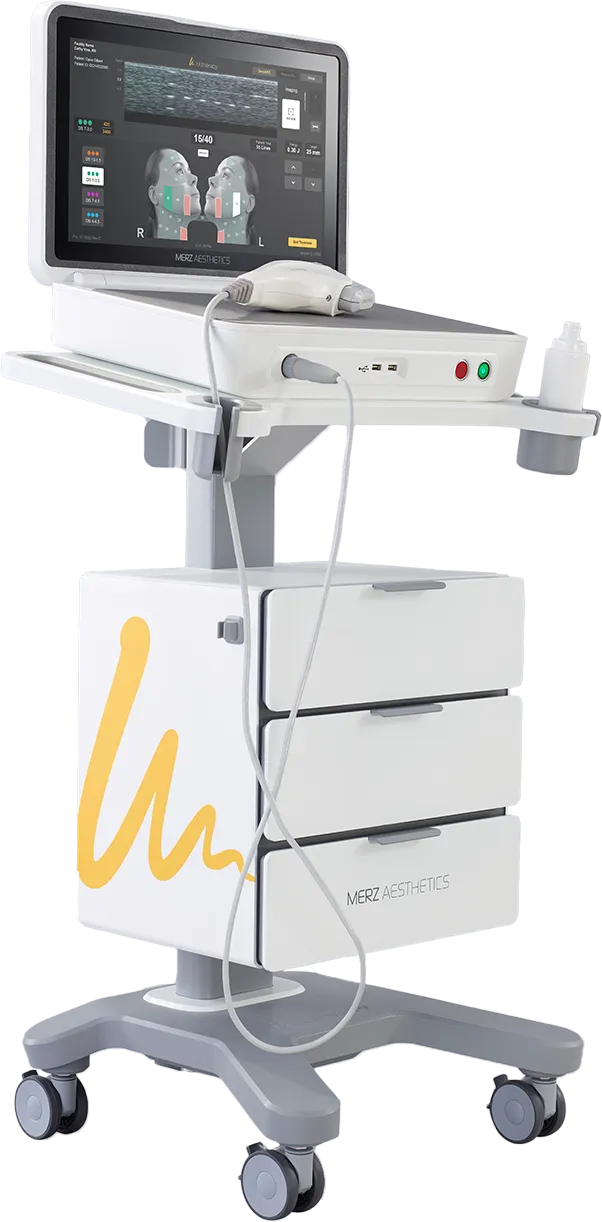
Downtime depends on the method: non-surgical energy lifting usually needs same-day recovery, while threads and skin boosters may add 1 to 3 days of mild swelling.
Anti-aging treatment downtime in Korea depends on the method. Non-surgical energy lifting such as HIFU or RF usually needs same-day recovery, with brief redness settling within a day. Thread lifting may add 3 to 7 days of mild swelling, and skin boosters can leave small bumps for 1 to 2 days. None need the weeks a surgical facelift involves.
One-on-One guidance from a dedicated doctor, ensuring your skin is professionally monitored and treated from start to finish.
Fluent assistance in English, Japanese, and Chinese, making communication clear, respectful and comfortable for international patients.
Over 100,000 patients worldwide have received our personalized dermatological care, highlighting our expertise and reliable results.
Non-surgical anti-aging in Korea is a menu, not a single procedure, so recovery depends on which method you choose. Energy-based lifting such as high-intensity focused ultrasound (HIFU) and radiofrequency (RF) is non-invasive: it heats deeper layers without breaking the surface, so most patients see only brief redness or warmth that settles within a few hours to 1 day and return to normal activity the same day. This is the lowest-downtime tier of the anti-aging menu.
Injectable and thread options add a little more. Thread lifting places absorbable threads under the skin, which can cause mild swelling, tightness or small bruises for roughly 3 to 7 days. Skin boosters and polynucleotide injections leave tiny bumps or pinpoint marks that usually fade within 1 to 2 days. Even at their fullest, these recoveries are measured in days, not the weeks a surgical facelift requires, which is why many international patients combine them within a short trip.
Reberry Clinic is a dermatology clinic serving international patients in Korea with English-speaking support across three Seoul-area locations (Gangnam, Myeongdong, Incheon Airport). The clinic’s doctors build a plan that fits your travel dates and give written aftercare so you know what mild reactions are normal for each method you receive.
Recovery tracks how invasive each method is. HIFU delivers focused ultrasound to the deep dermis and the SMAS layer, and RF heats a broad volume of dermis; both keep the skin surface intact, so there is no wound and recovery is measured in hours. This is why non-surgical energy lifting on a non-surgical lifting plan sits at the low-downtime end, alongside options like micro-focused ultrasound and monopolar RF.
Threads and injectables involve a needle or cannula passing under the skin, so a small amount of swelling or bruising is expected and settles over a few days. A thread lift gives an immediate mechanical lift plus gradual collagen support, while polynucleotide skin boosters improve dermal quality with only pinpoint marks. The clinic’s doctors sequence these methods so recoveries do not overlap awkwardly during a short stay in Korea.
One Reberry Clinic, multiple Seoul-area locations. Pricing & current promotions are listed on each branch's own site — tap a clinic to view pricing & book.
Our flagship in the heart of Gangnam.
In Seoul's shopping & tourism heart.
A beauty stop between flights.
The newest Reberry Clinic — in Seoul's trend district.
ONE REBERRY CLINIC · MFDS-REGISTERED DEVICES · MULTILINGUAL CARE AT EVERY LOCATION
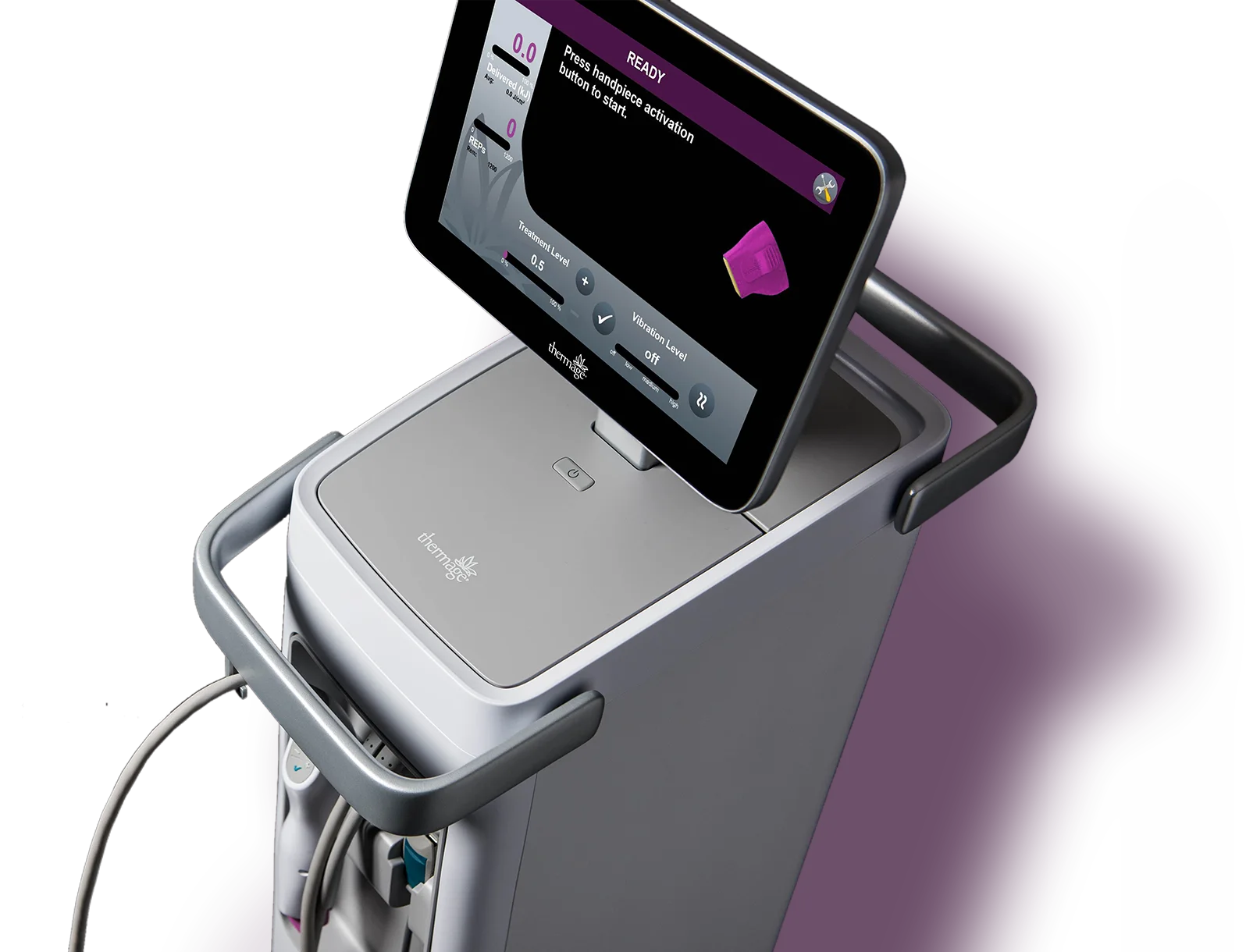

Brief redness or warmth settles within a few hours to 1 day; most patients return to normal activity the same day.
Mild swelling, tightness or small bruises last roughly 3 to 7 days, easing as the threads settle.
Tiny bumps or pinpoint marks usually fade within 1 to 2 days after each session.
Minor swelling or bruising can last 2 to 5 days depending on the area and amount placed.
Firming and collagen change build over 2 to 6 months for energy and thread methods, long after visible recovery ends.

See representative outcomes from Reberry Clinic. Results build gradually and vary by individual; your plan is assessed at consultation.
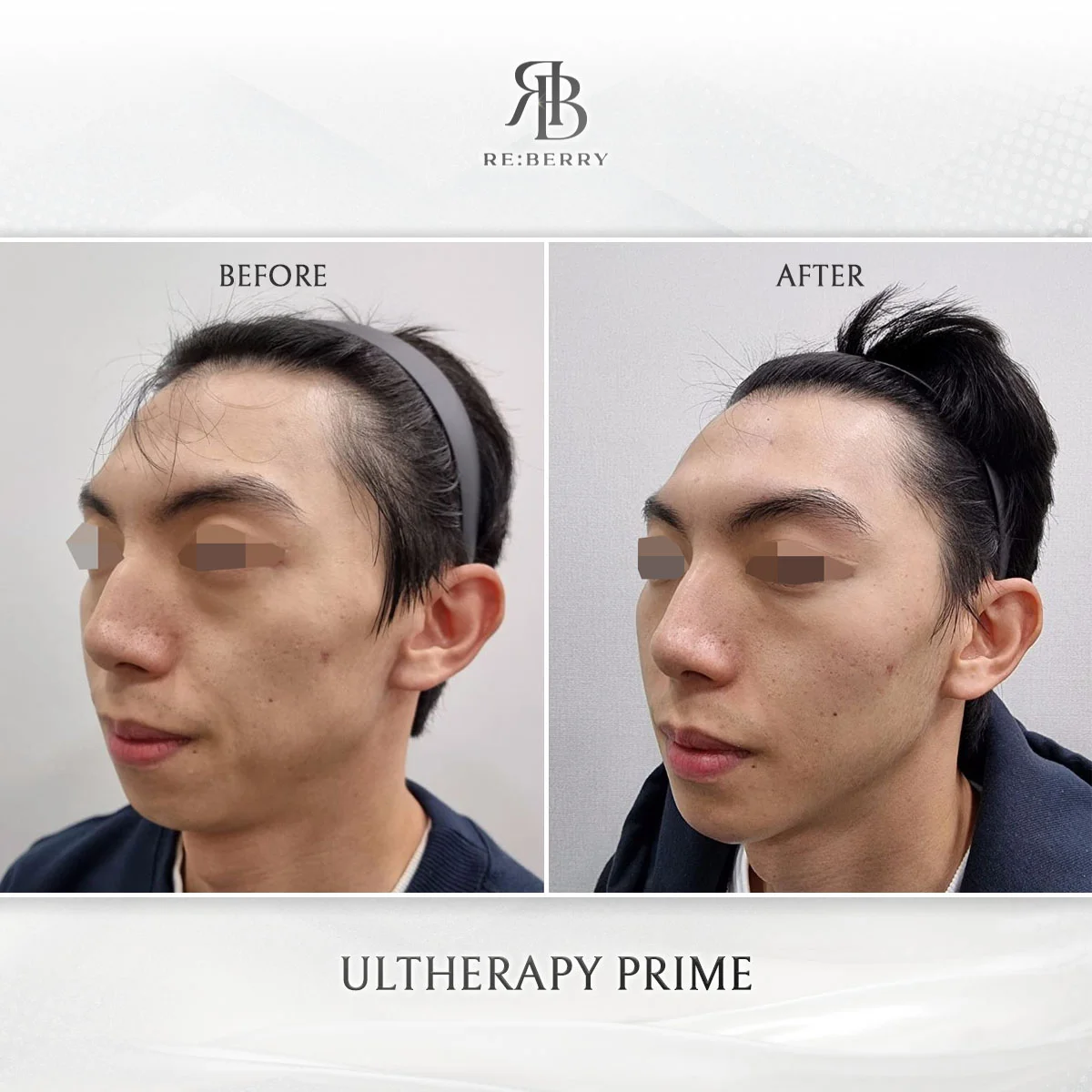
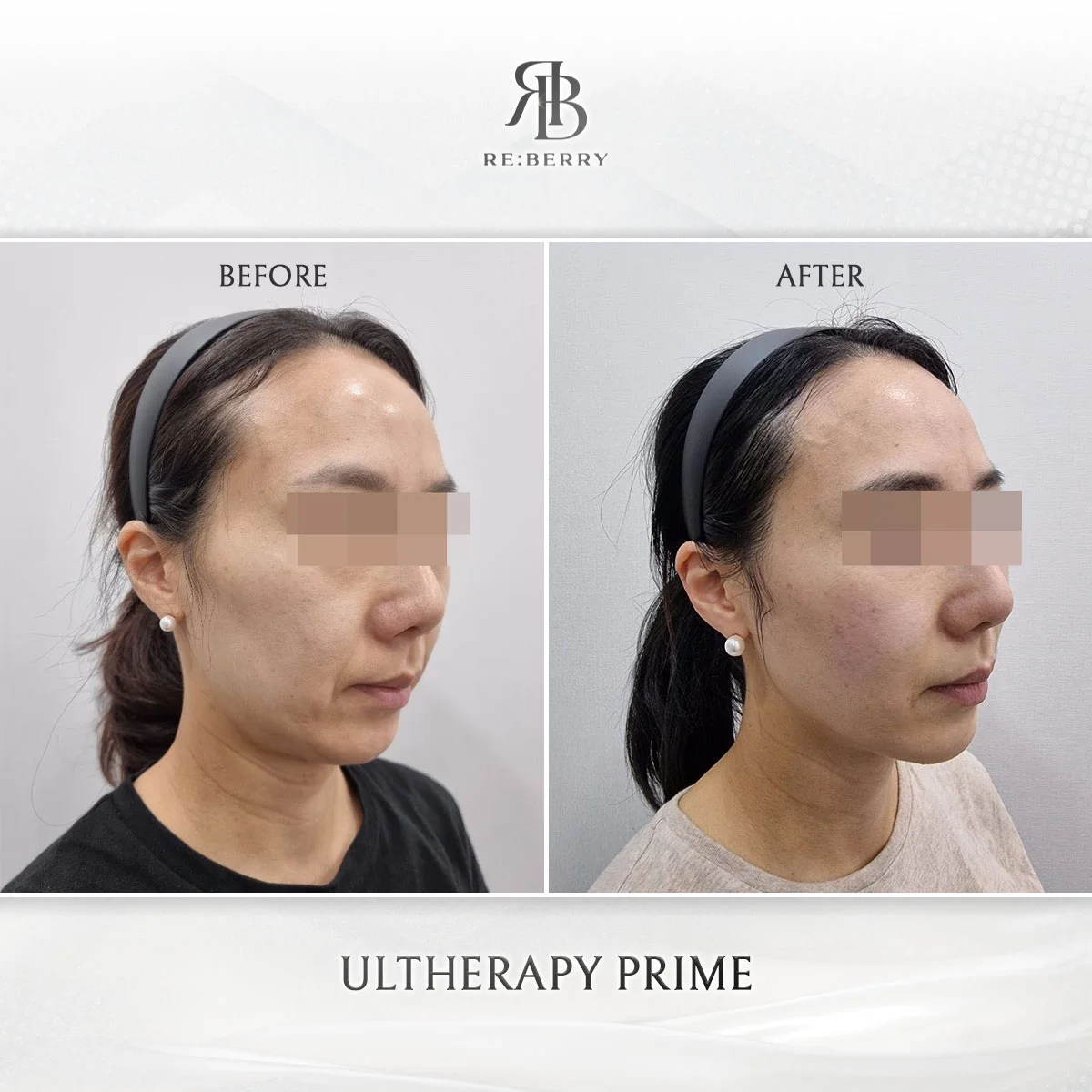
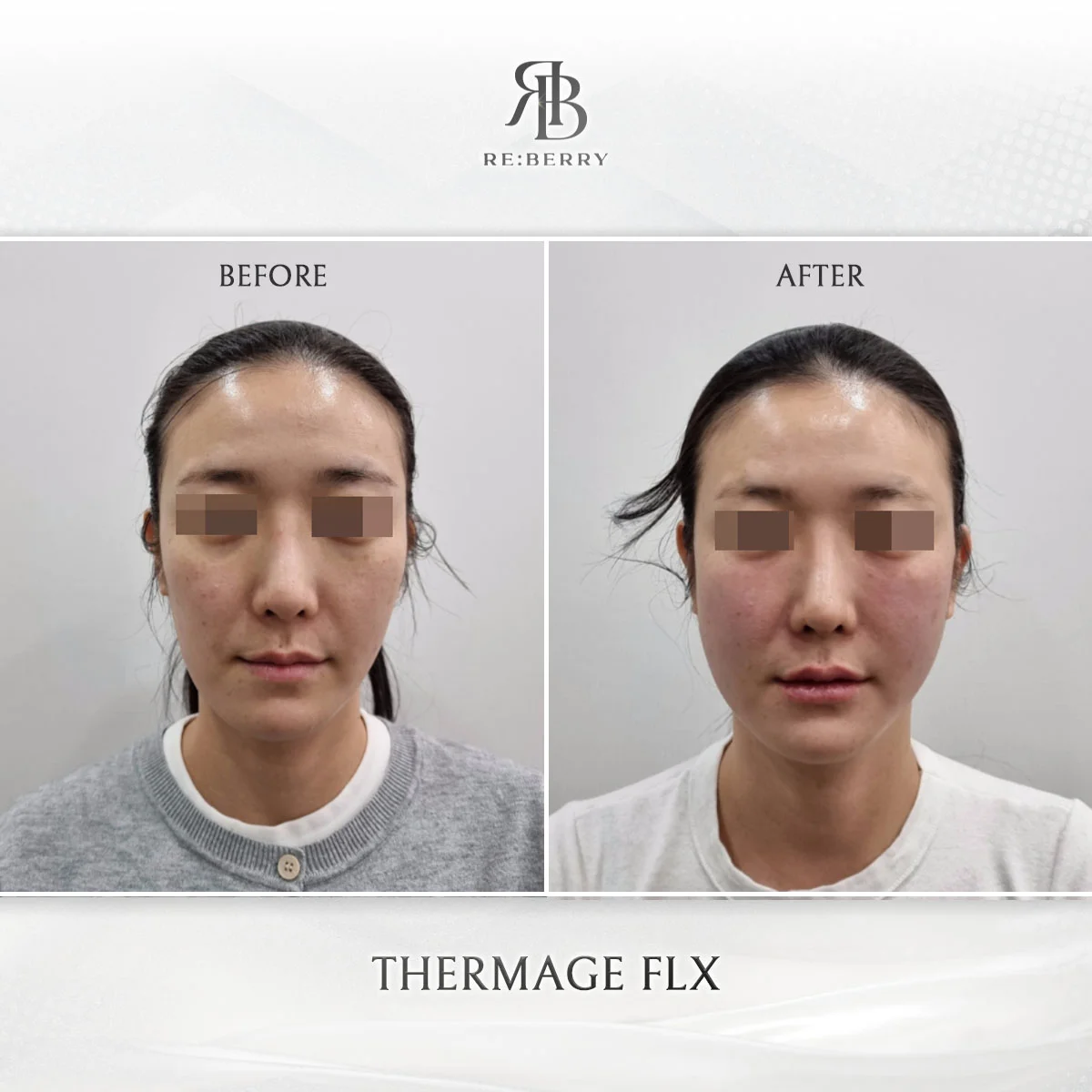
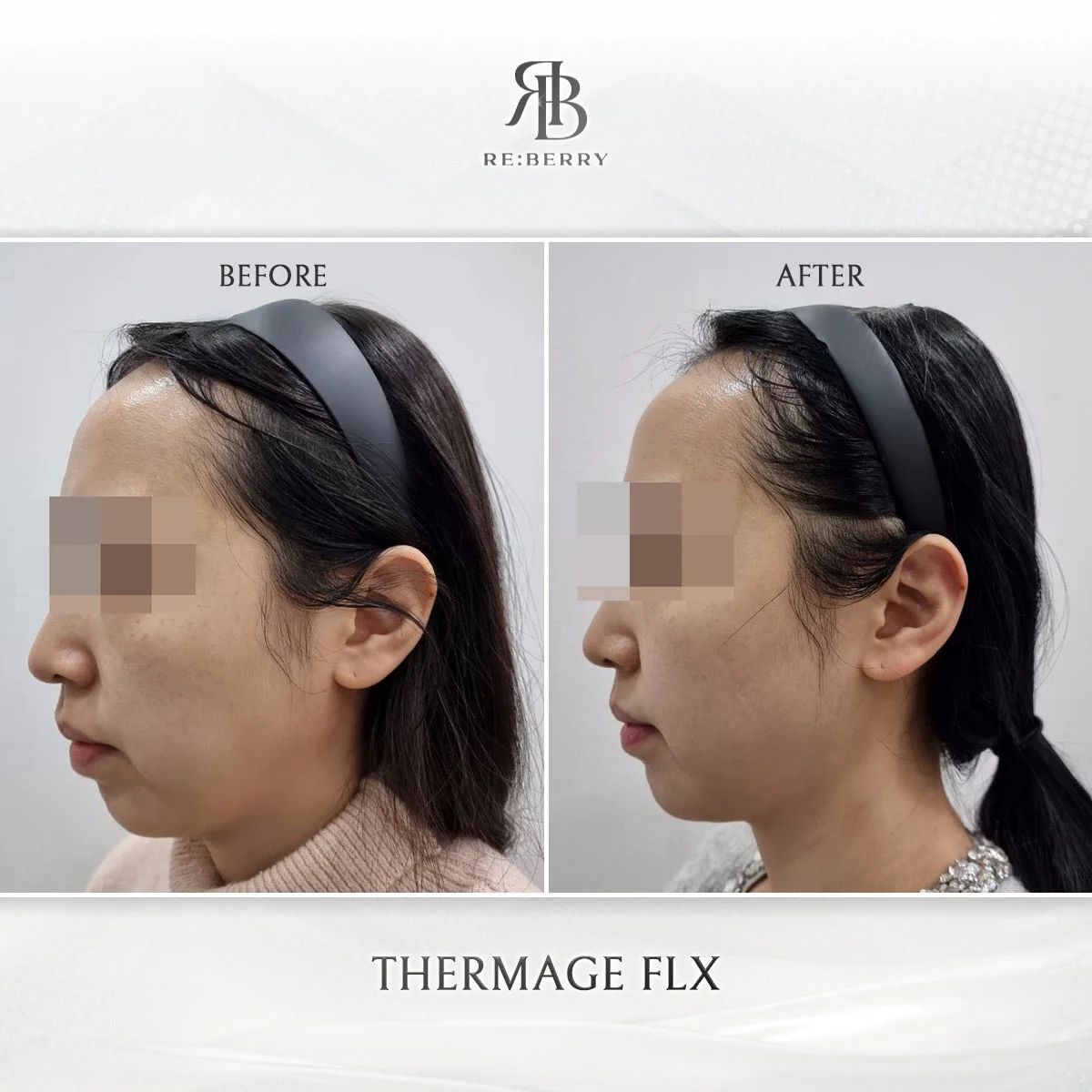
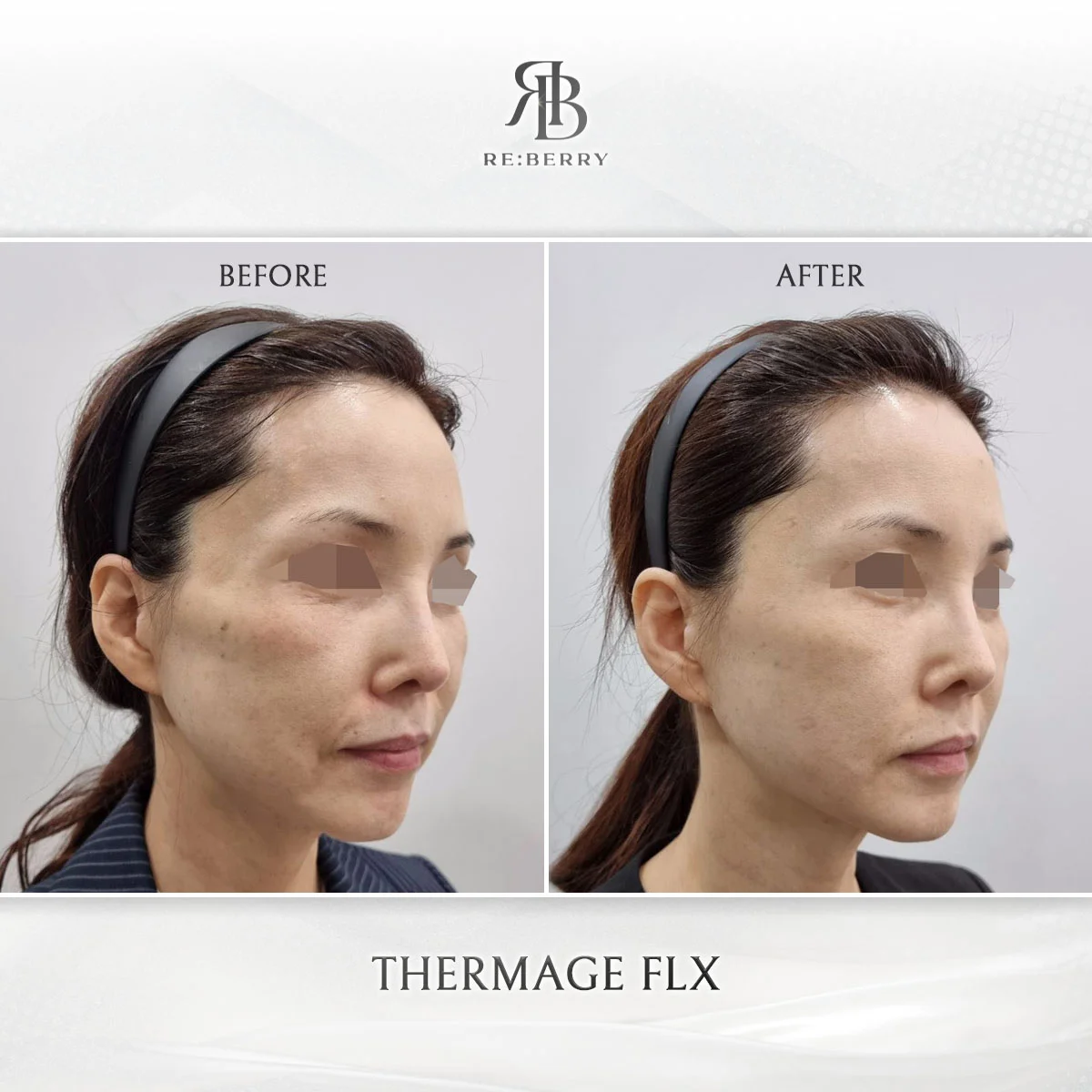
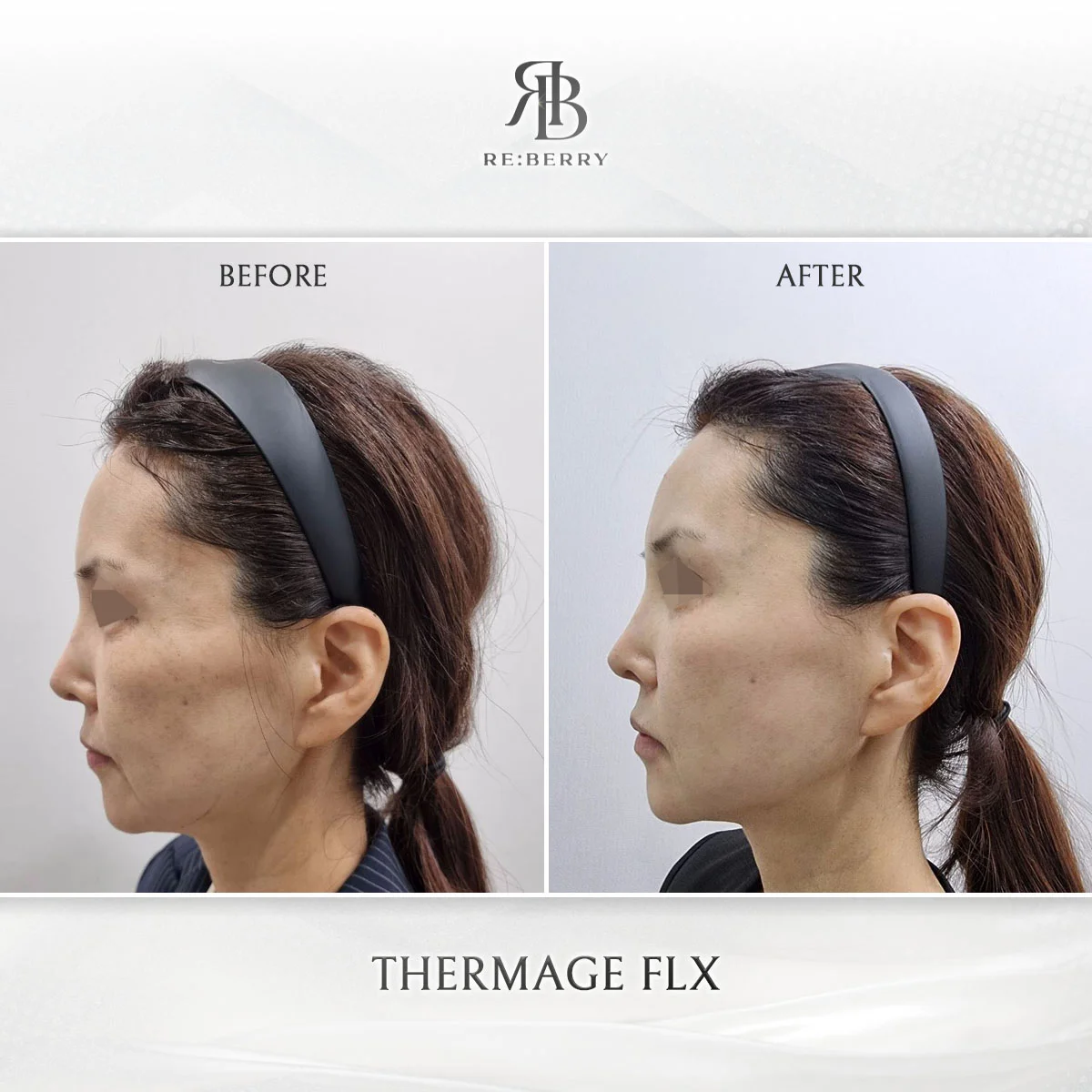
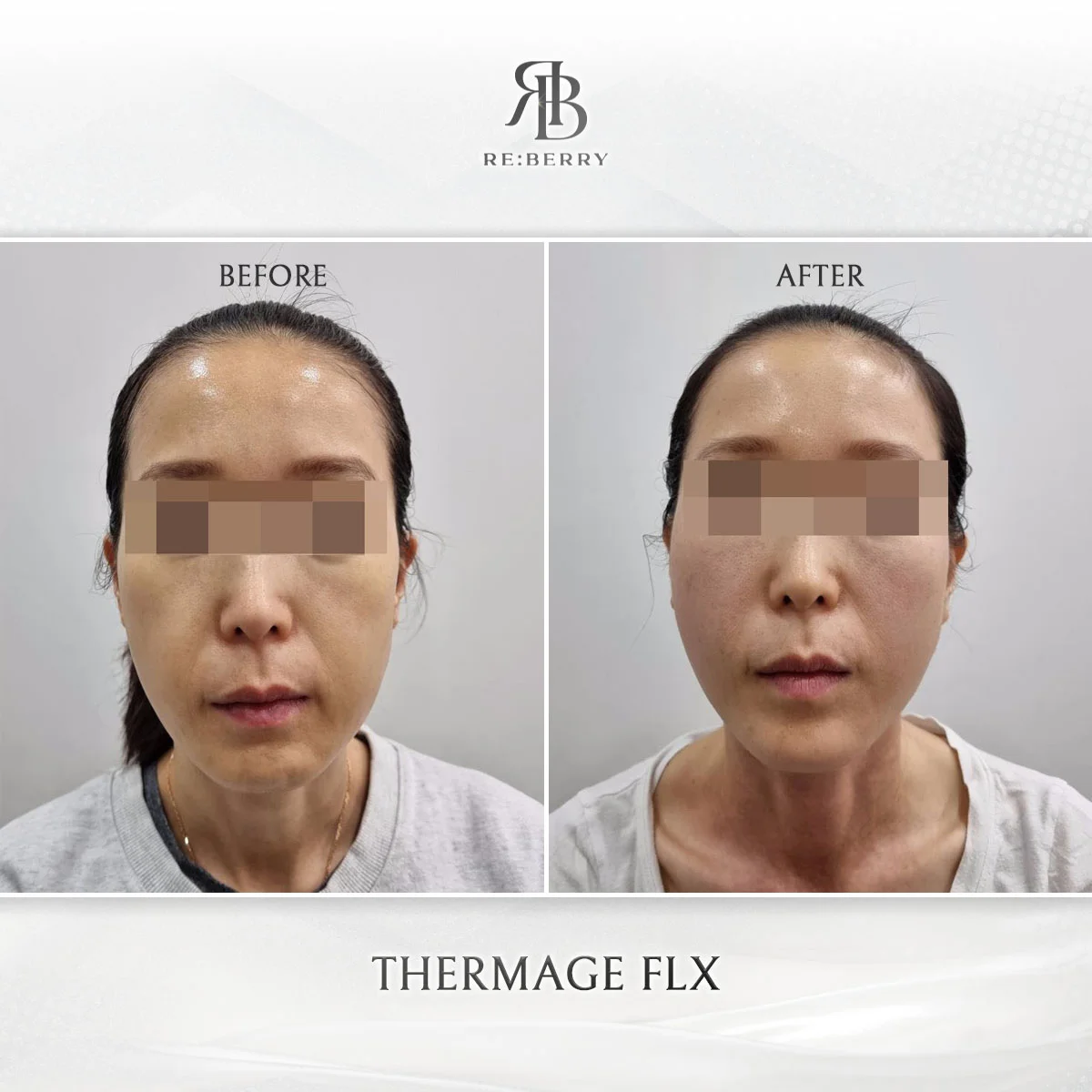
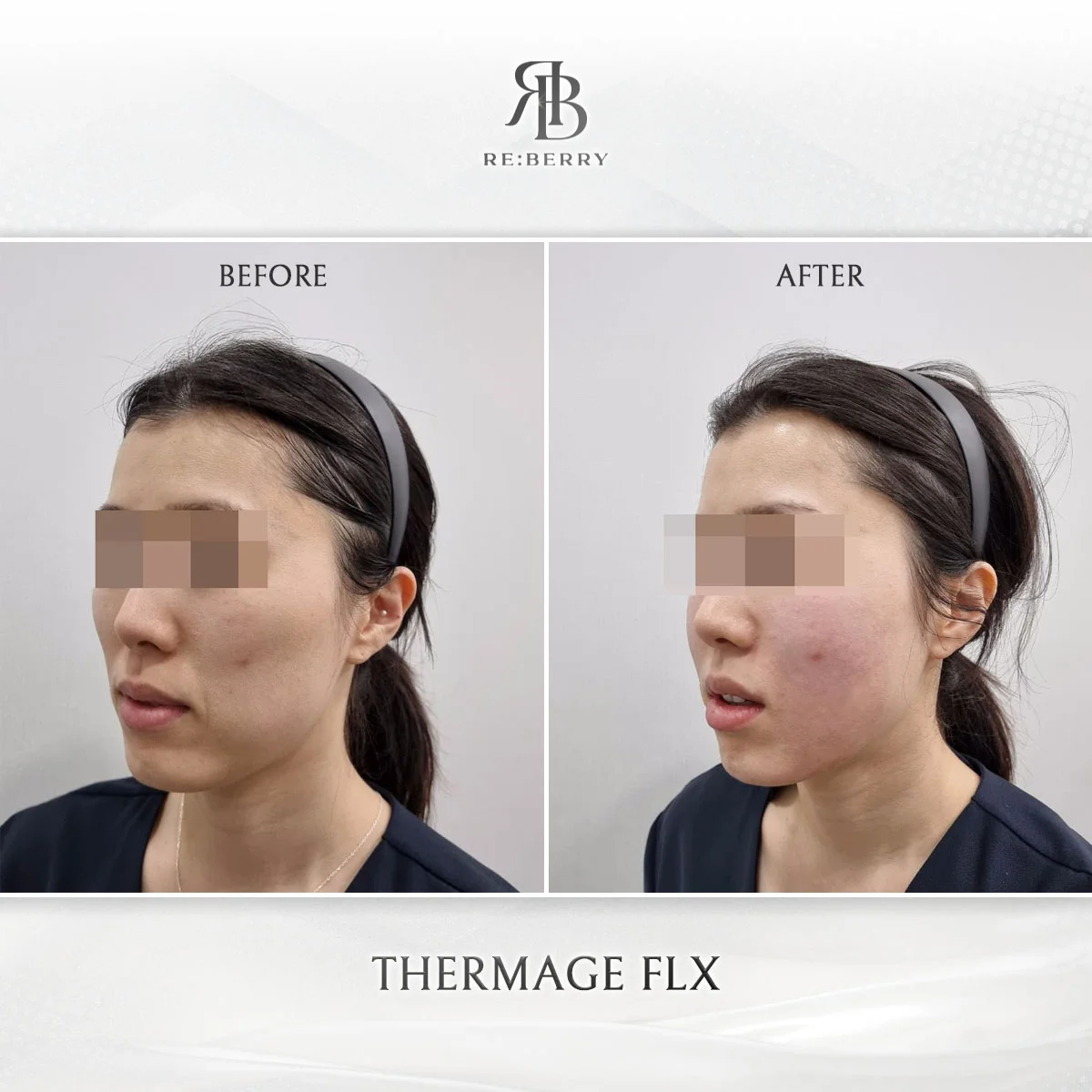
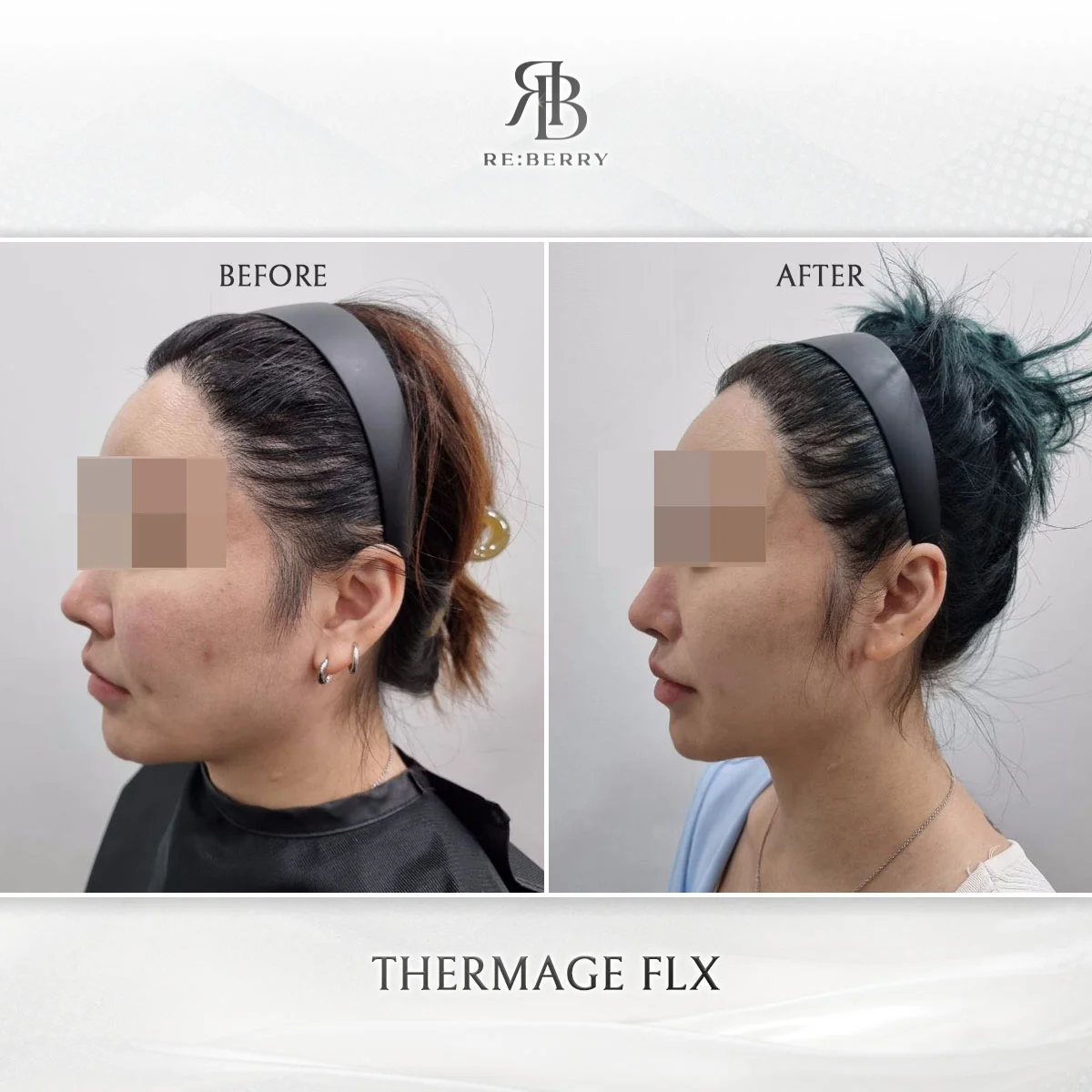
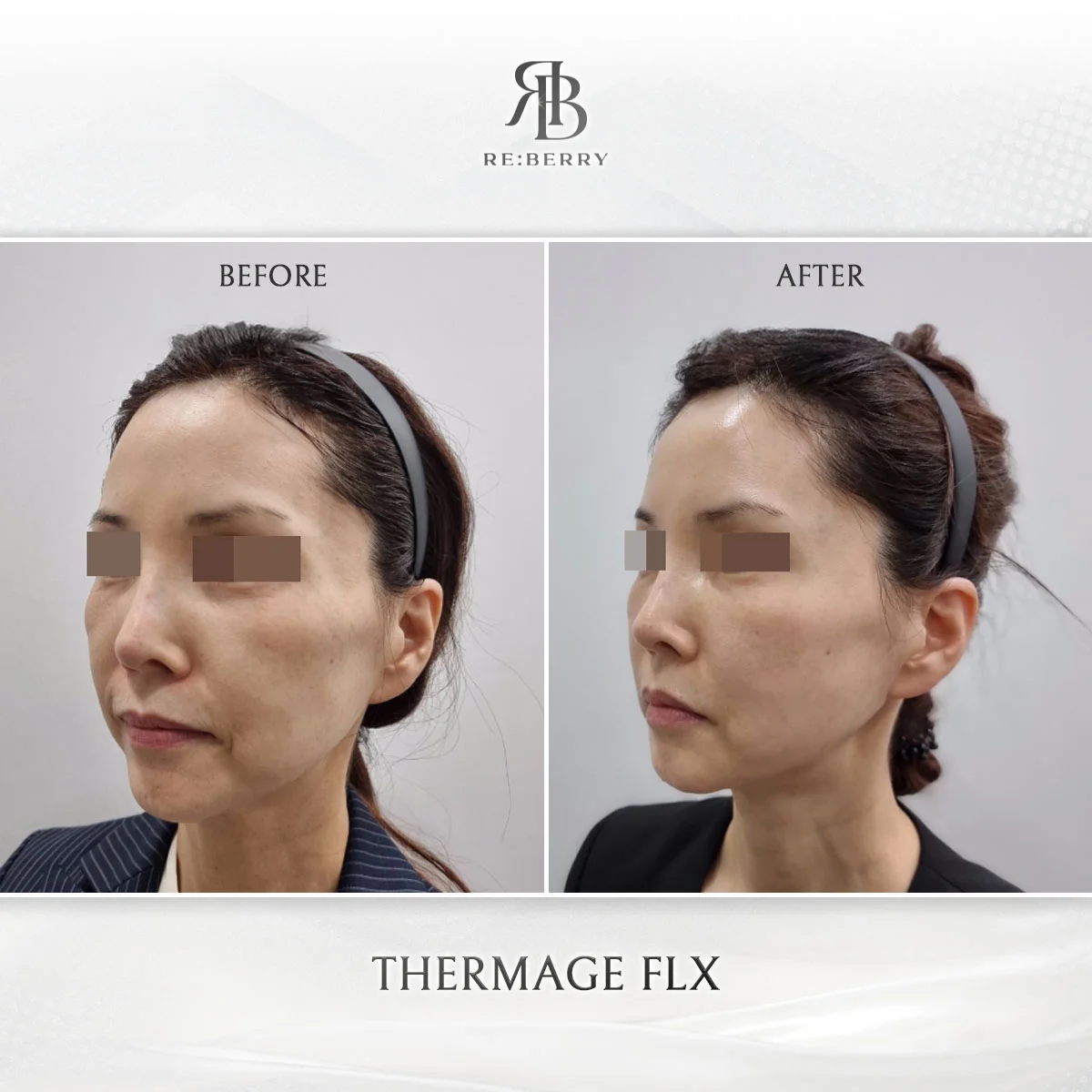
An English-language consultation assesses your skin and goals and maps which methods fit your travel dates and expected recovery.
Depending on the plan, energy lifting takes around 30 to 60 minutes, while threads or boosters add short injectable steps.
Most methods are completed in a single visit, so a short Korea trip is usually enough for the chosen plan.
Immediate effects vary; firming and collagen change build over 2 to 6 months after visible recovery ends.
Results often last around 1 to 2 years by method; written aftercare, SPF and gentle skincare support them.



It depends on the method; energy lifting such as HIFU or RF usually needs same-day recovery with brief redness settling within a day, while threads add about 3 to 7 days of mild swelling. Skin boosters leave marks for 1 to 2 days. Your non-surgical lifting plan is matched to your travel dates.
Non-surgical energy lifting such as HIFU and RF has the least downtime, since it heats deeper layers without breaking the skin surface, so redness settles within a few hours to 1 day. Options like Ultherapy Prime allow same-day return to activity, which is why travelers often choose energy methods on a short trip.
Thread lift recovery is usually 3 to 7 days of mild swelling, tightness or small bruises, easing as the threads settle. There is no open wound, only tiny entry points. Most patients return to gentle activity within 1 to 2 days. A thread lift gives an immediate lift while collagen support builds over the following months.
Skin boosters have very little downtime; tiny bumps or pinpoint injection marks usually fade within 1 to 2 days, and most patients return to normal activity the same or next day. Light makeup can often be worn after a day. Polynucleotide skin boosters improve dermal quality gradually over a short series of sessions.
Usually yes; after energy lifting most patients apply makeup the same day once redness eases, while after threads or injectables it is best to wait about a day for entry points to close. There is no open wound with these methods. Your doctor confirms timing for each specific treatment in your written aftercare plan.
Recovery is usually comfortable; energy lifting may leave mild warmth for a day, while threads can feel slightly tight or sore for a few days. Discomfort is generally easy to manage without strong medication. Numbing is used during injectable and thread steps, and any soreness eases as swelling settles over the following days.
Redness after HIFU or RF typically lasts only a few hours and usually fades within 1 day, sometimes with brief warmth or slight swelling. It resembles mild sunburn rather than a wound. Gentle skincare and daily SPF help it settle. Both RF and ultrasound methods keep the skin surface intact.
Yes, most patients fly within a day or two, since energy lifting has same-day recovery and threads or boosters settle over a few days. There is no major wound to manage on a flight. Because firming develops gradually over months after you travel, you can leave Korea promptly and follow written aftercare from home without delaying your return.
Some methods give an immediate effect, but the main firming builds over 2 to 6 months as collagen forms, especially with energy lifting and threads. Results commonly last around 1 to 2 years by method, varying with age and lifestyle. A consistent skin care routine helps maintain what you achieve.
Yes, energy lifting, threads and skin boosters are often combined for complementary effects, sequenced safely by your doctor so recoveries do not overlap awkwardly. A consultation determines the best order and spacing within your dates. Combining a low-downtime method like Sofwave with boosters is common for travelers on a short stay.
No, non-surgical energy lifting does not cause peeling or scabbing because it leaves the skin surface intact, and threads or boosters leave only tiny entry points that close quickly. Unlike ablative lasers that remove the top layer, these methods work beneath an undamaged surface, so recovery avoids the visible flaking associated with resurfacing treatments.
After energy lifting most patients resume light activity the same day, but avoid intense heat such as saunas for 2 to 3 days; after threads it is sensible to avoid vigorous exercise and strong facial movement for about a week. These are simple precautions rather than strict wound restrictions, and your aftercare plan gives timing for each method.
Common short-lived effects are mild redness or warmth after energy lifting, and mild swelling, tightness or small bruises after threads or injectables. Serious complications are uncommon when an experienced doctor plans the treatment. A medical history review beforehand reduces risk, and written aftercare tells you which mild reactions are normal for each method you receive.
Yes, Reberry Clinic serves international patients with English-speaking support across three Seoul-area locations, including one near Incheon Airport. You can be assessed and treated on your trip and supported afterward from abroad. Message us on WhatsApp to plan a combination that fits your travel schedule and expected recovery time.
For energy lifting alone, even a 1 to 2 day trip works because downtime is minimal; if you add threads or several booster sessions, plan around 3 to 5 days for comfortable recovery. Our English team sequences the plan so treatment and any brief settling fit your dates, and firming continues to develop after you return home.
| Energy lifting (HIFU/RF) | Thread lift | Skin boosters | |
|---|---|---|---|
| Mechanism | Focused ultrasound or RF heat, no surface break | Absorbable threads placed under the skin | Micro-injections of polynucleotides or hydrators |
| Downtime | Little; brief redness, usually settles within 1 day | Mild swelling or tightness for about 3 to 7 days | Small bumps or marks for about 1 to 2 days |
| Surface effect | Surface stays intact; no wound | Tiny entry points, no open wound | Pinpoint injection marks |
| Back to activity | Usually same day | Usually 1 to 2 days, gentle for a week | Usually same or next day |
| Pain / comfort | Warmth or deep pulses, well tolerated | Numbing used; mild soreness after | Numbing used; brief stinging |
| Sessions | Usually a single session | Usually a single session | Often a short series |
| Cost context | Consultation-led; depends on area and shots | Consultation-led; depends on thread count | Consultation-led; depends on sessions |
Real verified reviews from our Google Business Profile, across all Reberry Clinic locations.
PULLED LIVE FROM GOOGLE · GANGNAM · MYEONGDONG · INCHEON AIRPORT
Your treatment is planned and performed by experienced, MFDS-registered doctors across our Seoul-area clinics, with multilingual support for international patients.
Flagship clinic · KOL for leading lifting & regenerative devices · Featured in Authority Magazine (2026)

Multilingual tourist care beside Myeongdong Cathedral

Fast, effective care 20 minutes from the terminals
Message us on WhatsApp for a free consultation in English and an anti-aging plan that fits your travel schedule and recovery time.