

Gangnam
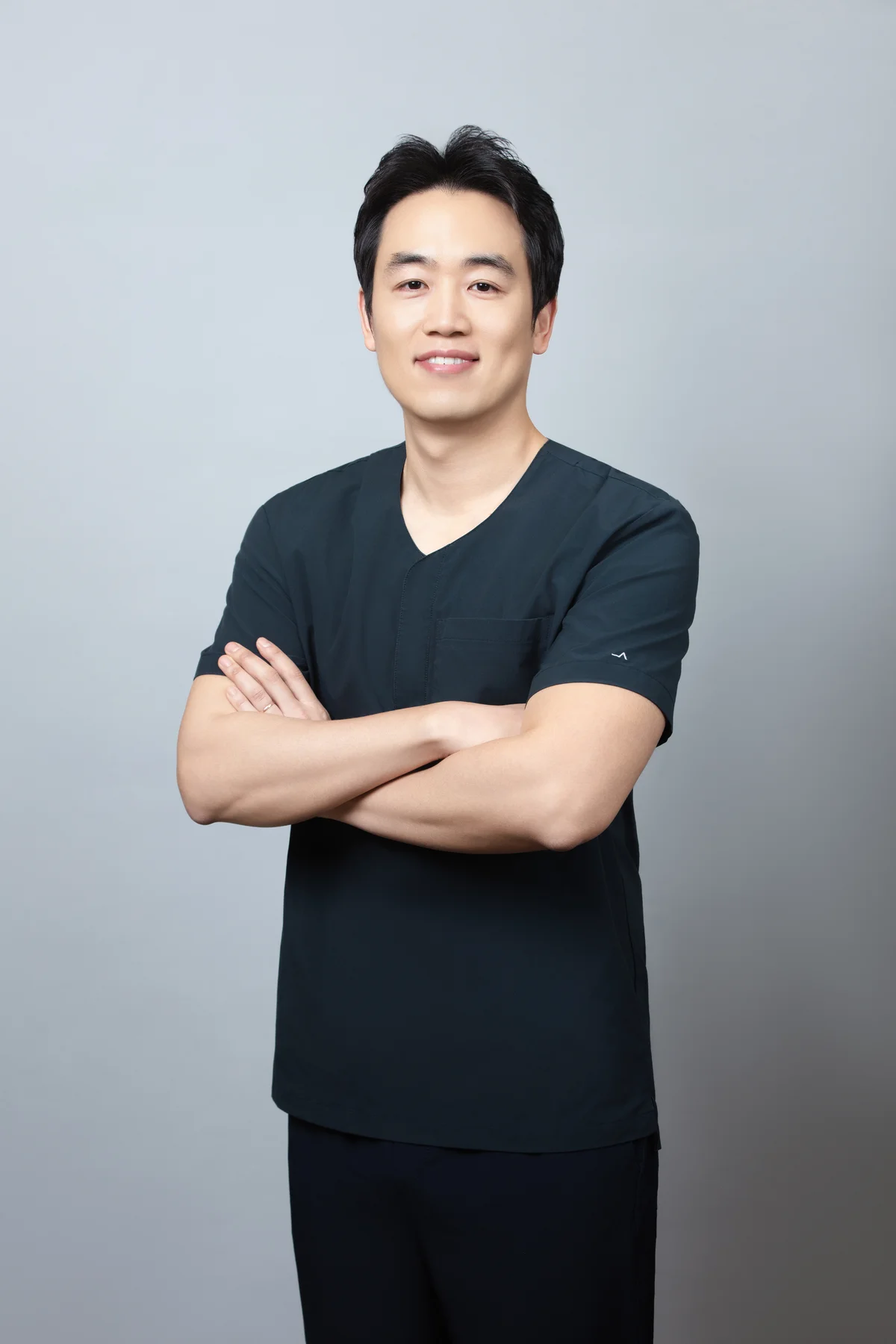
Dr. Yoongon Ryu
Aesthetic Medicine Specialist
Flagship clinic · KOL for leading lifting & regenerative devices

A skin booster works across the 3 main injectable families (HA, polynucleotide, PDLLA), so the right clinic is the one that matches the material to your skin, not the one with the loudest promise.
To choose a good skin booster clinic near Incheon Airport, look for a doctor-led assessment of your skin, a clear explanation of which injectable family (hyaluronic acid, polynucleotide, or PDLLA) suits you, honest talk about sessions and downtime, and transparent, consultation-based pricing rather than a single headline claim. Proximity to ICN matters for transit patients, but fit matters more.
One-on-One guidance from a dedicated doctor, ensuring your skin is professionally monitored and treated from start to finish.
Fluent assistance in English, Japanese, and Chinese, making communication clear, respectful and comfortable for international patients.
Over 100,000 patients worldwide have received our personalized dermatological care, highlighting our expertise and reliable results.
A skin booster is an intradermal injectable that improves skin quality, hydration, glow, and fine-line texture rather than adding contour volume. Because there are several material families, hyaluronic acid microdroplets, polynucleotide, and PDLLA collagen-stimulators, the most important thing a clinic does is match the material to your skin type, concern, and timeline. A clinic that recommends the same product to everyone is a warning sign, not a shortcut.
For international patients arriving through Incheon, location is a genuine convenience factor. Our Incheon Airport (Yeongjongdo) location sits near ICN, which suits stopover, arrival-day, and pre-departure timing. Still, a good clinic prioritises the right assessment over the fastest slot: skin boosters are usually planned as a short series, so the plan should fit your travel, not the other way around.
At Reberry Clinic, skin booster care is consultation-led. Dr. Seongjun Cho, Medical Director at our Incheon Airport (Yeongjongdo) location, assesses your skin and explains the options in English before anything is agreed. Cost is discussed transparently at consultation, because the right injectable, the number of sessions, and the treated area all shape it.
Understanding the categories helps you judge whether a clinic’s advice is sound. Hyaluronic acid boosters, delivered as fine intradermal microdroplets, draw water into the dermis for smoother, more hydrated skin, with effects that typically build over the first weeks and last several months. Polynucleotide boosters focus on regeneration and skin resilience, supporting elasticity and dermal quality over a short series spaced roughly 2 to 4 weeks apart. PDLLA is a collagen-stimulating material that works more gradually, prompting the skin to remodel its own collagen over 8 to 12 weeks. A clinic worth choosing near Incheon Airport explains which of these matches your goal, whether that is a quick pre-trip glow, longer-term texture, or firmness, rather than pushing one product for every face. The doctor should also confirm that a skin booster is even the right tool: sun damage, active acne, or laxity may call for a different or combined plan.
One Reberry Clinic, multiple Seoul-area locations. Pricing & current promotions are listed on each branch's own site — tap a clinic to view pricing & book.
Our flagship in the heart of Gangnam.
In Seoul's shopping & tourism heart.
A beauty stop between flights.
The newest Reberry Clinic — in Seoul's trend district.
ONE REBERRY CLINIC · MFDS-REGISTERED DEVICES · MULTILINGUAL CARE AT EVERY LOCATION
A doctor, not just a coordinator, should grade your skin across at least 3 factors: hydration, texture, and elasticity, before suggesting an injectable.
Expect a clear reason for choosing 1 of the 3 families (HA, polynucleotide, PDLLA), tied to your specific concern rather than a generic pitch.
Most skin boosters run as a series of 2 to 3 sessions spaced 2 to 4 weeks apart, so a promise of full results from 1 visit is a red flag.
Ask about the 1 to 3 days of possible tiny bumps or redness so you can time treatment around flights from Incheon Airport.
A good clinic explains cost transparently at consultation, covering the material, number of sessions, and area, with no single fixed figure for everyone.
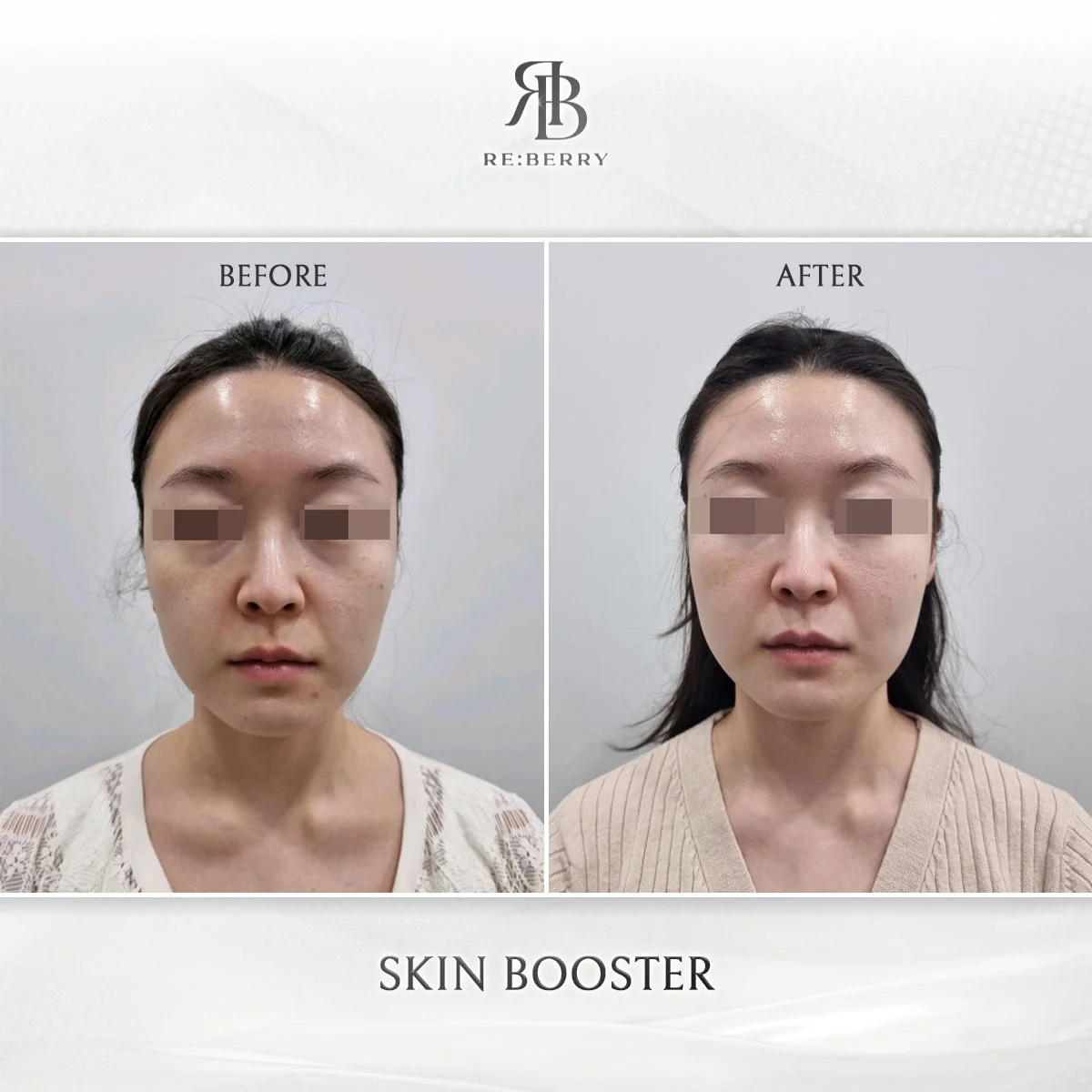
See representative outcomes from Reberry Clinic. Results build gradually and vary by individual; your plan is assessed at consultation.
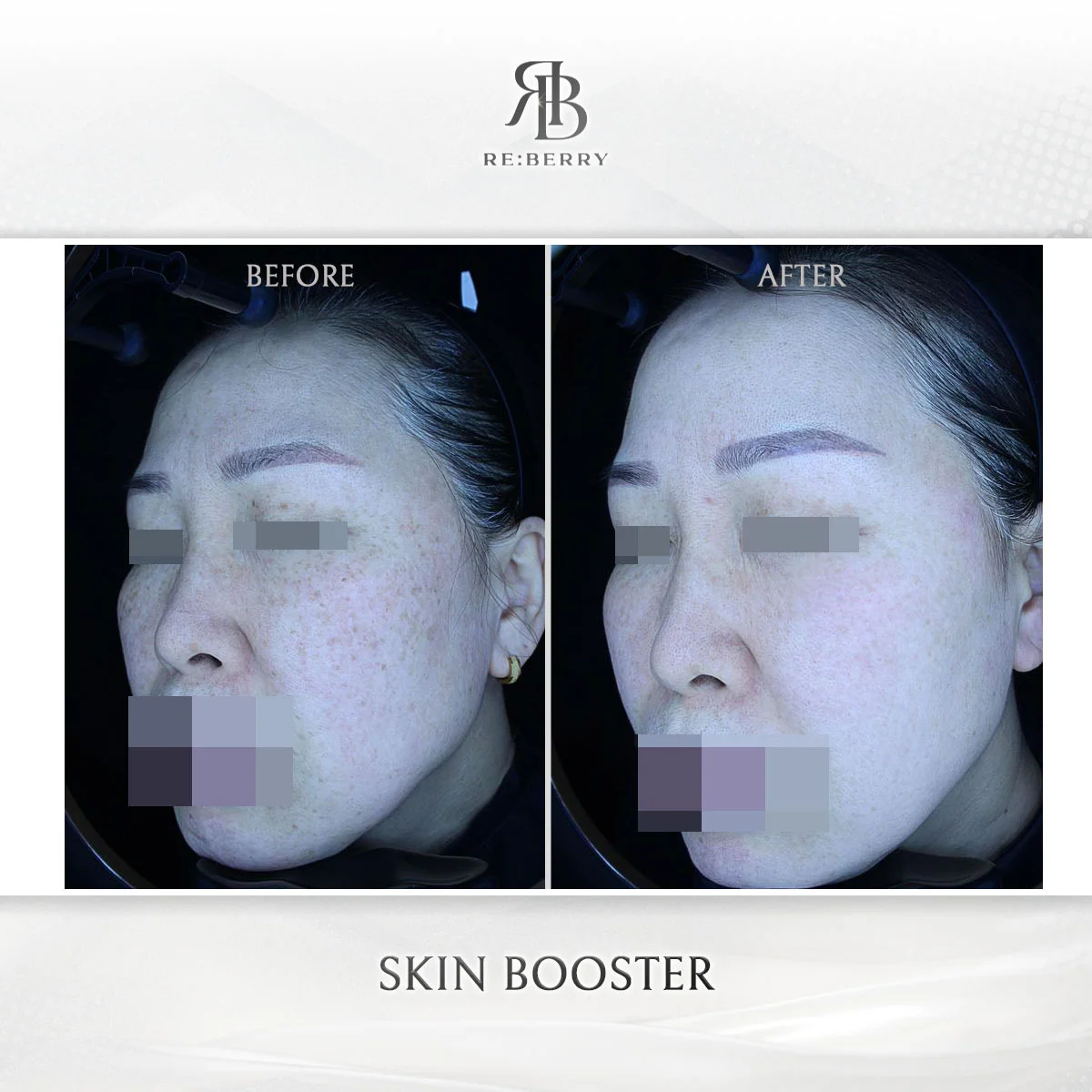
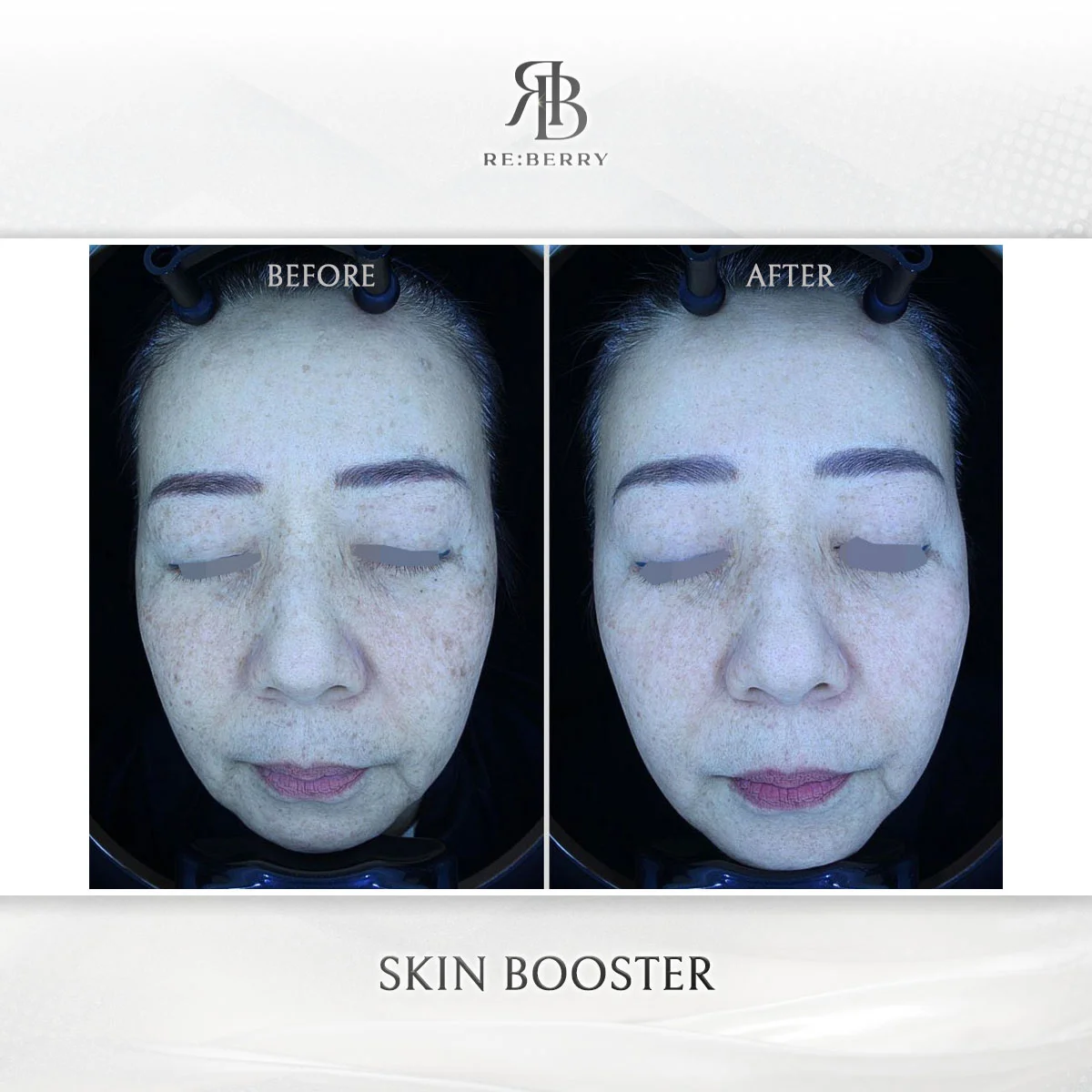
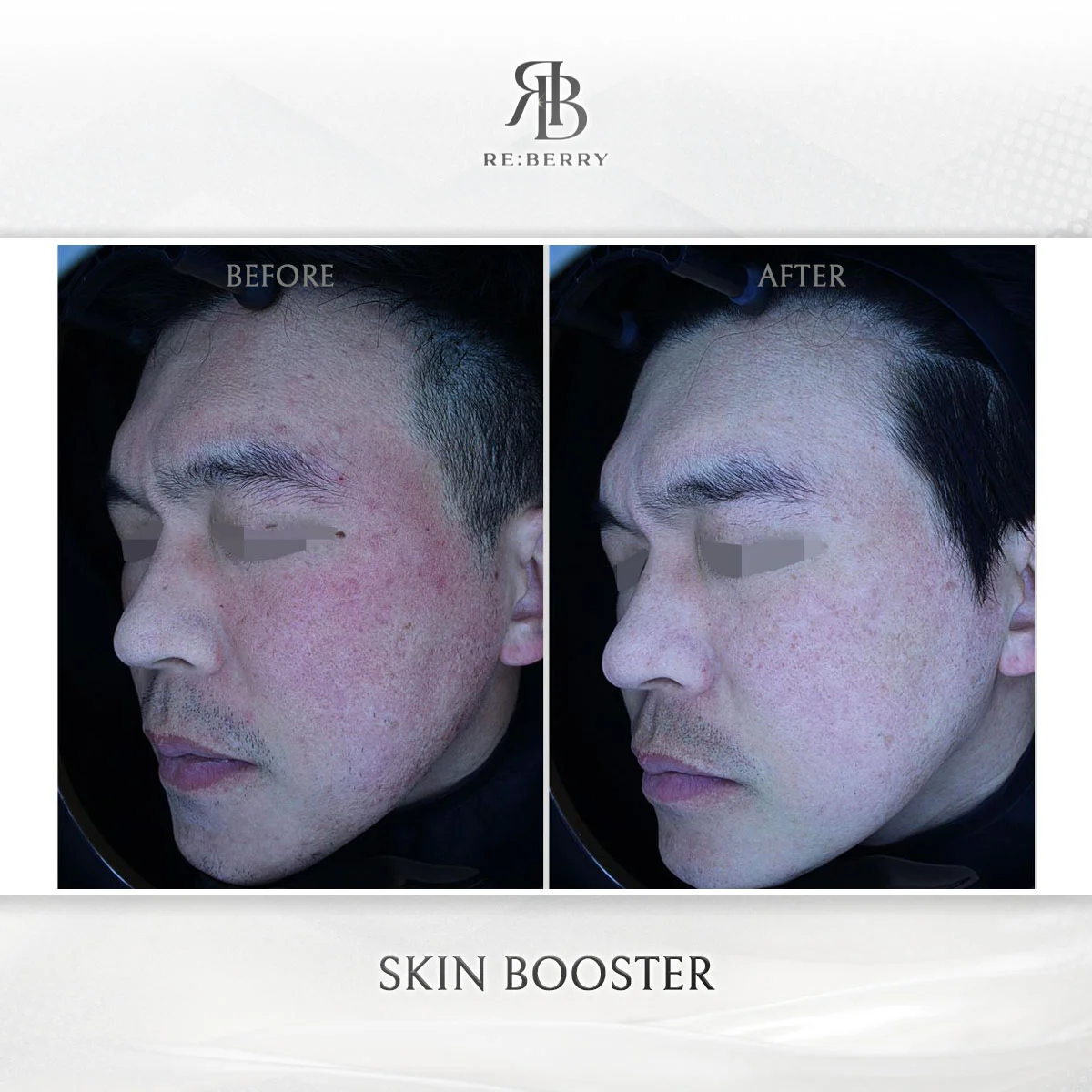
Dr. Seongjun Cho, Medical Director at our Incheon Airport (Yeongjongdo) location, assesses your skin and explains which booster family fits, in English.
Once a material is chosen, a session usually takes about 20 to 30 minutes, including numbing time before the injections.
Most skin booster plans run as a series of 2 to 3 sessions spaced 2 to 4 weeks apart rather than a single visit.
Hydration-focused boosters build over the first weeks, while collagen-stimulating PDLLA develops gradually over 8 to 12 weeks.
Results are maintained with periodic top-ups and good skincare, so long-term planning is discussed transparently at consultation.
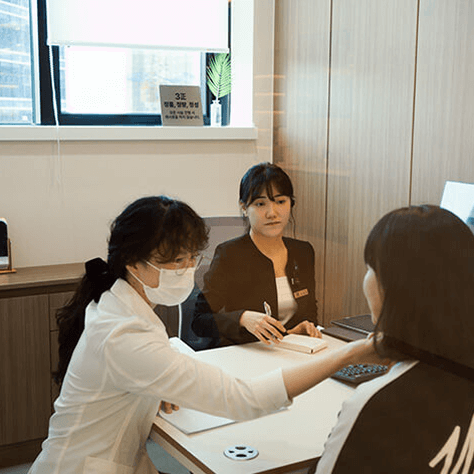
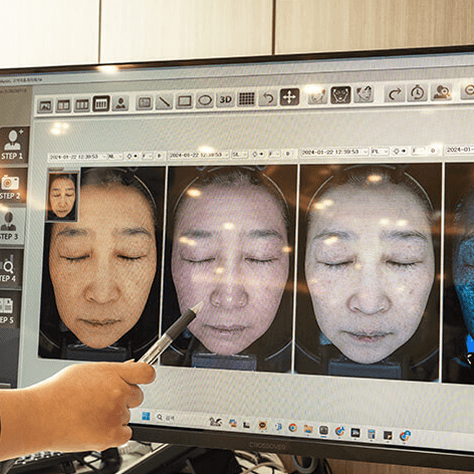
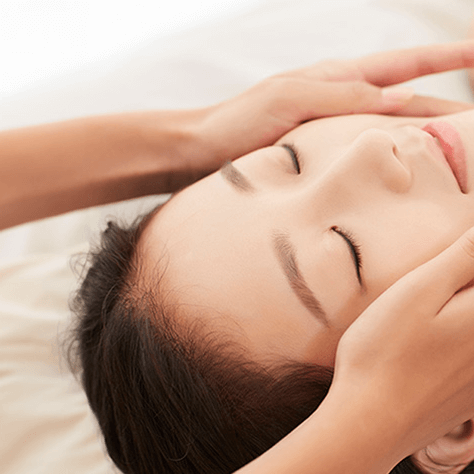
Choose a clinic where a doctor assesses your skin across hydration, texture, and elasticity, then explains which injectable family fits and why. Honest talk about sessions, downtime, and transparent pricing matters more than a single headline claim. You can start with our glass skin treatment page.
That depends on your main concern: hyaluronic acid boosters suit dull, dehydrated skin, polynucleotide supports elasticity and texture over a series, and PDLLA stimulates gradual collagen. A doctor should match the material to your skin type and timeline at consultation, rather than recommending the same product to everyone.
Our Incheon Airport (Yeongjongdo) location is near ICN, which suits transit, arrival-day, and pre-departure timing for international patients. Dr. Seongjun Cho, Medical Director, provides skin booster care there with English support. This makes it practical to plan a session around a stopover or the start of a Korea trip.
Most skin boosters are planned as a series of 2 to 3 sessions spaced 2 to 4 weeks apart, not a single visit. The exact number depends on the material and your skin’s response. A clinic promising a one-visit transformation is overselling, so a clear multi-session plan is a good sign.
Discomfort is usually mild because numbing cream is applied before the fine intradermal injections. Some materials feel slightly more noticeable than others, but sessions are short. You can review the broader approach on our injection treatment page before your consultation.
Downtime is usually minimal, often just tiny bumps, mild redness, or occasional small marks for 1 to 3 days. Hyaluronic acid microdroplets can leave small temporary bumps that settle quickly. Most people return to normal activities the same day, which makes timing around a flight straightforward.
Hydration-focused hyaluronic acid boosters build over the first weeks, while collagen-stimulating PDLLA develops gradually over 8 to 12 weeks. Polynucleotide effects grow across the series. Because results are cumulative, a good clinic sets realistic timelines rather than promising instant, dramatic change from one appointment.
Most skin booster results last several months and are maintained with periodic top-ups, since skin quality is managed over time rather than fixed permanently. Longevity varies by material and lifestyle. Your doctor discusses a realistic maintenance schedule so you can plan return visits around travel or budget.
Yes, skin boosters are often combined with treatments like lasers or gentle resurfacing for fuller results, sequenced so the skin is not over-stressed. A doctor plans the order and spacing. You can explore complementary options on our Rejuran Healer page.
Skin boosters are widely performed and generally considered safe when a trained doctor selects the right material and technique for your skin. A consultation reduces risks like temporary bruising or bumps. Choosing a clinic that reviews your history carefully, rather than one making sweeping safety claims, is the safer path.
Be cautious of clinics promising flawless outcomes, a single-session transformation, or claims that sound too perfect. A trustworthy clinic explains realistic timelines, possible side effects, and why it chose your material. You can compare their advice against the honest overview on our glass skin page.
Aftercare is simple: avoid heavy makeup and vigorous exercise for a day, keep the area clean, and use sunscreen. Gentle hydration helps. A supportive skin care routine protects your results between sessions, and your doctor tailors advice to the material you received.
Most adults wanting better hydration, glow, or texture are suitable candidates, though the ideal material varies. A consultation confirms whether a skin booster fits your goal or whether another approach suits you better. Active skin infection, pregnancy, or certain conditions may mean deferring, which a doctor reviews upfront.
Yes, your skin type, age, and concern all influence which family and technique are safest and most effective. Dehydrated skin may favour hyaluronic acid, while texture and firmness goals may point to polynucleotide or PDLLA. A doctor accounts for this at consultation so the plan genuinely fits your skin.
Cost depends on the material chosen, the number of sessions, and the area treated, so it is explained transparently at consultation rather than as a single fixed price. A good clinic gives you a clear plan before you commit. You can begin on our glass skin treatment page.
For a single session, even a stopover can work, since downtime is minimal and treatment near Incheon Airport is convenient. If you want a first review afterward, 1 to 2 days is comfortable. Many international patients begin a series here and continue on return visits to Korea.
Yes, flying within a day is generally fine for most skin boosters, since they are minimally invasive. Cabin air is drying, so moisturise and protect the treated skin from sun. If you had a collagen-stimulating material, your doctor will give tailored aftercare to follow while you travel.
International patients can complete a skin booster series across one or more visits, and the clinic offers English-language check-ins between trips so the plan stays on track. You can also continue supportive skincare at home. Your treatment notes are kept on file for continuity at future appointments.
| Hyaluronic Acid Booster | Polynucleotide Booster | PDLLA Booster | |
|---|---|---|---|
| Mechanism | Microdroplets draw water into the dermis for hydration | Regenerative support for elasticity and skin resilience | Stimulates the skin to build its own collagen gradually |
| Best for | Dull, dehydrated skin wanting quicker glow | Fine texture, elasticity, and skin quality over a series | Longer-term firmness and gradual remodeling |
| Pain / comfort | Mild; numbing cream used for the microdroplet passes | Mild; short series with numbing as needed | Mild to moderate; numbing used before injection |
| Downtime | Usually tiny bumps for a day, minimal overall | Minimal, occasional small marks | Minimal, possible mild swelling early on |
| Results timeline | Builds over the first weeks | Develops across the series over several weeks | Gradual over 8 to 12 weeks as collagen forms |
| Cost factors | Depends on area and number of sessions | Depends on the series length and area treated | Depends on sessions and volume of material |
Real verified reviews from our Google Business Profile, across all Reberry Clinic locations.
PULLED LIVE FROM GOOGLE · GANGNAM · MYEONGDONG · INCHEON AIRPORT
Your treatment is planned and performed by experienced, MFDS-registered doctors across our Seoul-area clinics, with multilingual support for international patients.
Flagship clinic · KOL for leading lifting & regenerative devices
Multilingual tourist care beside Myeongdong Cathedral
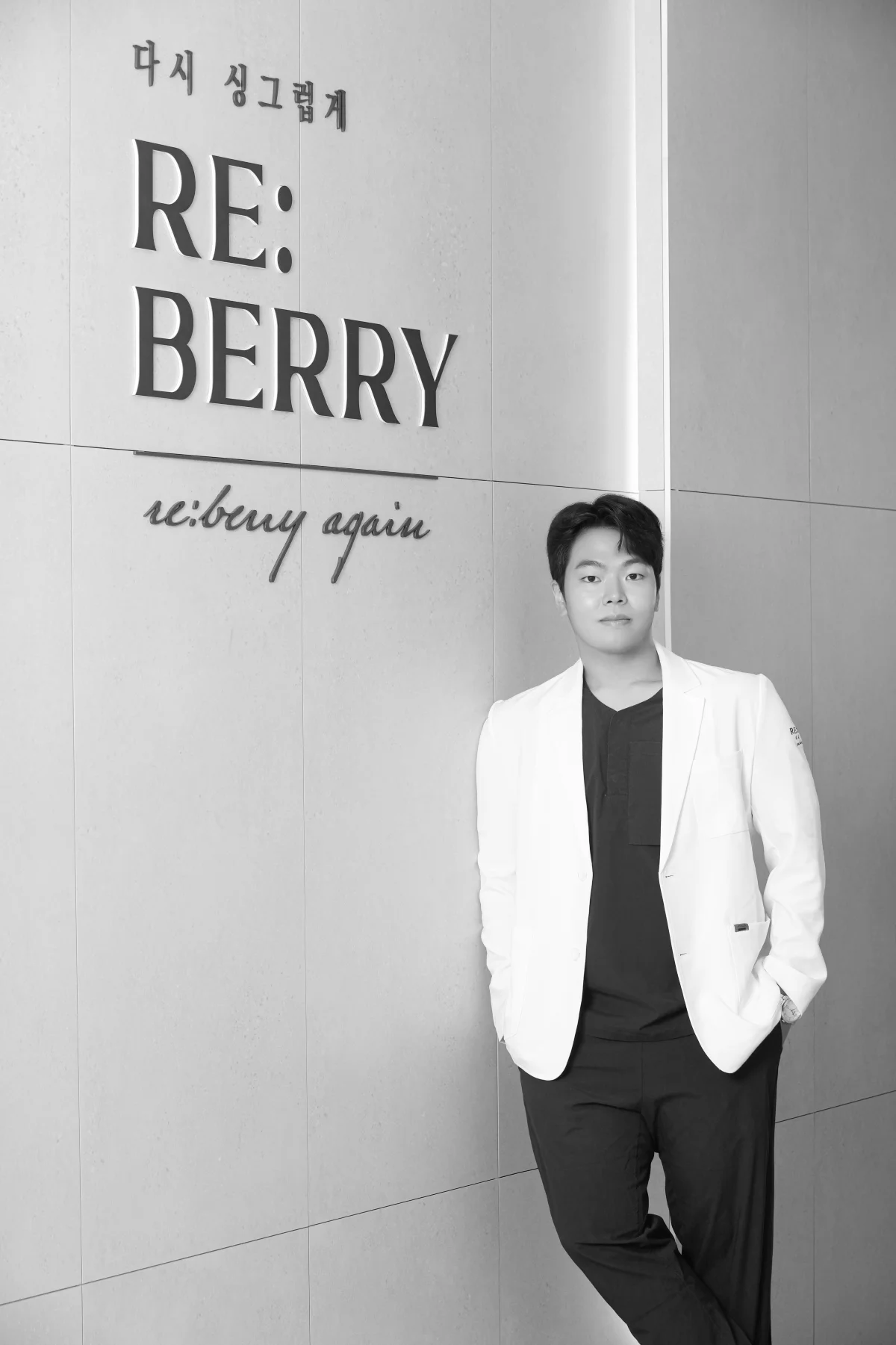
Fast, effective care 20 minutes from the terminals
Message us on WhatsApp for a free consultation in English about which skin booster fits your skin, near Incheon Airport.