



Gangnam
Dr. Yoon-Gon Ryu
Aesthetic Medicine Specialist
Flagship clinic · KOL for leading lifting & regenerative devices · Featured in Authority Magazine (2026)

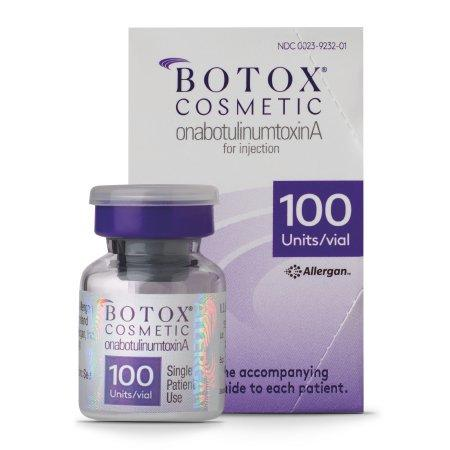
Botox cost is unit-based, so your total reflects how many of the 3 main variables (areas treated, units needed, and sessions per year) your plan actually requires.
Botox cost near Incheon Airport depends on which areas you treat, how many units of botulinum toxin those muscles need, and how often you repeat over a year. Because dosing is individual, the clinic’s doctors at our Incheon Airport (Yeongjongdo) location confirm your cost at consultation rather than quoting one fixed figure.
One-on-One guidance from a dedicated doctor, ensuring your skin is professionally monitored and treated from start to finish.
Fluent assistance in English, Japanese, and Chinese, making communication clear, respectful and comfortable for international patients.
Over 100,000 patients worldwide have received our personalized dermatological care, highlighting our expertise and reliable results.
Botox cost is not a single sticker price. Botulinum toxin type A is dosed in units, and each treatment area needs a different amount, so a small single-area treatment sits at one end of the range and a full upper-face plan sits at the other. The number of areas you address is usually the biggest variable in your total.
The second driver is repetition. The muscle-relaxing effect of botulinum toxin is temporary, typically lasting around 3 to 4 months, so most people plan for a few sessions across a year rather than a one-time visit. How often you top up shapes your annual budget more than any single appointment does.
Our Incheon Airport (Yeongjongdo) location is near ICN, which suits transit and stopover patients who want a quick, planned session close to the airport. Care is consultation-led: the clinic’s doctors, led by Dr. Sunbeen Kim as Medical Director, assess your muscles, agree the dose, and explain cost transparently in English before anything is injected.
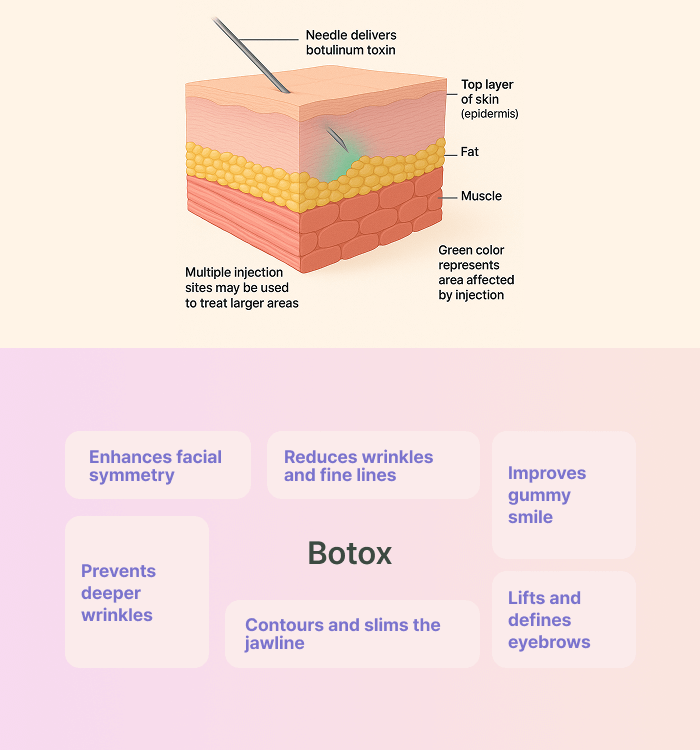
Botox works by delivering botulinum toxin type A, a neuromodulator, into targeted muscles, where it temporarily blocks the nerve signal that tells the muscle to contract. Because the dose is measured in units and each muscle group needs a specific amount, cost scales with anatomy rather than a flat fee. A strong or larger muscle simply needs more units than a fine, small one, and treating several areas in one visit adds those units together. Onset is gradual, usually beginning within 3 to 5 days and settling by around 2 weeks, and the result is not permanent, so a maintenance rhythm of roughly every 3 to 4 months is normal. This is why the clinic’s doctors assess muscle strength and your goals first: two people asking for the same area can need different unit counts, and that difference is what sets your individual cost. Reberry Clinic uses this assessment-led approach so your plan matches your face, not a generic menu.
One Reberry Clinic, multiple Seoul-area locations. Pricing & current promotions are listed on each branch's own site — tap a clinic to view pricing & book.
Our flagship in the heart of Gangnam.
In Seoul's shopping & tourism heart.
A beauty stop between flights.
The newest Reberry Clinic — in Seoul's trend district.
ONE REBERRY CLINIC · MFDS-REGISTERED DEVICES · MULTILINGUAL CARE AT EVERY LOCATION

The clinic’s doctors examine muscle strength and movement across the 1 to 3 or more areas you want treated, which is the single biggest factor in your unit count.
A plan may cover 1 to 3 or more areas, and because each area needs its own units, more areas mean a higher total dose and cost.
Stronger or larger muscles need more units than fine ones, so 2 people asking for the same area can receive different doses and pay differently.
Because results last about 3 to 4 months, most patients budget for 2 to 3 sessions a year rather than a single visit.
After assessment, the clinic’s doctors give you 1 transparent, individualised cost in English instead of a fixed price for everyone.
See representative outcomes from Reberry Clinic. Results build gradually and vary by individual; your plan is assessed at consultation.
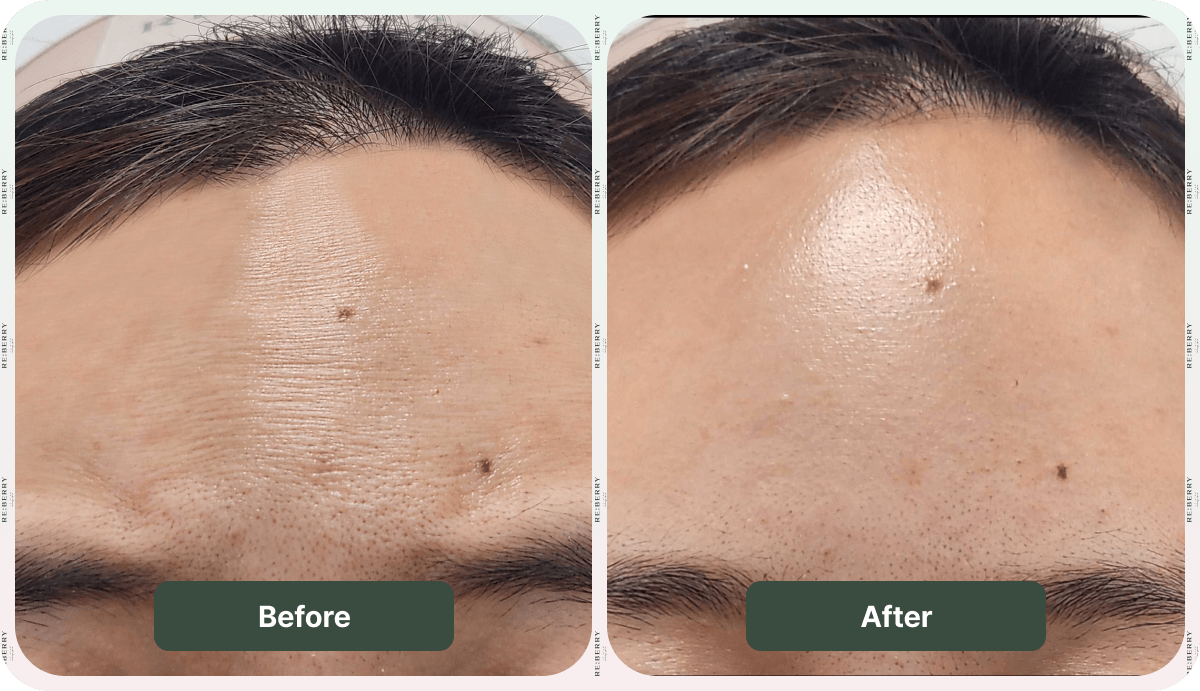
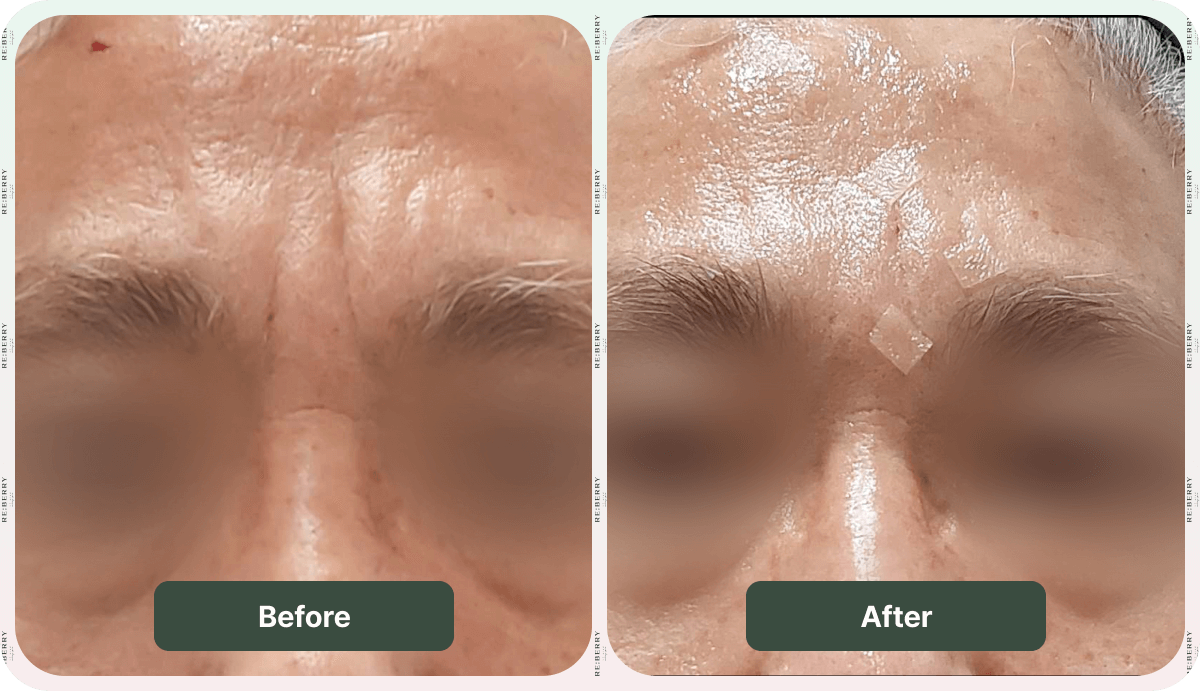
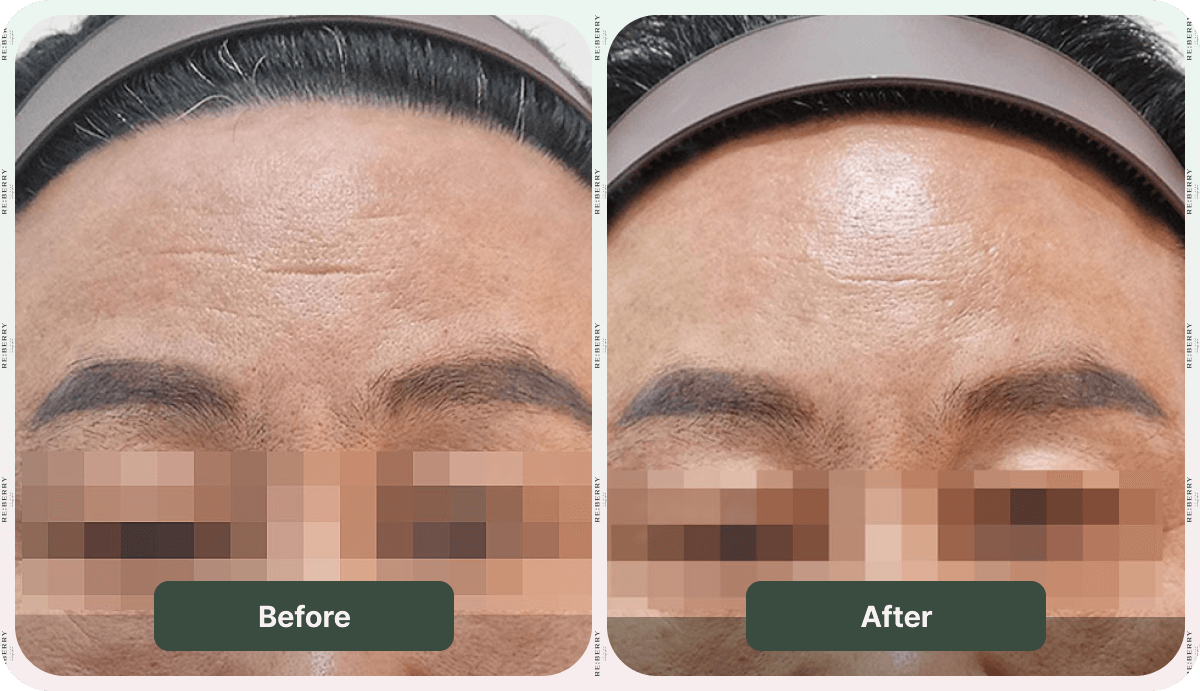
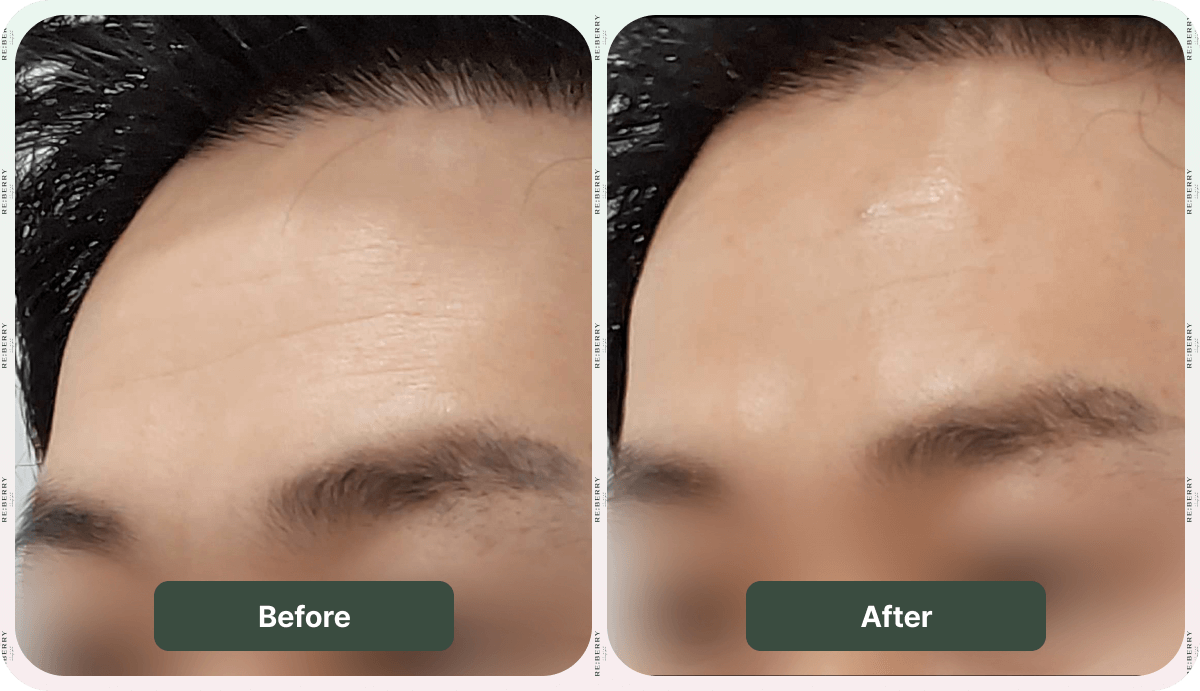
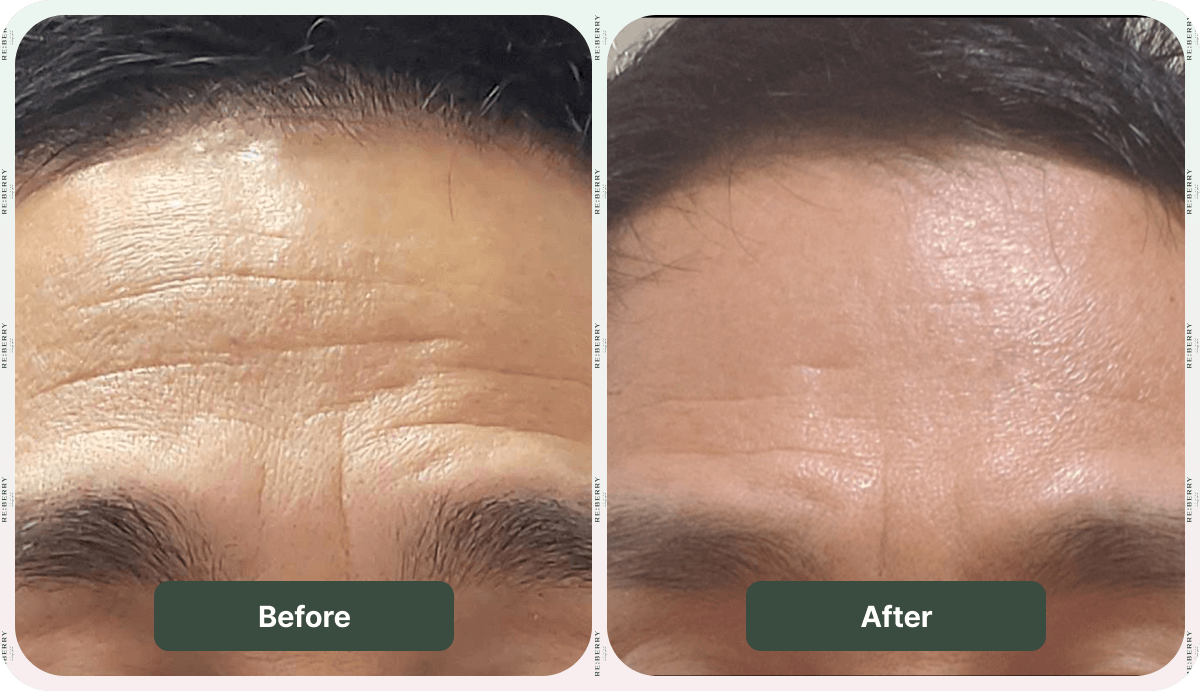
The clinic’s doctors assess your muscles and goals, then explain which areas your plan needs, the unit count, and what drives the cost, in English.
A typical session takes about 10 to 20 minutes, and many airport-transit patients fit it around their flight schedule.
The injection itself is quick, but the muscle-relaxing effect builds over roughly 2 weeks, so cost buys a result that settles gradually.
Softening usually starts within 3 to 5 days and peaks by about 2 weeks, then holds for around 3 to 4 months before a top-up.
Because the effect fades over 3 to 4 months, most patients plan 2 to 3 sessions a year, which is factored into long-term cost.



Botox cost near Incheon Airport depends on the areas you treat, the units of botulinum toxin needed, and how often you repeat across a year. Because dosing is individual, the clinic’s doctors confirm your exact cost at consultation. You can start on our botox injection page.
Botulinum toxin is dosed in units, and each muscle needs a different amount, so two people asking for the same area can need different doses. A single small area sits at one end of the range and a multi-area plan at the other. That is why cost is set after a doctor assesses your muscles, not from a flat menu.
The number of areas you treat is usually the biggest factor, because each area adds its own units of botulinum toxin. Stronger muscles also need more units than fine ones. Your assessment sets both the total dose and how the cost is structured, as our injection treatment page explains.
Yes, a session is typically quick, often about 10 to 20 minutes, which suits transit and stopover schedules. Our Incheon Airport (Yeongjongdo) location is near ICN, so many international patients plan a session around a flight. A consultation confirms whether the timing works for you. See our botox injection page.
Botox results typically last around 3 to 4 months, since the muscle-relaxing effect of botulinum toxin is temporary, not permanent. Duration varies with the dose, the area, and how your muscles respond. Most patients plan a top-up when movement gradually returns, which is why cost is often mapped across a year.
Because the effect fades over about 3 to 4 months, most people have 2 to 3 sessions a year to maintain a consistent result. Your exact rhythm depends on the areas treated and your muscle activity. Your doctor reviews response between visits and adjusts the plan and cost accordingly.
Yes, treating more areas generally costs more because each area needs its own units of botulinum toxin, and those units add up. A single-area treatment uses fewer units than a full plan. Your doctor helps prioritise areas so the plan fits your budget, as our botox page outlines.
Softening usually begins within 3 to 5 days and reaches its peak by around 2 weeks, not immediately after the injection. If you are treating multiple areas, they settle over the same window. Your doctor may schedule a review to fine-tune the dose once the effect has fully developed.
Discomfort is generally brief and mild, as the needles used for botulinum toxin are very fine, and comfort measures are included rather than charged separately. Most patients describe a quick pinch. Your doctor explains what to expect before starting so nothing about the session is a surprise.
Downtime is usually minimal, and many patients return to normal activities the same day, which is convenient for airport-transit visits. You may have brief redness or small marks at injection points. Your doctor will give simple aftercare, such as avoiding rubbing the area, to protect your result.
Yes, botox is often combined with treatments that address different concerns, since it relaxes muscles rather than adding volume or resurfacing skin. For example, some patients pair it with an injectable filler for volume. Your doctor sequences combinations safely and explains how each affects the overall cost.
Botox is priced by units of botulinum toxin, while dermal filler is priced by syringe, because they do different jobs. Botox relaxes muscle movement; filler adds volume or smooths static lines. Which you need, and therefore the cost, depends on your concern, as your doctor explains at consultation.
Botox is widely performed and generally considered safe when a trained doctor selects the right muscles and an appropriate dose. A consultation reviews your history to reduce risks like temporary asymmetry or heaviness. You can read more about the approach on our botox injection page first.
Botox is generally not advised during pregnancy or breastfeeding, or for people with certain neuromuscular conditions such as myasthenia gravis. An allergy to the toxin or its components is also a contraindication. Your doctor reviews your medical history and current medications at consultation to confirm you are a suitable candidate.
Simple steps help: stay upright for a few hours, avoid rubbing or massaging treated areas, and skip intense exercise, saunas, and heavy heat that day. These reduce the chance of the toxin spreading beyond the target muscle. Your doctor gives tailored aftercare, which matters most in the first hours after injection.
For most botox sessions, a very short stay is enough, since the injection is quick and downtime is minimal. Many transit patients treat it as a same-day or overnight stop near ICN. Because results take about 2 weeks to settle, any review can be handled remotely if you have already flown home.
Yes, flying shortly after botox is generally fine, which makes an airport-adjacent session practical for travellers. Simply follow the same aftercare, avoiding rubbing the treated area and staying upright for a few hours. If you have questions once home, our English-speaking team can advise on your result remotely.
International patients often complete a first session near the airport and manage top-ups on return trips, since results settle over about 2 weeks. Between visits, the clinic offers remote check-ins in English so your plan stays on track. Ongoing skin care can continue at home, and your notes are kept on file.
| Single-Area Botox | Multi-Area Botox Plan | Dermal Filler (Different Purpose) | |
|---|---|---|---|
| Mechanism | Botulinum toxin type A relaxes one muscle group | Botulinum toxin type A across several muscle groups | Adds volume or smooths static lines, not muscle relaxation |
| Best for | One dynamic-line concern | Several dynamic-line areas at once | Volume loss or deeper static folds |
| Units / material | Fewer units, lower total | Units add up across areas | Priced by syringe, not toxin units |
| Downtime | Usually minimal | Usually minimal across areas | Minimal, occasional swelling or bruising |
| Results timeline | Builds over about 2 weeks | Builds over about 2 weeks across areas | Often visible immediately |
| Longevity | Around 3 to 4 months | Around 3 to 4 months | Varies by product, often longer than toxin |
Real verified reviews from our Google Business Profile, across all Reberry Clinic locations.
PULLED LIVE FROM GOOGLE · GANGNAM · MYEONGDONG · INCHEON AIRPORT
Your treatment is planned and performed by experienced, MFDS-registered doctors across our Seoul-area clinics, with multilingual support for international patients.
Flagship clinic · KOL for leading lifting & regenerative devices · Featured in Authority Magazine (2026)

Multilingual tourist care beside Myeongdong Cathedral

Fast, effective care 20 minutes from the terminals
Message us on WhatsApp for a free consultation in English about your botox goals and a transparent, individualised cost near Incheon Airport.