



Gangnam
Dr. Yoon-Gon Ryu
Aesthetic Medicine Specialist
Flagship clinic · KOL for leading lifting & regenerative devices · Featured in Authority Magazine (2026)

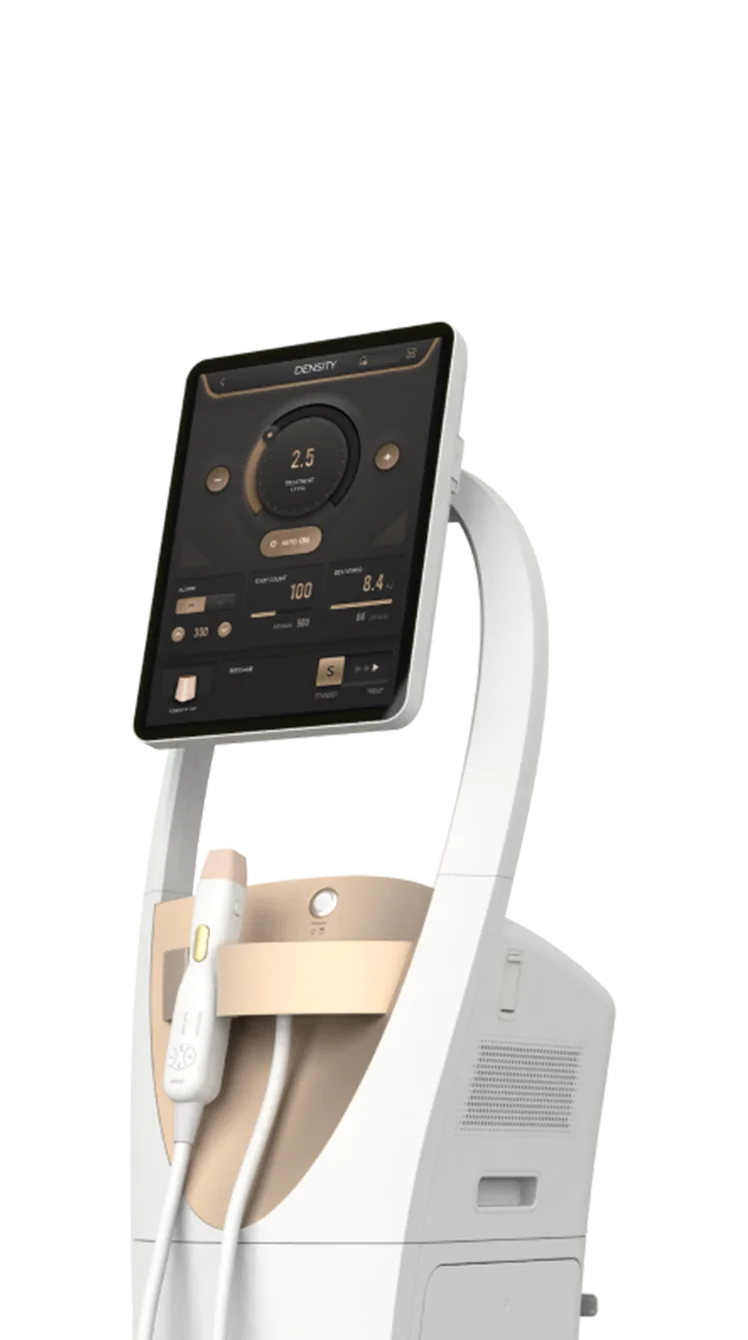
Korean glass skin is built with injectable skin boosters that deliver hydration and matrix support into the dermis, typically over a course of 3 sessions spaced weeks apart.
Glass skin treatment in Myeongdong, Seoul is a course of injectable skin boosters that place hydrating and matrix-building ingredients into the dermis to create a smooth, dewy, translucent finish. Delivered at our Myeongdong (Seoul) location, it typically runs across 3 sessions, with your exact plan set by the clinic’s doctors at consultation.
One-on-One guidance from a dedicated doctor, ensuring your skin is professionally monitored and treated from start to finish.
Fluent assistance in English, Japanese, and Chinese, making communication clear, respectful and comfortable for international patients.
Over 100,000 patients worldwide have received our personalized dermatological care, highlighting our expertise and reliable results.
Glass skin treatment is the medical approach behind the Korean “glass skin” look: skin so hydrated, even, and smooth that it appears translucent and reflective, like glass. Rather than a single product, it is a category of injectable skin boosters delivered into the dermis to raise hydration, refine texture, and improve reflectivity, usually across a short course of sessions.
Unlike surface skincare, these boosters work below the epidermis. Hyaluronic-acid-family boosters draw and hold water in the dermis, while extracellular-matrix (ECM) and polynucleotide options add structural support that improves density and elasticity over time. A plan is chosen to match your skin, and results build session by session rather than appearing after one visit.
At Reberry Clinic, glass skin care is consultation-led. At our Myeongdong (Seoul) location — 5, Myeongdong 10-gil, Jung-gu, about 5 minutes from Myeongdong Station — Dr. Seung Jae Baek, Medical Director, and the clinic’s doctors assess your skin and build a tailored plan in English, so international patients can plan around their trip to Seoul.
For visual context, browse glass facial before and after photos, and see how the Korean glass facial protocol is structured.
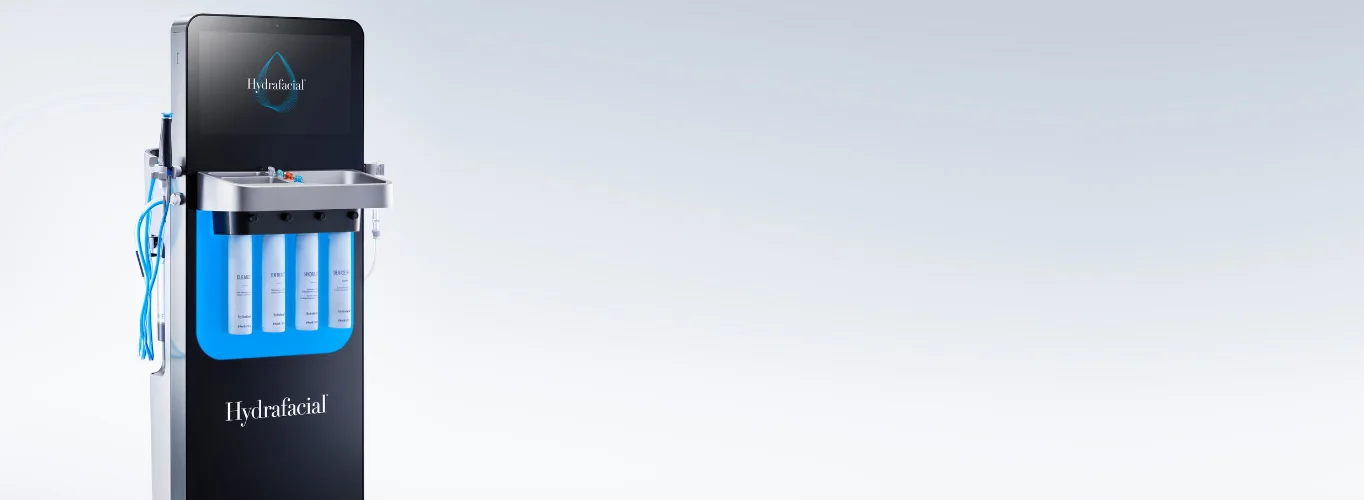
Glass skin boosters are micro-injections placed into the dermis, the living layer beneath the surface where hydration, collagen, and elasticity are determined. Different boosters use different mechanisms, and a plan may combine them. Hyaluronic-acid-family boosters, such as stabilized HA skin boosters and SkinVive-type products, bind water in the dermis to restore plumpness, smoothness, and light reflection. Polynucleotide boosters use salmon-DNA fragments to support repair and hydration. ECM boosters, such as Re2o, deliver particulated human acellular dermal matrix (hADM) — roughly 80% collagen with elastin and glycosaminoglycans — to physically replenish the matrix that thins with age. Because each mechanism addresses a different part of skin quality, the clinic’s doctors sequence a course rather than relying on one session, and your reflective “glass” finish develops gradually as hydration and dermal density improve.
One Reberry Clinic, multiple Seoul-area locations. Pricing & current promotions are listed on each branch's own site — tap a clinic to view pricing & book.
Our flagship in the heart of Gangnam.
In Seoul's shopping & tourism heart.
A beauty stop between flights.
The newest Reberry Clinic — in Seoul's trend district.
ONE REBERRY CLINIC · MFDS-REGISTERED DEVICES · MULTILINGUAL CARE AT EVERY LOCATION
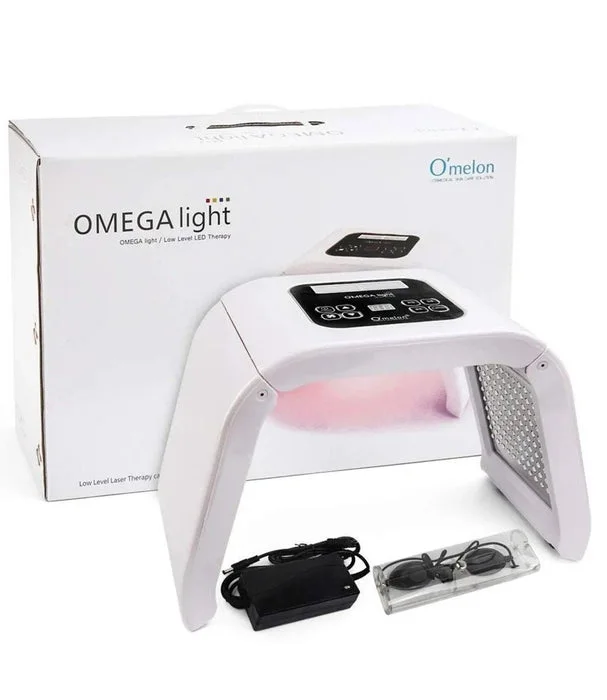

The clinic’s doctors evaluate hydration, texture, and elasticity, then choose from 3 booster families (HA-based, polynucleotide, ECM) for your plan.
Skin is cleansed and a topical anesthetic is applied for about 20 to 30 minutes so the micro-injections stay comfortable.
Fine needles or a multi-injector place the booster across the treatment zones in a session lasting roughly 20 to 40 minutes.
Most glass skin plans run 2 to 3 sessions spaced about 2 to 4 weeks apart, because hydration and density build cumulatively.
Results commonly last 6 to 12 months depending on the booster, so a top-up every few months helps sustain the finish.

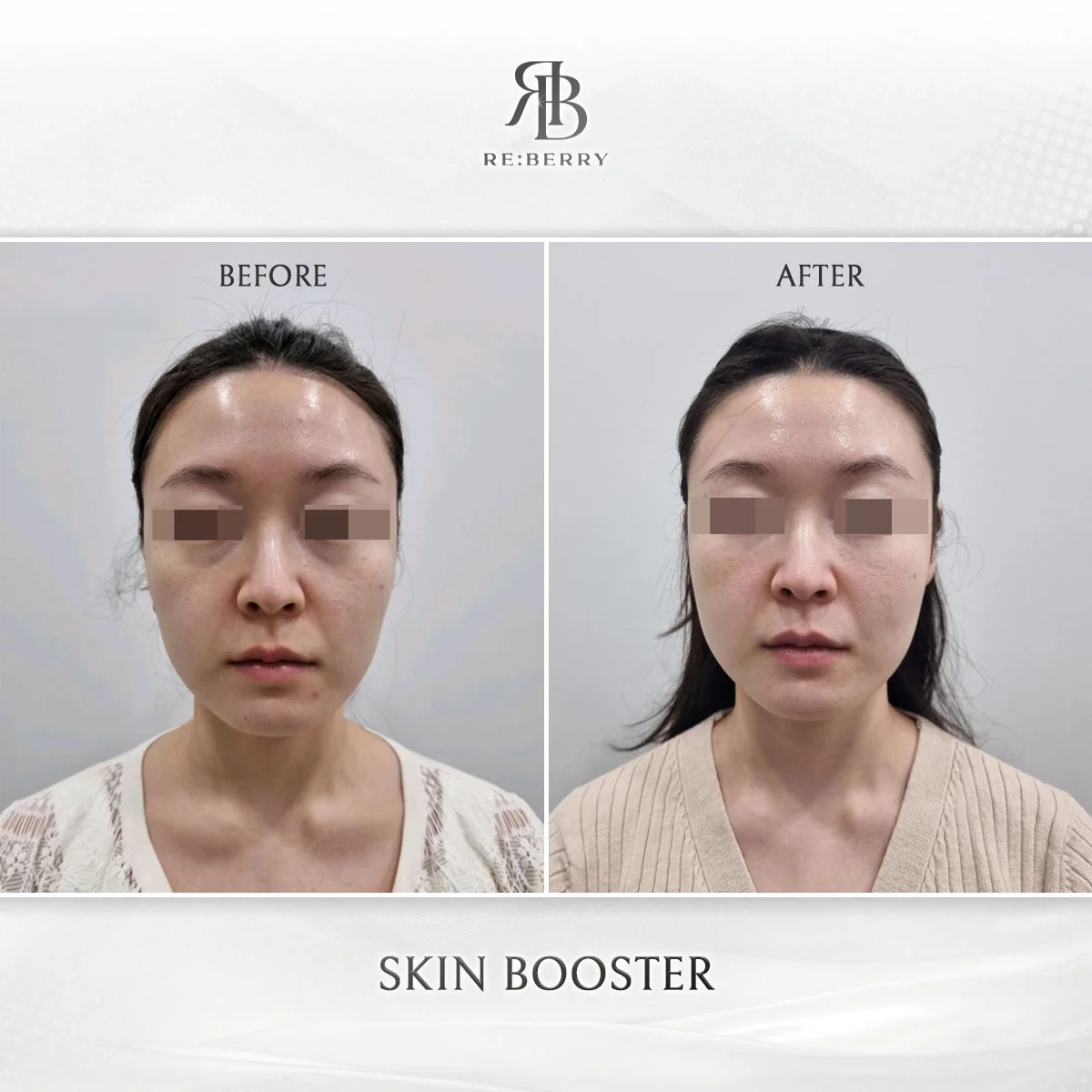
See representative outcomes from Reberry Clinic. Results build gradually and vary by individual; your plan is assessed at consultation.
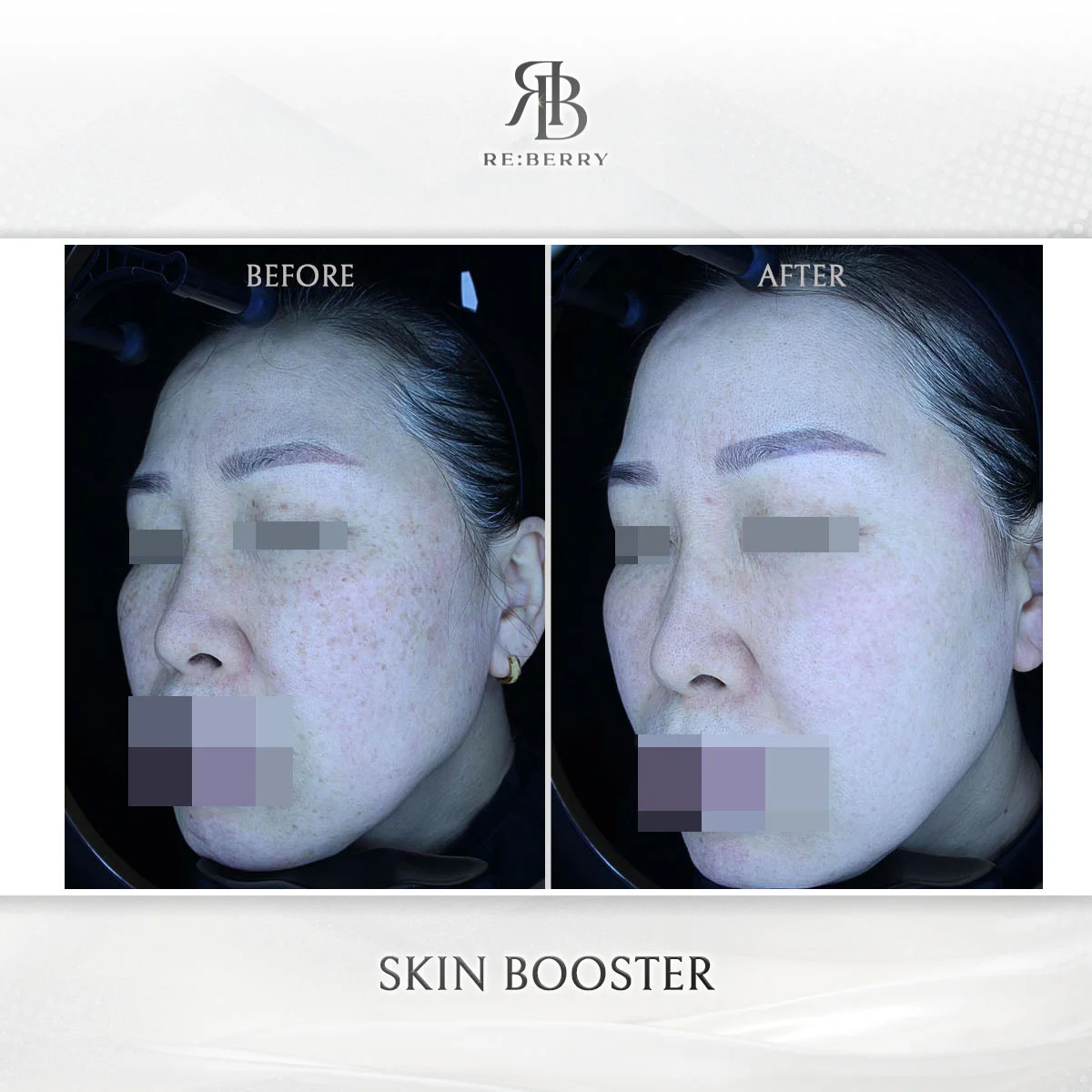
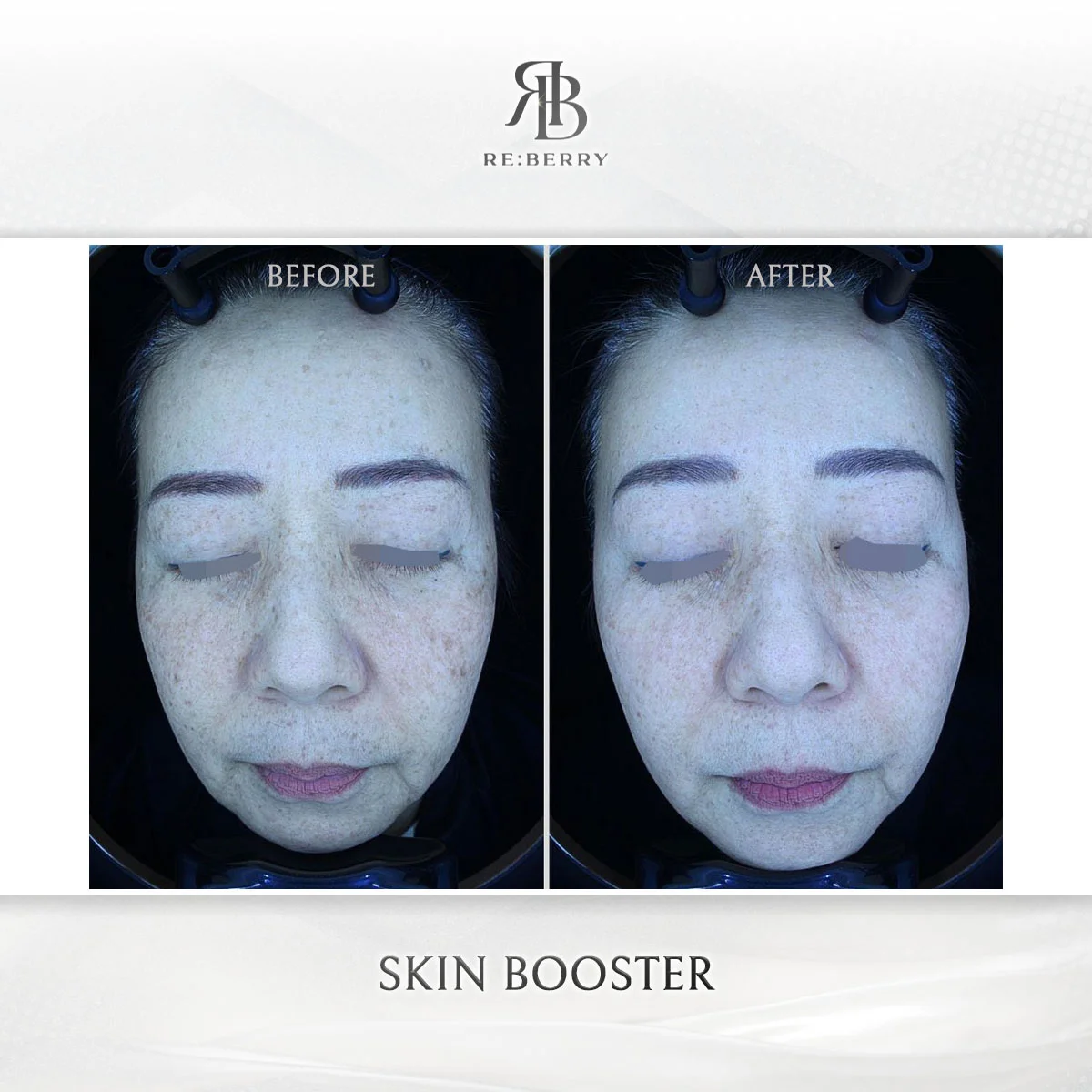
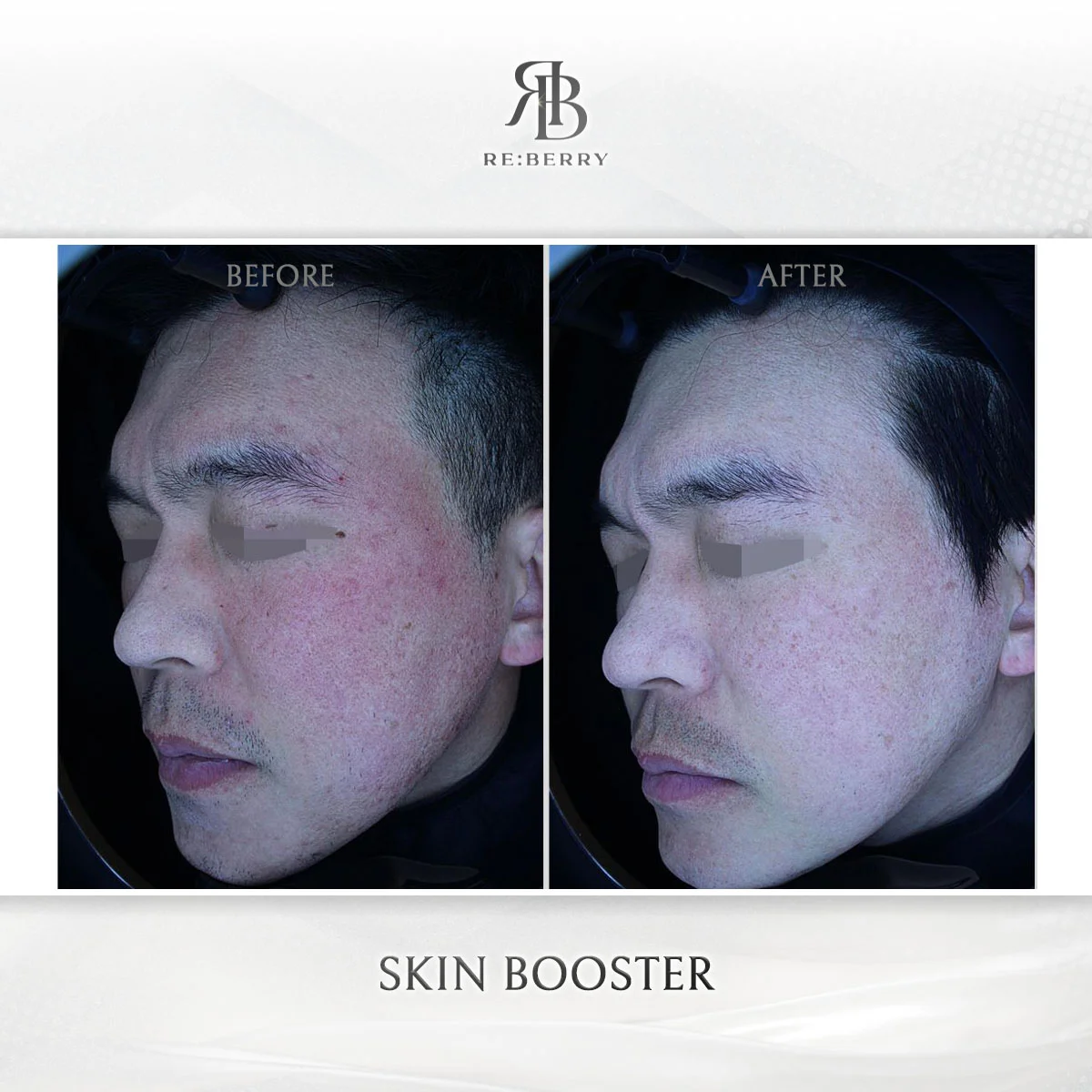
At our Myeongdong (Seoul) location, the clinic’s doctors assess your skin and recommend which booster or combination suits your goals, in English.
After numbing for about 20 to 30 minutes, the session itself usually takes 20 to 40 minutes depending on the booster and area.
Glass skin is planned as a course, so most patients complete 2 to 3 sessions spaced a few weeks apart for full effect.
Hydration and glow often appear within days, while density and texture continue improving over the following weeks.
Results commonly last 6 to 12 months; gentle skincare, sunscreen, and periodic top-ups help maintain the finish.



Glass skin treatment is a course of injectable skin boosters that place hydrating and matrix-building ingredients into the dermis for a smooth, dewy, translucent finish. It is a category rather than one product, so options include HA-based, polynucleotide, and ECM boosters chosen for your skin. See our glass facial skin page.
The right booster depends on your skin type and goals across 3 families: HA boosters for fast hydration and glow, polynucleotides for overall skin quality, and ECM boosters like Re2o for density and firmness. A consultation matches the option or combination to your skin. You can explore injection treatments for context.
Discomfort is usually mild because a topical anesthetic is applied for about 20 to 30 minutes before the micro-injections. Most patients describe brief pricking rather than pain. A multi-injector or fine needles keep the process quick, and any sensitivity settles soon after the session ends.
Downtime is minimal, typically brief redness, tiny bumps, or slight swelling that settles within hours to a day or two. Most people return to normal activities the same day. Makeup can usually be worn the next day, and your doctor gives specific aftercare based on which booster was used.
Hydration and glow often appear within a few days, while smoother texture and density build over the following weeks as the course progresses. Because glass skin is cumulative, the reflective finish looks most complete after your full series of 2 to 3 sessions rather than after one visit.
Most glass skin plans use 2 to 3 sessions spaced about 2 to 4 weeks apart, because hydration and dermal support build gradually. The exact number depends on your skin and the booster chosen. Your doctor confirms the plan at consultation and adjusts it based on how your skin responds.
Results commonly last 6 to 12 months depending on the booster; HA boosters tend toward the shorter end and ECM boosters like Re2o toward the longer. Glass skin is maintained rather than fixed once, so periodic top-ups keep the finish. Your doctor suggests a maintenance rhythm at consultation.
Yes, boosters are often combined or paired with lasers or lifting for a fuller result, sequenced so skin is not over-stressed. For example, a booster course may follow gentle resurfacing. Your doctor plans the order, and you can review options like Rejuran Healer alongside boosters.
Glass skin boosters are widely used and generally considered safe when a trained doctor selects the right product and technique for your skin. Temporary redness or small bumps are the most common effects. A consultation screens for contraindications, and the clinic’s doctors monitor comfort and technique throughout each session.
The most common effects are temporary redness, mild swelling, tiny injection bumps, or slight bruising, which usually settle within days. Serious reactions are uncommon with appropriate product selection. Your doctor reviews your history for allergies and blood-thinning medication and explains what to expect for the specific booster in your plan.
Yes, dry and dull skin often respond well because HA-based boosters draw water into the dermis while ECM and polynucleotide options support texture and density. A tailored plan targets your specific concern. Supportive home care and a skin care routine help extend the glow between sessions.
Most healthy adults wanting more hydration, glow, and smoother texture are suitable candidates. It works across skin types when the booster is matched correctly. A consultation confirms your goals and screens for contraindications such as active infection or pregnancy, so the plan is both safe and appropriate for your skin.
Glass skin boosters spread hydration and matrix support broadly through the dermis to improve overall quality, while injectable fillers add targeted volume to a specific area. Boosters refine texture and glow rather than reshape contour. Many patients use each for different goals, and your doctor explains which fits your case.
Keep the skin clean, avoid heavy makeup for about a day, and use daily sunscreen and gentle moisturizer to protect the result. Avoid saunas, intense exercise, and alcohol for a day or two. A consistent skin care routine helps sustain hydration and glow between booster sessions.
Glass skin treatment is offered at our Myeongdong (Seoul) location, at 5, Myeongdong 10-gil, Jung-gu, about 5 minutes from Myeongdong Station. Dr. Seung Jae Baek, Medical Director, and the clinic’s doctors provide care in English, making it convenient for international patients staying in central Seoul.
For a first session, 2 to 3 days is comfortable, allowing a consultation, the procedure, and a short review. Because glass skin runs as a course, many international patients begin in Seoul and continue on return trips. Our English-speaking team at Myeongdong helps coordinate your timing.
Yes, flying within a day or so is generally fine, since booster injections are minimally invasive. Cabin air is drying, so moisturize and protect treated skin from sun. Avoid heavy makeup on the flight, and your doctor gives specific aftercare so you can travel comfortably after your Myeongdong session.
International patients can complete a booster course across one or more visits, and the clinic offers remote check-ins in English between trips. Your treatment notes are kept on file for continuity. You can also maintain results at home with a supportive skin care routine until your next visit.
| HA Skin Booster | Polynucleotide (Rejuran) | ECM Booster (Re2o) | |
|---|---|---|---|
| Mechanism | Hyaluronic acid binds water in the dermis | Salmon-DNA polynucleotides support repair and hydration | Particulated hADM replenishes the collagen matrix |
| Best for | Immediate glow, dryness, dull texture | Overall skin quality, redness-prone skin | Density, fine lines, structural firmness |
| Pain / comfort | Mild with numbing | Mild with numbing | Mild with numbing |
| Downtime | Minimal, brief redness or tiny bumps | Minimal, brief redness | Minimal, brief redness or swelling |
| Results timeline | Glow often visible within days, builds over sessions | Builds across the course over weeks | Builds over weeks as matrix reforms |
| Longevity | Around 6 months, varies | Several months, varies | Often around a year, varies |
| Cost factors | Depends on product and sessions | Depends on sessions and product tier | Higher-tier booster; depends on volume and sessions |
Real verified reviews from our Google Business Profile, across all Reberry Clinic locations.
PULLED LIVE FROM GOOGLE · GANGNAM · MYEONGDONG · INCHEON AIRPORT
Your treatment is planned and performed by experienced, MFDS-registered doctors across our Seoul-area clinics, with multilingual support for international patients.
Flagship clinic · KOL for leading lifting & regenerative devices · Featured in Authority Magazine (2026)

Multilingual tourist care beside Myeongdong Cathedral

Fast, effective care 20 minutes from the terminals
Message us on WhatsApp for a free consultation in English about a glass skin plan at our Myeongdong (Seoul) location.