

Gangnam
Dr. Yoongon Ryu
Aesthetic Medicine Specialist
Flagship clinic · KOL for leading lifting & regenerative devices

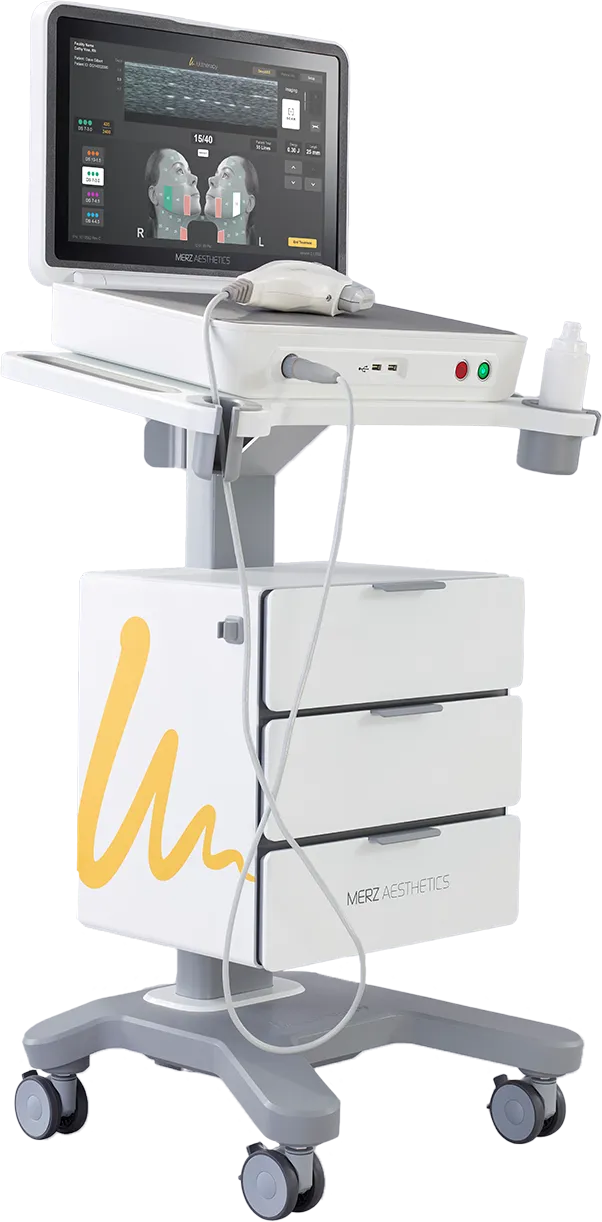
Non-surgical face lifting uses ultrasound, radiofrequency, or absorbable threads and carries a generally low rate of serious complications, with most side effects mild and settling within 1 to 2 weeks.
Non-surgical face lifting in Korea is generally safe with a low rate of serious complications when performed by an experienced doctor using regulated devices and threads. Most side effects, such as redness, swelling or brief tenderness, are mild and resolve within hours to 2 weeks. Safety depends on candidacy, depth settings and sterile technique, assessed at consultation.
One-on-One guidance from a dedicated doctor, ensuring your skin is professionally monitored and treated from start to finish.
Fluent assistance in English, Japanese, and Chinese, making communication clear, respectful and comfortable for international patients.
Over 100,000 patients worldwide have received our personalized dermatological care, highlighting our expertise and reliable results.
Non-surgical face lifting is considered a low-risk way to firm and lift the face because it avoids incisions, skin removal and general anaesthesia. The main approaches use focused ultrasound that reaches the deep SMAS layer, radiofrequency that heats the dermis, or absorbable PDO/PLLA threads that reposition tissue. Each works by stimulating your own collagen at a controlled depth, so the surrounding tissue is largely protected and the serious-complication rate stays low in published series.
No aesthetic procedure is entirely without risk, and honesty matters. For energy devices, the common side effects are brief redness, mild swelling, warmth or temporary tenderness that settle within hours to a couple of days. Thread lifting can add a few days of swelling or bruising, with occasional small dimples or asymmetry that ease as tissue settles. Less common issues, such as a localised burn, nerve irritation or minor infection, are uncommon and usually manageable, and become far less likely with appropriate settings and experienced placement.
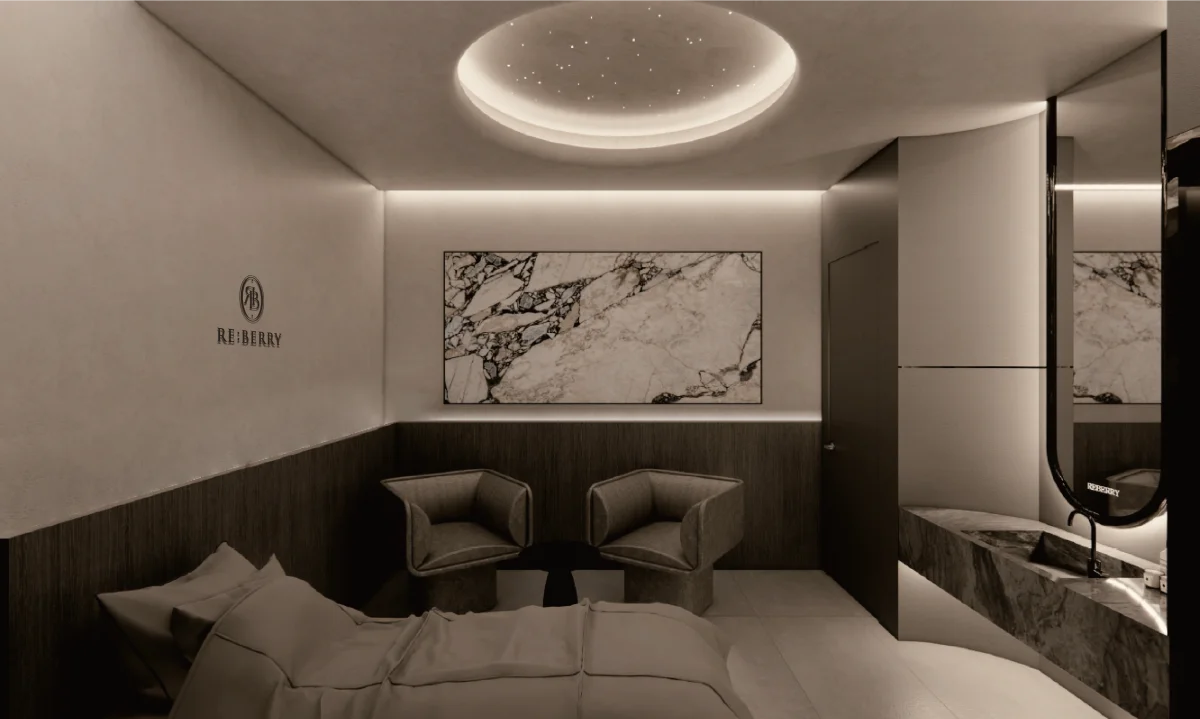
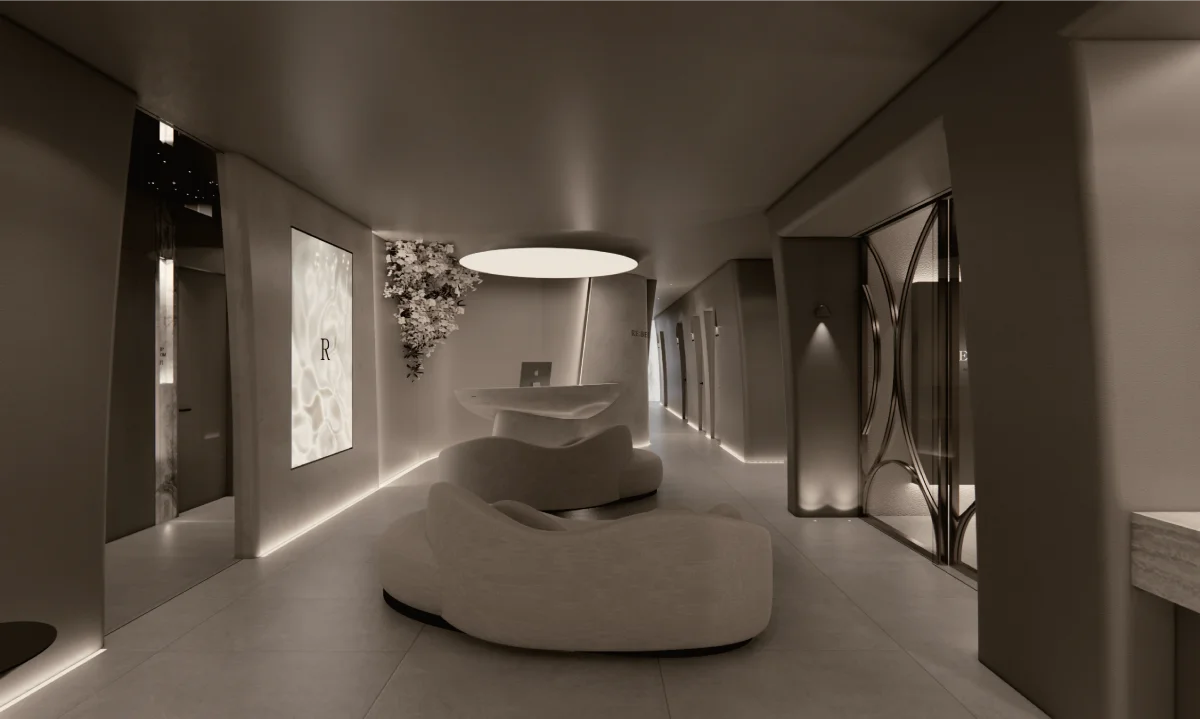
Reberry Clinic is a dermatology clinic and non-surgical lifting is performed by the clinic’s doctors. The clinic serves international patients across three Seoul-area locations (Gangnam, Myeongdong, Incheon Airport) with English-speaking support, and reviews your medical history, expectations and suitability before recommending a plan, so safety is judged individually for your skin rather than treated as a given.
The safety of non-surgical face lifting comes from delivering energy or threads at a precise, controlled depth. Micro-focused ultrasound creates tiny thermal coagulation points around 65 degrees Celsius at preset depths such as 4.5 mm and 3.0 mm while imaging the tissue plane, so heat is confined to the target and the skin surface is spared. Monopolar radiofrequency warms the dermis to roughly 40 to 45 degrees Celsius with built-in cooling, spreading energy gently rather than focusing it.
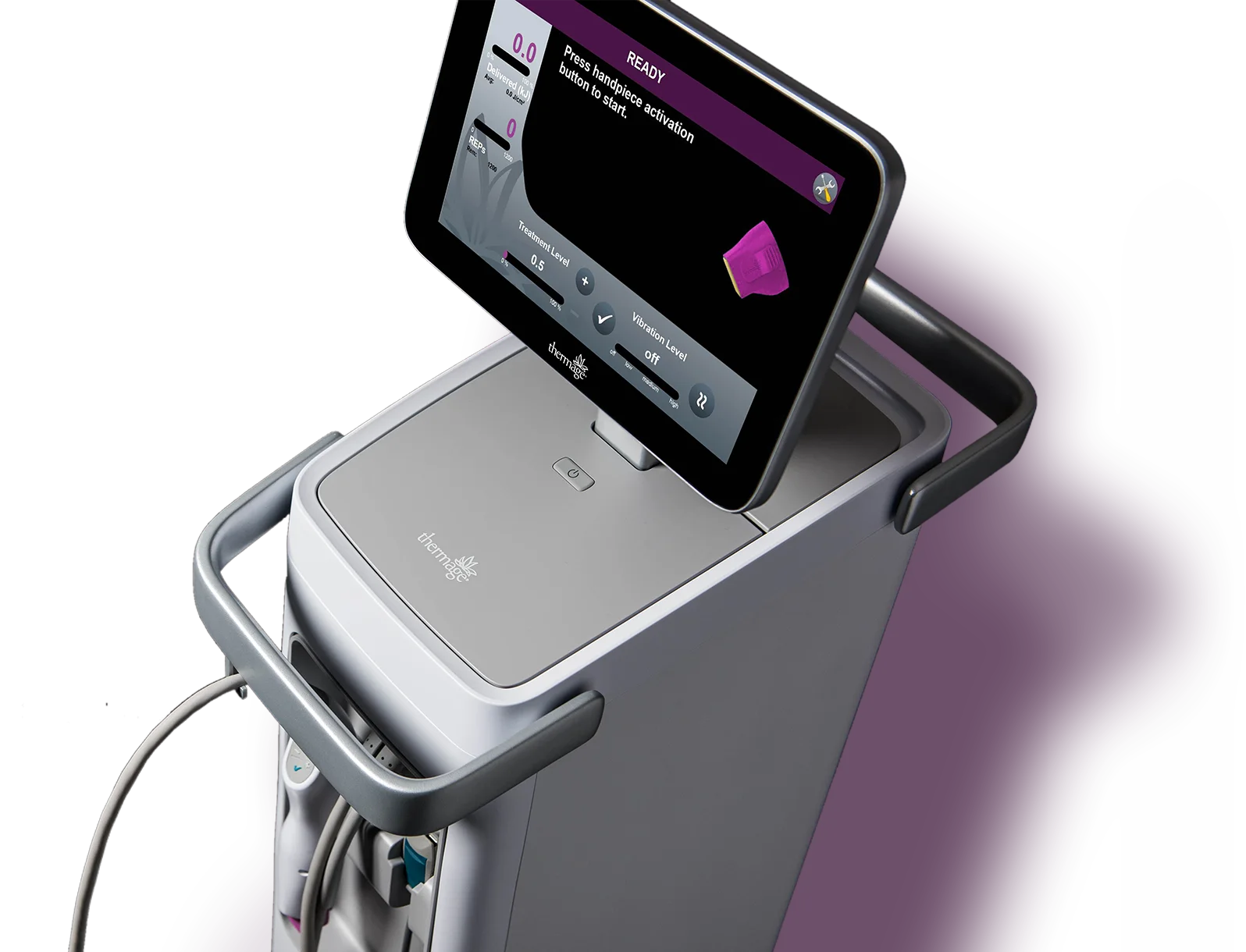
Thread lifting uses absorbable PDO or PLLA threads from the same material family long used in surgical sutures; they dissolve over several months into harmless byproducts, so nothing permanent is left behind. Because each method targets a defined layer, the clinic matches the modality to your laxity rather than using one tool for every face. When a gentler or different approach suits you, the doctor may suggest an imaging-guided ultrasound device or a mid-dermis ultrasound device that needs no insertion at all.
One Reberry Clinic, multiple Seoul-area locations. Pricing & current promotions are listed on each branch's own site — tap a clinic to view pricing & book.
Our flagship in the heart of Gangnam.
In Seoul's shopping & tourism heart.
A beauty stop between flights.
The newest Reberry Clinic — in Seoul's trend district.
ONE REBERRY CLINIC · MFDS-REGISTERED DEVICES · MULTILINGUAL CARE AT EVERY LOCATION
The doctor screens the 4 main contraindications: pregnancy, active infection or acne, implanted devices and bleeding risk.
Suitability is confirmed for your laxity, since 1 modality does not fit every degree of sagging.
For energy devices, depths such as 4.5 mm and 3.0 mm and conservative energy levels are selected to protect surrounding tissue.
Treatment is performed in-clinic with sterile, single-use tips or cannulas in a session of about 30 to 90 minutes.
You receive written instructions and warning signs to watch for over the first 1 to 2 weeks.
See representative outcomes from Reberry Clinic. Results build gradually and vary by individual; your plan is assessed at consultation.
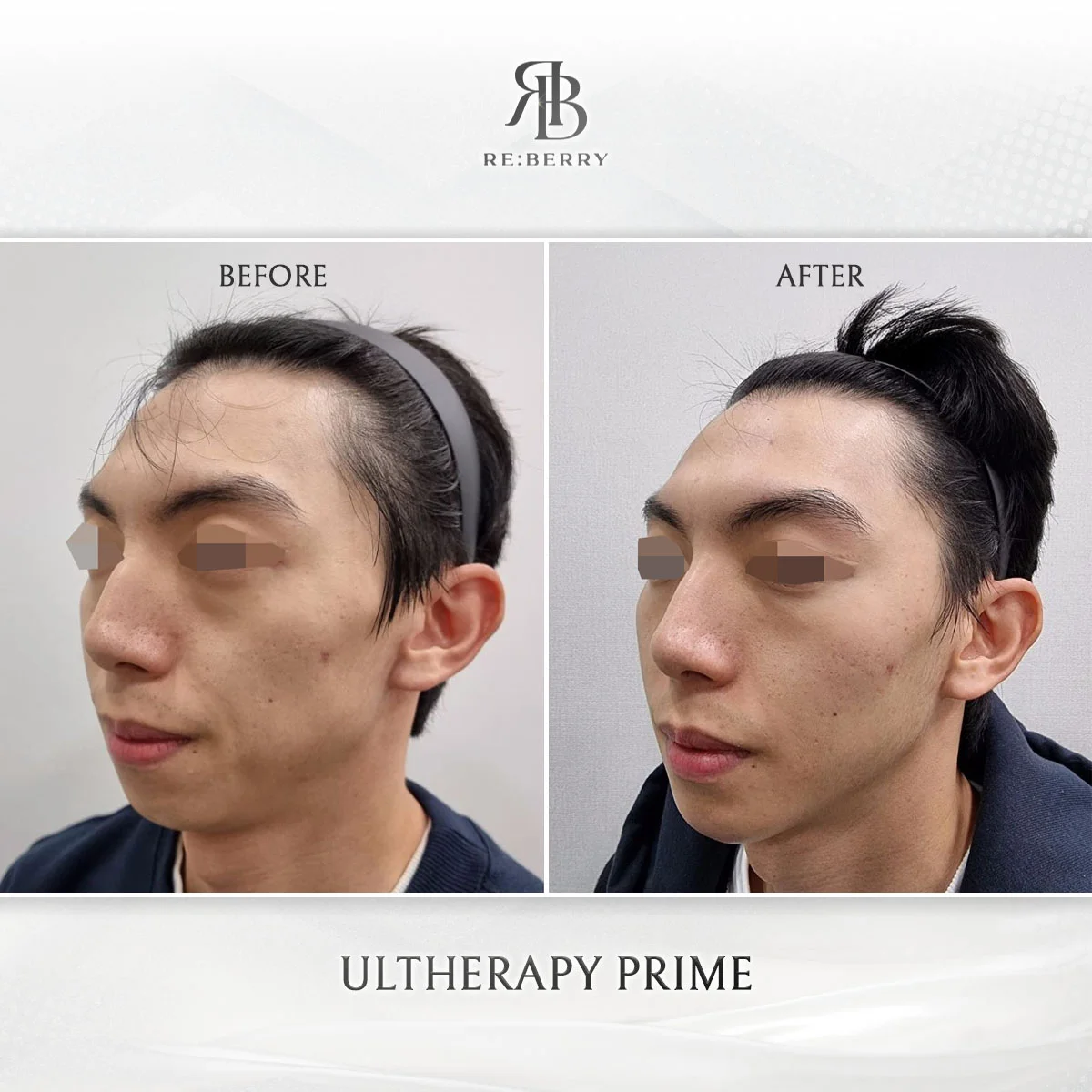
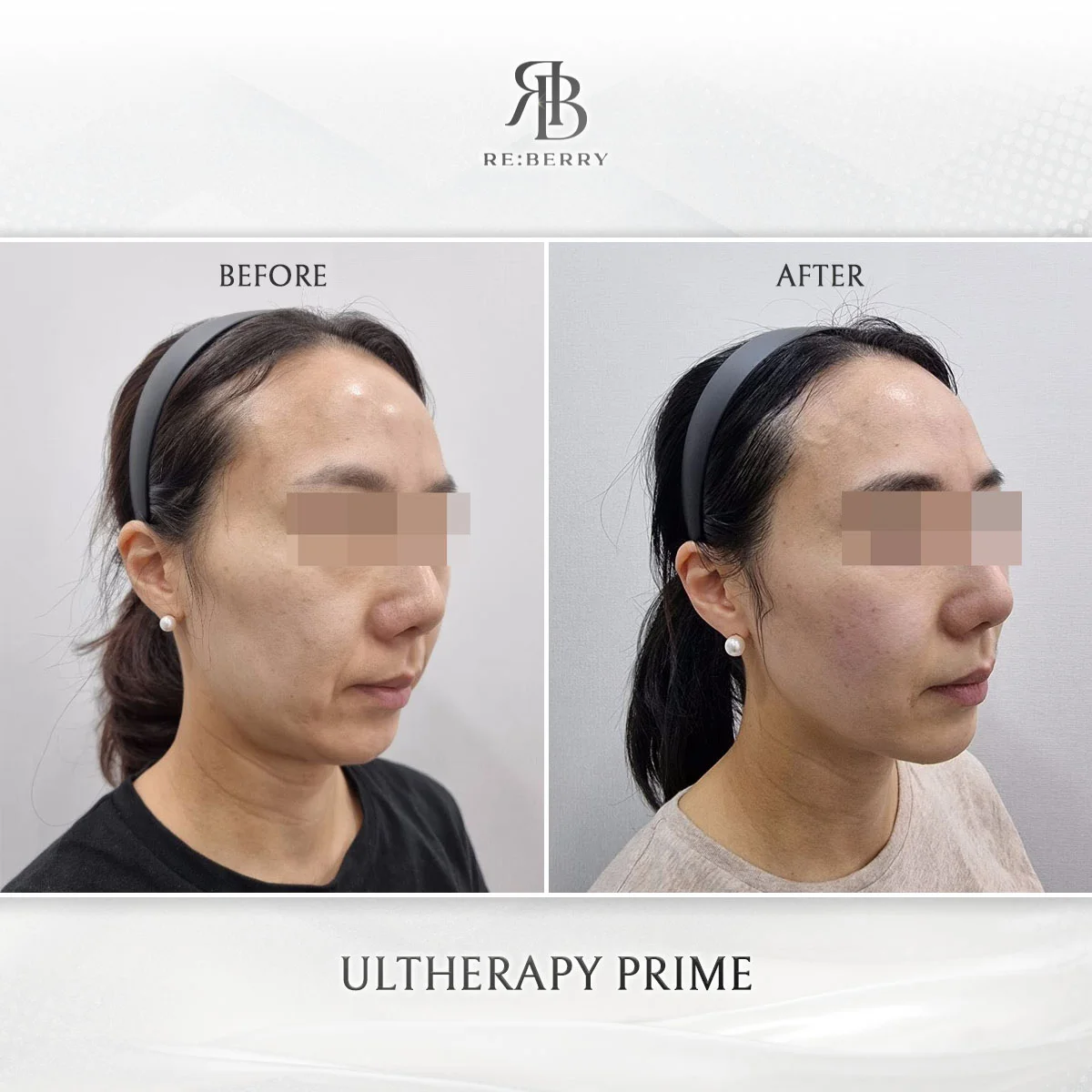
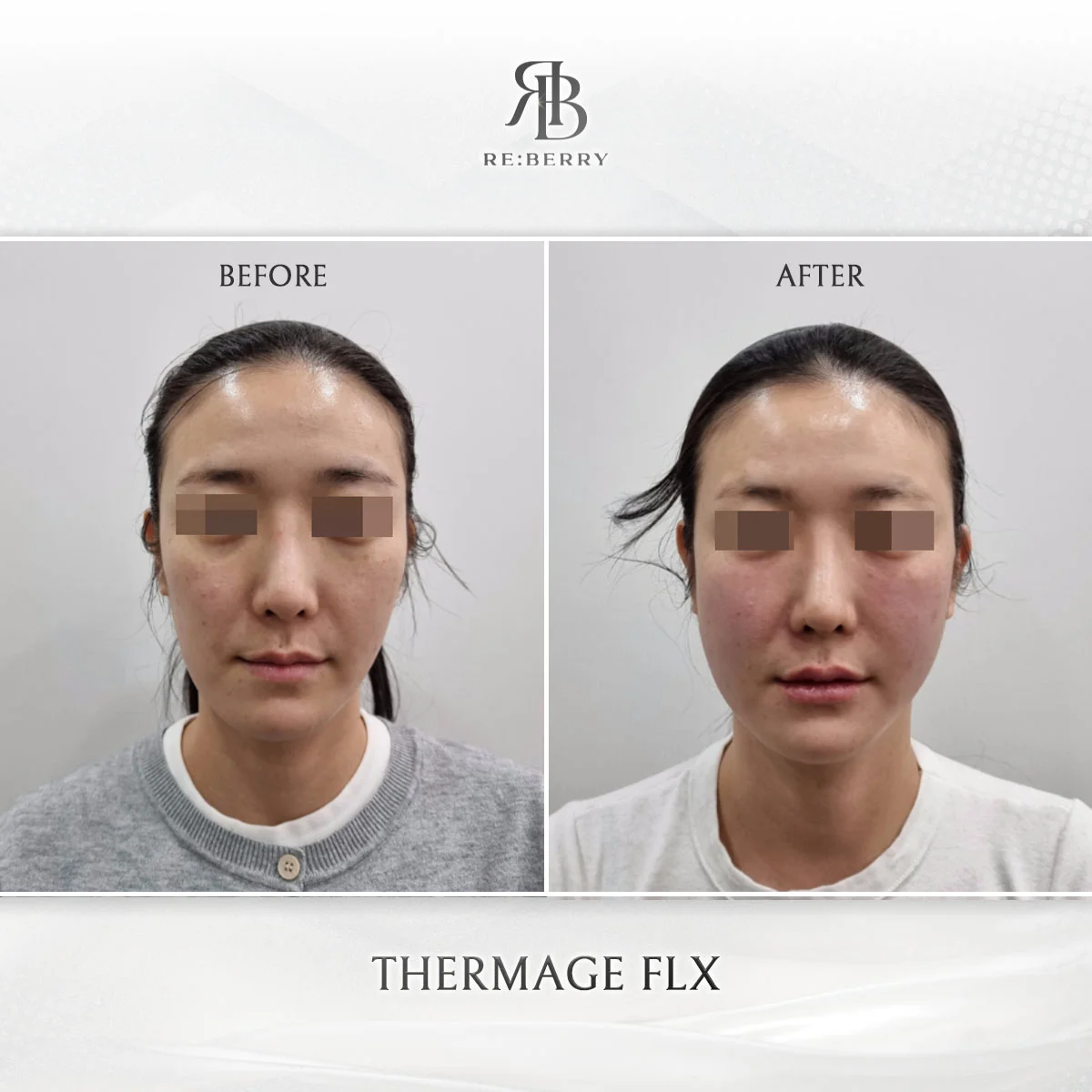
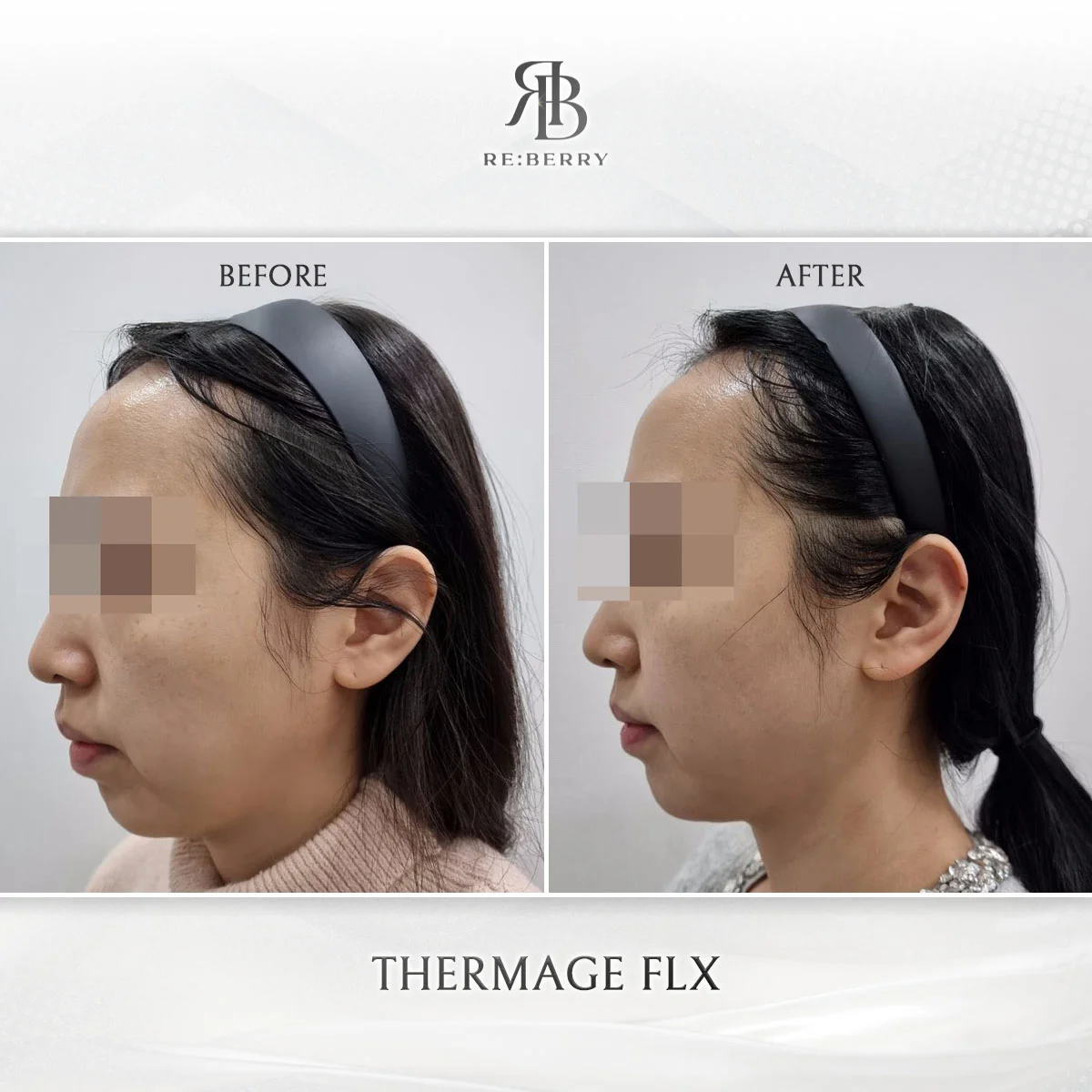
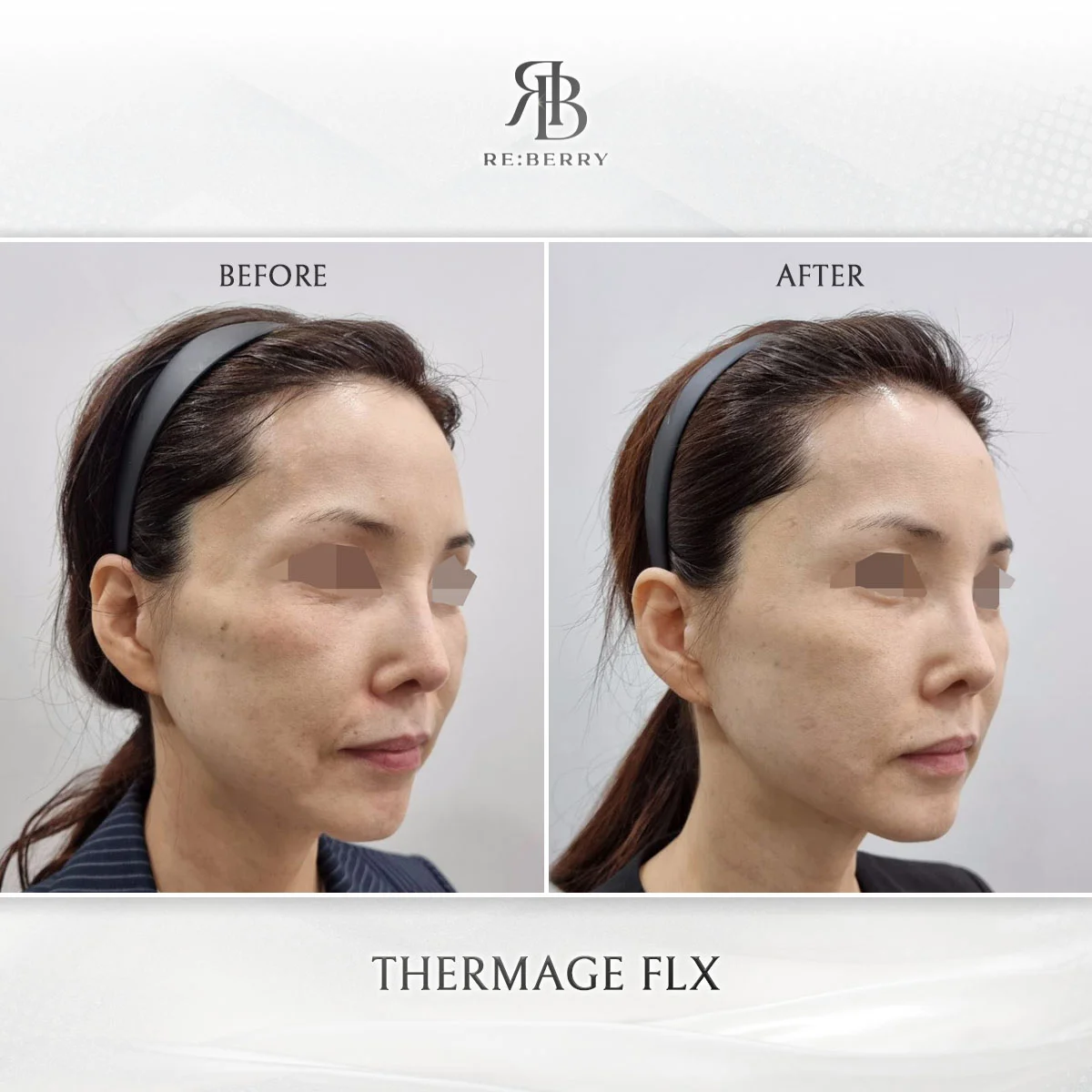
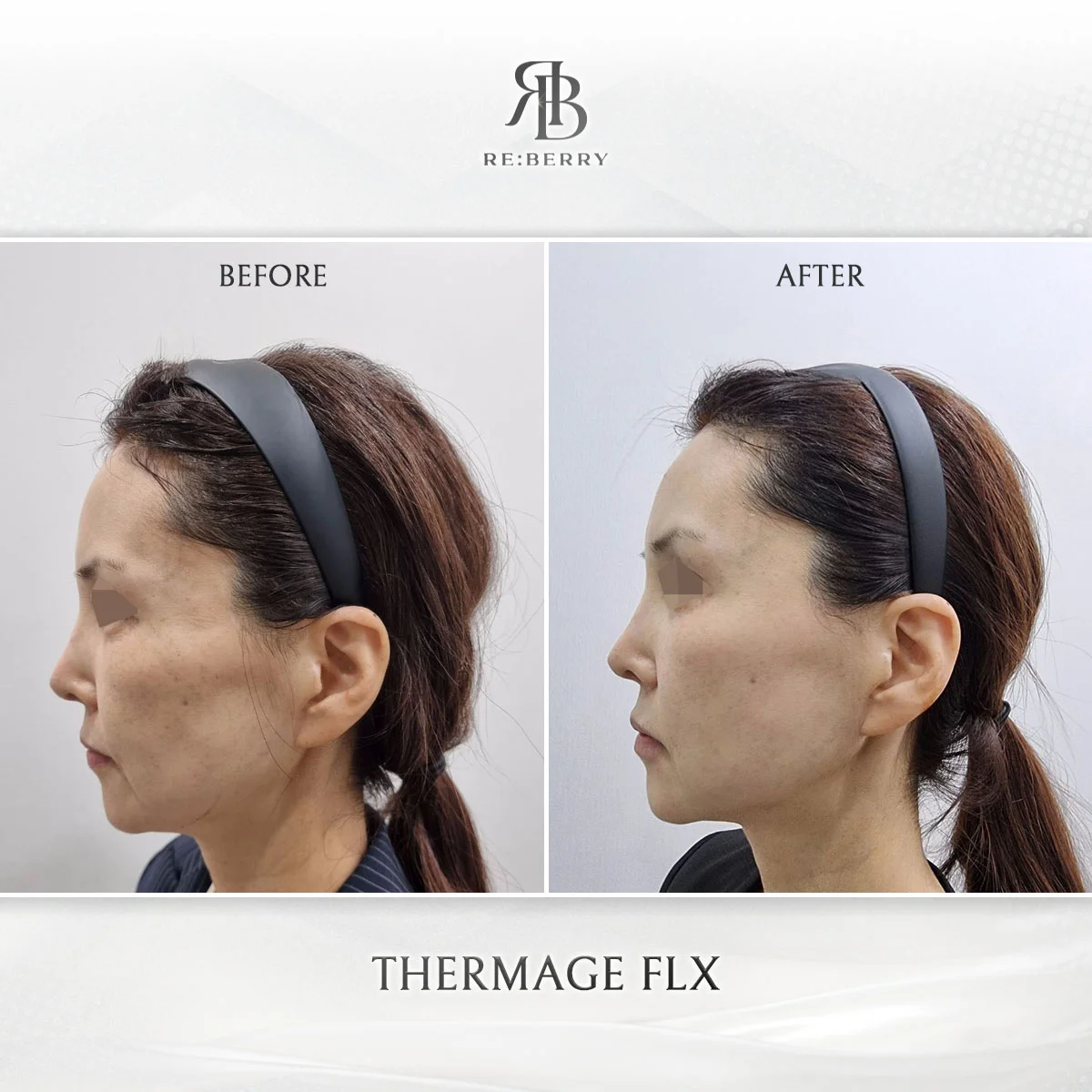
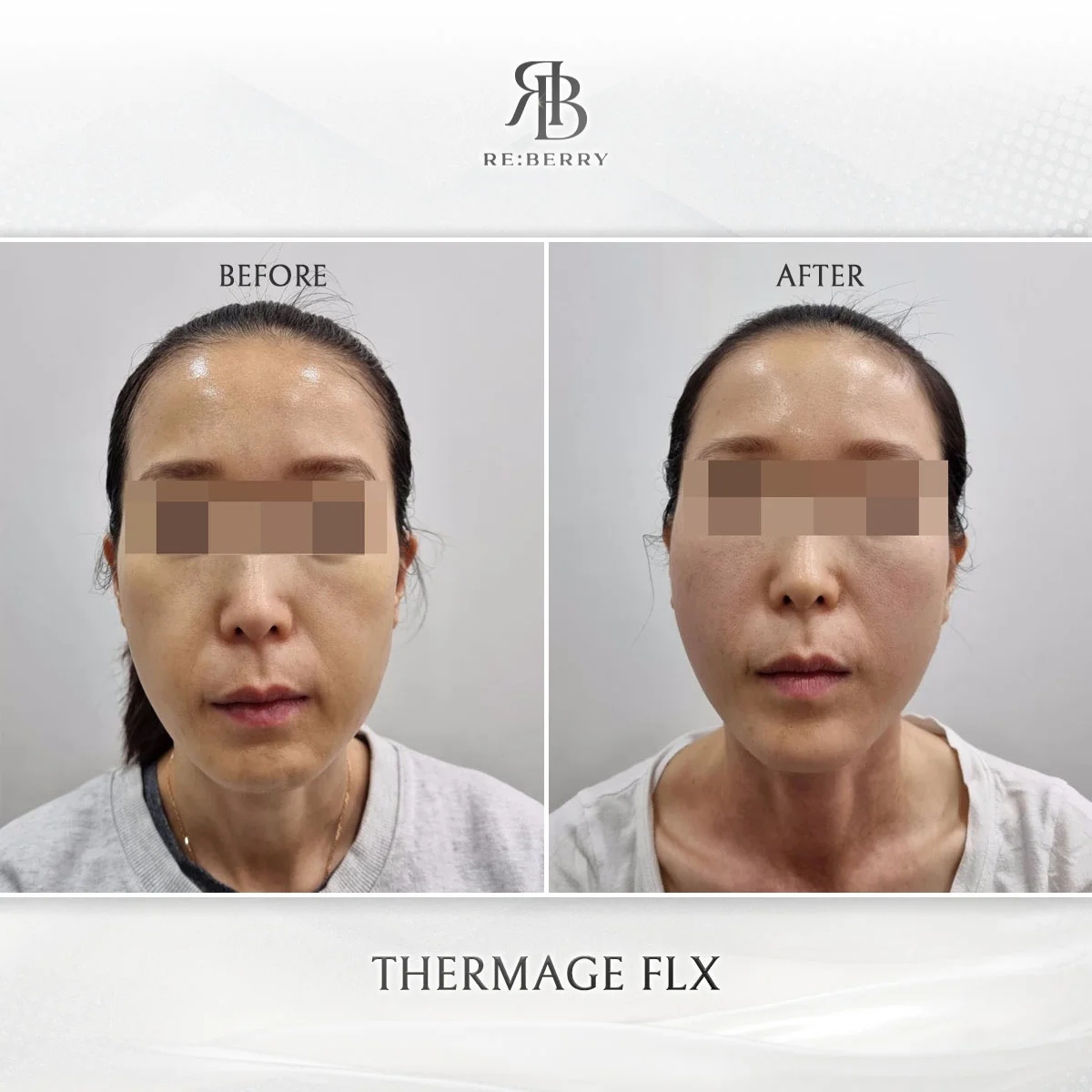
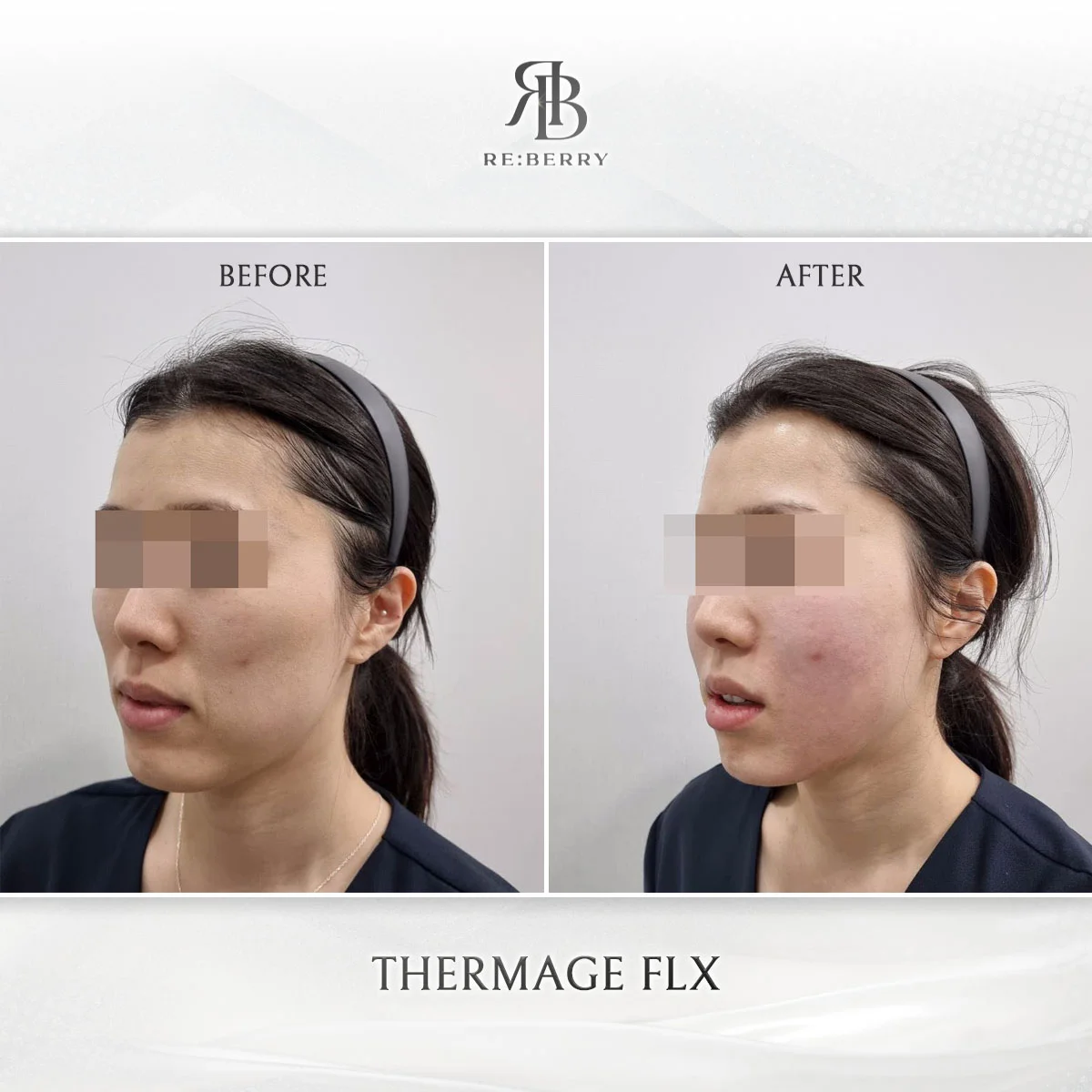
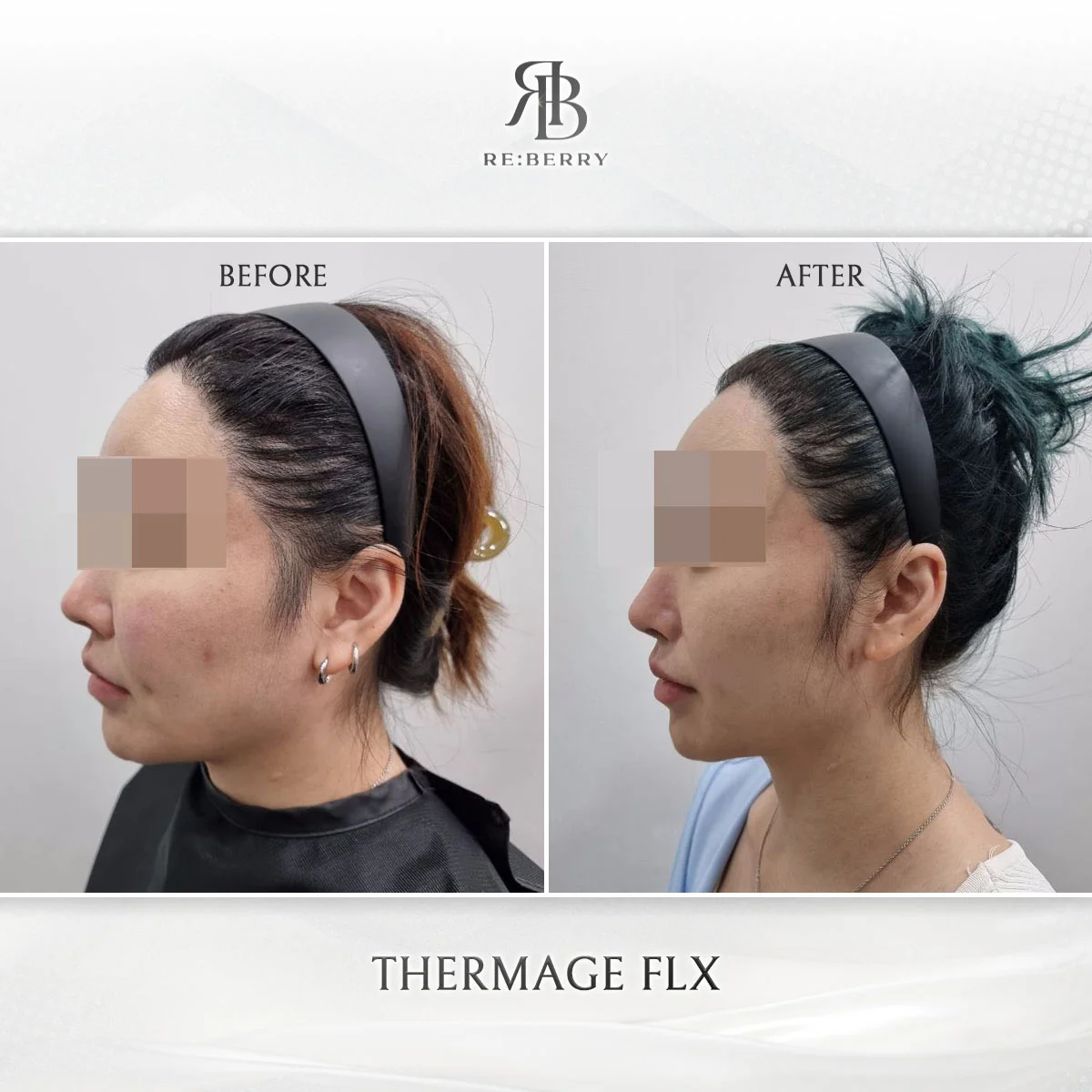
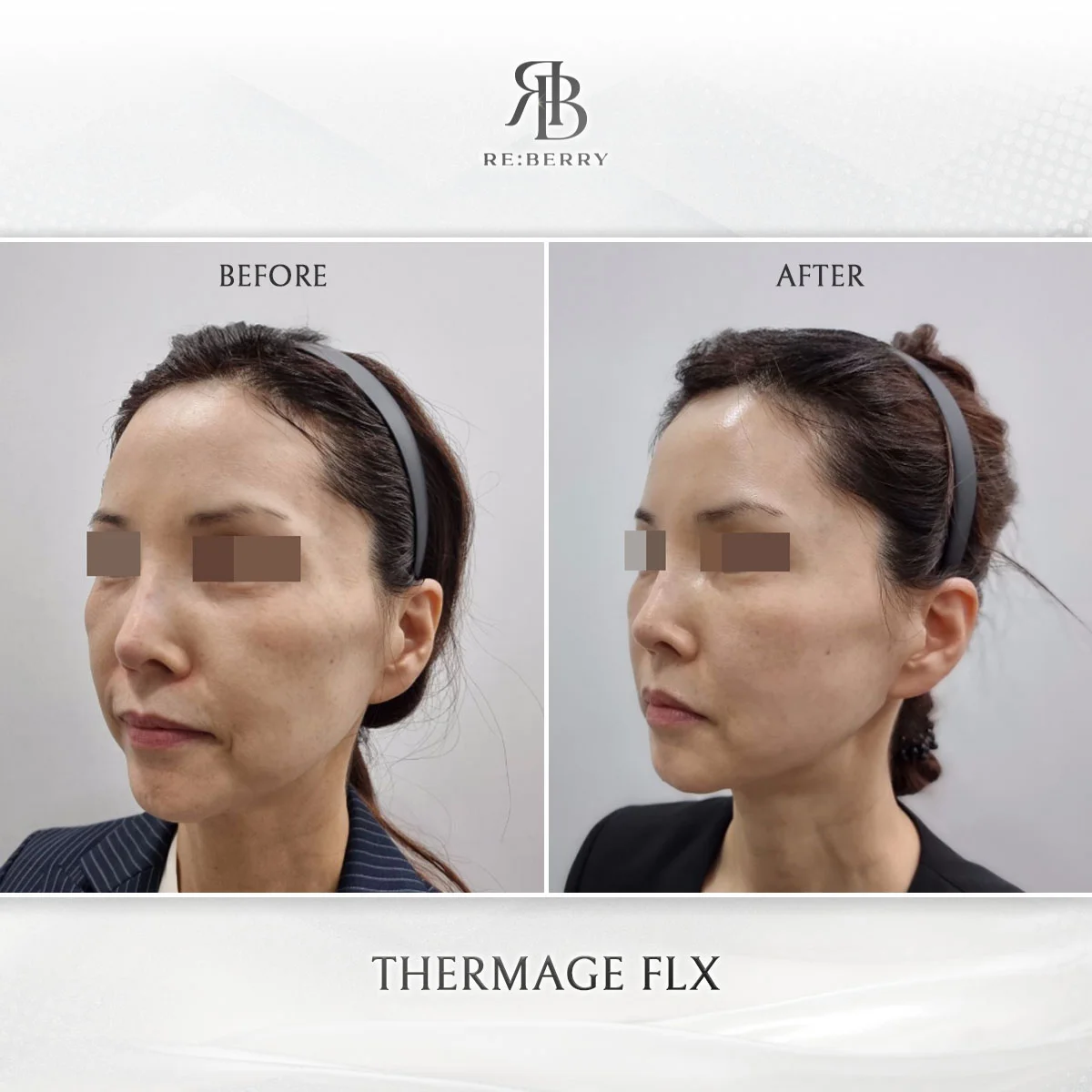
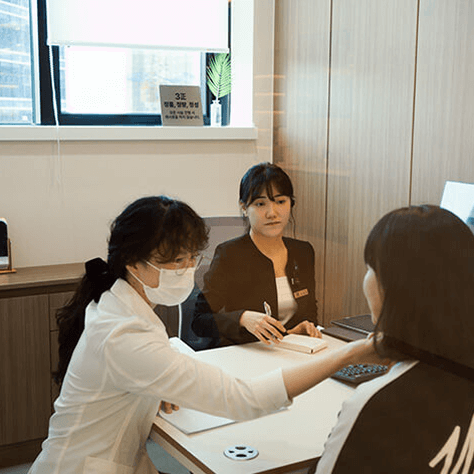
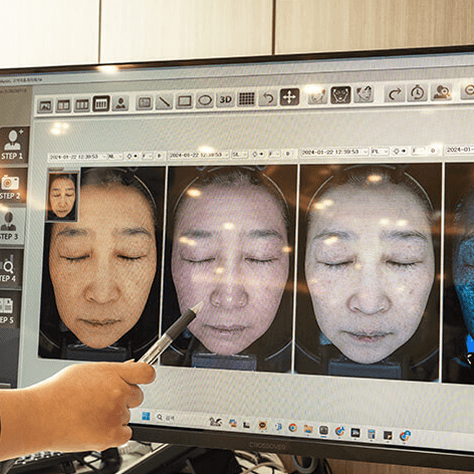
An English-language consultation reviews your medical history, screens contraindications and confirms you are a suitable candidate.
Treatment is delivered in-clinic with sterile technique; a session commonly takes 30 to 90 minutes depending on the modality.
Most energy and thread treatments are a single session, so recovery monitoring fits a short Seoul trip.
Any redness or swelling settles within days, and common side effects typically resolve within 1 to 2 weeks.
You receive written aftercare and warning signs; gentle care early on supports a safe recovery.
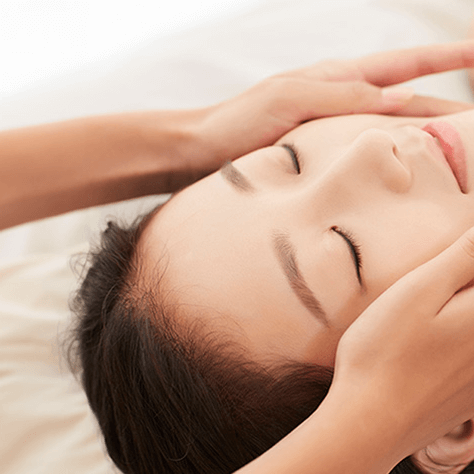
Non-surgical face lifting is generally safe with a low rate of serious complications when performed by an experienced doctor using regulated devices and threads. Most side effects are mild and settle within hours to 2 weeks. Safety is assessed individually before any face lifting plan is recommended.
For energy devices, the common side effects are brief redness, mild swelling, warmth or temporary tenderness that settle within hours to a couple of days. Thread lifting can add a few days of swelling or bruising. Your doctor explains what to expect for your chosen modality during the consultation beforehand.
Serious problems are uncommon and usually manageable: a localised burn, nerve irritation, prolonged swelling, asymmetry, or a minor infection. Correct depth settings, conservative energy and sterile technique lower this risk substantially. Your individual risk for any face lifting plan is reviewed before treatment, with warning signs provided.
Both have favourable safety profiles when settings are appropriate; ultrasound confines heat to precise depths while imaging the tissue, and radiofrequency spreads gentler heat with built-in cooling. Neither is inherently safer, the right one depends on your laxity. Compare a popular ultrasound option on our Ultherapy Prime page.
Comfort varies by modality: focused ultrasound causes brief deep warmth during each pulse, radiofrequency feels warm and is well tolerated, and thread lifting is done under local anaesthetic with mild soreness afterwards. Comfort measures are used throughout, and any sensation is temporary, easing soon after the session ends.
It is generally avoided during pregnancy or breastfeeding, with active infection or acne in the area, with implanted electrical devices nearby, or with uncontrolled bleeding risk. Very severe sagging may be better suited to surgery. Your suitability is confirmed during assessment before any plan is made.
Yes, the threads are absorbable PDO or PLLA from the same material family long used in surgical sutures, and they dissolve naturally over several months into harmless byproducts. Nothing permanent stays behind. As they break down, they stimulate your own collagen, which is part of why the procedure is considered low-risk.
Choose an experienced doctor, disclose your full medical history, follow the aftercare plan and protect your skin from sun and intense heat early on. Appropriate settings and skilled technique are the biggest factors. The clinic screens candidacy carefully and gives clear instructions to support a safe recovery.
For suitable candidates, non-surgical lifting avoids the risks tied to incisions and general anaesthesia, so its profile is favourable, though it gives subtler, gradual change rather than a dramatic result. Very advanced sagging may respond better to surgery. Your doctor advises which path fits your degree of laxity at consultation.
Yes, because these treatments bypass or gently warm rather than ablate the surface, they suit a wide range of skin tones when depths and settings are chosen correctly. Imaging-guided technique by experienced doctors supports safety. Your suitability is confirmed during the assessment before any plan is finalised.
All are well tolerated, but they differ: energy devices are non-invasive with minimal downtime, while a thread lift is minimally invasive with a few days of swelling. The right choice depends on your laxity and preference. Compare options on our thread lift page and our Sofwave page.
When the right modality and conservative settings are used, the result looks like a refreshed, lifted version of your own face rather than an overdone change. Overcorrection is avoided by experienced delivery. Realistic goals are agreed during your Ultherapy Prime or other modality assessment so safety and appearance are balanced.
Expect mild redness, slight swelling or temporary tenderness for a few hours to a couple of days; thread lifting may add some bruising. Contact the clinic if you notice spreading redness, worsening pain, fever or unusual swelling after a few days. Your written aftercare lists exactly which warning signs to monitor.
Yes, Reberry Clinic serves international patients with English-speaking support across three Seoul-area locations, including one near Incheon Airport, and screens candidacy carefully. You are assessed before treatment and supported afterward from abroad. Message us on WhatsApp to ask about suitability and plan your visit.
For energy-based lifting, 2 to 3 days usually covers consultation, treatment and a brief review, since downtime is minimal. Thread lifting may warrant a couple of extra days for swelling to settle. There is no required multi-week stay. Our team helps schedule around your trip and explains warning signs to monitor at home.
Yes, after energy-based lifting most patients fly the same or next day, since downtime is minimal and any redness settles quickly. After a thread lift, a short wait lets swelling settle. You receive a written aftercare plan so you can follow up on your face lifting results from abroad.
How the three main non-surgical lifting methods compare on safety and recovery.
| Focused ultrasound | Radiofrequency | Thread lift | |
|---|---|---|---|
| Energy / mechanism | Micro-focused ultrasound to the deep SMAS | Monopolar radiofrequency heating the dermis | Absorbable PDO/PLLA threads placed under the skin |
| Invasiveness | Non-invasive; energy through intact skin | Non-invasive; energy through intact skin | Minimally invasive; threads via small entry points |
| Common side effects | Brief redness, mild tenderness | Warmth, brief redness | Swelling, bruising, occasional dimpling |
| Anaesthesia | None or topical numbing | None or topical numbing | Local anaesthetic |
| Downtime | Little; same-day return to activity | Little; same-day return to activity | A few days for swelling or bruising |
| Recovery profile | Generally well tolerated | Generally well tolerated | Low serious-complication rate with skilled placement |
| Cost context | Consultation-led; depends on lines and area | Consultation-led; depends on tip and area | Consultation-led; depends on thread count and type |
Real verified reviews from our Google Business Profile, across all Reberry Clinic locations.
PULLED LIVE FROM GOOGLE · GANGNAM · MYEONGDONG · INCHEON AIRPORT
Your treatment is planned and performed by experienced, MFDS-registered doctors across our Seoul-area clinics, with multilingual support for international patients.
Flagship clinic · KOL for leading lifting & regenerative devices
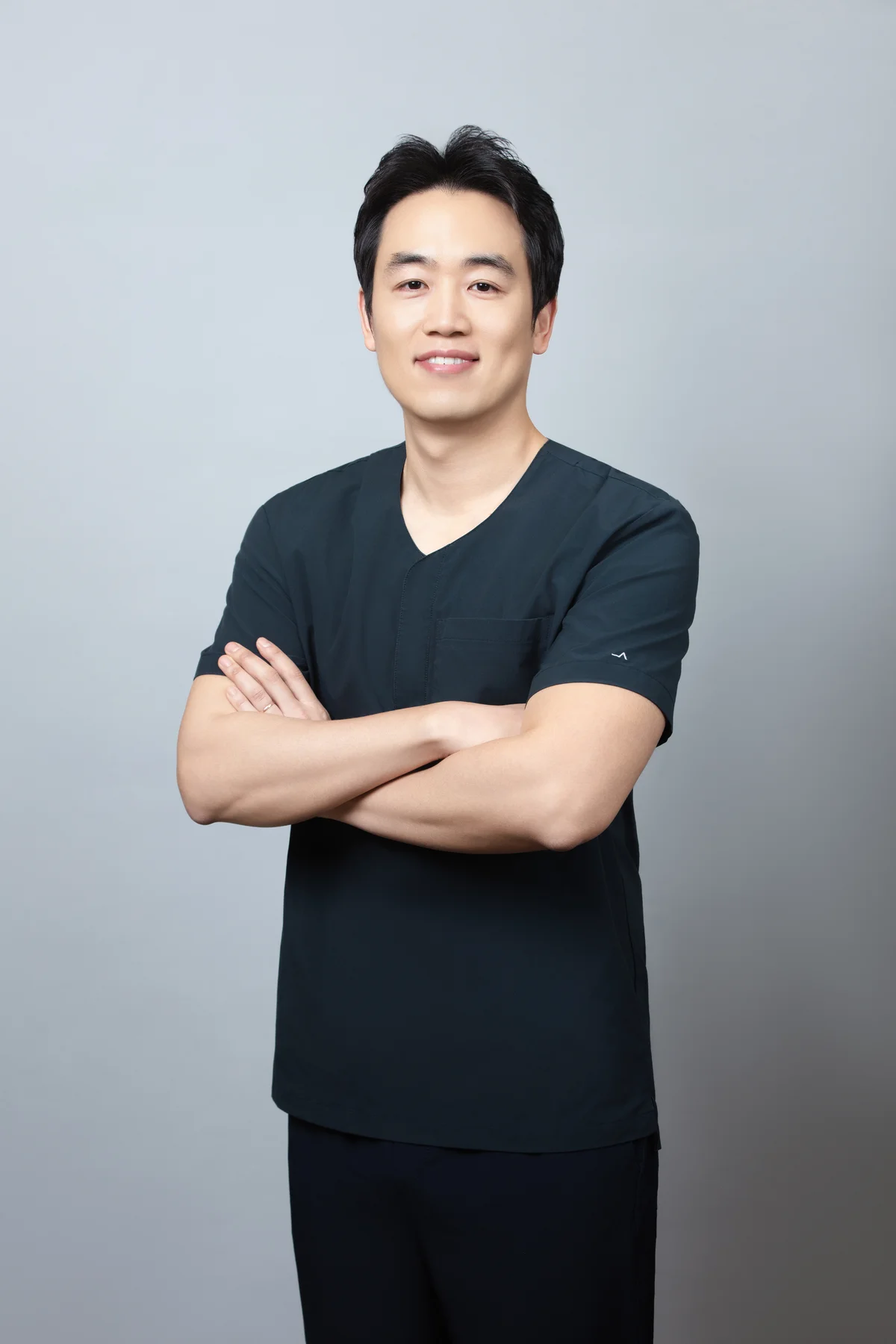
Multilingual tourist care beside Myeongdong Cathedral
Fast, effective care 20 minutes from the terminals
Message us on WhatsApp for a free consultation in English to review your suitability and a personalized non-surgical lifting plan.