

Gangnam
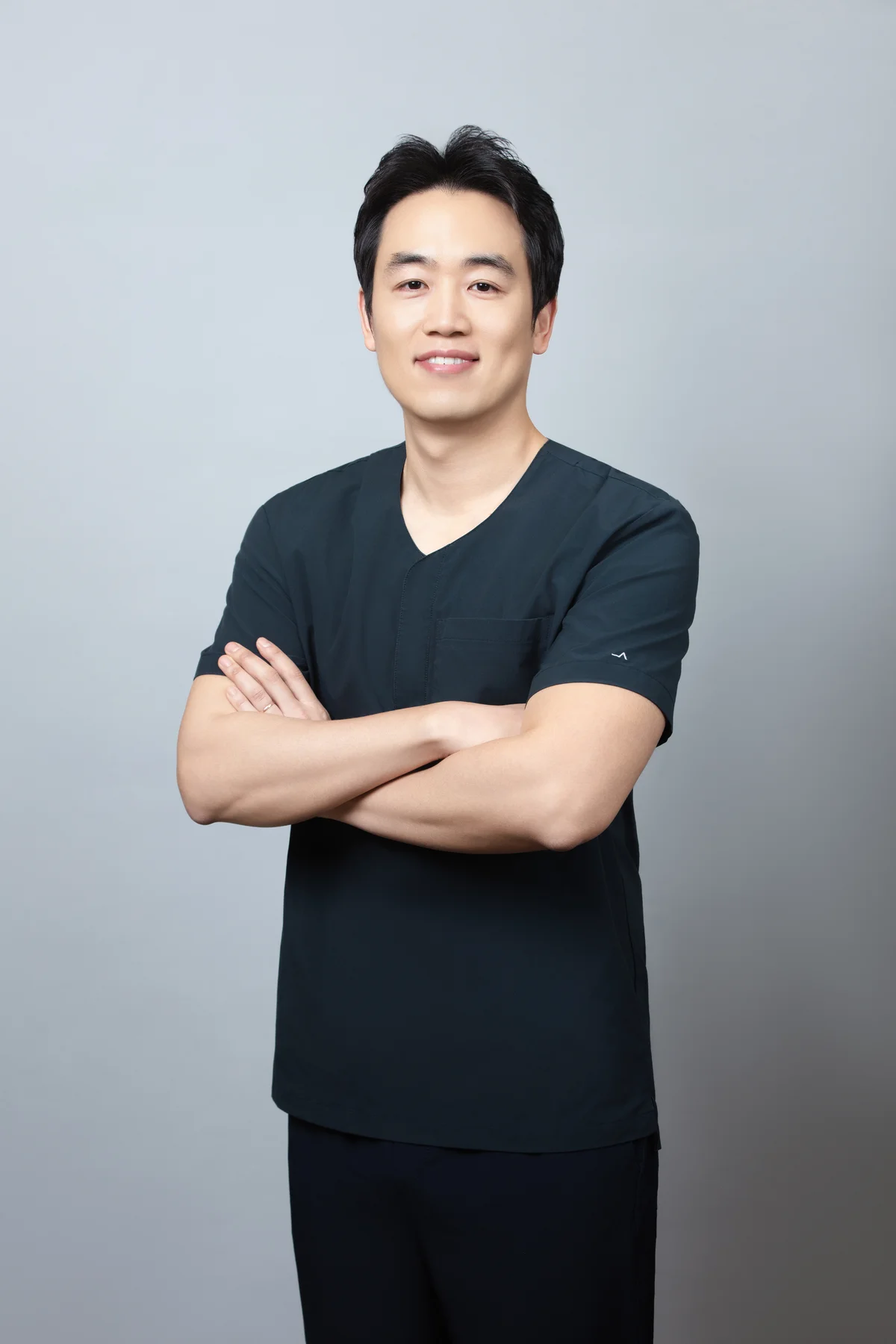
Dr. Yoongon Ryu
Aesthetic Medicine Specialist
Flagship clinic · KOL for leading lifting & regenerative devices

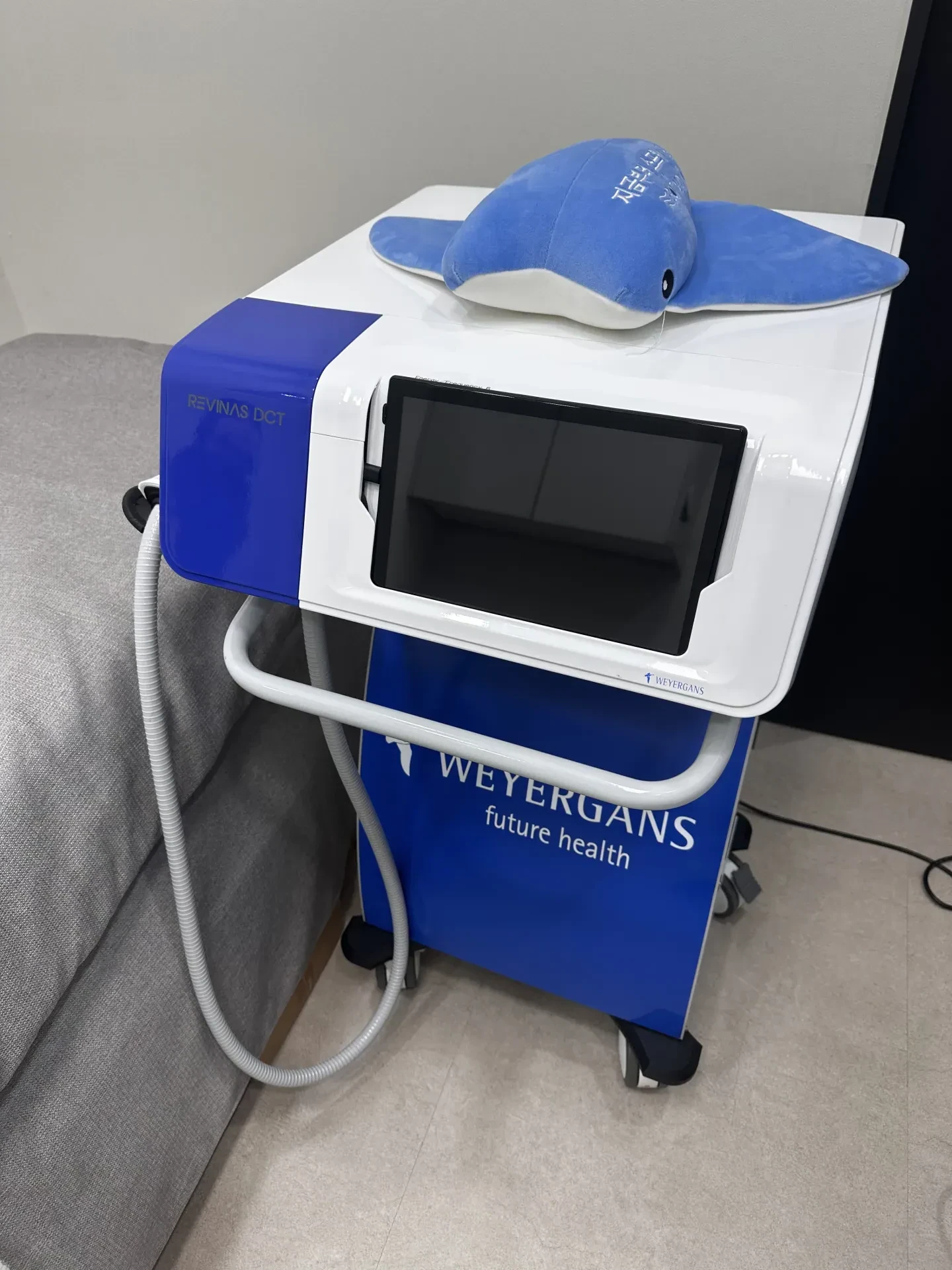
Revinas is a non-invasive acoustic-wave treatment with a favourable record; reported effects are mostly mild and settle within hours to a couple of days.
Revinas has a favourable safety profile in Korea and is a non-invasive, needle-free acoustic-wave treatment that does not break the skin surface. Reported effects are mostly mild and temporary, such as brief redness, mild warmth or slight tenderness that settle within hours to days. Safety depends on a trained operator, honest history disclosure and correct settings, confirmed at consultation.
One-on-One guidance from a dedicated doctor, ensuring your skin is professionally monitored and treated from start to finish.
Fluent assistance in English, Japanese, and Chinese, making communication clear, respectful and comfortable for international patients.
Over 100,000 patients worldwide have received our personalized dermatological care, highlighting our expertise and reliable results.
Revinas has a favourable safety profile and is used in Korea as a non-invasive, regenerative skin treatment. It works with focused acoustic-wave (shockwave) energy delivered through a handpiece on the skin surface, so there are no needles, no incisions and no breaking of the skin barrier. Because the energy is non-thermal and non-ablative, it does not burn or wound the surface, which is part of why serious reactions are uncommon. The most frequently reported effects are mild and temporary: brief redness, a warm flushed feeling, slight tenderness or, rarely, minor sensitivity that typically settles within hours to a couple of days.
As with any treatment, safety is not automatic; it depends on who performs it and how. A genuine, well-maintained device, correctly selected settings, appropriate handpiece movement and honest screening of your medical history all reduce risk. A small number of people should be cautious or defer treatment, including those who are pregnant or breastfeeding, have an active skin infection or inflammation in the area, or take certain blood thinners, and the clinic asks about this at consultation. Because Revinas is delivered as a short course, the doctor also monitors how your skin responds across the sessions.
Reberry Clinic is a dermatology clinic where regenerative treatments are performed by the clinic’s doctors, and it serves international patients across three Seoul-area locations (Gangnam, Myeongdong, Incheon Airport) with English-speaking support. The team reviews your suitability before any Revinas session, so safety is assessed for your individual skin rather than assumed.

Revinas uses focused acoustic-wave energy: mechanical pulses pass into the dermis and create a controlled micro-stimulus that signals fibroblasts to build collagen and elastin through mechanotransduction. Because the mechanism is mechanical rather than thermal or ablative, it does not rely on heating or wounding tissue, so the risks linked to burns, deep injection or permanent volume placement do not apply in the same way. The skin surface stays intact, which is a key reason the safety profile is favourable when treatment is performed correctly.
That said, Revinas is different from an injectable regenerative option such as a polynucleotide booster or a PDLLA collagen stimulator, each of which carries its own injection-related considerations, so the right choice depends on your goal. The clinic’s doctors explain these differences and screen your history, so the treatment selected is both appropriate and safe for you rather than chosen on popularity alone.
One Reberry Clinic, multiple Seoul-area locations. Pricing & current promotions are listed on each branch's own site — tap a clinic to view pricing & book.
Our flagship in the heart of Gangnam.
In Seoul's shopping & tourism heart.
A beauty stop between flights.
The newest Reberry Clinic — in Seoul's trend district.
ONE REBERRY CLINIC · MFDS-REGISTERED DEVICES · MULTILINGUAL CARE AT EVERY LOCATION
The doctor reviews your medical history, medications and skin, checking against the 5 main contraindications before treatment.
The doctor chooses energy levels and handpiece settings suited to your skin, since 1 set of parameters does not fit everyone.
A gel couples the handpiece to clean, intact skin, and treatment avoids any area with active infection or open wounds.
Energy is delivered as the handpiece moves across the zones over the typical course of 3 to 4 sessions to monitor response.
You receive written aftercare and the doctor reviews how your skin settles over the first 1 to 2 days, so any reaction is addressed early.
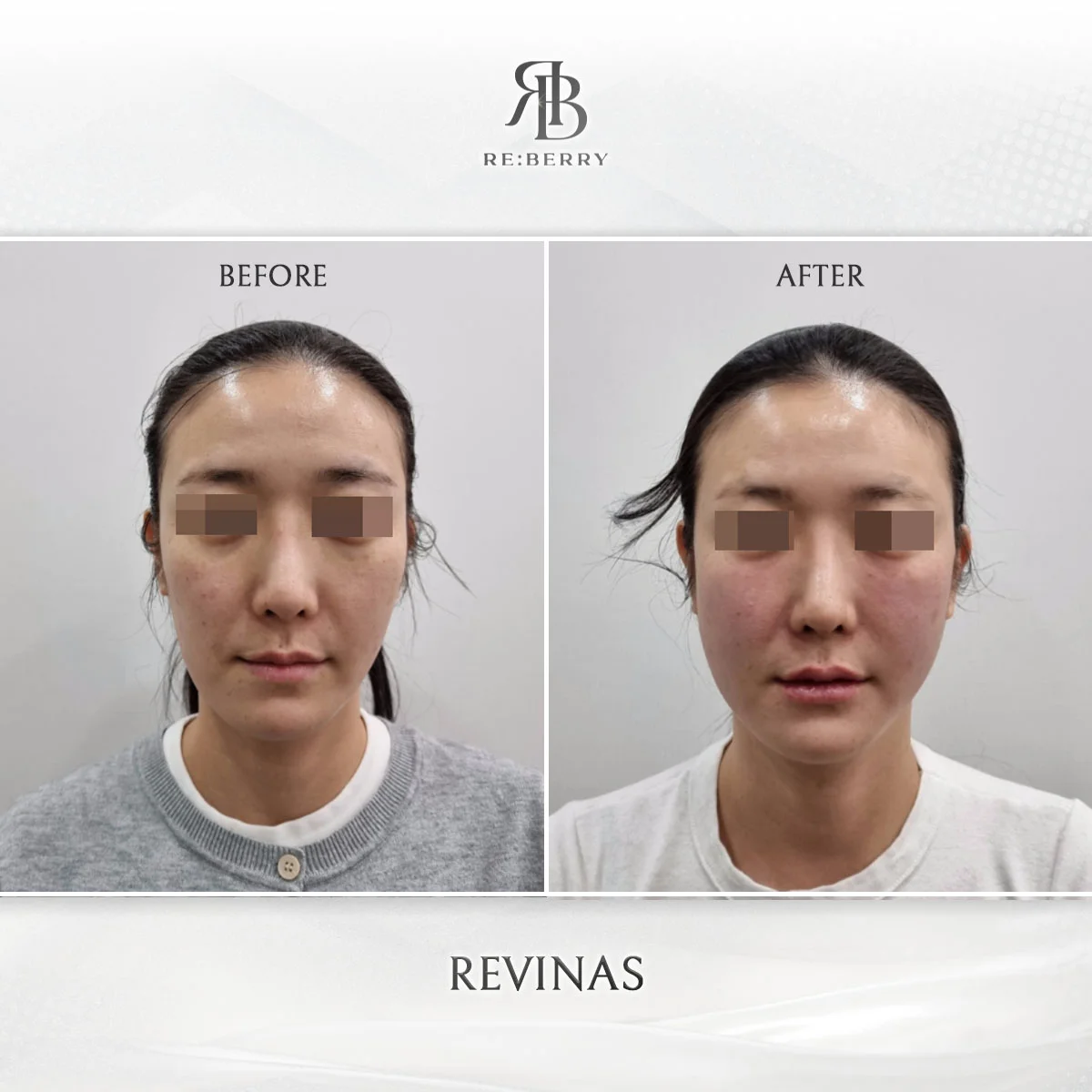
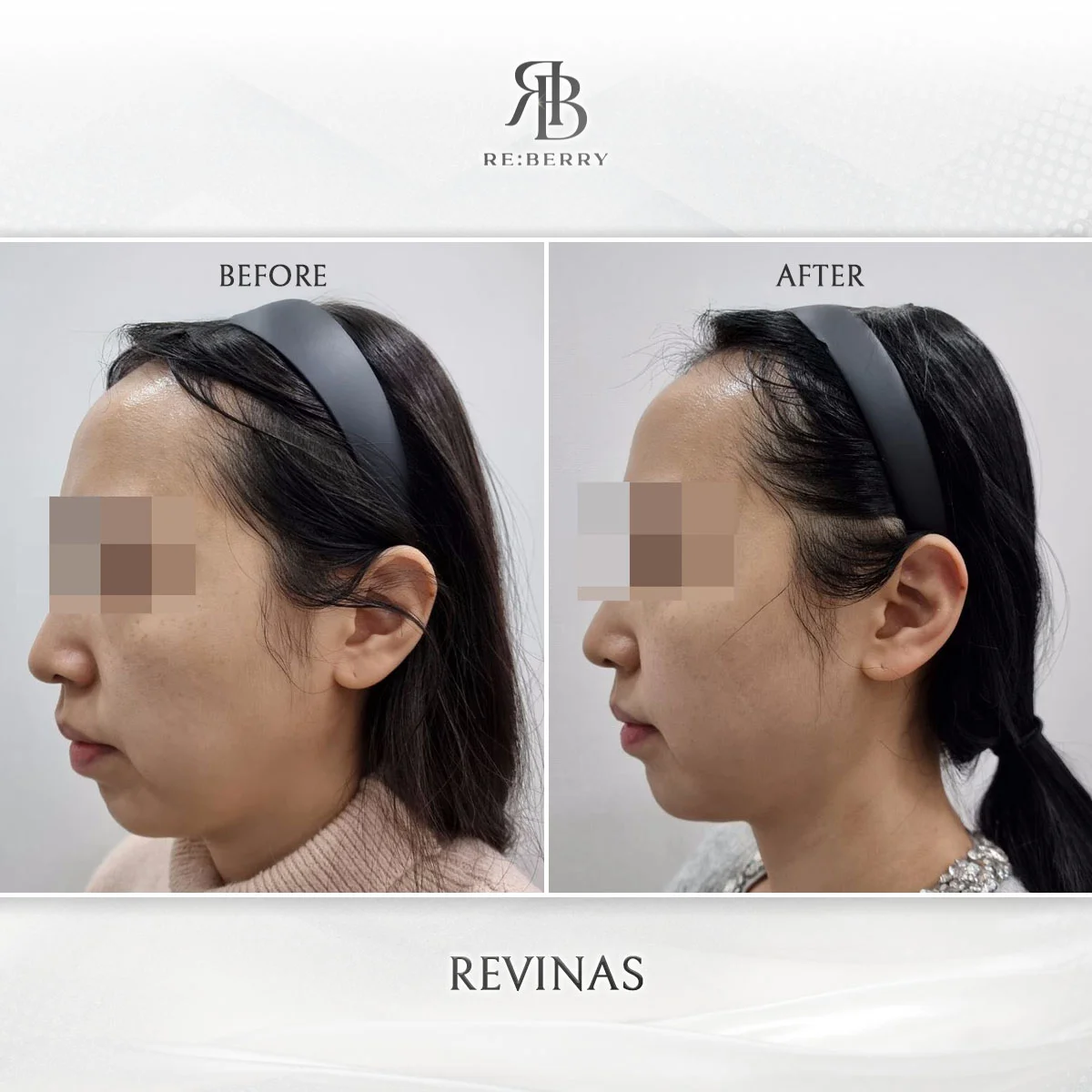
See representative outcomes from Reberry Clinic. Results build gradually and vary by individual; your plan is assessed at consultation.
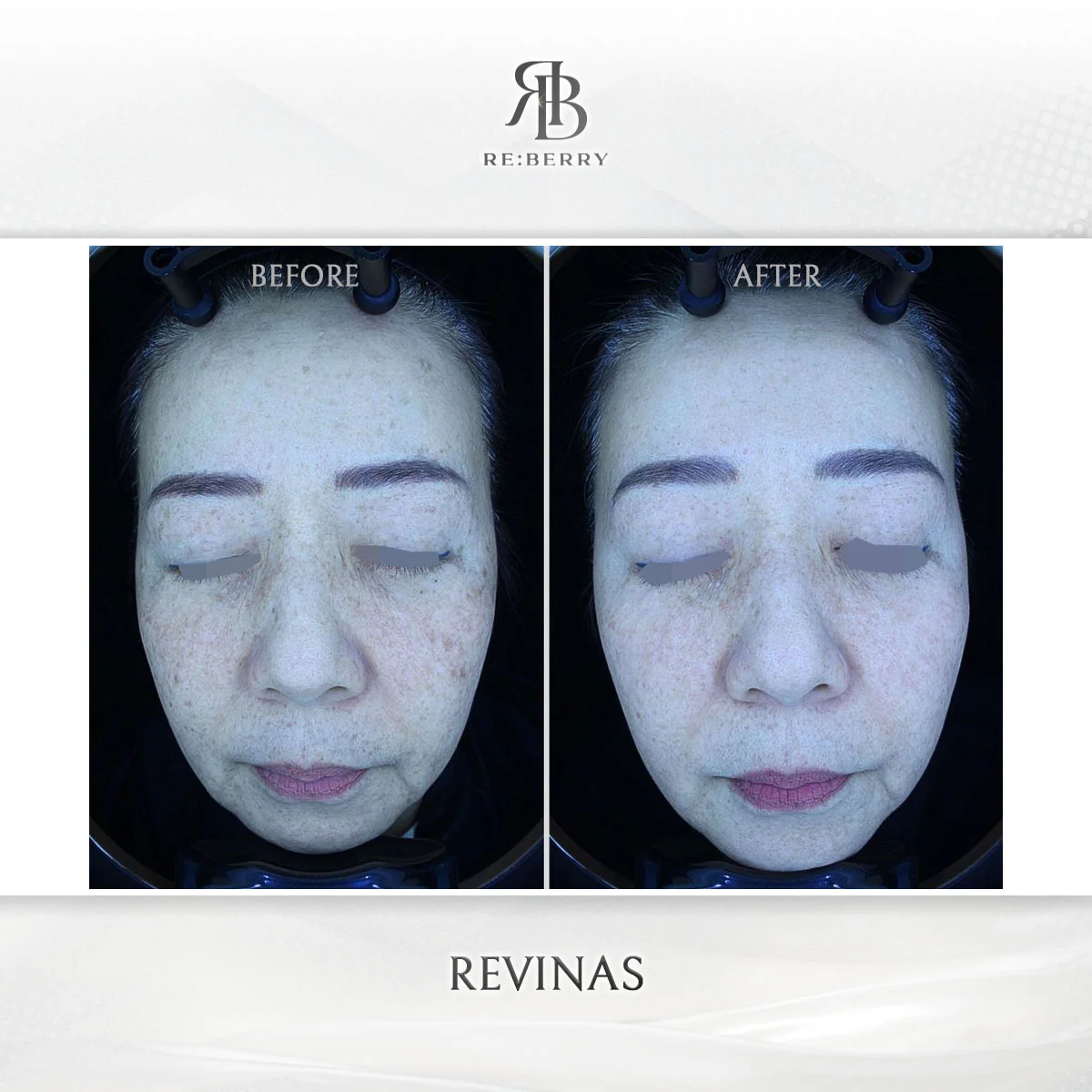
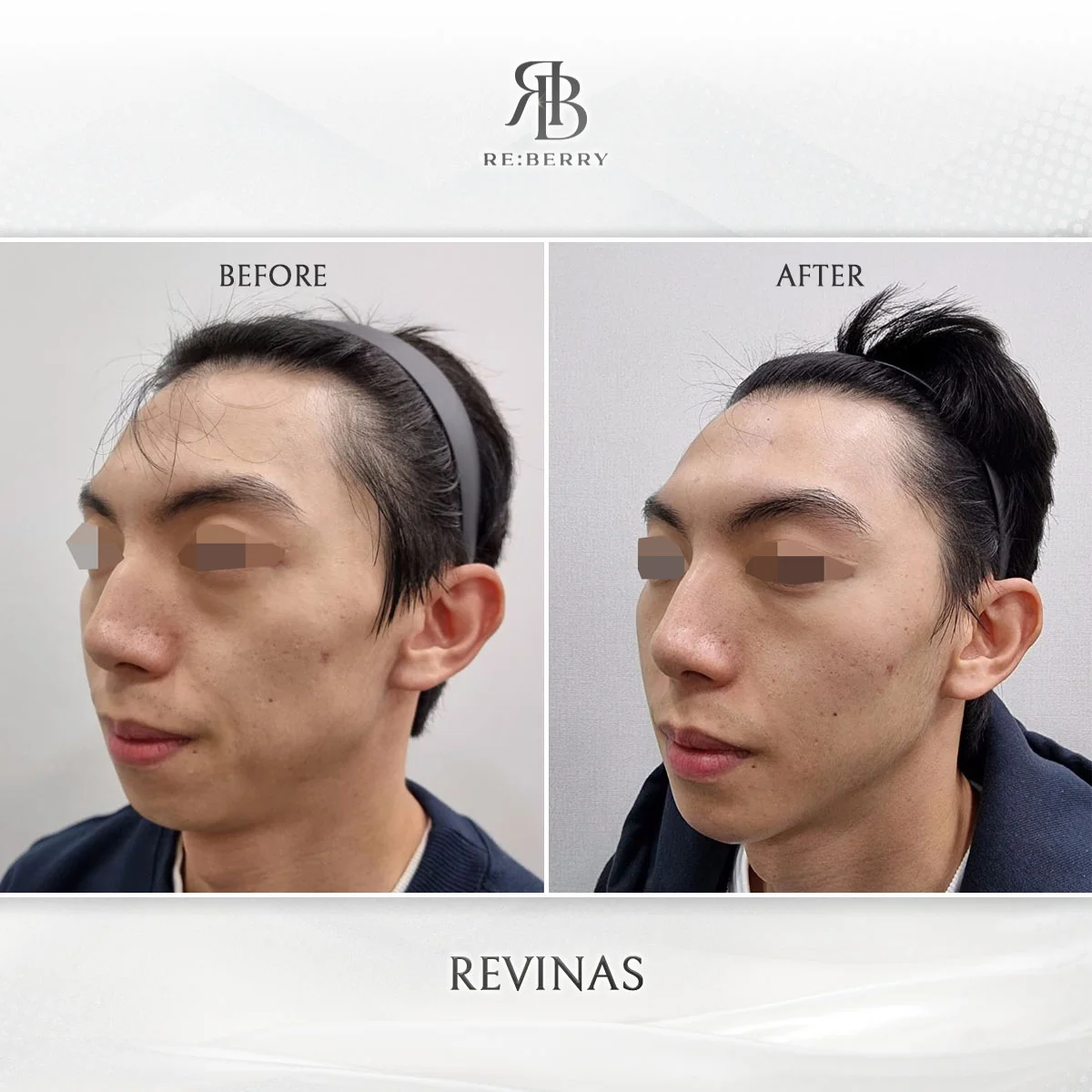
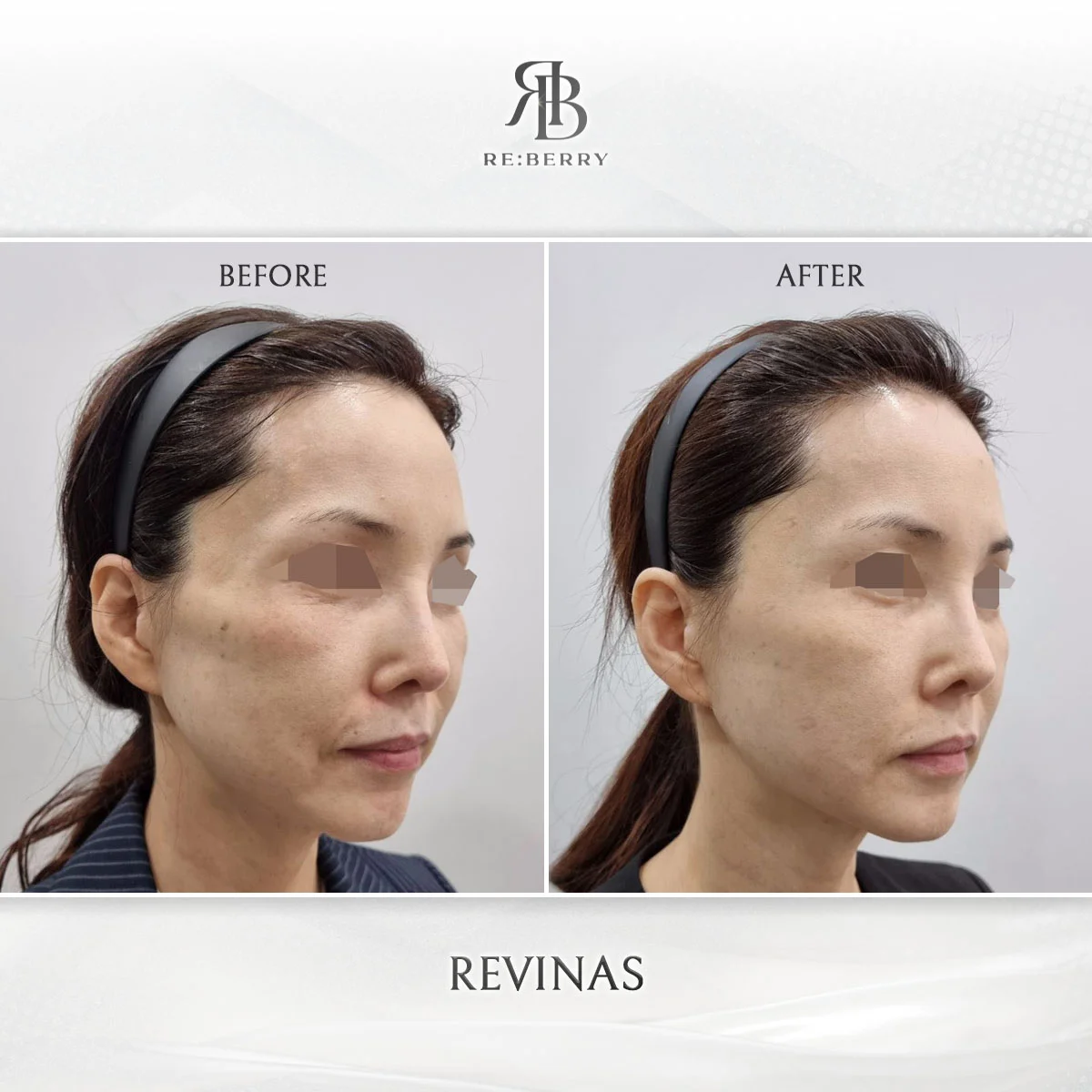
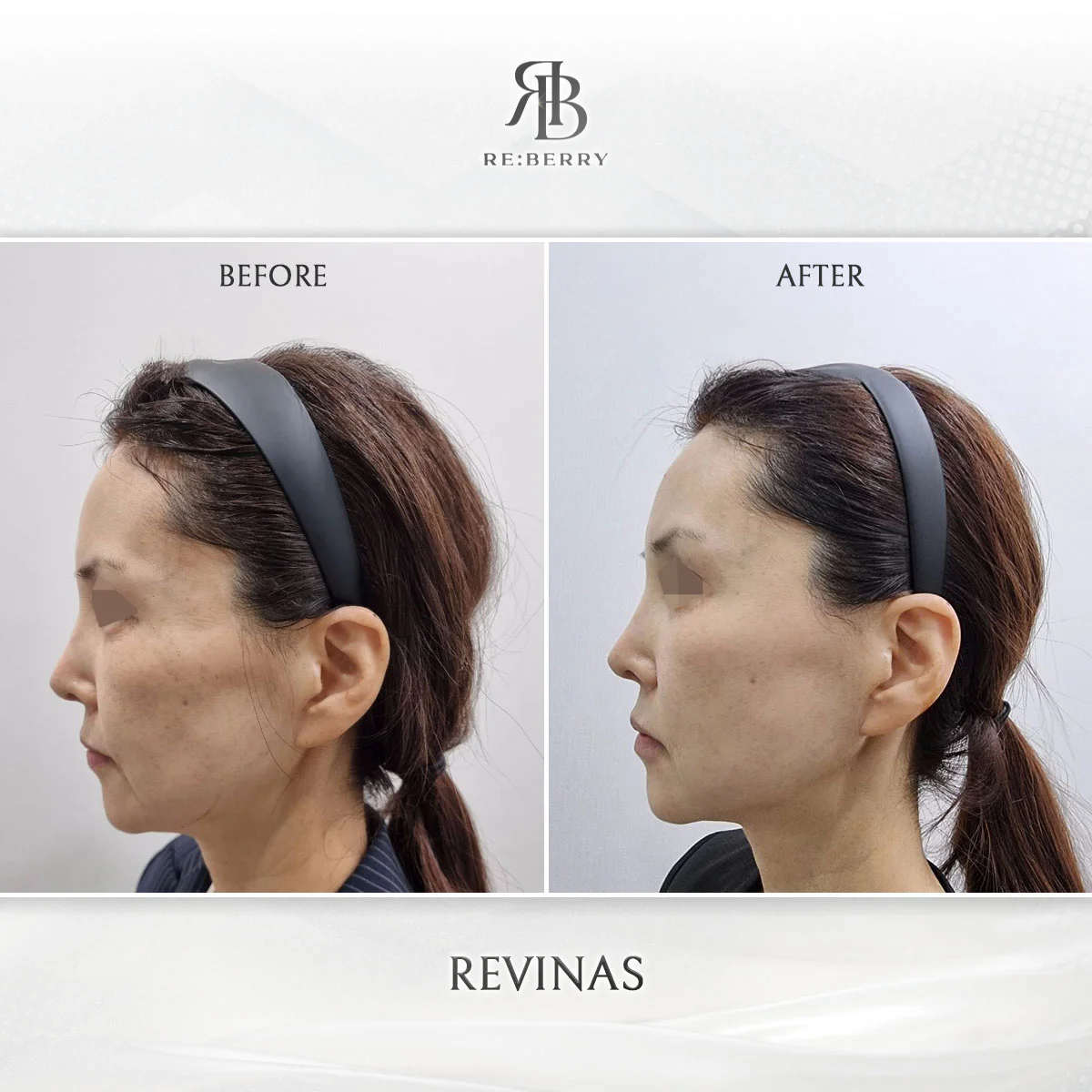
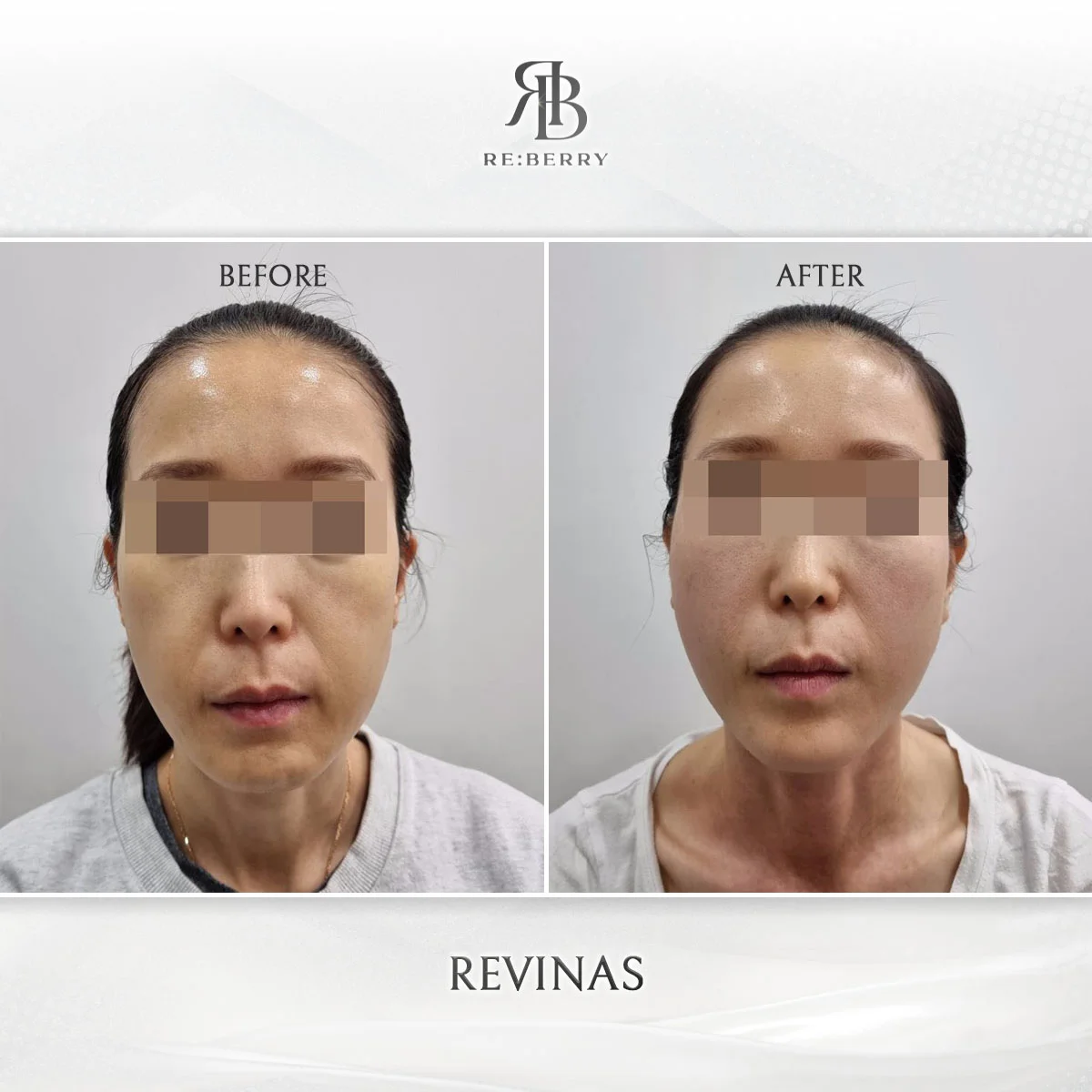
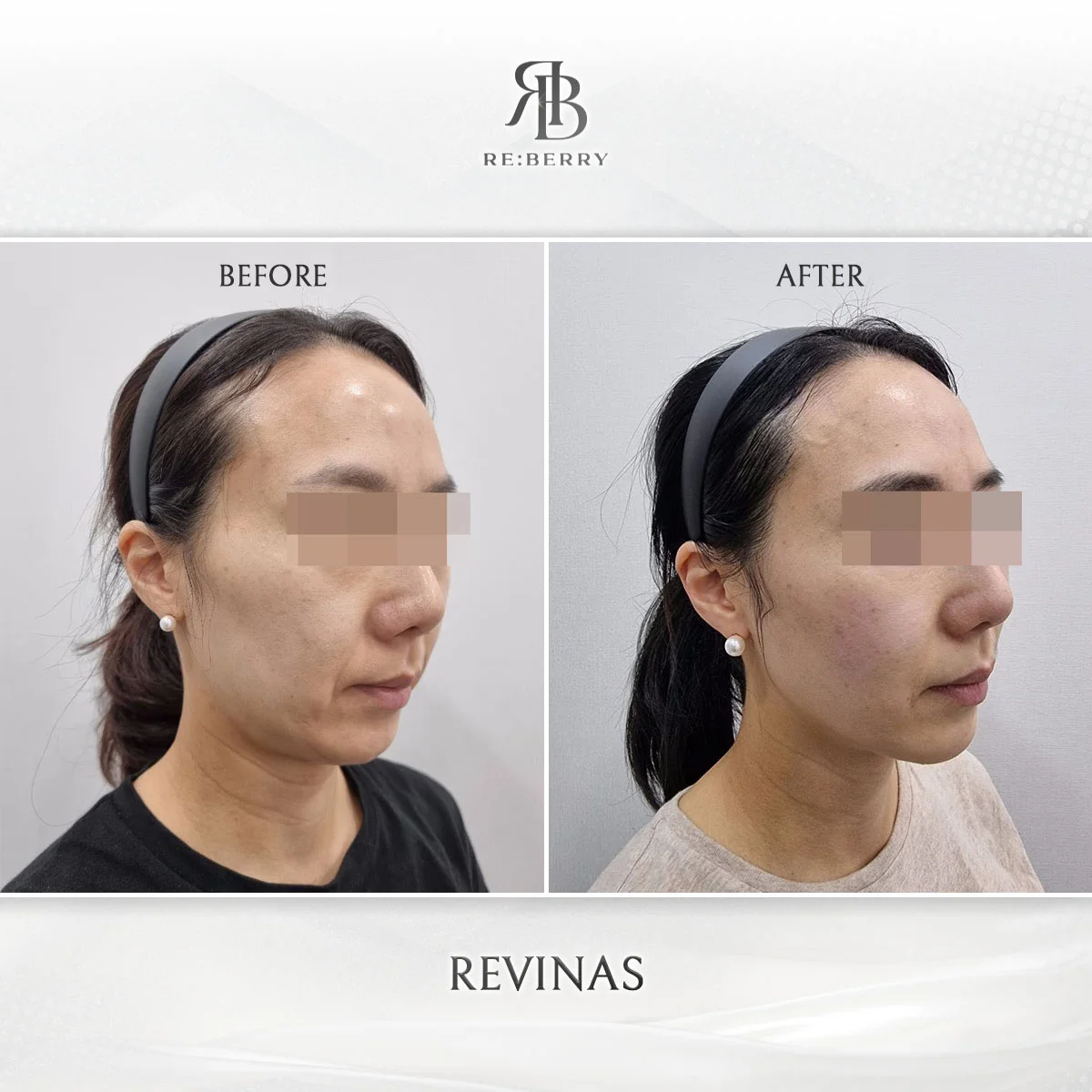
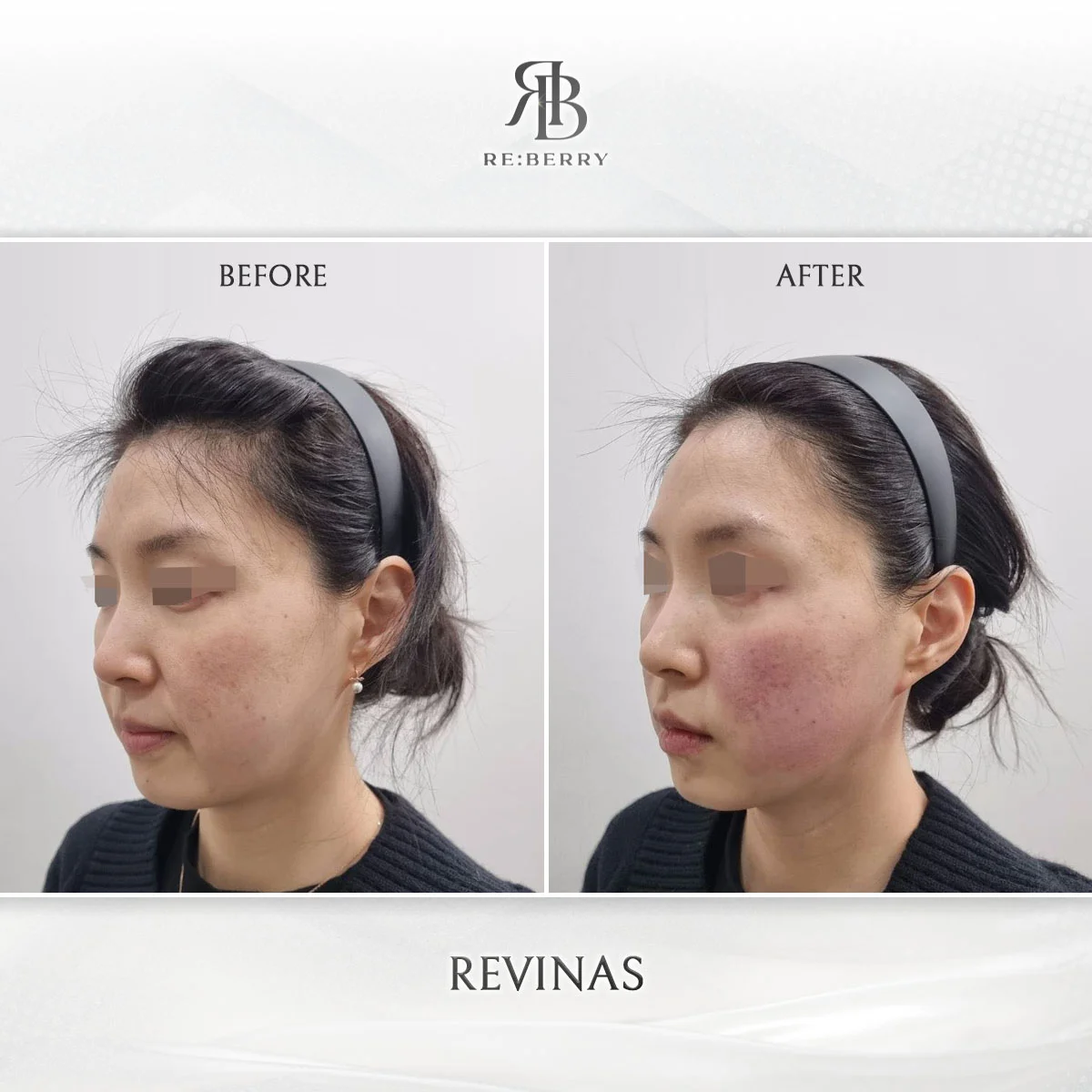
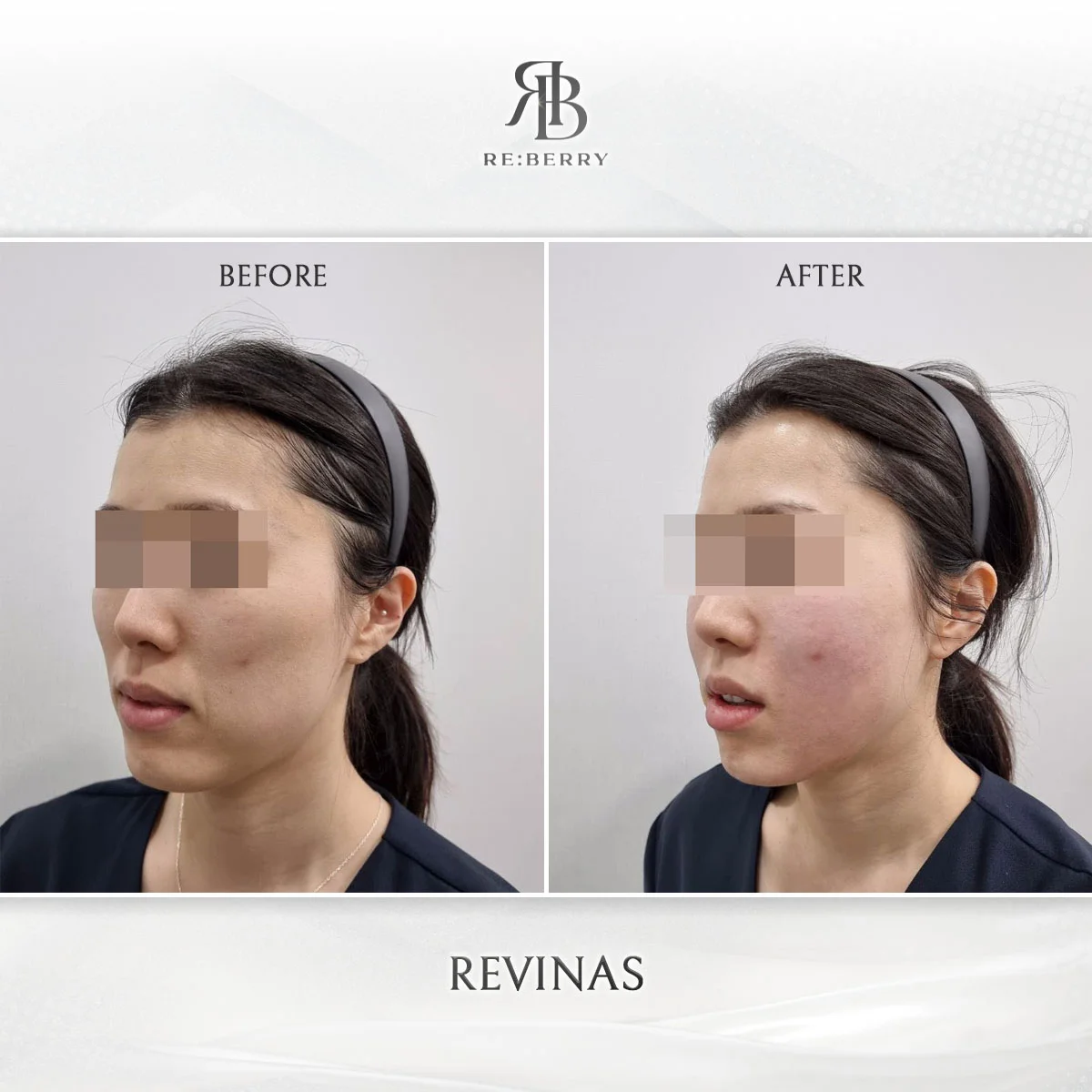
An English-language consultation screens your history and medications and confirms whether Revinas is suitable for your skin.
After cleansing and coupling gel, the doctor moves the handpiece across the zones; a session commonly takes 20 to 30 minutes.
A full course is typically 3 to 4 sessions spaced 2 to 4 weeks apart, so the doctor monitors your response over time.
Firming builds gradually over 8 to 12 weeks; any temporary redness or warmth settles within hours to a couple of days.
Results are maintained with occasional sessions; written aftercare and follow-up support you, including from abroad.
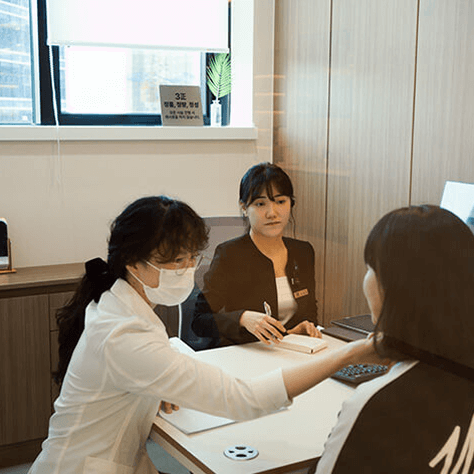
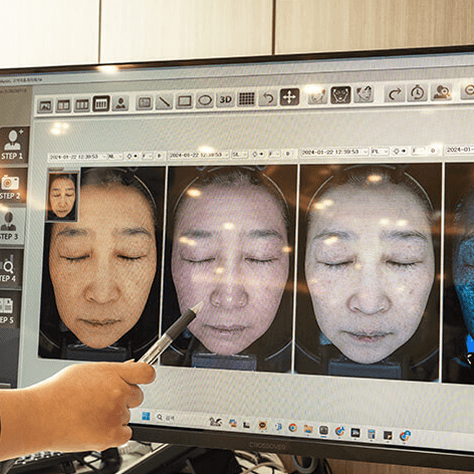

Revinas has a favourable safety profile and is a non-invasive, needle-free acoustic-wave treatment that keeps the skin surface intact. Reported effects are mostly mild and temporary. Safety depends on a trained operator, a genuine device and honest screening, which the team confirms before any Revinas session at consultation.
Revinas delivers focused acoustic-wave energy through a handpiece on the skin to stimulate collagen via mechanotransduction. Because there are no needles and the energy is non-thermal and non-ablative, the skin barrier stays intact, which avoids burns and injection-related risks. This mechanical, surface-sparing mechanism is a key reason the treatment is generally well tolerated.
The most common effects are mild and temporary: brief redness, a warm flushed feeling, slight tenderness and occasionally minor sensitivity that usually settle within hours to a couple of days. Serious reactions are rare. Because the skin surface is not broken, there are no incisions or injection points to heal, so recovery is typically quick and uncomplicated.
Treatment is deferred during pregnancy or breastfeeding and over active infection, inflammation or open wounds in the area, and those with bleeding disorders, on blood thinners, or with implanted electrical devices near the site need prior review. The clinic’s doctors screen for these during your Revinas consultation before any plan is set.
Most patients find Revinas comfortable, feeling gentle tapping or pulsing as the handpiece moves, which is normal and not a safety concern, so numbing is usually unnecessary. The energy is non-thermal, so there is no burning sensation. Any unusual or lasting discomfort after a session should be reported so the doctor can review it.
Downtime is minimal; you may notice mild redness or slight warmth for a short time, and most patients resume normal activities the same day. Because there are no incisions or injections, there is nothing to heal, so international visitors can continue their plans in Seoul soon after each session without extended recovery.
Yes, because the energy is non-thermal and does not target surface pigment, Revinas suits a wide range of skin tones when settings are chosen correctly, with lower risk of pigment changes than some light-based treatments. Settings are adjusted to your skin by the clinic’s doctors, and your suitability is confirmed during screening before any plan.
They carry different risks rather than one being universally safer. Revinas is needle-free and keeps the surface intact, so it avoids injection and vascular concerns, while an injectable such as Rejuran Healer targets repair from within. The right, safest choice depends on your goal, which the doctor discusses at assessment.
A standard Revinas course is typically 3 to 4 sessions spaced 2 to 4 weeks apart, with occasional maintenance afterwards, and this schedule is well tolerated. Spacing sessions lets the doctor monitor how your skin responds, so the number of sessions suits you safely rather than being rushed together.
Keep the area clean, use gentle skincare and daily SPF, and avoid excessive heat, saunas and harsh products for a day or two to let any mild redness settle. Report any spreading redness, unusual pain or persistent swelling promptly. You receive written aftercare to follow at home, which supports comfortable recovery between sessions.
Yes, Revinas is often combined with other regenerative or skin-quality treatments, but sessions are sequenced and spaced by the doctor to keep treatment safe and comfortable rather than done all at once on the same area. You can review options on our injection treatment page, with the plan mapped at your assessment.
Because Revinas is non-thermal and non-ablative and does not break the skin surface, the burn and scarring risks associated with some heat-based or ablative devices do not apply in the same way. A genuine, well-maintained device and correct settings keep risk low. The clinic uses appropriate parameters and monitors your skin across the course.
Disclose any pregnancy or breastfeeding, current medications including blood thinners, bleeding disorders, implanted electrical devices, active skin infections and recent treatments in the area. This honest history is what lets the doctor screen safely and set correct settings. Skipping details is the main avoidable risk, so share everything at consultation.
Yes, Reberry Clinic serves international patients with English-speaking support across three Seoul-area locations, including one near Incheon Airport, and screens you in English before treatment. Message us on WhatsApp to discuss your history and suitability so the team can confirm Revinas is safe for you and plan your visit.
Most patients fly the same or next day because downtime is minimal and there are no incisions or injections to heal, with any mild redness or warmth settling quickly. Stay hydrated and use SPF during travel. You receive a written aftercare plan and can follow up on your Revinas course remotely from abroad.
The clinic’s doctors screen your history, select settings suited to your skin, treat only clean, intact areas, and monitor your response across the short course rather than treating once and stopping. This step-by-step approach, plus English-language aftercare, is how safety is managed individually rather than assumed before your Revinas sessions.
How needle-free acoustic-wave Revinas compares on safety considerations with two injectable regenerative options.
| Revinas | Rejuran Healer | Juvelook | |
|---|---|---|---|
| Method | Non-invasive acoustic-wave handpiece | Polynucleotide micro-injections | PDLLA collagen-stimulator injection |
| Skin barrier | Stays intact (no needles) | Broken at injection points | Broken at injection points |
| Common effects | Brief redness, warmth, tenderness | Injection bumps, redness, brief bruising | Swelling, redness, occasional nodules |
| Key precaution | Pregnancy, infection, blood thinners | Fish or salmon allergy | Avoid in some autoimmune conditions |
| Downtime | Minimal; settles in hours to days | Little; settles in a few days | Little; settles in a few days |
| Sessions | A series of 3 to 4 | A course of 3 or more | Often 1 to 2 sessions |
Real verified reviews from our Google Business Profile, across all Reberry Clinic locations.
PULLED LIVE FROM GOOGLE · GANGNAM · MYEONGDONG · INCHEON AIRPORT
Your treatment is planned and performed by experienced, MFDS-registered doctors across our Seoul-area clinics, with multilingual support for international patients.
Flagship clinic · KOL for leading lifting & regenerative devices
Multilingual tourist care beside Myeongdong Cathedral

Fast, effective care 20 minutes from the terminals
Message us on WhatsApp for a free consultation in English to confirm your suitability and plan a safe Revinas course.