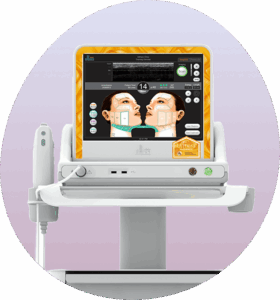


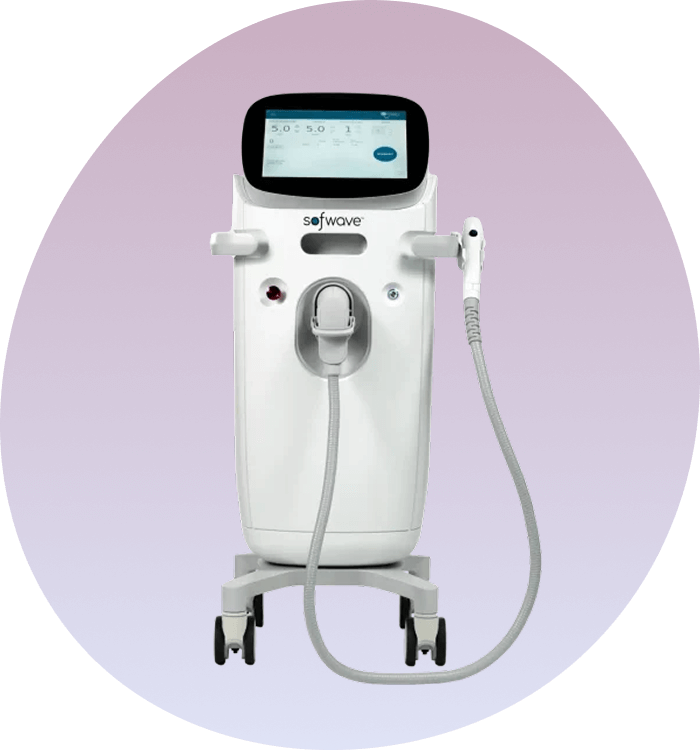
Sofwave is effective for firming early-to-moderate skin laxity and fine lines, with peer-reviewed studies showing measurable collagen and elastin increases in the mid-dermis. It uses SUPERB ultrasound focused at around 1.5mm, builds gradually over three to six months, and suits people wanting a non-surgical option with minimal downtime. It does not remove significant sagging the way surgery can.
“Is Sofwave actually effective, or is it just hype?” is among the questions international patients most frequently ask before booking a non-surgical lift in Seoul. It is a fair question. Sofwave is a relatively newer ultrasound treatment, and anyone spending time and money on a trip wants to know whether the firming is real, measurable and worth it for their particular skin and goals.
This guide answers that question directly and in depth. It explains what “effective” means for an energy-based treatment, what peer-reviewed studies actually measured, who tends to benefit most, how long results take and last, and where Sofwave’s limits are. It closes with the decision-style questions patients search before committing, so you can judge realistically whether it fits your expectations rather than relying on marketing language.
Is Sofwave Effective? The Direct Answer
Yes, Sofwave is effective for the right concern, which is early-to-moderate skin laxity and fine lines rather than significant sagging. Its effectiveness is supported by peer-reviewed studies showing measurable increases in collagen and elastin in the mid-dermis after treatment, not just subjective impressions. That distinction matters: “effective” here means a real, gradual firming and subtle lift in suitable candidates, not a dramatic surgical change.
The honest framing is about matching, not magic. Sofwave works well when the concern is the kind it is designed to address: a softening jawline, early looseness, fine lines or a heavier brow in someone who wants a non-surgical option. For very advanced sagging, the same treatment will feel underwhelming, because it is the wrong tool for that degree of laxity. Most disappointment with energy-based treatments comes from a mismatch between the concern and the device.
It is also gradual rather than instant. The firming develops over three to six months as new collagen forms, so judging effectiveness on the day of treatment is misleading. You can read more about how Sofwave is offered at the clinic, but the core idea holds: for early-to-moderate laxity in a realistic candidate, it produces a measurable, meaningful improvement that builds over months.
It is worth separating effectiveness from marketing. Any aesthetic treatment can be presented in glowing terms, so the more useful question is what the device actually does to the skin and for whom. Sofwave’s case rests on histology and blinded clinical assessment rather than testimonials, which is a meaningful distinction. That evidence base is what lets a clinician speak about realistic improvement honestly, and it is also why an over-promised, dramatic result should always be treated with healthy skepticism regardless of the device.
How Sofwave Works, in Plain Terms
Sofwave’s effectiveness comes from how it heats the skin. Its SUPERB technology (Synchronous Ultrasound Parallel Beam) fires seven parallel ultrasound beams from synchronized transducers into the mid-dermis at a depth of roughly 1.5mm, creating precise thermal zones in the collagen-rich middle layer while a cooling mechanism protects the surface. This is ultrasound energy concentrated at the mid-dermis, not radiofrequency and not focused deep at the SMAS.
That controlled heat does something specific: it partially denatures existing collagen and elastin in the mid-dermis and signals fibroblasts to produce fresh fibers over the following months. The result is a biological remodeling response. Because the body has to build new collagen, the firming and subtle lift appear gradually rather than immediately, which is why the treatment is judged over a months-long window rather than on the day itself.
Understanding the mechanism explains both the strengths and the limits. Because the energy stays concentrated at the mid-dermis, Sofwave is well suited to early laxity and fine lines that arise in that layer, while sparing the surface. But the same shallow, precise targeting is why it is not designed to lift the deep structural sagging that more advanced laxity involves. Knowing where the energy goes makes its realistic effectiveness much easier to judge.
This also clarifies a common point of confusion: depth is not the same as quality. Reaching a shallower layer does not make a treatment weaker; it makes it suited to a different concern. Sofwave is effective precisely because it concentrates energy where early laxity and fine lines develop, rather than spreading it thinly across a depth that does not match the problem. Effectiveness is about matching energy to concern, not about which device claims to reach the deepest, and that framing keeps the comparison honest.
What the Evidence Actually Shows
The evidence for Sofwave is concrete rather than promotional. Clinical studies have measured improvement using blinded reviewers and, importantly, histology, examining the skin itself under a microscope before and after treatment. This is the strongest kind of evidence for an aesthetic device, because it shows a structural change in the tissue rather than relying on how a result looks in a photograph or how a patient feels about it.
In a clinical and histologic analysis, mean collagen fiber density in the mid-dermis rose from 0.849 to 1.432 after two months, and mean elastic fiber density rose from 0.504 to 0.673, with collagen remodeling confirmed at depths of one to three millimeters. Separate studies reported measured improvement in skin laxity and fine lines with a favorable safety profile and no serious adverse events. The detailed citations appear in the Scientific evidence section below.
What this means in practice is that the firming is not imaginary or purely cosmetic in the photographic sense; the skin’s structural proteins genuinely increase. At the same time, the studies describe improvement, not transformation, and outcomes vary between individuals. That is the realistic reading of the evidence: a measurable, gradual collagen response in suitable candidates, never a fixed or uniform outcome for everyone who has the treatment.
The safety side of the evidence matters just as much as the firming. Across the studies, treatment was generally well tolerated, with reported effects limited to transient redness or mild swelling and no serious adverse events in the groups studied. The cooling mechanism that protects the surface while ultrasound targets the mid-dermis is central to this profile, since it spares the epidermis. A favorable safety record does not mean nothing can occur, but it does make the benefit-to-risk balance straightforward to discuss for suitable candidates.
Who Benefits Most From Sofwave
Sofwave is most effective for people with early-to-moderate skin laxity who want a non-surgical option and minimal downtime. Those in their thirties and forties noticing early looseness, fine lines, a heavier brow or a softening jawline tend to be ideal candidates, because their concern matches what the mid-dermis energy is designed to address. A proactive, preventive mindset also fits the treatment well, since its benefit accrues gradually.
Effectiveness drops when the concern is a poor match. People with very advanced sagging often find energy-based tightening underwhelming and may be better served by a surgical consultation. Those expecting an instant, dramatic change the same day will also be disappointed, not because the treatment failed but because the timeline and scope were misunderstood. Honest candidacy assessment is the single biggest predictor of satisfaction with the result.
It also helps to think about timing in life stages. Many people choose Sofwave when they first notice subtle changes, on the reasoning that supporting collagen earlier is more in keeping with the treatment’s gradual mechanism than waiting until laxity is pronounced. That is a personal choice rather than a rule, but it explains why the treatment is often discussed as a proactive option for people in their thirties and forties rather than a rescue for advanced sagging that has built up over many years.
The checklist below frames who tends to benefit. It is a starting point for your consultation rather than a substitute for a professional assessment, since the real answer depends on examining your skin in person and on which area you most want to improve.
- Have early-to-moderate laxity, fine lines or a softening jaw or brow: Sofwave is likely a good match.
- Want a non-surgical option with minimal downtime and a single session: the treatment fits that preference.
- Expect gradual improvement over months rather than an instant lift: your expectations align with how it works.
- Have very advanced sagging or want a dramatic change today: discuss surgical or combined options instead.
The Treatment Experience and Comfort
Knowing what the session feels like helps set realistic expectations, since comfort is part of how patients judge a treatment. A Sofwave visit begins with a consultation and skin analysis, then the skin is cleansed and a topical numbing cream is usually applied. The clinician selects energy settings suited to your skin and may mark a treatment grid before starting, tailoring the protocol to the areas being addressed.
During treatment the handpiece is placed against the skin and delivers brief ultrasound pulses, each felt as a short burst of warmth, while integrated cooling protects the surface throughout. Most people describe it as comfortable rather than painful, though sensation varies by person, area and settings. A full face and neck session is often completed in around thirty to forty-five minutes, depending on the protocol and how much area is covered.
Comfort connects to effectiveness in a practical way. A treatment that is tolerable means a clinician can deliver an adequate dose of energy without the patient needing the session cut short, which supports a more even, effective result. This is one reason the numbing step and the cooling mechanism matter beyond comfort alone, and why discussing any sensitivity with the clinician beforehand helps the team plan a session that is both manageable and thorough for your skin.
Afterward the skin is soothed, and moisturizer and sunscreen are applied or recommended along with aftercare guidance. Most people leave able to resume normal activities the same day, which is a meaningful part of the treatment’s appeal and a reason it is often considered effective in the practical sense: it delivers a measurable benefit without disrupting daily life or requiring significant recovery time afterward.
Downtime, Results Timeline and Longevity
Sofwave’s minimal downtime is part of why patients consider it worthwhile. Most people resume normal activities the same day, with any mild warmth, pinkness or slight swelling usually settling quickly. A gentle approach in the first days, moisturizer, diligent sunscreen and avoiding saunas, very hot showers and intense exercise briefly, supports comfort, though the clinic’s specific aftercare always takes priority over general advice.
The results timeline is gradual by design. Some people notice early changes within a few weeks, but the fuller firming develops over roughly three to six months as new collagen and elastin form. Judging effectiveness too early is a common mistake; the treatment should be assessed over that months-long window rather than immediately. This gradual arc is normal and expected, not a sign that anything has gone wrong.
Once matured, results often hold for around a year or more before a maintenance session is considered, with some patients choosing a second session within six to twelve months for additional firming. Longevity varies with age, skin condition, sun exposure and skincare habits, since skin keeps aging naturally. Periodic maintenance is part of a realistic long-term plan rather than evidence that the first treatment did not work.
A helpful way to judge whether the treatment worked for you is to take a clear, consistent reference photo before treatment under the same lighting and angle, then compare a few months later rather than day to day. Because the change is gradual, it is easy to lose track of a slow improvement when you see your face every morning. A months-apart comparison, together with the clinician’s assessment at a follow-up, gives a fairer read on effectiveness than memory alone.
Scientific evidence
Peer-reviewed studies provide the clearest answer to whether Sofwave is effective, because they measure structural change rather than impressions. A clinical and histologic analysis by Suh and colleagues examined high-intensity parallel ultrasound tightening of facial skin and confirmed objective increases in dermal fibers. After two months, mean collagen fiber density in the mid-dermis rose from 0.849 to 1.432, and mean elastic fiber density rose from 0.504 to 0.673, with collagen remodeling confirmed at depths of one to three millimeters and straightening of elastic fibers also observed under the microscope.
A prospective study by Hongcharu and colleagues evaluated the high-intensity parallel beam ultrasound device at a depth of 1.5mm for skin tightening, reporting measured improvement in skin laxity with a favorable safety profile and no serious adverse events in the studied group. A further multi-center study by Gold and colleagues assessed high-frequency, non-focused parallel ultrasound beams for facial skin laxity, documenting clinical improvement that blinded reviewers could identify, which strengthens confidence that the benefit is real rather than a placebo or photographic artifact.
Read together, these studies support a measured conclusion: Sofwave produces a genuine, gradual collagen and elastin response at the mid-dermis in suitable candidates, with a favorable safety profile. They describe improvement that varies between individuals, not a permanent or fixed outcome for everyone. That is the honest meaning of “effective” for this treatment, and it is why realistic expectations and a careful candidacy assessment matter as much as the technology itself.
Suh DH, Lee SJ, Song KY, Ahn HJ, Shin MK. High-Intensity, Parallel Ultrasound Tightening of Facial Skin: Clinical and Pathologic Results. Journal of Cosmetic Dermatology. 2025;24(2):e16670. doi:10.1111/jocd.16670
Hongcharu W, Gold M, Munavalli G, et al. The efficacy and safety of the high-intensity parallel beam ultrasound device at the depth of 1.5 mm for skin tightening. Journal of Cosmetic Dermatology. 2023;22(5):1480-1487. doi:10.1111/jocd.15672
Gold MH, Hooper J, Biron JA. Efficacy and safety of high-intensity, high-frequency, non-focused ultrasound parallel beams for facial skin laxity. Journal of Cosmetic Dermatology. 2024;23(8):2510-2517. doi:10.1111/jocd.16098
Where Sofwave’s Limits Are
Being clear about limits is part of judging effectiveness honestly. Sofwave does not remove significant sagging the way a surgical lift can, and it is not a filler that restores lost volume. It addresses early-to-moderate laxity, fine lines and a subtle lift, working with your own collagen over months. For more advanced laxity, a clinician may instead discuss deeper or different approaches matched to that concern.
For volume loss, options such as collagen stimulators may be more appropriate, and a clinician might mention Juvelook as an example of a different mechanism. For deeper structural laxity, an ultrasound option at the SMAS layer such as Ultherapy Prime, or a radiofrequency approach such as Thermage FLX, may be raised. Recognizing these boundaries is exactly what makes a consultation valuable, because it maps your concern to the right tool.
None of this diminishes Sofwave’s effectiveness within its scope; it simply defines that scope realistically. The treatments that disappoint patients most are usually the ones asked to do something they were never designed for. Used for the right concern, in a suitable candidate, with realistic expectations about timeline and degree of change, Sofwave delivers a measurable, worthwhile result that the evidence supports.
A useful way to think about it is as a maintenance and early-intervention tool rather than a one-time fix. Skin ages continuously, so a realistic plan treats Sofwave as a step that firms current laxity and can be revisited over time, often alongside good skincare and sun protection. Patients who approach it this way, rather than expecting a single permanent transformation, tend to be the ones who feel the treatment lived up to its reputation when they judge it months later.
Considering Sofwave in Seoul as an International Patient
Seoul is a practical place to consider Sofwave, partly because clinics are accustomed to international visitors and partly because the treatment’s low downtime fits a trip. Reberry Clinic supports international patients with multilingual staff (English, Simplified Chinese, Traditional Chinese, Japanese and Spanish), which makes the consultation, candidacy discussion and aftercare instructions far easier to follow when you are away from home and want to judge for yourself whether the treatment fits your goals.
The clinic operates three Seoul-area locations (Gangnam, Myeongdong and Incheon Airport), so you can often choose the branch that suits your route, whether that means a central Seoul visit or a stop tied to your arrival or departure. During the consultation the clinic’s doctors review your concern, confirm whether you are a realistic candidate, and explain the expected timeline honestly rather than promising a fixed outcome.
If you are planning a short stay, timing is worth thinking through. Because Sofwave is usually a single low-downtime session, it can often fit one trip, with the firming unfolding gradually after you return home. Sharing your travel window with the clinic early lets the team assess candidacy, plan timing and outline aftercare, so you can make an informed decision about whether the treatment is effective for your particular skin.
Influencers with Reberry



















Planning a visit? A short consultation is a reliable way to judge whether Sofwave is effective for your particular skin, since it confirms candidacy and sets a realistic timeline rather than a fixed promise. Our multilingual team at Reberry Clinic is happy to walk you through the evidence, expectations and aftercare before you decide.

Dr. Yoon-Gon Ryu
Frequently Asked Questions
Is Sofwave effective for skin tightening?
Yes, Sofwave is effective for early-to-moderate laxity and fine lines, supported by studies showing measurable collagen and elastin increases in the mid-dermis. It uses ultrasound at around 1.5mm and builds gradually over three to six months. It does not remove significant sagging, so matching the concern to the treatment is key to a satisfying result at Reberry Clinic.
How does Sofwave produce results?
Sofwave fires seven parallel ultrasound beams into the mid-dermis at about 1.5mm, creating precise thermal zones that prompt fresh collagen and elastin over months. A cooling mechanism protects the surface. Because the body builds new collagen, the firming develops gradually rather than instantly. You can read how Sofwave is offered at the clinic on its treatment page.
What do studies say about Sofwave?
Peer-reviewed studies measured real structural change, not just impressions. One histologic analysis found mid-dermis collagen density rose from 0.849 to 1.432 and elastic fiber density from 0.504 to 0.673 after two months. Others reported improved laxity with a favorable safety profile. The studies describe genuine but individual improvement, never a fixed or uniform outcome for everyone.
How long until Sofwave results appear?
Some people notice early changes within a few weeks, but the fuller firming develops over roughly three to six months as new collagen forms in the mid-dermis. Judging effectiveness too early is a common mistake. Sofwave should be assessed over that months-long window, which is normal and expected rather than a sign anything is wrong with the result.
How long do Sofwave results last?
Once matured, Sofwave results often hold for around a year or more before maintenance is considered, with some patients choosing a second session within six to twelve months. Longevity varies with age, skin condition, sun exposure and skincare habits, since skin keeps aging. A clinician at Reberry Clinic can give a personalized estimate after assessing your skin.
Who benefits most from Sofwave?
People with early-to-moderate laxity, fine lines or a softening jaw or brow benefit most, especially those in their thirties and forties wanting a non-surgical option with minimal downtime. Those with very advanced sagging often find it underwhelming and may be better served by a surgical consultation. Honest candidacy assessment is the biggest predictor of a satisfying result.
Is Sofwave worth it?
For the right concern, many patients find Sofwave worthwhile: it delivers a measurable, gradual firming with minimal downtime and usually a single session. Whether it is worth it for you depends on matching your concern and expectations to what it does. A consultation at Reberry Clinic in Seoul confirms candidacy honestly rather than promising a fixed outcome.
Does Sofwave hurt?
Most people find Sofwave comfortable. It delivers brief warm ultrasound pulses, each felt as a short burst of heat, usually after a topical numbing cream, while surface cooling protects the skin. Comfort varies by person, area and settings, and the clinician can adjust the protocol to keep the session manageable during your visit to the clinic.
Is Sofwave better than Thermage or Ultherapy?
None is universally better; they target different depths. Sofwave concentrates ultrasound at the mid-dermis for early laxity, Thermage FLX uses radiofrequency for deeper firming, and Ultherapy Prime reaches the deeper SMAS layer. The right choice depends on your concern, which a consultation maps to the appropriate energy and depth.
Is Sofwave safe?
Studies report a favorable safety profile with no serious adverse events in the groups studied, and surface cooling helps protect the epidermis while ultrasound targets the mid-dermis. As with any energy-based treatment, transient redness or swelling can occur and should be raised promptly. A review of your medical history at Reberry Clinic confirms suitability before treatment.
Why didn't I see instant results from Sofwave?
That is expected. Sofwave works by prompting your body to build new collagen and elastin, which takes time, so the firming develops over three to six months rather than the same day. Early changes may appear within weeks. Assessing the result too soon is a common reason patients underestimate its effectiveness during the first few weeks after treatment.
Does Sofwave replace a facelift?
No. Sofwave works with controlled ultrasound heat and your own collagen, so it firms early-to-moderate laxity rather than removing significant sagging the way surgery can. For pronounced sagging a clinician may discuss surgical or thread-based options such as a thread lift during your consultation in Seoul, matched to your concern.
How many Sofwave sessions do I need to be effective?
Many patients see meaningful firming from a single Sofwave session, with some adding a second within six to twelve months for additional improvement, depending on skin and goals. The effect builds over months as collagen forms, so one session is often enough for early laxity. A consultation confirms a personalized plan for your skin at Reberry Clinic.
Can Sofwave help fine lines?
Yes, Sofwave can soften fine lines because its mid-dermis ultrasound prompts new collagen and elastin in the layer where fine lines form. Studies documented improvement in fine lines and wrinkles alongside firming. If softening fine lines and a subtle lift are your main goals, Sofwave is usually a relevant option to discuss at the clinic.
What affects how effective Sofwave is for me?
Effectiveness depends mostly on matching: your degree of laxity, age, skin condition and realistic expectations all shape the result, along with the protocol chosen. Sofwave suits early-to-moderate laxity, not advanced sagging. Sun protection and skincare help preserve the outcome. A consultation at Reberry Clinic assesses these factors honestly before recommending treatment for your skin.