



Gangnam
Dr. Yoon-Gon Ryu
Aesthetic Medicine Specialist
Flagship clinic · KOL for leading lifting & regenerative devices · Featured in Authority Magazine (2026)

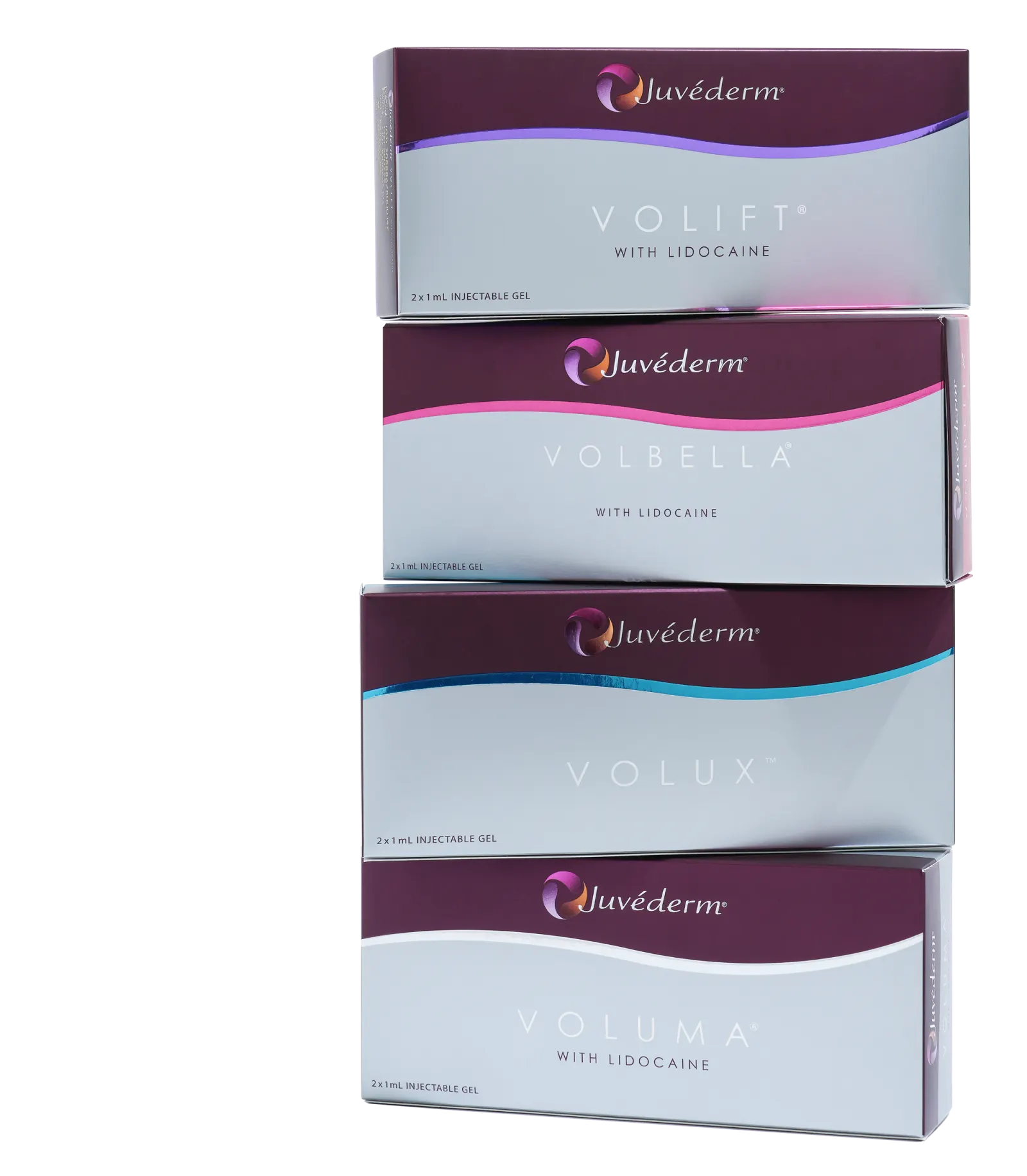
The periorbital area involves 3 distinct zones (tear trough, under-eye hollow, and temple), so a plan targets each with the right hyaluronic acid filler or booster rather than one product.
Periorbital rejuvenation restores the eye area using targeted hyaluronic acid filler in the tear trough, under-eye hollow and temples, often paired with a skin booster for texture. At our Incheon Airport (Yeongjongdo) location near ICN, the clinic’s doctors assess your anatomy first, so exact products, volume and cost are confirmed at consultation, not fixed in advance.
One-on-One guidance from a dedicated doctor, ensuring your skin is professionally monitored and treated from start to finish.
Fluent assistance in English, Japanese, and Chinese, making communication clear, respectful and comfortable for international patients.
Over 100,000 patients worldwide have received our personalized dermatological care, highlighting our expertise and reliable results.
Periorbital rejuvenation is a non-surgical approach to refreshing the eye area, addressing tired-looking hollows, shadowing and volume loss around the eyes without an operation. As we age, fat pads shift, the under-eye and temple regions deflate, and the tear trough deepens, which casts shadows that read as fatigue even when you are well rested. Carefully placed hyaluronic acid (HA) filler restores that lost support, while skin boosters improve the thin, crepey skin that develops here.
The periorbital region is one of the most technically demanding areas to treat because the skin is thin and the anatomy is delicate. That is why a considered, zone-by-zone plan matters more than a single injection. Tear-trough and under-eye hollows call for a soft, low-swelling HA gel, temple hollowing needs a firmer volumising gel, and skin quality is supported with a booster placed superficially.
At Reberry Clinic, periorbital care is consultation-led and delivered with full English support. International patients travelling through Seoul are welcomed at our Incheon Airport (Yeongjongdo) location near ICN, where the clinic’s doctors map your under-eye, tear-trough and temple zones before recommending any product, so the plan fits your face and your travel schedule.
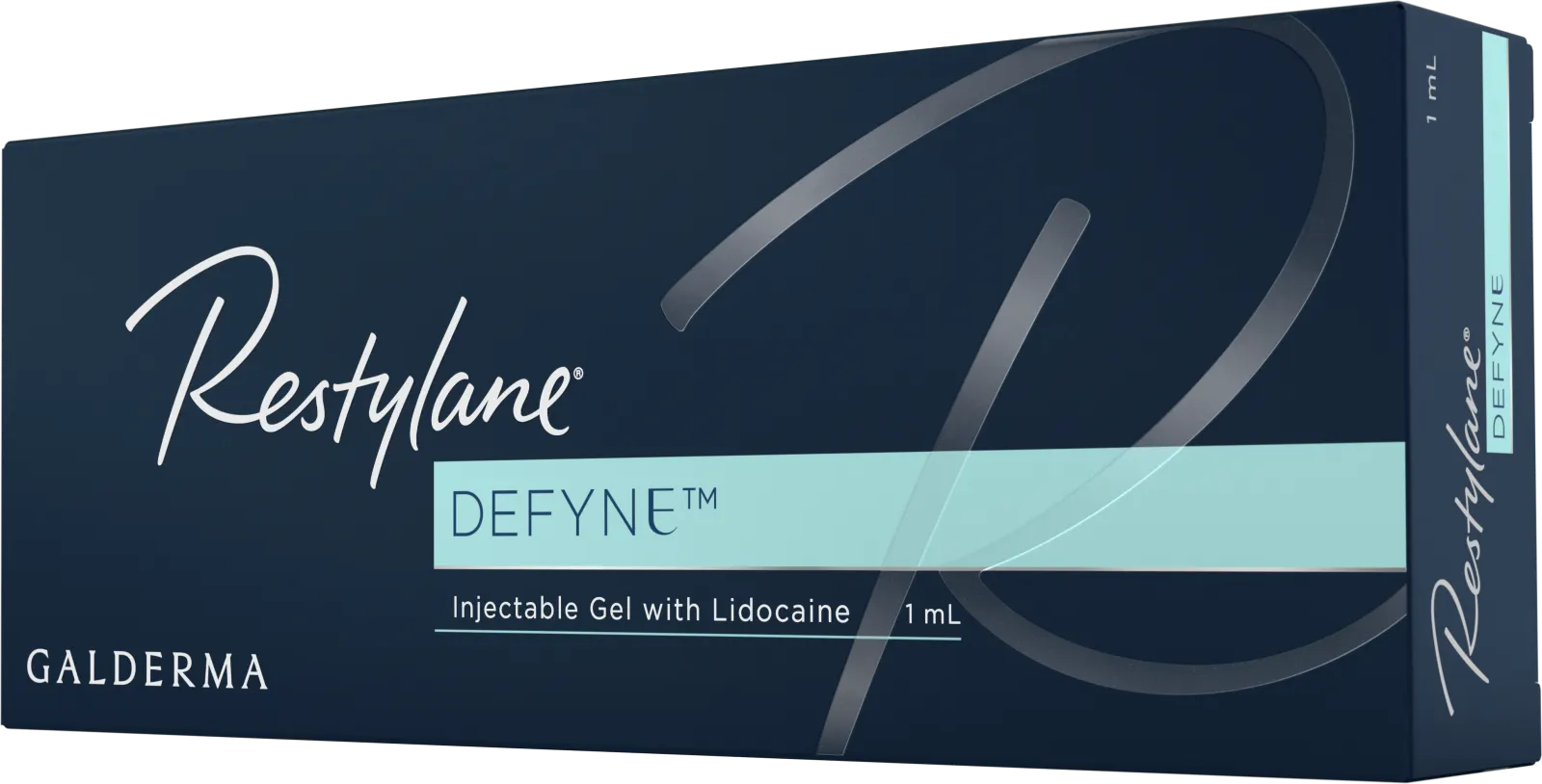
Periorbital rejuvenation relies mainly on hyaluronic acid, a sugar molecule that binds water and integrates into tissue to restore volume where the face has deflated. In the tear trough and under-eye hollow, a soft, cohesive, low-hydrophilic HA gel is chosen specifically to minimise puffiness in this water-retaining zone, and it is placed deep, on or near the bone, so it lifts the hollow without lying visibly under thin skin. In the temples, a firmer volumising HA gel rebuilds the concave upper-face frame, which indirectly softens the outer eye and brow. A skin booster, a lightly cross-linked or non-cross-linked HA placed in the superficial dermis, addresses fine lines and texture rather than volume. Because HA is reversible, it can be dissolved with hyaluronidase if a correction is ever needed, which is a key safety advantage in this delicate region. The clinic’s doctors match gel firmness, injection depth and placement to each of the 3 zones, using slow, low-pressure technique to reduce bruising and keep results natural. This is precisely why the eye area is treated by zone, not with a single all-purpose product.
One Reberry Clinic, multiple Seoul-area locations. Pricing & current promotions are listed on each branch's own site — tap a clinic to view pricing & book.
Our flagship in the heart of Gangnam.
In Seoul's shopping & tourism heart.
A beauty stop between flights.
The newest Reberry Clinic — in Seoul's trend district.
ONE REBERRY CLINIC · MFDS-REGISTERED DEVICES · MULTILINGUAL CARE AT EVERY LOCATION

The clinic’s doctors assess your tear trough, under-eye hollow and temples, since 1 product rarely suits all 3 areas.
A soft, low-swelling HA is selected for the under-eye, while a firmer volumising HA is chosen for the temples, matched to each zone’s depth.
Under-eye filler is placed deep on or near the bone in small aliquots, and slow injection lowers the roughly 10% bruising risk reported for this area.
For thin or crepey skin, 1 or more superficial booster sessions improve texture, spaced 2 to 4 weeks apart from the volume work.
A follow-up at about 2 weeks lets the doctor check settling and top up conservatively, since the eye area is corrected gradually, not overfilled in 1 visit.

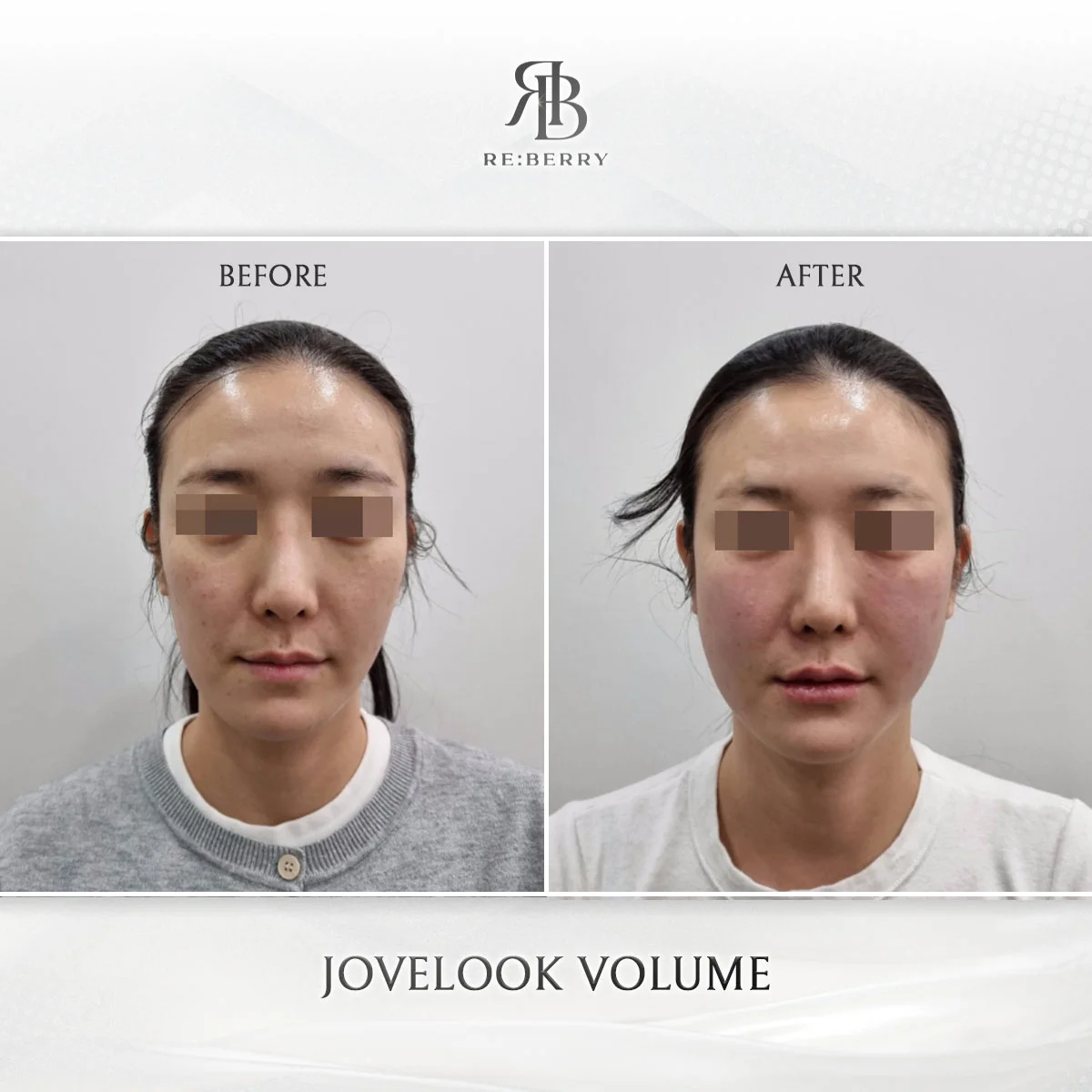
See representative outcomes from Reberry Clinic. Results build gradually and vary by individual; your plan is assessed at consultation.
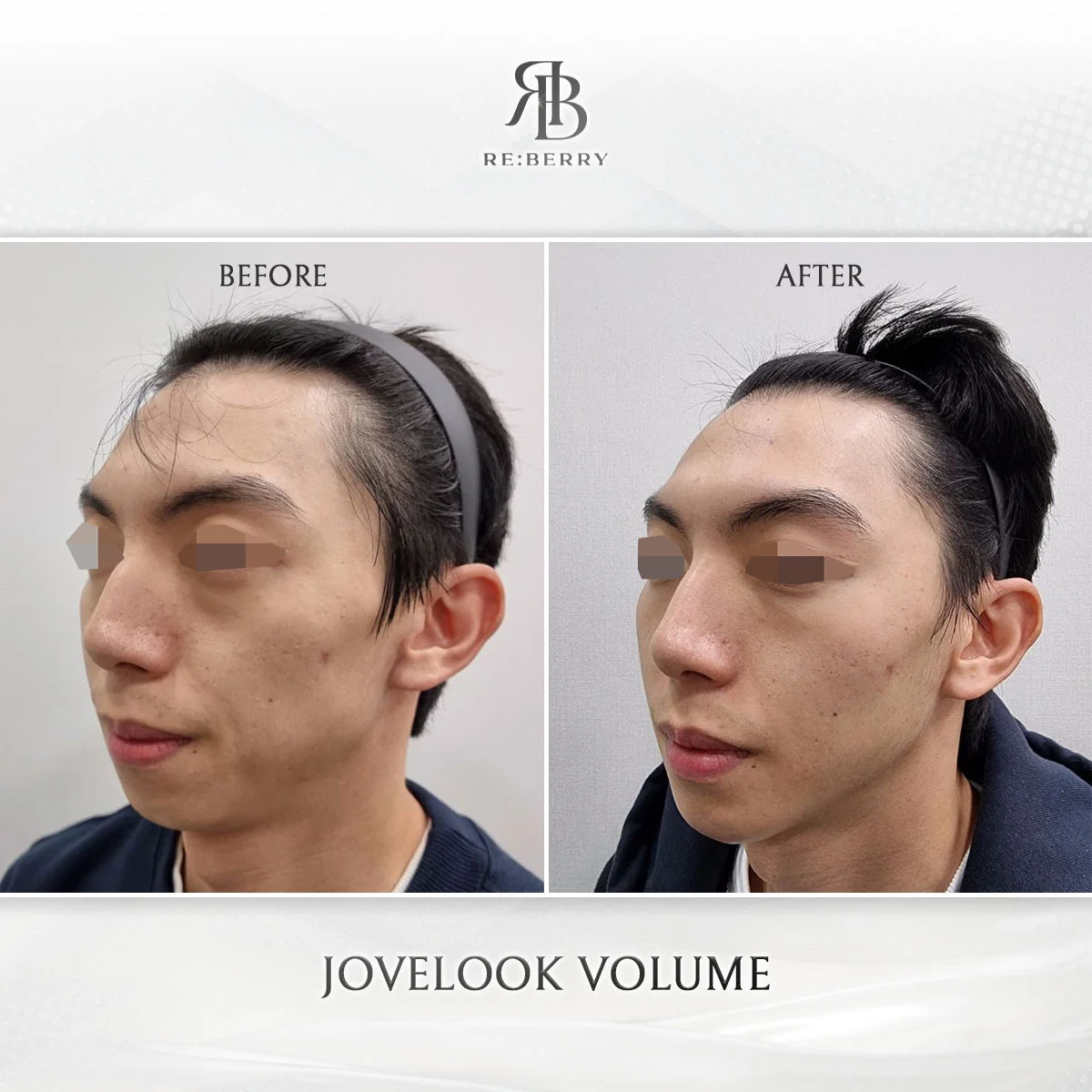
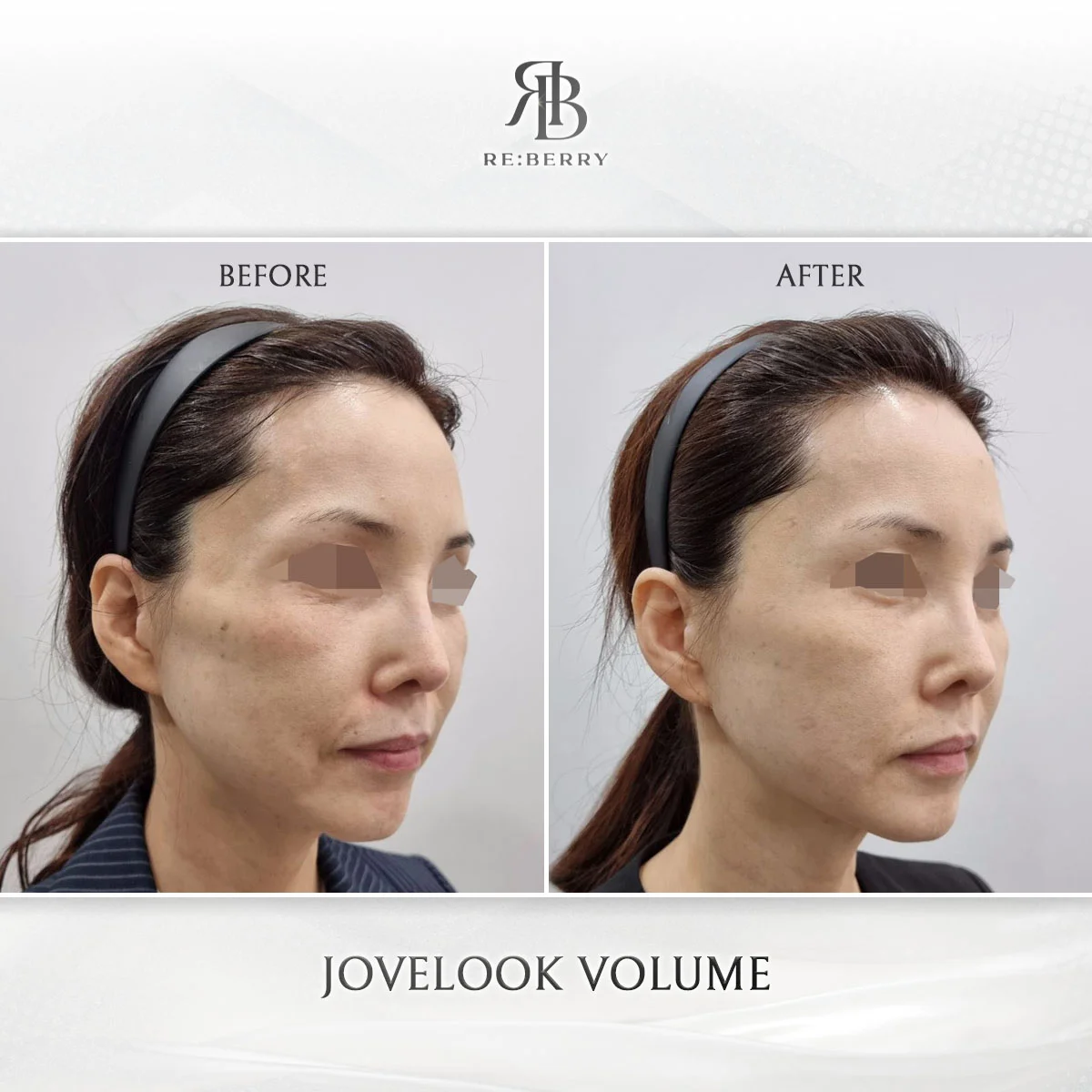
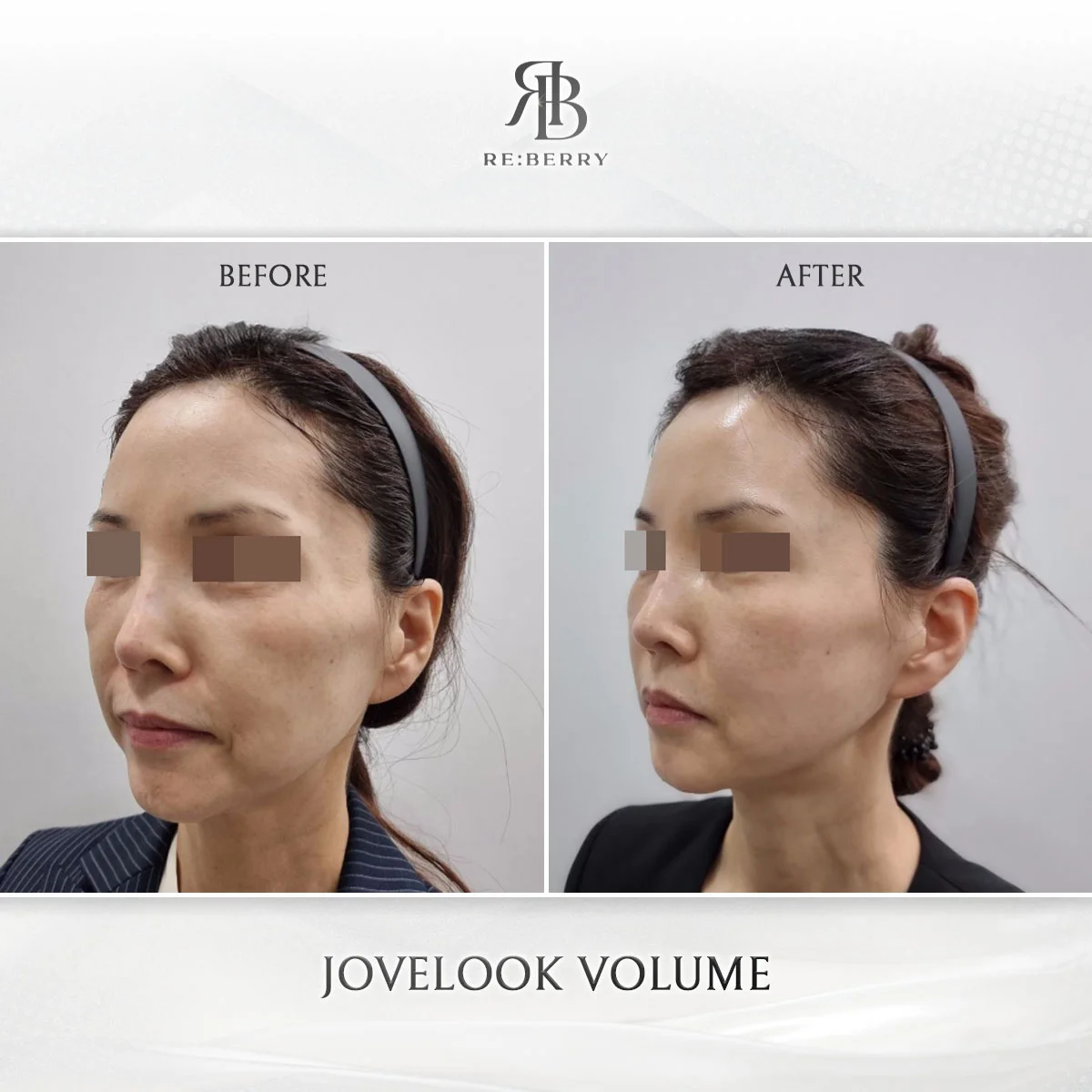
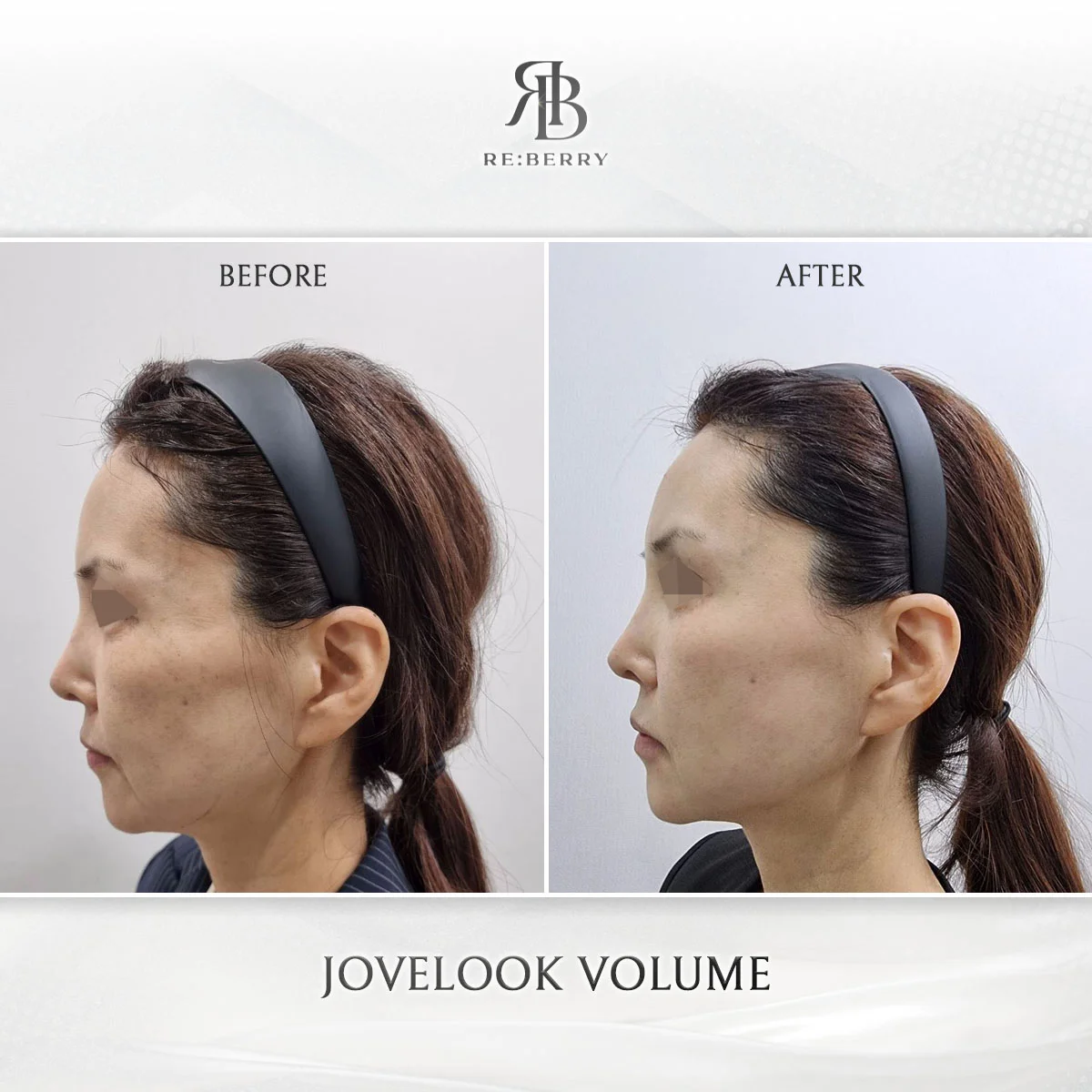
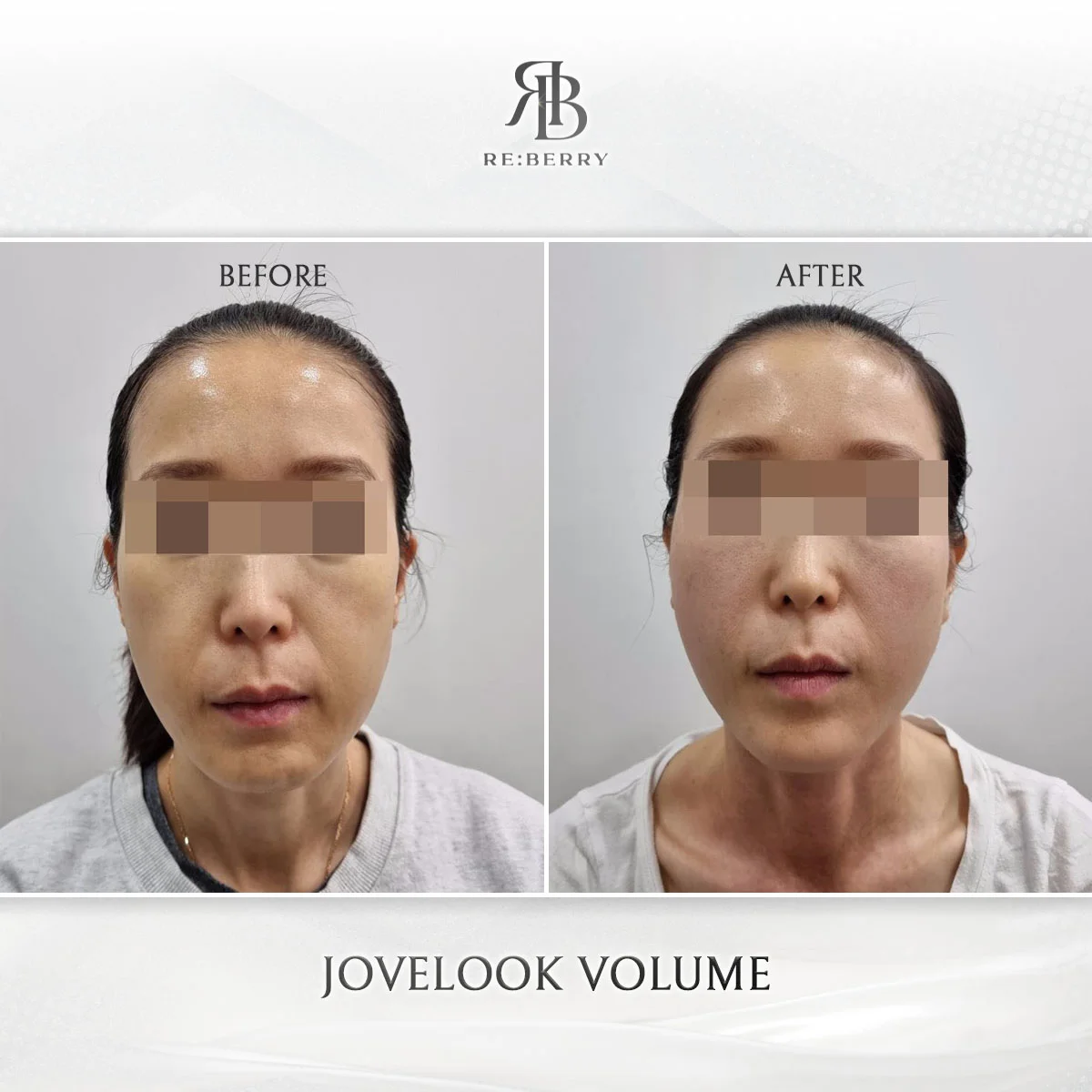
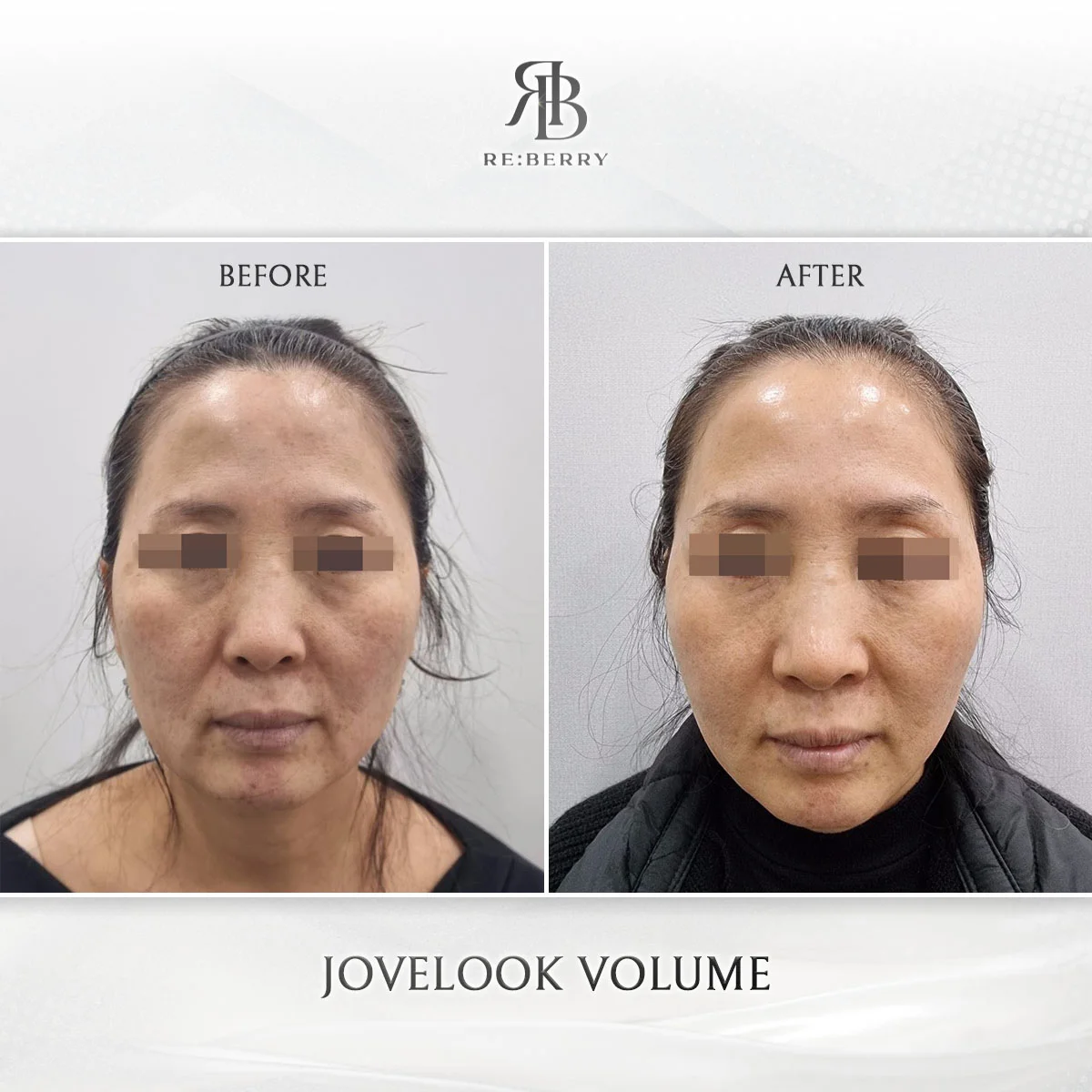
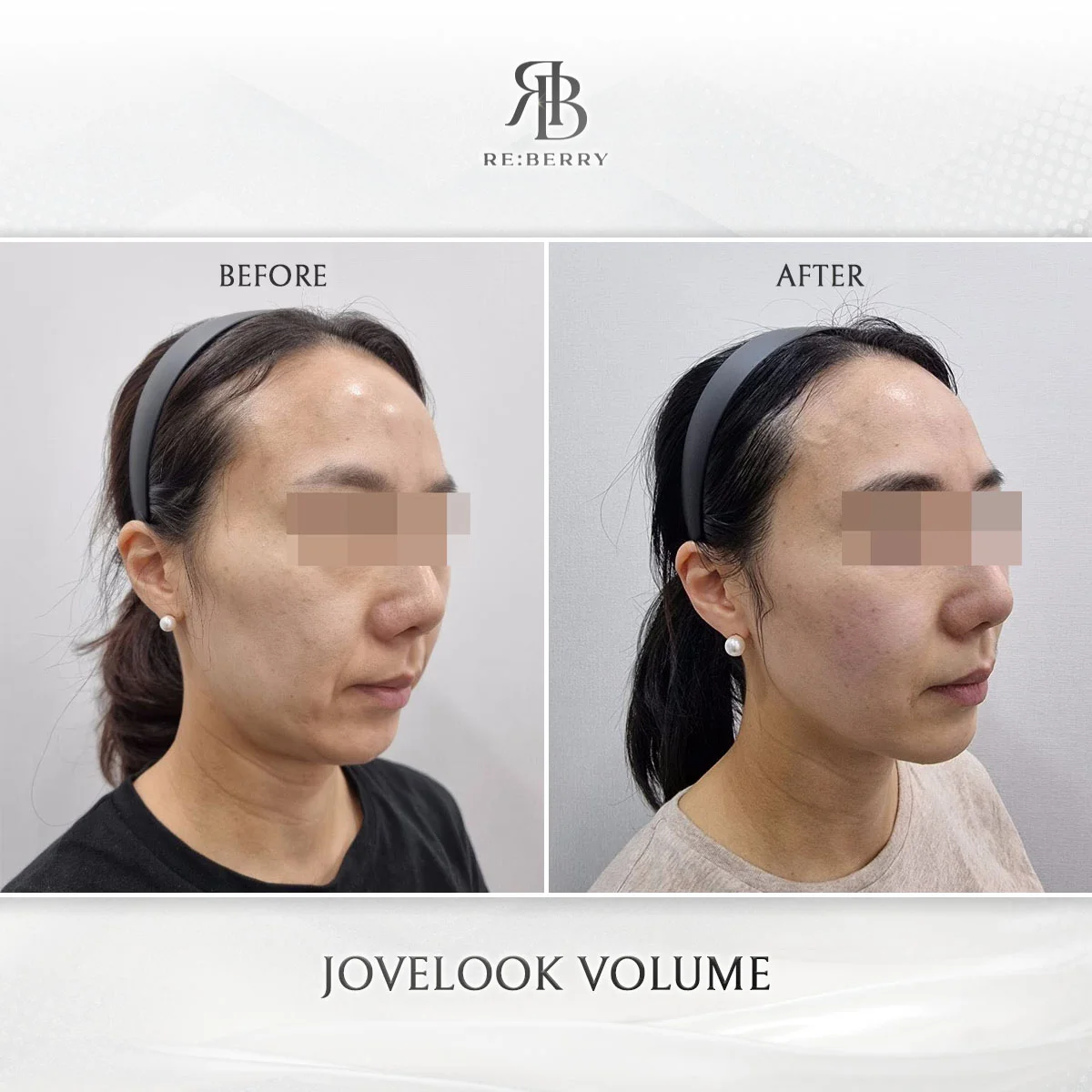
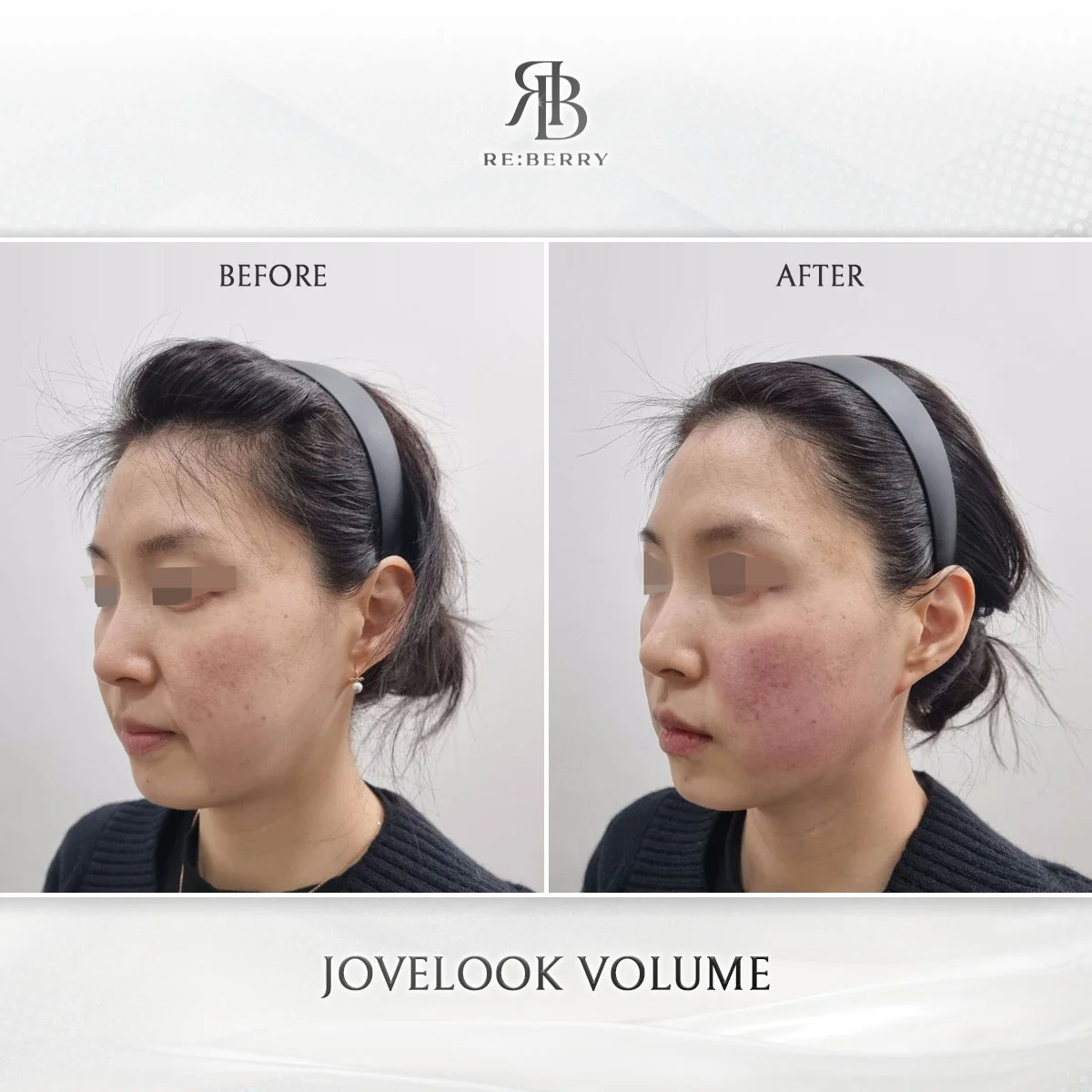
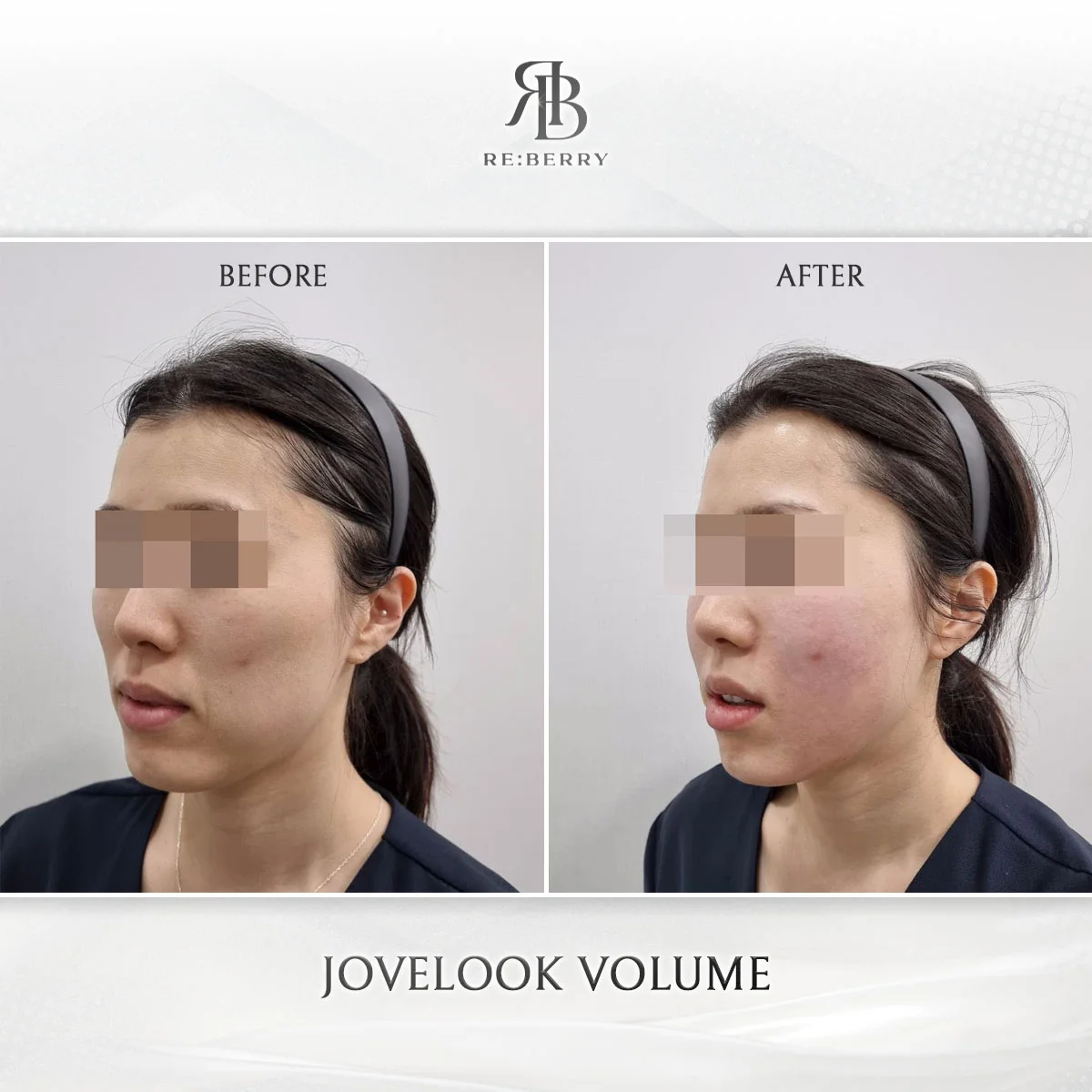
At our Incheon Airport (Yeongjongdo) location, the clinic’s doctors examine your 3 periorbital zones and explain which products, volumes and cost factors apply, in English.
Treatment usually takes about 20 to 40 minutes depending on how many zones are addressed, with numbing cream applied first for comfort.
A single volume session is typically completed in 1 visit, while a skin-booster course runs over 2 to 3 sessions a few weeks apart.
Volume is visible immediately and settles over 1 to 2 weeks, with a review appointment around day 14 to refine conservatively if needed.
Under-eye HA often lasts around 9 to 18 months and temple HA around 12 months or more, maintained with periodic top-ups and gentle aftercare.



Periorbital rejuvenation is a non-surgical treatment of the eye area, targeting 3 zones: tear-trough and under-eye hollows, temple concavity, and skin texture. It uses hyaluronic acid filler for volume and a skin booster for quality. You can explore the products on our injectable fillers page.
A soft, cohesive, low-swelling hyaluronic acid gel is used under the eyes, chosen specifically to minimise puffiness in this water-retaining zone. It is placed deep, on or near the bone, so it lifts the hollow without showing through thin skin. The exact product is selected at consultation based on your anatomy.
Yes, restoring temple volume rebuilds the upper-face frame and can soften the outer eye and brow region. A firmer volumising HA gel is used here, at a deeper plane than under-eye work. Many patients combine temple and under-eye treatment for a balanced, rested look rather than treating one zone alone.
Discomfort is usually mild because numbing cream is applied first and most HA products contain lidocaine. You may feel brief pressure or a pinch during injection. The under-eye is sensitive, so the clinic’s doctors work slowly with fine technique, which also helps reduce the roughly 10% bruising risk reported for this area.
Downtime is generally minimal, with possible mild bruising or swelling for a few days, most noticeable under the eyes. Many patients return to normal activities the same day. Bruising, when it occurs, can usually be covered with makeup. Your doctor will advise on timing if you have events or flights soon after.
Volume results are visible immediately, then settle over about 1 to 2 weeks as swelling resolves and the gel integrates. A skin booster works more gradually across a short series. A review around day 14 lets your doctor assess the settled result and add a small top-up if needed rather than overfilling initially.
Under-eye hyaluronic acid often lasts around 9 to 18 months and temple filler around 12 months or longer, though this varies with product and metabolism. One study reported infraorbital improvement up to 18 months. Periodic maintenance keeps the eye area refreshed, and a longer-lasting collagen option like Juvelook can be discussed.
Yes, one advantage of hyaluronic acid is that it can be dissolved with hyaluronidase if you dislike the result or a correction is needed. This reversibility is a key safety feature in the delicate eye area. If you have older filler placed elsewhere, your doctor can assess whether dissolving before retreatment is appropriate.
Yes, periorbital work is often paired with a skin booster for texture, or with lifting and collagen treatments for the wider face. Sequencing matters so the skin is not over-stressed. You can review complementary options such as Rejuran Healer and discuss a combined plan at your consultation.
Most side effects are mild and temporary: bruising near 10%, swelling around 3%, contour irregularity about 2%, and Tyndall-type bluish discoloration near 1% under the eyes. Serious complications are uncommon in trained hands. Conservative volumes, correct depth and slow technique reduce these risks, which is why an experienced assessment matters.
A bluish-grey shadow can appear when filler sits too superficially under thin under-eye skin, historically called a Tyndall effect. It is avoided by placing a low-swelling gel deep, on or near the bone, in conservative amounts. If it occurs, hyaluronidase can dissolve the product, since HA is reversible, which is one reason HA is preferred here.
Good candidates have tear-trough shadows, under-eye or temple hollowing and healthy skin. If puffiness is driven mainly by fat prolapse rather than volume loss, filler alone may not suit you and your doctor will explain alternatives. A consultation confirms suitability. You can read more on our injectable fillers page first.
Yes, a skin booster is a lightly cross-linked or non-cross-linked hyaluronic acid placed superficially to improve fine lines, hydration and crepey texture, rather than to add volume like a filler. Boosters suit thin under-eye skin. A tailored skin care routine supports and prolongs booster results between sessions.
Cost depends on how many of the 3 zones you treat, the products chosen and the volume used, so there is no single fixed price. Because plans are individualised, the clinic’s doctors confirm your cost transparently at consultation in English. Volume needs, not a fixed menu, drive the final figure for your eye area.
You can be treated at our Incheon Airport (Yeongjongdo) location near ICN, convenient for transit and stopover visits, with Dr. Sunbeen Kim as Medical Director. English support is provided throughout. Reberry Clinic also has Seoul locations, and your doctor helps you choose the site that fits your travel plans.
For a first session, 2 to 3 days is comfortable, allowing a consultation, treatment, and a short settling window before travel. If you want a review, a slightly longer stay helps. Because our Incheon Airport (Yeongjongdo) location sits near ICN, many patients fit treatment around a stopover or the start of a trip.
Yes, flying within a day or so is generally fine, as HA filler is minimally invasive, though mild swelling or bruising may still be present. Cabin air is drying, so keep skin moisturised and avoid rubbing the area. Because our Incheon Airport (Yeongjongdo) location is near ICN, treatment can be timed close to a departure.
International patients can complete a review before flying home, and the clinic offers remote check-ins in English for reassurance about settling or aftercare. Your treatment notes are kept on file for continuity if you return. You can maintain skin quality at home with a supportive skin care routine between visits.
| Under-Eye / Tear-Trough HA Filler | Temple HA Filler | Periorbital Skin Booster | |
|---|---|---|---|
| Mechanism | Soft, low-swelling hyaluronic acid restoring volume | Firmer volumising hyaluronic acid rebuilding the temple | Superficial hyaluronic acid improving skin quality |
| Best for | Tear-trough shadows and under-eye hollowing | Temple concavity and outer-eye framing | Fine lines, crepey texture, thin under-eye skin |
| Depth | Deep, on or near bone | Deep, above muscle in a safe plane | Shallow, in the superficial dermis |
| Downtime | Minimal, occasional bruising or swelling | Minimal, occasional bruising | Minimal, brief redness or tiny bumps |
| Results timeline | Visible immediately, settles over 1 to 2 weeks | Visible immediately, softens over 1 to 2 weeks | Gradual, over a short series of sessions |
| Longevity | Often around 9 to 18 months, area-dependent | Often around 12 months or longer | Shorter, maintained with periodic sessions |
| Cost context | Depends on product and volume used | Depends on product and volume used | Depends on the number of booster sessions |
Real verified reviews from our Google Business Profile, across all Reberry Clinic locations.
PULLED LIVE FROM GOOGLE · GANGNAM · MYEONGDONG · INCHEON AIRPORT
Your treatment is planned and performed by experienced, MFDS-registered doctors across our Seoul-area clinics, with multilingual support for international patients.
Flagship clinic · KOL for leading lifting & regenerative devices · Featured in Authority Magazine (2026)

Multilingual tourist care beside Myeongdong Cathedral

Fast, effective care 20 minutes from the terminals
Message us on WhatsApp for a free consultation in English about your under-eye, tear-trough and temple options near Incheon Airport.