



Gangnam
Dr. Yoon-Gon Ryu
Aesthetic Medicine Specialist
Flagship clinic · KOL for leading lifting & regenerative devices · Featured in Authority Magazine (2026)


A thread lift places absorbable PDO or PLLA sutures under the skin to reposition tissue and trigger collagen, with new collagen building over roughly 2 to 6 months.
A thread lift in Gangnam, Seoul, Korea uses fine absorbable PDO or PLLA threads inserted under the skin to reposition sagging tissue and stimulate collagen. It is minimally invasive, takes about 30 to 60 minutes, and gradual firming builds over 2 to 6 months. At our Gangnam (Seoul) location, Dr. Yoongon Ryu tailors thread type and placement to your face.
One-on-One guidance from a dedicated doctor, ensuring your skin is professionally monitored and treated from start to finish.
Fluent assistance in English, Japanese, and Chinese, making communication clear, respectful and comfortable for international patients.
Over 100,000 patients worldwide have received our personalized dermatological care, highlighting our expertise and reliable results.
A thread lift is a minimally invasive lifting procedure that uses fine, absorbable sutures, most commonly PDO (polydioxanone) or PLLA (poly-L-lactic acid), inserted under the skin to reposition mildly sagging tissue and stimulate the body’s own collagen. Unlike energy-based devices that heat tissue from outside, a thread lift works mechanically and biologically at once: the threads give an immediate subtle lift, and the material dissolves over months while new collagen forms along the thread path.
Threads come in two broad roles. Barbed or cog threads (often PDO) grip tissue and physically reposition the jawline, cheeks, or brow, while smooth mono and screw threads act more as collagen stimulators to improve skin quality and firmness. Many plans combine both. The threads are fully absorbable, typically breaking down over about 6 to 8 months for PDO and longer for PLLA, while the collagen benefit outlasts the material itself.
At Reberry Clinic’s Gangnam (Seoul) location, thread lifts are consultation-led. Dr. Yoongon Ryu assesses your degree of laxity, skin thickness, and facial anatomy, then selects thread type, vector, and number. International patients are supported in English, and Gangnam is easily reached about 2 minutes from Gangnam Station exit 10 in Seoul, Korea.
Absorbable threads do two jobs. Mechanically, barbed threads have tiny bidirectional cogs that anchor into the subcutaneous tissue; when the doctor sets the thread along a lifting vector, those cogs hold repositioned tissue in place, producing an immediate but subtle lift of the cheek, jawline, or brow. Biologically, the thread material acts as a foreign body that triggers a controlled healing response: fibroblasts migrate to the thread, and neocollagenesis lays down fresh type I and III collagen along the thread track over the following weeks. PDO threads are made of polydioxanone, a suture material used in surgery for decades, and typically absorb over about 6 to 8 months. PLLA threads absorb more slowly and are chosen when longer collagen stimulation is the priority. Because the lift depends on placement and vector rather than heat, thread selection and technique matter more than raw device power, which is why an experienced hand plans the number, depth, and direction of each thread individually.
One Reberry Clinic, multiple Seoul-area locations. Pricing & current promotions are listed on each branch's own site — tap a clinic to view pricing & book.
Our flagship in the heart of Gangnam.
In Seoul's shopping & tourism heart.
A beauty stop between flights.
The newest Reberry Clinic — in Seoul's trend district.
ONE REBERRY CLINIC · MFDS-REGISTERED DEVICES · MULTILINGUAL CARE AT EVERY LOCATION

The doctor grades your laxity and maps lifting vectors, choosing PDO or PLLA threads and the number needed, often between 4 and 20 depending on the area.
Topical and local anaesthetic are applied to entry points so the roughly 30 to 60 minute procedure stays comfortable.
Fine threads are guided under the skin through 1 small entry point per vector using a cannula or needle, with barbed threads anchoring tissue for an immediate lift.
The doctor gently adjusts the lifted tissue along each of the mapped vectors so the jawline, cheek, or brow sits in a more supported position, checking symmetry on both sides.
Over the next 2 to 6 months, fibroblasts build new collagen along each thread path while the material absorbs, firming skin beyond the initial lift.
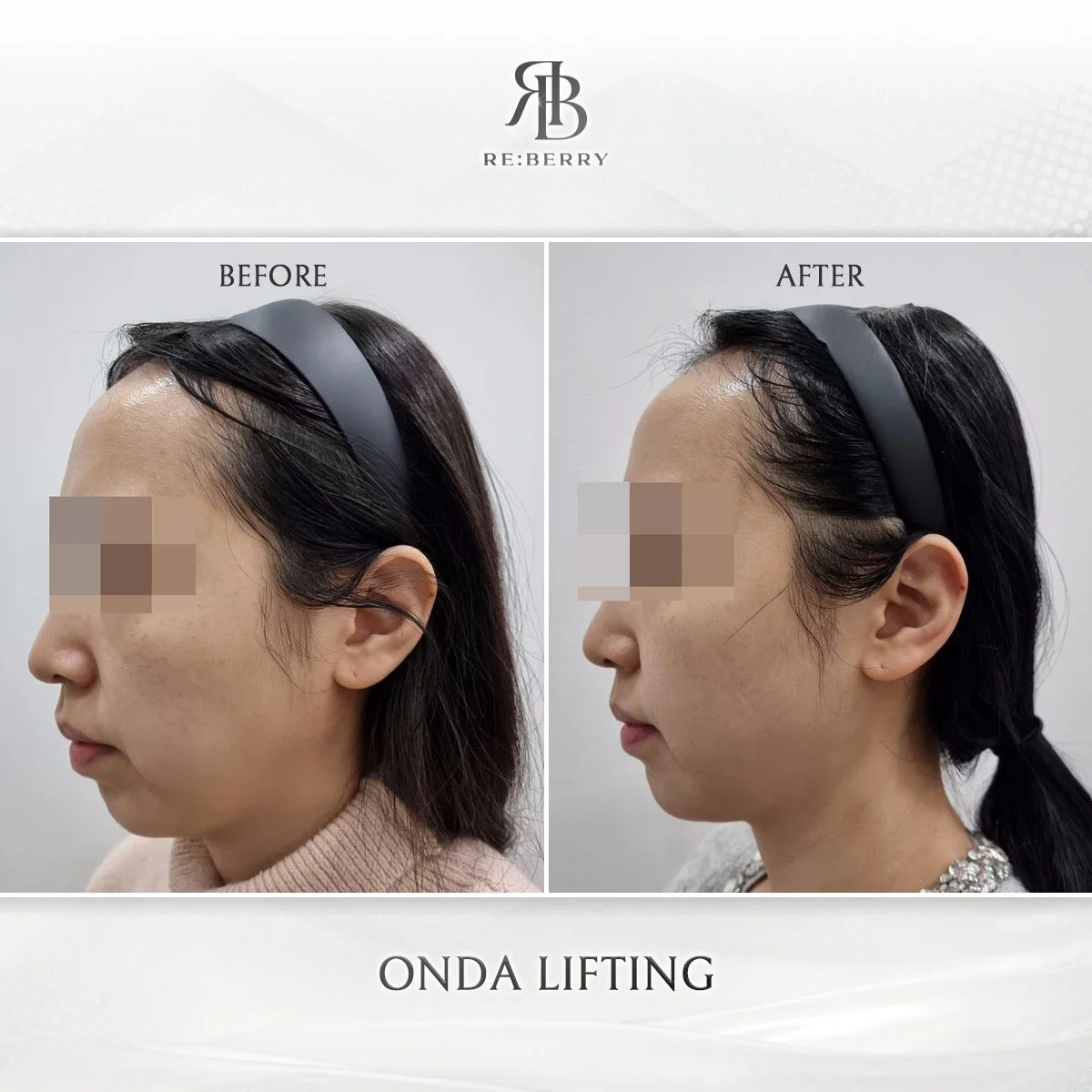
See representative outcomes from Reberry Clinic. Results build gradually and vary by individual; your plan is assessed at consultation.
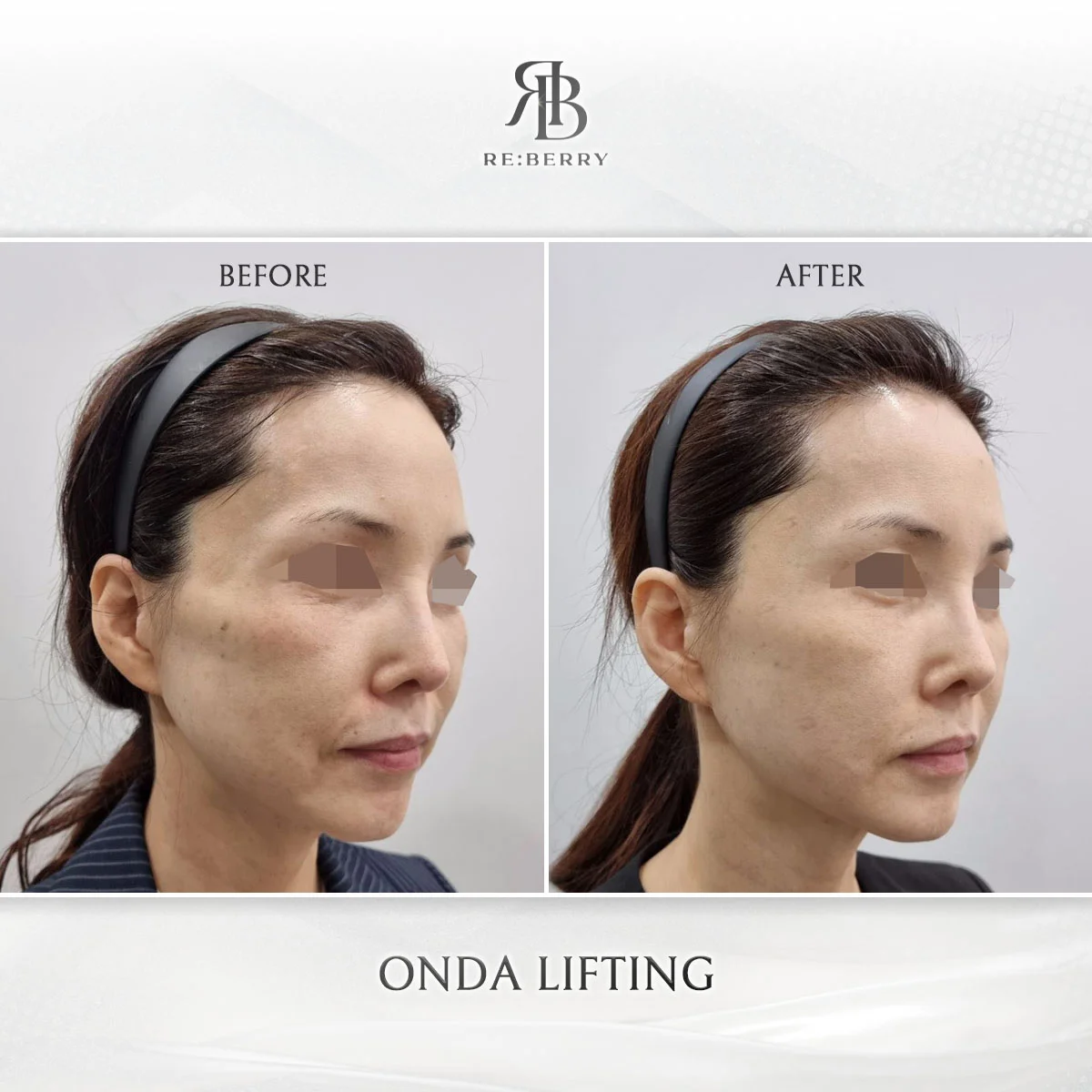
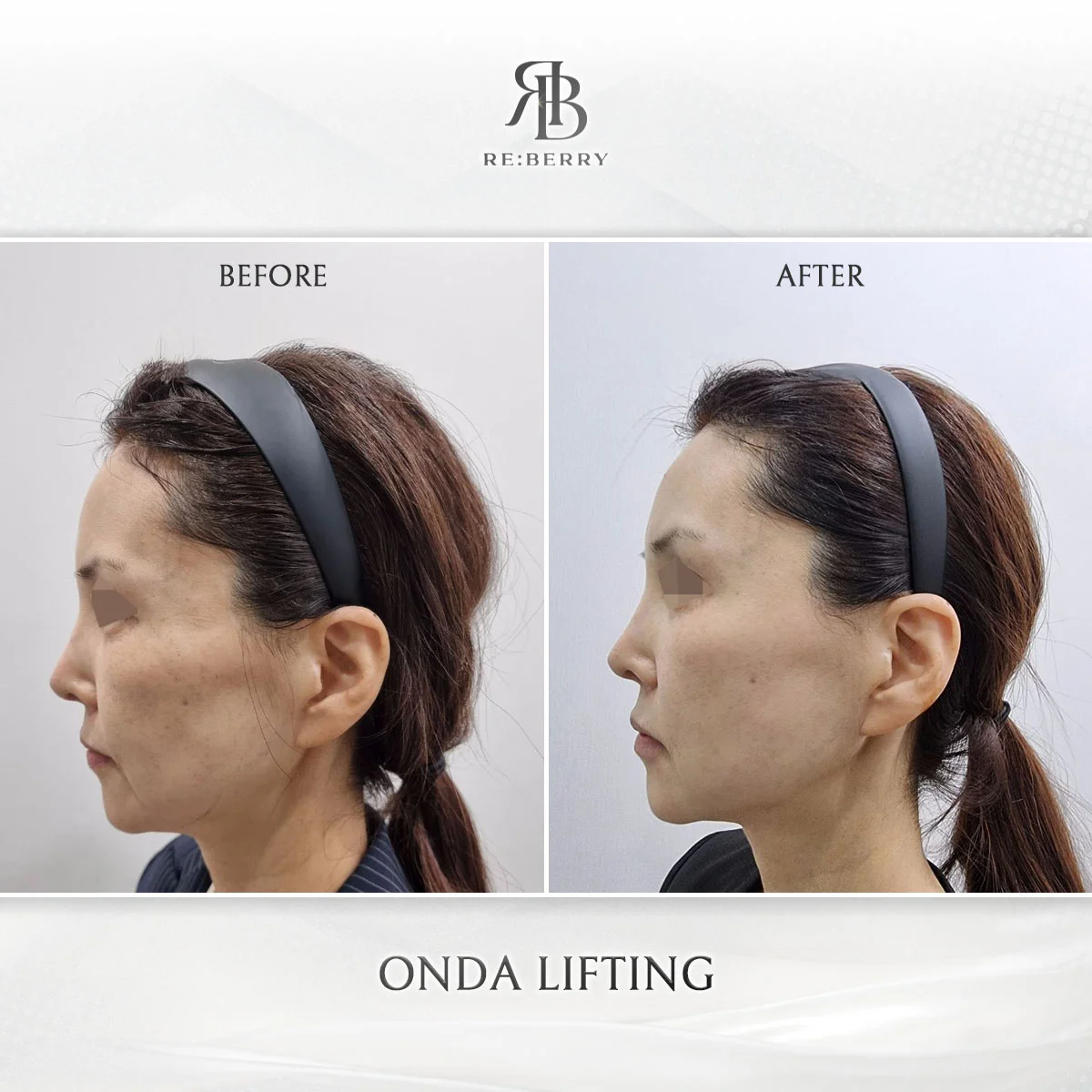
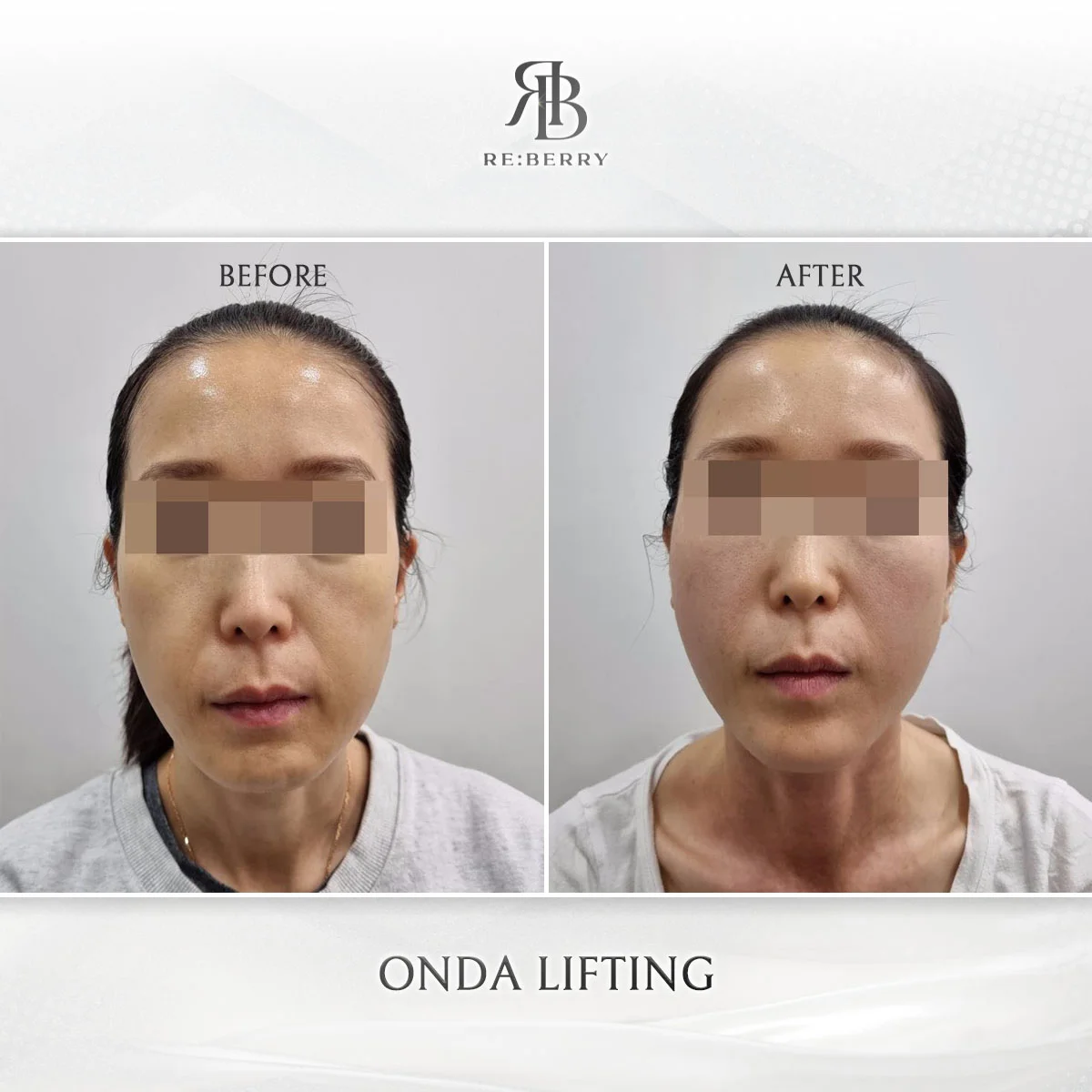
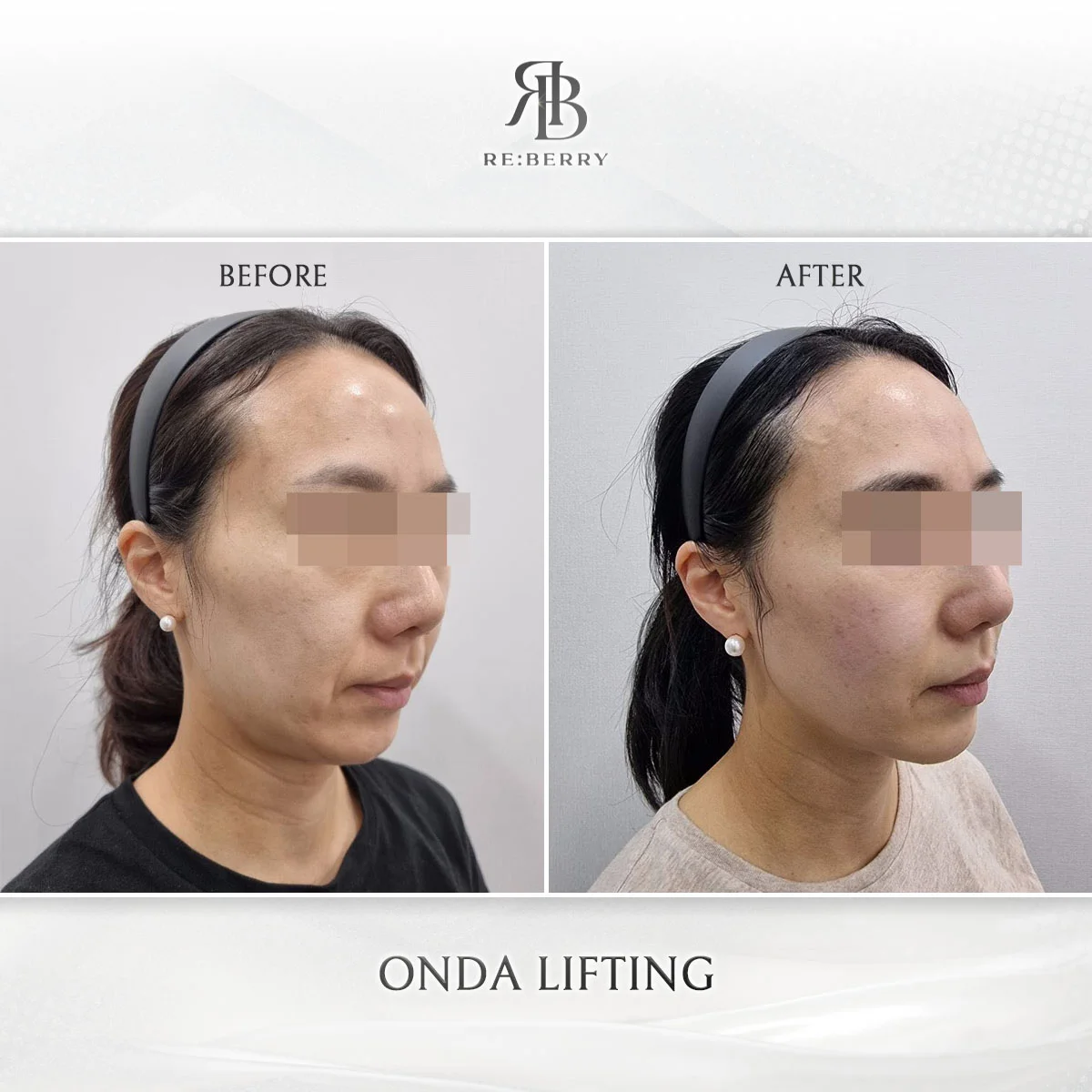
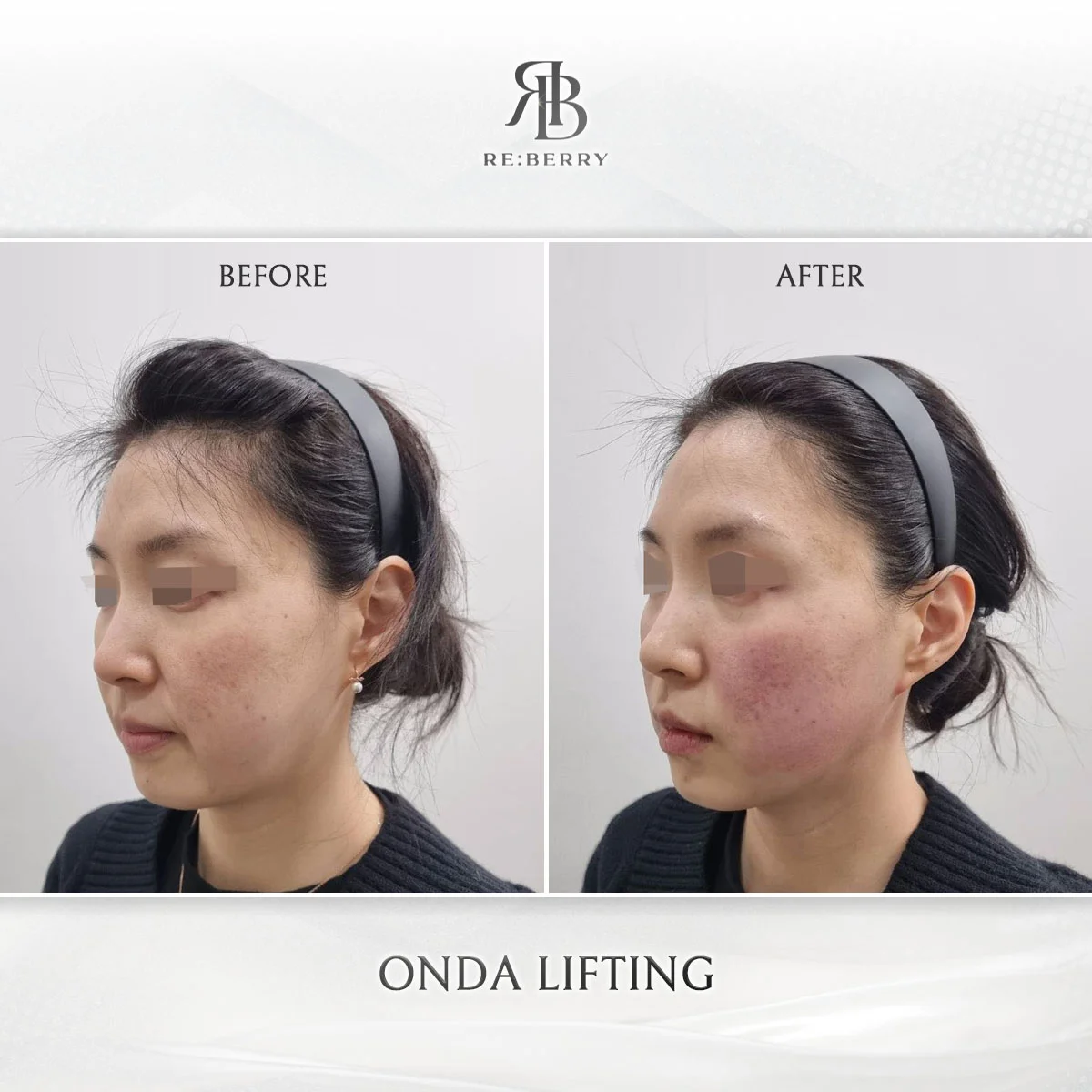
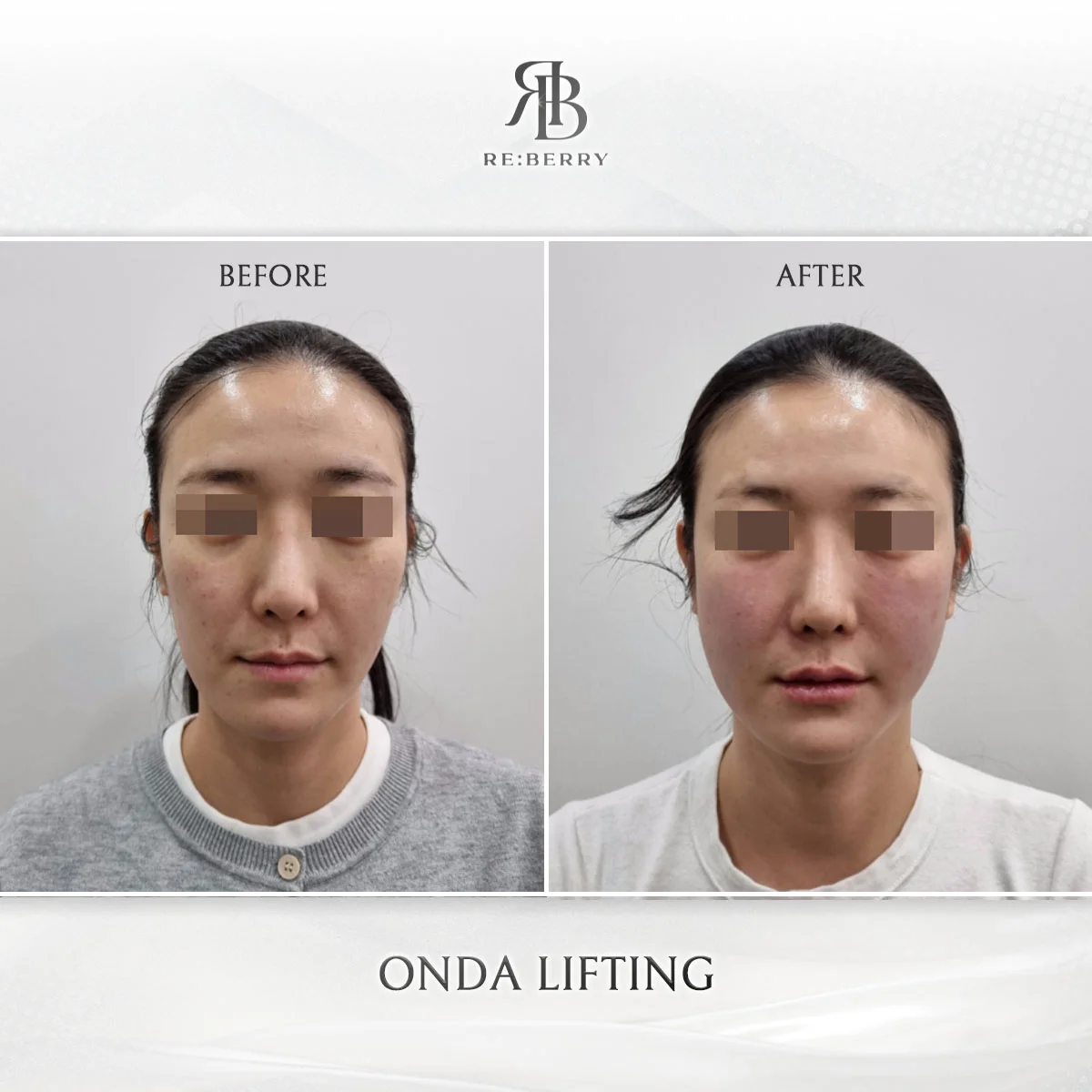
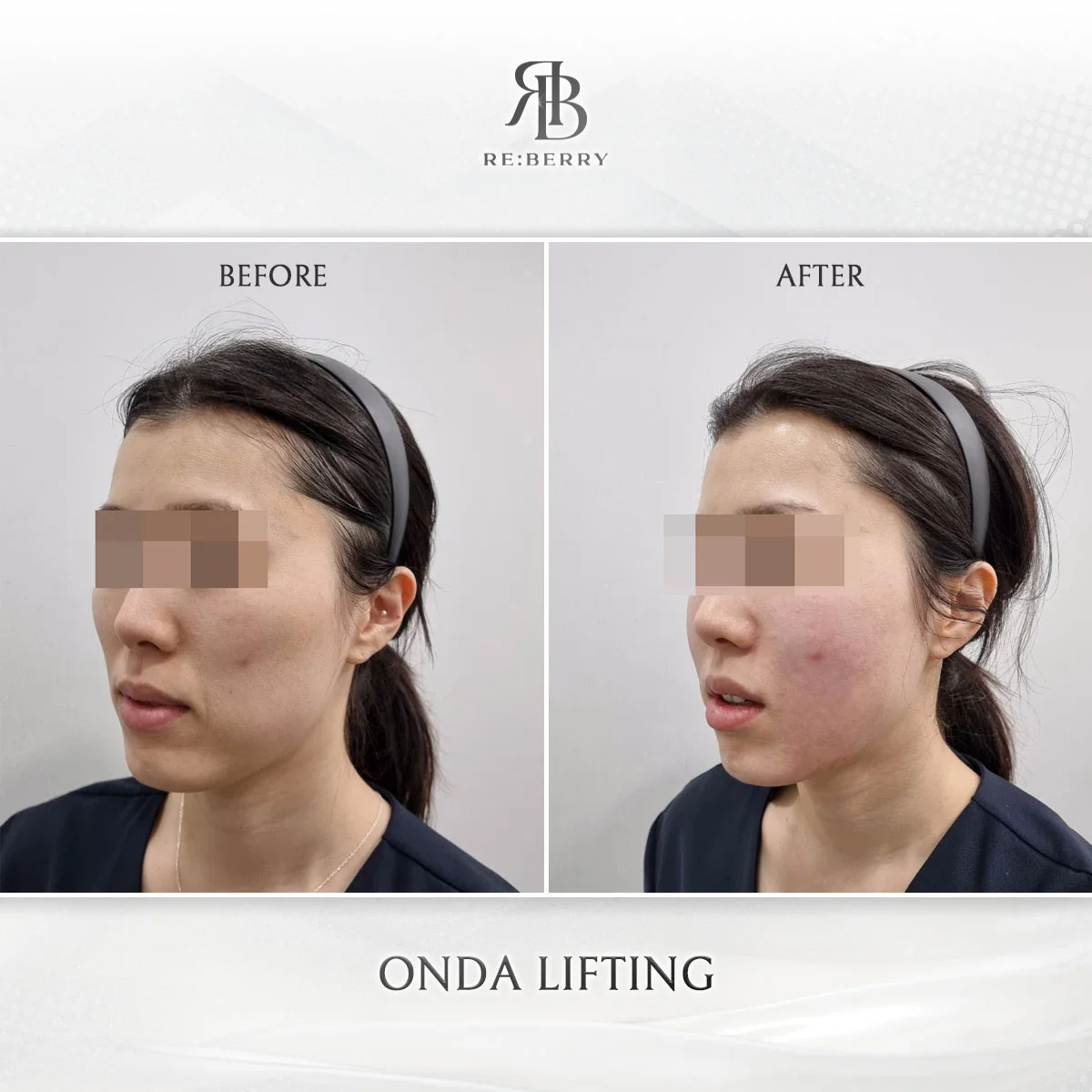
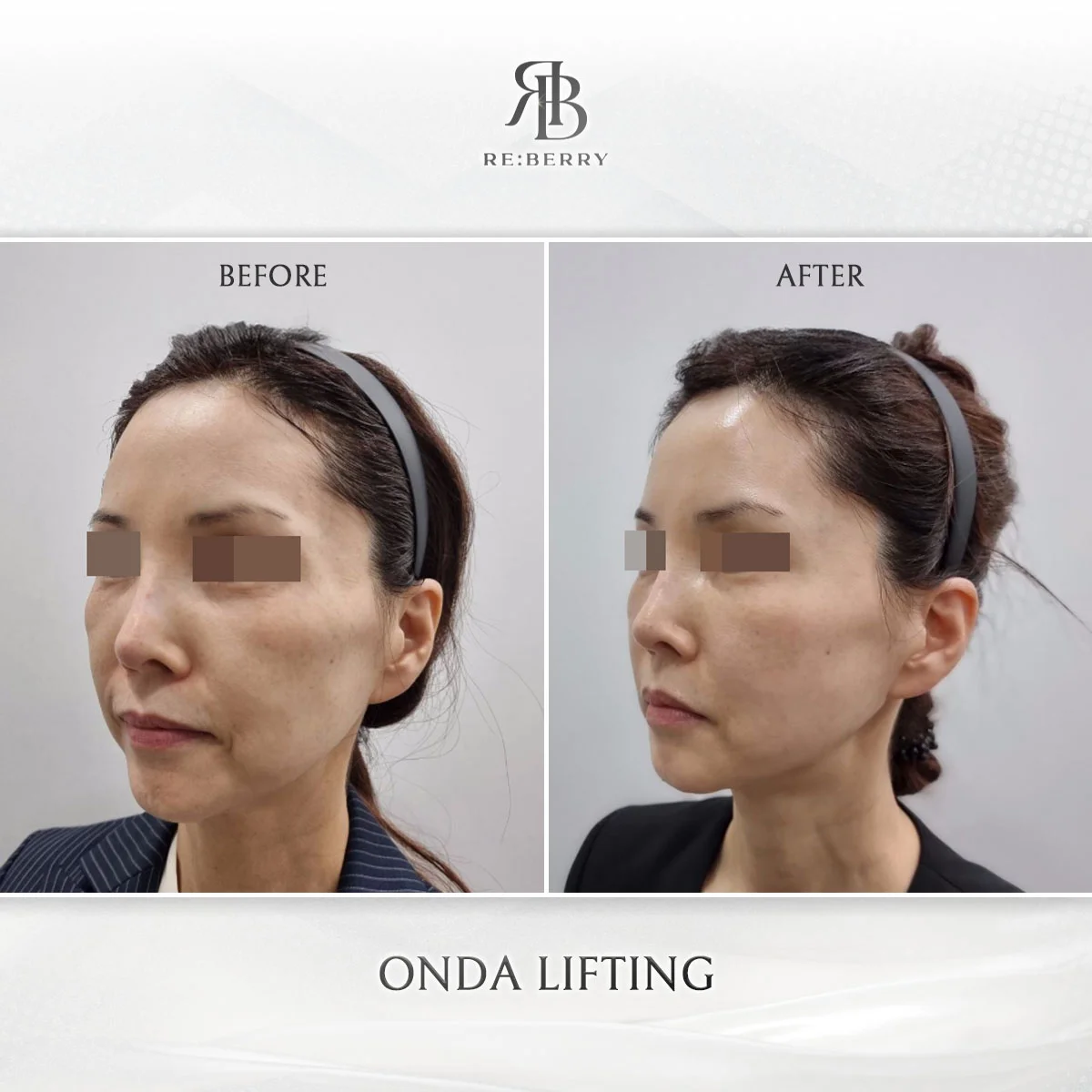
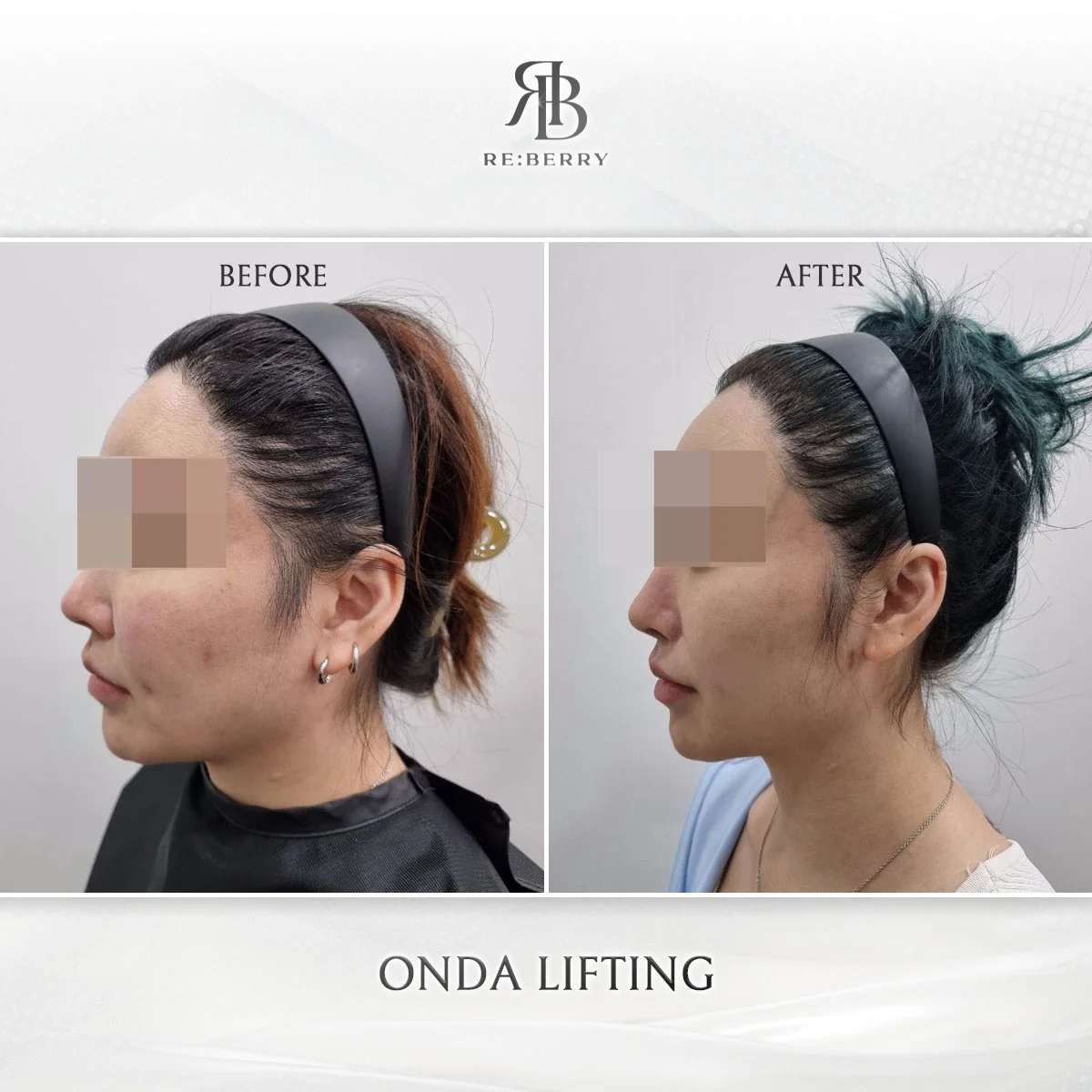
At our Gangnam (Seoul) location, Dr. Yoongon Ryu assesses your laxity and facial anatomy, then plans thread type, vectors, and number, explaining cost transparently in English.
After numbing, the procedure itself usually takes about 30 to 60 minutes, and you can typically return to light activity the same day.
Most thread lifts are completed in a single visit, though some plans stage threads with energy or skin boosters across appointments.
You see a subtle lift immediately, then firming builds over 2 to 6 months as new collagen forms along each thread path.
Results often last around 12 to 18 months as threads absorb; avoiding heavy facial movement and extreme expressions early helps threads settle.



A thread lift uses fine absorbable PDO or PLLA sutures placed under the skin to reposition sagging tissue and stimulate collagen. Barbed threads anchor and lift, while the material dissolves over months as new collagen forms. You can read more on our thread lift page before your consultation in Gangnam, Seoul.
Thread lifts are performed at our Gangnam (Seoul) location, where Dr. Yoongon Ryu plans thread type and vectors for your face. Gangnam is about 2 minutes from Gangnam Station exit 10 in Seoul, Korea. International patients are supported in English, with two other Reberry Clinic locations in Myeongdong and near Incheon Airport.
Discomfort is usually mild because topical and local anaesthetic are applied before insertion. Most patients feel pressure or tugging rather than sharp pain during the roughly 30 to 60 minute procedure. Some tenderness, swelling, or bruising can follow for a few days, and your doctor explains what to expect and how to manage it.
Downtime is typically short, with mild swelling, tightness, or bruising for a few days that settles on its own. Most people return to desk work quickly, though your doctor may advise avoiding vigorous exercise, saunas, and dental work for about 1 to 2 weeks so the threads settle securely into position.
You see a subtle lift immediately from the repositioned tissue, then firming continues to build over 2 to 6 months as new collagen forms along each thread path. The early result may look its best after initial swelling settles, and skin quality often keeps improving as collagen matures. Individual timelines vary by skin and thread type.
Results often last around 12 to 18 months, though this varies with thread type, number placed, your age, and skin quality. The threads themselves absorb over months, but the collagen they stimulate outlasts the material. Many patients maintain results by combining threads with energy lifting such as our Ultherapy Prime option.
The number depends on the area and your degree of sagging, commonly ranging from about 4 to 20 threads across the face. Fewer are used for a targeted brow or nasolabial area, while a full lower-face lift uses more. Dr. Yoongon Ryu maps the vectors and confirms the exact number and thread type at your consultation.
Yes, thread lifts are often combined with energy devices or skin boosters for layered results. Threads reposition tissue while a device firms the dermis, so the two complement each other. Many patients pair threads with a device such as Thermage FLX, and the sequence and timing are planned during consultation.
Common effects are temporary and include swelling, bruising, tenderness, or slight dimpling at entry points that settles within days to a couple of weeks. Less common issues such as thread visibility or asymmetry are usually addressable. Choosing an experienced doctor and following aftercare reduces risks, which your doctor reviews fully before you proceed.
A thread lift is minimally invasive with little downtime and suits mild to moderate sagging, while a surgical facelift addresses more advanced laxity with a longer recovery. Threads give a subtle, temporary lift plus collagen; surgery is more dramatic and lasting. For energy-based alternatives, see our face lift options page.
Thread lifts suit a wide age range, most often adults in their 30s to 60s with mild to moderate sagging and reasonable skin quality. Younger patients may use threads preventively, while very advanced laxity may respond better to other approaches. A consultation confirms whether threads fit your anatomy and goals rather than age alone.
PDO (polydioxanone) threads absorb over about 6 to 8 months and are versatile for both lifting and collagen stimulation. PLLA threads absorb more slowly and are chosen when longer collagen stimulation is the goal. Your doctor selects the material based on your skin, the area, and how much firming versus lifting you want.
For the first 1 to 2 weeks, avoid extreme facial expressions, heavy exercise, saunas, and sleeping face-down so threads settle. Sleep slightly elevated, eat softer foods for a few days, and keep entry points clean. A gentle skin care routine supports healing, and your doctor gives you specific instructions on the day.
Thread lifts use tiny entry points rather than incisions, so visible scarring is uncommon. The small punctures usually heal without a mark. Occasionally a temporary dimple appears at an entry point and resolves over days. Your doctor places entry points discreetly and reviews healing so the skin surface recovers smoothly.
Before your procedure, avoid blood-thinning medications, alcohol, and high-dose fish oil for several days if your doctor approves, to reduce bruising. Arrive with clean, makeup-free skin, and mention any allergies or recent treatments. Your Gangnam consultation covers preparation in English so you know exactly what to do beforehand.
For a thread lift, 2 to 3 days in Seoul is comfortable, allowing a consultation, the procedure, and a short review before you travel. Because most swelling settles within days, many international patients plan a brief trip. Our English-speaking team in Gangnam helps coordinate timing around your schedule.
Yes, flying within a day or two is generally fine, as a thread lift is minimally invasive. Expect some swelling or bruising while you travel, so stay hydrated, avoid alcohol, and protect the area. Your doctor gives aftercare guidance you can follow abroad, and you can check in remotely if questions arise.
International patients can complete a thread lift in a single visit, and our English-speaking team offers remote check-ins between trips so healing stays on track. Your treatment notes are kept on file for continuity, and if you return for maintenance or a combined thread lift plan, the doctor builds on your record.
| Thread Lift | Ultherapy Prime | Thermage FLX | |
|---|---|---|---|
| Energy / mechanism | Absorbable PDO or PLLA threads that reposition tissue and stimulate collagen | Micro-focused ultrasound to the SMAS layer | Monopolar radiofrequency across the dermis |
| Best for | Mild to moderate sagging needing a directional lift | Deep lifting on the SMAS for laxity | Overall tightening and skin firmness |
| Pain / comfort | Numbing used; some pressure and tugging during insertion | Numbing used; heat sensation at focal points | Numbing used; brief heat pulses with cooling |
| Downtime | Mild swelling or bruising for a few days | Usually minimal | Usually minimal |
| Results timeline | Immediate subtle lift, then collagen over 2 to 6 months | Builds over about 2 to 3 months | Builds over about 2 to 6 months |
| Longevity | Often around 12 to 18 months as threads absorb | Often around 12 months or more | Often around 12 to 24 months |
| Cost factors | Depends on thread type and number placed | Depends on lines delivered and area | Depends on tip size and area treated |
Real verified reviews from our Google Business Profile, across all Reberry Clinic locations.
PULLED LIVE FROM GOOGLE · GANGNAM · MYEONGDONG · INCHEON AIRPORT
Your treatment is planned and performed by experienced, MFDS-registered doctors across our Seoul-area clinics, with multilingual support for international patients.
Flagship clinic · KOL for leading lifting & regenerative devices · Featured in Authority Magazine (2026)

Multilingual tourist care beside Myeongdong Cathedral

Fast, effective care 20 minutes from the terminals
Message us on WhatsApp for a free consultation in English about thread lift options at our Gangnam, Seoul location.