

Ultherapy cost in Korea depends mainly on the number of ultrasound lines delivered, the areas treated and whether the neck or brow are included, so prices are confirmed at consultation rather than published as a single fixed figure. A typical session takes about 60 to 90 minutes with minimal downtime, and the firming develops gradually over roughly two to six months as collagen remodels, which is why patience is part of the plan.
If you are weighing Ultherapy in Seoul, the practical questions usually come down to three things: what drives the cost, what the appointment actually involves, and how long recovery and results take. This guide answers each in plain language, focused on what an international patient genuinely needs to plan a trip. It avoids invented prices, because a transparent quote after a skin assessment is far more reliable than any generic number online.
Below, you will find how Ultherapy works at the correct depth, the qualitative factors that move the price, a step-by-step walk-through of the session, a realistic downtime and results timeline, candidacy notes, and how to sequence the treatment with a Seoul visit. It closes with the long-tail questions patients most often search before booking, so you arrive at your consultation already knowing what matters.
How Ultherapy Works at the SMAS
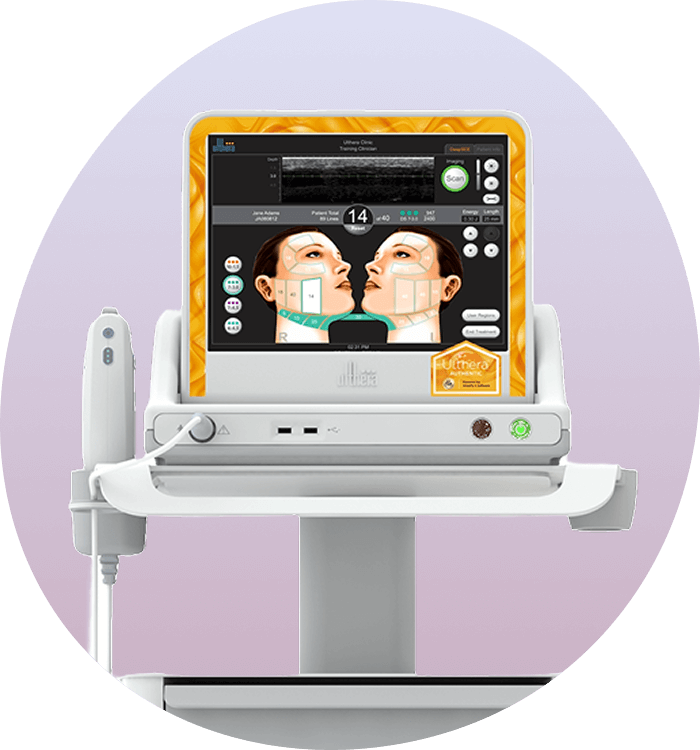
Ultherapy uses micro-focused ultrasound, not radiofrequency or laser, and that distinction matters for understanding both cost and recovery. Ultherapy Prime delivers focused ultrasound energy at selectable depths of roughly 1.5mm, 3.0mm and 4.5mm. The deepest setting reaches the SMAS, the superficial musculoaponeurotic system, which is the foundational layer a surgeon addresses in a facelift, so the treatment aims at structural firming rather than only surface refinement.
Because it can be visualized, the clinician sees the tissue layers on a screen and places energy precisely along mapped lines. Each pulse creates a tiny zone of thermal coagulation that signals the body to produce fresh collagen and elastin over the following weeks and months. This is a gradual biological response, which is exactly why results take time to appear and why the treatment is planned around realistic timelines rather than an instant change.
Understanding the modality also clarifies the limits. Ultherapy improves mild-to-moderate laxity and skin quality; it does not remove significant sagging the way surgery can, and it is not a filler or a thread. For volume loss or pronounced sagging, a clinician may discuss other approaches such as a thread lift. Matching the right tool to your concern keeps both your budget and your expectations grounded from the outset.
What Actually Affects the Cost
The single biggest driver of Ultherapy cost is the number of ultrasound lines, sometimes called shots, delivered during the session. More lines mean more coverage and more energy, so a focused jawline treatment naturally costs less than a full-face-and-neck protocol with a high line count. Clinics quote based on the plan your skin needs, which is why two patients can leave the same clinic with different totals for the same named treatment.
The areas treated are the next major factor. A single zone such as the lower face is more economical than combining the full face with the neck, the brow or the décolletage. Adding the neck, in particular, raises the line count meaningfully because that area often needs dedicated coverage. Whether you opt for a single session or plan periodic maintenance over time also shapes the overall investment, though many patients start with one session.
It is also worth understanding why Korea is frequently chosen for this treatment in the first place. Beyond the clinics being accustomed to international patients, the volume of aesthetic work performed in Seoul means practitioners are often highly experienced with ultrasound lifting, and pricing tends to be transparent once your plan is mapped. None of that translates into a single universal number, but it does mean you can expect a clear, itemized quote rather than a vague figure, which makes it easier to decide how much coverage you actually want.
Other qualitative factors include the device generation and protocol chosen, the complexity of your laxity, and whether the treatment is combined with anything else. Combining Ultherapy with a different modality, for example, changes the total. The honest summary is that an individualized quote after your assessment is the only reliable figure, and any generic online price should be treated as a rough indication rather than a promise.
It also helps to understand what a quote usually includes, so you can compare like with like. In Korea the medical consultation and the topical numbing are commonly part of the standard package rather than separate charges, and a clear quote should state the areas, the approximate line count and whether the neck is covered. Asking the clinic to break the figure down by area removes ambiguity and lets you adjust the plan if your priority is a single zone rather than full coverage, which is a practical way to align the treatment with your budget.
The Step-by-Step Process
An Ultherapy appointment follows a clear sequence, and knowing it removes most of the uncertainty. It begins with a consultation and skin analysis, where the clinician assesses your laxity, maps the treatment areas, decides the depths and line count, and discusses comfort options. This is also when candidacy is confirmed and your questions about results and recovery are answered, so it is worth arriving with your concerns clearly in mind.
Next, the skin is cleansed of makeup and oils, and a topical numbing cream is commonly applied and left to take effect, since the deeper heating can feel intense. The clinician then applies ultrasound gel and treats the mapped lines, often guided by the on-screen visualization that is characteristic of the platform. You will feel brief pulses of focused heat that come and go with each line, and the clinician adjusts pacing to keep the session manageable.
A full-face-and-neck session generally takes about 60 to 90 minutes, depending on the line count and areas. Afterward, the skin is soothed, and moisturizer and sunscreen are applied or recommended along with aftercare instructions. Most people leave able to resume normal activities the same day. Because the plan is individualized, the exact duration and number of lines are decided on the day rather than fixed in advance.
One detail worth noting is that Korean clinics often deliver a thorough line count per zone, which means coverage of each area tends to be methodical. That thoroughness is part of why the process is mapped carefully during consultation rather than improvised, and it is also why the line count, the single largest cost driver, is discussed openly before you begin. If you have a clear priority, such as the jawline or the under-chin, raising it early lets the clinician concentrate the plan where it matters most to you rather than spreading energy thinly.
Sensation and Comfort
Ultherapy is usually described as a series of brief deep-heat sensations rather than constant pain. Each pulse can feel like a quick warmth or prickling deep in the skin, most noticeable at the deeper 3mm and 4.5mm settings and over bonier areas. Between pulses the sensation fades, so the experience is intermittent rather than continuous, which many patients find more tolerable than they expected.
Comfort is managed in several ways. A topical numbing cream is commonly applied beforehand, and some clinics offer additional comfort options; the clinician can also adjust energy settings and pacing to suit your tolerance. Communicating openly during the session helps, because the plan can be tailored in real time. Comfort varies from person to person and across areas, so there is no single experience that applies to everyone.
It is worth setting expectations honestly: the deeper reach that gives Ultherapy its lifting potential is also why it can feel more intense than gentler, shallower treatments. That trade-off is a normal part of the decision, and a consultation is the right place to weigh comfort against your goals. If a gentler experience is a priority, the clinician can discuss alternatives during your visit.
Comfort also has a small bearing on cost indirectly, because the line count and areas that shape your quote are the same factors that shape how long you spend in the chair. A focused, single-zone plan is both more economical and quicker to sit through, while a comprehensive full-face-and-neck protocol costs more and asks more of your tolerance. Discussing this openly at consultation lets you balance budget, comfort and coverage in a way that genuinely suits you rather than defaulting to the largest possible plan.
Downtime and the Recovery Timeline
Ultherapy is designed for minimal downtime, which is a major reason travelers choose it. Most people return to daily activities immediately and can usually apply makeup the same day, sometimes after a short wait the clinic advises. In the first hours, mild redness is common and typically fades quickly. This low-downtime profile is part of what makes the treatment practical to fit into a short Seoul itinerary.
Over the following day or two, some people notice mild swelling, tenderness or a tingling sensation as the treated tissue and nerves respond to the heat. Occasionally there is temporary numbness or altered sensation that resolves on its own over days to a few weeks. These effects are generally mild and transient. A gentle routine helps: keep the skin moisturized, use sunscreen diligently, and it is commonly advised to avoid saunas, very hot showers and intense exercise for a couple of days.
For travelers, this gentle timeline is genuinely convenient, because none of these effects usually prevent sightseeing, dining out or flying home. There is no peeling, no dressings and no extended recovery to plan around, which is one reason Ultherapy is often chosen by people with limited time in Seoul. That said, everyone heals slightly differently, so it is sensible to keep your first day after treatment relaxed and to have the clinic’s contact details on hand in case you want reassurance about anything you notice.
The checklist below summarizes typical aftercare, though the clinic’s own instructions always take priority because they are tailored to your skin and the settings used. If anything feels unusual, such as prolonged swelling or persistent discomfort, contact the clinic promptly so they can advise.
- Apply sunscreen diligently and keep the skin moisturized in the days after treatment.
- Avoid saunas, very hot showers and intense exercise for a couple of days while the skin settles.
- Expect mild redness, swelling or brief tingling that generally resolves over hours to a few weeks.
- Follow the clinic’s specific aftercare and contact them promptly if any reaction seems unexpected.
When Results Appear and How Long They Last
Results from Ultherapy are gradual, not immediate, because they rely on your body forming new collagen and elastin. Early photos taken at one to two weeks rarely reflect the eventual outcome, so it is normal to see little change at first. The firming and subtle lifting typically develop over roughly two to six months, with many people noticing a sharper jawline or tighter neck within the first few months as remodeling progresses.
How long the result holds varies, but many people find the improvement lasts around a year or more before a maintenance session is considered. The exact duration depends on your age, baseline skin condition, sun exposure, skincare habits and lifestyle, all of which influence how quickly natural ageing returns laxity. Diligent sun protection and a consistent routine help preserve the effect for longer.
Because the timeline is individual, a clinician can give you a more realistic, personalized estimate after evaluating your skin than any single number that supposedly applies to everyone. Setting expectations around a gradual, months-long arc, rather than an instant facelift result, is the single most useful thing you can do to feel satisfied with the outcome of a treatment like this.
This gradual timeline also has a sensible bearing on how you plan repeat treatments and budget over time. Because the firming continues developing for several months, there is rarely any reason to rush a second session, and many people prefer to assess the full result before deciding whether maintenance is worthwhile. Spacing treatments around how your skin actually responds, rather than a fixed calendar, tends to be both more cost-effective and more satisfying, and a clinician can advise on sensible intervals once your initial result has settled. For most people, a thoughtful single session followed by an honest review months later is a more sensible plan than committing to a fixed schedule in advance.
Scientific evidence
Peer-reviewed studies support both the lifting mechanism and the gradual timeline that shape the Ultherapy experience. A rater-blinded prospective cohort study by Alam and colleagues treated the face and neck with micro-focused ultrasound and found that, on blinded review of standardized photographs at 90 days, a clear majority of patients showed clinician-rated improvement in skin laxity. This provided early objective support for the treatment rather than relying on subjective impression alone.
Histology helps explain why results take months. A 2025 analysis by Marquardt and colleagues examined the thermal coagulation points created by micro-focused ultrasound with visualization and documented significantly increased mature collagen and recruitment of HSP47-positive fibroblasts by Day 90, alongside a significant rise in newly synthesized elastin in treated zones compared with Day 14. This time-dependent remodeling aligns closely with the two-to-six-month window patients are advised to expect, and it underscores why early photos show little change.
Broader reviews reinforce the same qualitative picture. A systematic review of micro-focused ultrasound for skin rejuvenation and tightening concluded that the technology can produce meaningful improvement in facial and neck laxity with a generally favorable safety profile, while noting that results are gradual and individual rather than promised or permanent. Taken together, the evidence frames Ultherapy as a non-surgical option whose benefit builds over time and whose outcome varies with the person, which is exactly how a realistic consultation presents it.
Alam M, White LE, Martin N, Witherspoon J, Yoo M, West DP. Ultrasound tightening of facial and neck skin: a rater-blinded prospective cohort study. Journal of the American Academy of Dermatology. 2010;62(2):262-269. doi:10.1016/j.jaad.2009.06.039
Marquardt K, Hartmann C, Wegener F, et al. Microfocused Ultrasound With Visualization Induces Remodeling of Collagen and Elastin Within the Skin. Journal of Cosmetic Dermatology. 2025;24(1):e16638. doi:10.1111/jocd.16638
Park JY, Lin F, Suydam R, et al. A Systematic Review of the Clinical Efficacy of Micro-Focused Ultrasound Treatment for Skin Rejuvenation and Tightening. Cureus. 2022;14(1):e20880. doi:10.7759/cureus.20880
Who Is a Good Candidate
Good candidates for Ultherapy generally have mild-to-moderate skin laxity, want a non-surgical option, and prefer little or no downtime. People in their thirties through fifties who notice early looseness, a softening jaw contour or a less defined neckline often find it a sensible step. Realistic expectations matter a great deal, because the treatment works gradually with your own collagen rather than producing an instant surgical change.
Some people are better served by other routes or need extra caution. Those with very advanced sagging may find energy-based tightening underwhelming and may be guided toward surgical consultation. Active skin infection, certain skin conditions in the treatment area, recent procedures or pregnancy should be disclosed beforehand, and your clinician reviews your medical history to confirm suitability before proceeding. This assessment is also where comfort options and the line plan are agreed.
If your main concern is skin texture or surface firmness rather than deep laxity, a clinician might discuss a gentler, shallower option such as Sofwave, or a radiofrequency approach such as Thermage FLX. The point of candidacy assessment is to match the right depth and energy to your concern, which protects both your result and your budget from being spent on the wrong tool.
Planning Ultherapy Around a Seoul Visit
Seoul is a practical place to plan Ultherapy, partly because clinics are accustomed to international patients and partly because the treatment’s low downtime fits neatly into a trip. Reberry Clinic supports visitors with multilingual staff (English, Simplified Chinese, Traditional Chinese, Japanese and Spanish), which makes the consultation, the cost breakdown and the aftercare instructions far easier to follow when you are away from home and want to understand exactly what is included in your quote.
The clinic operates three Seoul-area locations (Gangnam, Myeongdong and Incheon Airport), so you can often choose the branch that suits your route, whether that means a central Seoul appointment or a stop tied to your arrival or departure. During the consultation the clinic’s doctors assess your laxity, map the areas and lines, explain realistic timelines, and outline pre-care and aftercare relevant to your travel dates.
Because Ultherapy is typically a single session with minimal downtime, many travelers fit it into one visit and let the gradual results unfold after they return home. Sharing your travel window early lets the team plan realistically rather than rushing the treatment, and it leaves room to discuss line counts, areas and any combination, so your final quote and schedule genuinely reflect your skin and your itinerary.
Influencers with Reberry



















Planning a visit? A short consultation can clarify your likely line count, the areas worth treating, realistic recovery and a transparent quote for your skin. Our multilingual team at Reberry Clinic is happy to walk you through the process, downtime and timeline before you decide on Ultherapy in Seoul.
Dr. Yoon-Gon Ryu
Frequently Asked Questions
How much does Ultherapy cost in Korea?
Prices are confirmed at consultation rather than fixed, because cost depends on your plan. The number of ultrasound lines, the areas treated, and whether neck or brow are included all shape the total. A transparent quote after your skin assessment at Reberry Clinic is more reliable than any generic online figure, since two patients can need very different line counts.
What is the biggest factor in Ultherapy pricing?
The number of ultrasound lines, sometimes called shots, is the biggest driver. More lines mean more coverage and energy, so a focused jawline treatment costs less than a full-face-and-neck protocol. Adding the neck in particular raises the line count. Your clinician maps the plan your skin needs, which is why Ultherapy Prime quotes are individualized.
How long does an Ultherapy session take?
A full-face-and-neck session generally takes about 60 to 90 minutes, depending on the line count and areas treated, while a single focused zone may take less. Consultation, numbing time and aftercare add to your visit. At Reberry Clinic the exact duration of Ultherapy Prime is decided on the day, based on your individual plan.
Is there much downtime after Ultherapy?
Downtime is minimal, which appeals to travelers. Most people resume activities immediately and can apply makeup the same day, sometimes after a short wait. Mild redness, swelling or brief tingling may occur and generally settles over hours to a few weeks. Follow the clinic’s aftercare and contact Reberry Clinic promptly if any reaction seems unexpected during recovery.
When will I see results after Ultherapy?
Results are gradual, developing over roughly two to six months as new collagen forms. Early photos at one to two weeks rarely show real change, so little visible difference at first is normal. Many people notice a sharper jawline or tighter neck within a few months. Realistic timing expectations help you judge progress fairly rather than expecting an instant lift.
How long do Ultherapy results last?
Many people find the improvement lasts around a year or more before a maintenance session is considered. Results do not last forever because skin keeps ageing naturally. How long the effect holds depends on age, skin condition, sun exposure and skincare habits. A consultation at Reberry Clinic gives a more realistic, personalized estimate than a single number for everyone.
Does Ultherapy hurt, and is numbing used?
Ultherapy is usually felt as brief deep-heat pulses rather than constant pain, most noticeable at deeper settings. A topical numbing cream is commonly applied beforehand, and the clinician can adjust energy and pacing to your tolerance. Comfort varies by person and area. Communicating openly during the session at Reberry Clinic helps the team tailor the experience in real time.
How many Ultherapy sessions do I need?
Ultherapy is often performed as a single session, repeated periodically for maintenance, though the plan depends on your skin and goals. One treatment lets collagen remodel gradually over the following months. A consultation at Reberry Clinic in Seoul confirms whether a single session suits you or whether periodic upkeep makes sense, rather than applying a fixed number to everyone.
Can I fly home soon after Ultherapy?
Yes, many travelers have Ultherapy and continue their itinerary the same day, since downtime is minimal. Mild redness or swelling may linger briefly but usually does not prevent normal activity or travel. Sharing your departure date with Reberry Clinic early lets the team plan the session sensibly and provide aftercare you can follow once you return home.
Does Ultherapy use radiofrequency or laser?
No. Ultherapy uses micro-focused ultrasound (MFU) with visualization, not radiofrequency or laser, delivering focused sound energy to precise depths including the SMAS. The radiofrequency option is Thermage FLX, while Titanium Lifting uses laser. Knowing which energy a device uses helps you compare lifting options accurately when planning treatment at Reberry Clinic.
Who is a good candidate for Ultherapy?
People with mild-to-moderate laxity who want a non-surgical option and minimal downtime are typical candidates, often in their thirties through fifties. Very advanced sagging may suit surgical consultation, while texture concerns may suit Sofwave. Your clinician at Reberry Clinic reviews medical history during the consultation to confirm suitability before treatment.
Can I combine Ultherapy with other treatments?
Yes, with professional planning. Because Ultherapy targets deep laxity, some patients pair it with a different modality for skin quality or volume at different stages of a plan. Any combination should be spaced by a qualified clinician. At Reberry Clinic, the doctors can outline whether pairing with Sofwave or another option suits your goals and budget.
Is Ultherapy aftercare complicated?
No, aftercare is generally simple. Keep the skin moisturized, use sunscreen diligently, and it is commonly advised to avoid saunas, very hot showers and intense exercise for a couple of days. These are comfort measures rather than strict rules. The clinic’s own instructions take priority, and Reberry Clinic provides guidance tailored to your skin and the settings used.
Is Ultherapy safe for Asian skin?
Ultherapy is widely used on Asian skin, and because the energy targets the dermis rather than surface pigment, it is generally considered suitable across skin tones. Clinicians adjust settings to your skin and tolerance, and any reaction should be raised promptly. A consultation reviewing your skin type and history confirms a suitable protocol at Reberry Clinic.
What should I do to prepare for Ultherapy?
Arrive with clean skin and tell the clinic about recent procedures, active skin conditions, pregnancy or relevant medical history, since these affect candidacy. Avoiding strong actives or harsh exfoliation shortly before may be advised. A consultation at Reberry Clinic confirms the right pre-care for your skin and explains the line plan, comfort options and what to expect on the day.
Does Ultherapy replace a surgical facelift?
No. Ultherapy works with controlled ultrasound heat and your own collagen response, so it improves mild-to-moderate laxity rather than removing significant sagging the way surgery can. For pronounced sagging a clinician may discuss surgical or thread-based options such as a thread lift during your consultation in Seoul.