

If you’ve ever looked in the mirror and thought, “I just want to smooth these lines, but have no idea how much Botox that actually takes,” you are not alone. It’s one of the most common questions first-time patients ask, and honestly, it makes complete sense to ask. After all, Botox is priced and measured in units, so knowing how many units of botox you need directly affects what you pay.
The number of Botox units depends on multiple factors, including treatment area, muscle strength, facial anatomy, and your aesthetic goals. In this blog, we’ll learn how Botox is measured, how many units of Botox are needed for each area, and what factors influence dosing, so you can make a fully informed and confident decision.
How is Botox Measured?
Unlike medications measured in milligrams or milliliters, Botox is measured in biological activity units. This is a standardized scale that reflects the potency and nerve-relaxing strength of the toxin rather than its physical volume. Each unit of Botox represents a precise amount of botulinum toxin type A and its ability to temporarily block nerve signals to a targeted muscle. One unit is not a drop, not a dose, it’s a measurement of biological effectiveness.
According to Drugs.com, the syringe of Botox contains 50 or 100 units, with each syringe reconstituted with saline before injection. The number of units injected per area is carefully calibrated by your provider based on your aesthetic goals and muscle anatomy.
It is also important to understand that Botox units are not interchangeable with other neurotoxin brands. Dysport, Xeomin, and Jeuveau all use different biological measurement systems. It means one unit of Botox is not equivalent to one unit of Dysport or Xeomin. It is always best to confirm which product is being used, and never compare dosage numbers across different brands without consulting your doctor.
How Many Units of Botox Do You Need for Each Treatment Area?

The number of Botox units required varies significantly across different parts of the face. Smaller muscles with subtle movement need very few units to achieve a visible result, while larger muscles require higher units. Here are the most common treatment areas, along with the average units required:
| Treatment Areas | Average Units | Treatment Insights |
|---|---|---|
| Forehead Lines | 10-30 units | Start conservatively for natural results |
| Frown Lines | 20-40 units | Strong muscles & may need higher units |
| Crow’s Feet | 20-30 units | Precision is key in this area |
| Lip Flip | 4-6 units | Ideal for subtle lip definition without filler |
| Bunny Lines | 5-10 units | Often part of a full-face treatment plan |
| Jaw Slimming | 30-40 units on each side | Results are cumulative over sessions |
| Neck Bands | 25-50 units | Advanced area; requires an expert injector |
| Chin Dimpling | 5-10 units | Small but effective amounts |
| Hyperhidrosis | 50 units in each underarm | Lasts 6-12 months |
Forehead Lines
The forehead is a commonly treated area and typically requires between 10 and 30 units, with most first-time patients needing around 10-20 units for natural results. The frontalis muscle, which is responsible for raising the eyebrows, spans the width of the forehead and has moderate strength. Treating it too aggressively can leave the brow feeling heavy, which is why conservative dosing is recommended to start.
Frown Lines
The frown lines are vertical creases between the eyebrows. These are relatively strong muscles, especially in people who have been frowning for years. This area requires 20 to 30 Botox units, while some patients with stronger muscles may need up to 40 units.
Crow’s Feet
Crow’s feet are the fine lines that are out from the outer corners of your eyes when you smile or squint. Both sides are treated in the same session, with the total typically ranging from 20 to 30 units. Because the orbicularis oculi muscle here is relatively delicate, precision in placement matters more than dose; poorly placed injections can lead to an unnatural expression or unwanted drooping around the eye.
Lip Flip
A lip flip is a subtle technique where a small dose of 4 to 6 units of Botox is injected into the upper lip muscle, causing the lip edge to gently roll outward and upward. This creates the illusion of a fuller, more defined upper lip without adding any volume through filler.
Bunny Lines (Nose)
Those scrunching lines on the sides of the nose that appear when you smile or wrinkle your nose are called bunny lines. They’re treated with a small amount, typically 5 to 10 units of Botox, only in the nasalis muscle. This is considered a finishing touch in many treatment plans rather than a standalone area.
Jaw Slimming (Masseter Botox)
Masseter Botox is treated by people with a wide or square jawline caused by overdeveloped jaw muscles. The masseter is a large, powerful muscle, and treating it requires significantly more units than most facial areas, typically requiring between 30 and 40 units per side. Over a series of treatments, the masseter gradually reduces in size, resulting in a slimmer, more oval facial contour.
Neck Bands (Platysmal Bands)
The vertical cords that appear on the neck with age or when straining are called platysmal bands. Treating them with Botox typically requires 25 to 50 units. This is a more advanced treatment area that requires significant anatomical expertise, as the platysma muscle is connected to surrounding facial structures.
Chin
An uneven, dimpled, or pebbly chin can be smoothed with a small amount of Botox, typically 5 to 10 units, injected into the mentalis muscle. This is a subtle treatment with noticeable results, particularly for people whose chin becomes more irregular with age or strong muscle activity.
Hyperhidrosis (Excessive Sweating)
According to the International Hyperhidrosis Society, Botox has helped in an 82-87% reduction in sweating for most patients. Botox is FDA-approved for treating excessive sweating in the underarms as well. This treatment typically requires 50 units per underarm, for a total of around 100 units per session.
How Many Units of Botox Do You Need for the First Time?
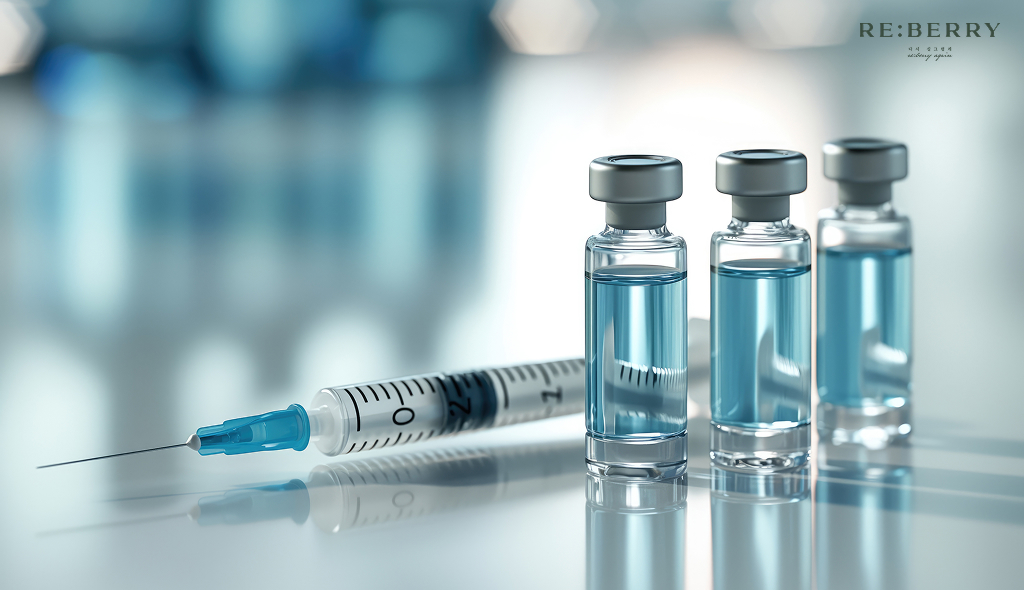
If this is your first Botox treatment, starting conservatively gives your injector the ability to assess how your muscles respond, and gives you time to decide how natural or relaxed you want the outcome to look. You can always add more at a two-week follow-up, but you can’t undo too much.
For a first-time patient, treating the three most common areas, forehead, frown lines, and crow’s feet, a total of 40 to 60 units is a reasonable and clinically safe starting point. Some patients with stronger muscles or deeper lines may need 60 to 80 units across those same areas to see a meaningful result. Others with naturally lighter muscle activity may see excellent results at the lower unit.
According to PMC, the most common total unit count for a first-time full upper-face treatment in clinical practice ranged between 40 and 64 units, with forehead and glabella making up the bulk of the dosage.
A two-week follow-up appointment after your first session is a standard practice at most reputable clinics. This is when your provider assesses the outcome, adjusts any asymmetry, and determines whether a top-up is needed before finalizing your dosing profile for further visits.
What Are the Factors That Affect Units of Botox?

There’s no universal answer to how many units you need because no two faces or facial muscles are the same. Several factors influence the units of Botox, and understanding them helps set realistic expectations before you arrive for treatment.
Muscle Strength and Size
This is the biggest factor affecting Botox dosing. A person with naturally strong, well-developed facial muscles will require significantly more units of botox to achieve the same level of relaxation as someone with lighter muscle activity. An experienced aesthetic medicine specialist can manually assess your muscle tone before injecting.
Treatment Area
Different areas of the face require different units of Botox. Larger muscles like the masseter need more product than smaller, more delicate muscles like the crow’s feet. The skin thickness, depth of existing lines, and degree of muscle activity in each area also influence dosing.
Age and Skin Condition
Younger patients with early, dynamic wrinkles tend to need fewer units to achieve a soft and natural result. Older patients with deep, static wrinkles may require higher units, and in some cases, Botox alone may not fully resolve those lines. In such scenarios, a combination with skin boosters or fillers may be used with Botox.
Previous Botox History
If you’ve been receiving Botox treatment for years, your aesthetic medicine specialist may find that your muscles have gradually become less active over time, meaning you may need fewer units to maintain the same results. Similarly, if you are new to Botox, your muscles may require higher dosing.
Gender
Men in general require more Botox units per area than women, according to the National Institutes of Health. This is due to the anatomical differences in muscle mass and skin thickness between genders.
How Is the Right Number of Botox Units Determined?

The correct number of Botox units is determined through a proper face-to-face clinical assessment with a qualified aesthetic medicine specialist or aesthetic practitioner. During a consultation, your injector evaluates your facial anatomy at rest and during movement, assesses muscle strength in each area, discusses your aesthetic goals, and reviews your history with Botox. Based on all of this, they recommend a specific dosing plan tailored to your face.
What you need to be cautious about is clinics or practitioners who give you a fixed unit count without a proper consultation, or who price and dose the same for every patient regardless of anatomy. Dosing is not one-size-fits-all, and any approach that treats it as such is a red flag.
How Much Does Botox Cost Per Unit?
Since Botox is measured and sold in units, the price per unit is the most transparent and honest way to understand what you’re paying for. The average price of Botox in the United States is between $10-$25 per unit, while it is about $8-$15 per unit in South Korea. The cost difference between the United States and South Korea has to do with the market, cost of doing business, and competition within each country, but not with safety or quality issues. South Korea, in particular, has earned a global reputation for high-standard aesthetic medicine delivered at accessible price points.
Get Expert Botox Treatment at Reberry Clinic

Knowing how many units of Botox you need is important. The right unit is never a guess and never a fixed number that applies to everyone. It is the result of a proper clinical assessment, an understanding of your muscle anatomy, and a treatment plan specifically tailored for you.
At Reberry Clinic, our aesthetic medicine specialists take a one-doctor-per-patient approach to every treatment. This means your consultation, your dosing plan, and your injections are handled by the same qualified expert who understands your facial anatomy. We only use FDA-approved Botulinum toxin and focus on results that look natural, not done.
If you are ready to understand exactly how many units of Botox your face needs, and what it will realistically cost, book a consultation with us today.