


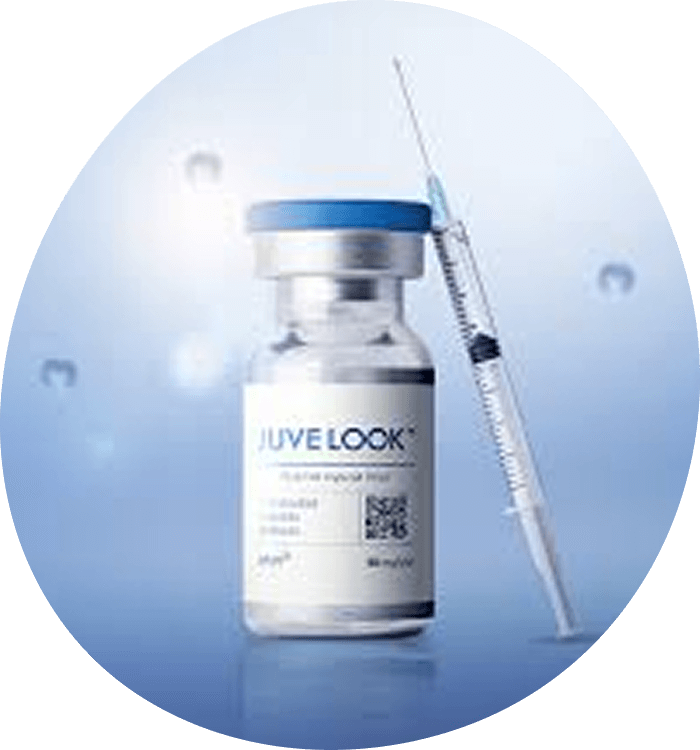
Juvelook can be worth it if your goal is gradual firmness, density and refined texture, and you accept results that build over weeks rather than instantly. As a PDLLA collagen stimulator, it prompts your own collagen with minimal downtime, usually over a short course. It is less suited to people wanting immediate volume or a surgical-level lift, so honest candidacy and realistic expectations decide whether it is worth it for you.
“Is Juvelook worth it?” is among the questions international patients most frequently ask before booking a skin booster in Seoul, and it is the right question to ask. Juvelook has a strong reputation for natural-looking skin improvement, but whether it is worth your time and money depends almost entirely on what you want, how your skin responds and whether your expectations match what a collagen stimulator can realistically do. There is no single yes-or-no answer that fits everyone.
This decision guide explains what Juvelook actually does, who tends to benefit, who might be better served by something else, and what a realistic result looks like. It then walks through downtime, the value question and the long-tail questions patients genuinely search before deciding, so you can judge for yourself whether Juvelook is a sensible choice for your skin and your goals.
What “Worth It” Really Means for Juvelook
Whether Juvelook is worth it depends on matching the treatment to your actual goal, not on whether it is popular. Juvelook is a PDLLA collagen stimulator: its poly-D,L-lactic acid prompts your own fibroblasts to gradually produce new collagen, improving firmness, density and texture over weeks to months. If that gradual, natural-looking improvement is what you want, the treatment is well aligned with its purpose, and many people find that alignment genuinely valuable.
It becomes a poor fit when expectations point elsewhere. If you want instant, visible volume, a dramatic same-day change, or correction of significant sagging, Juvelook is not designed for that, and judging it by those standards will leave you disappointed. The honest way to decide is to separate what Juvelook does from what you hoped a treatment might do, and see whether they overlap.
This is exactly why a consultation is so central to the value question. A clinician can tell you whether your concern suits a collagen stimulator at all, or whether another approach fits better, before you commit. You can review the Juvelook treatment page for background, but a dependable judgment of “worth it” comes from an in-person assessment of your skin and goals.
Who Tends to Benefit Most
Juvelook tends to be most worthwhile for people who want to improve skin quality, firmness and texture gradually, without surgery and with little downtime. Those who feel their skin has become thinner, less resilient or less firm with age often value its cumulative, natural-looking effect. Because it works with your own collagen, it suits patients who are comfortable with a result that develops over a course rather than appearing overnight.
It also tends to suit people who prefer subtlety. Juvelook is not about a dramatic transformation; it is about refreshing and supporting the skin so improvements look like better skin rather than an obvious treatment. Patients who want to look like themselves, only fresher, and who are willing to invest in a short series of sessions, are often the ones who feel the treatment was worth it after completing their plan.
The checklist below frames who typically benefits. It is a starting point for your consultation, not a substitute for a professional assessment, since the right answer depends on your skin in person and on the concern you most want to address. A clinician can confirm whether you fall into the group likely to find Juvelook worthwhile.
- You want gradual firmness, density and refined texture rather than instant volume.
- You prefer subtle, natural-looking improvement over a dramatic same-day change.
- You are comfortable with a short course of sessions and results that build over weeks.
- You want minimal downtime that fits around work or travel.
- You have realistic expectations and understand it is not a surgical lift.
Who Might Be Better Served by Something Else
Juvelook is not the right answer for everyone, and recognizing that protects your time and money. If your main concern is genuine volume loss, such as hollow areas that need restoring now, hyaluronic acid injectable fillers may suit you better, because they add volume more directly rather than relying on gradual collagen building. A clinician can explain why one fits your concern more closely than the other.
If your concern is more pronounced sagging or laxity, a collagen-stimulating booster will likely underwhelm you, and a clinician may instead discuss a thread lift, energy-based lifting or, in some cases, surgical consultation. Equally, if your skin mainly feels dry, dull or fragile rather than lacking firmness, a regenerative skin booster such as Rejuran might match your needs more precisely than a collagen stimulator.
Certain situations also call for caution or postponement. An active skin infection or inflammation in the area, pregnancy or breastfeeding, relevant allergies, or specific medical conditions may mean Juvelook is not appropriate right now, and your clinician reviews medical history to confirm. The point of raising all this is simple: “worth it” only applies when the treatment genuinely matches your concern and is safe for your situation.
What a Realistic Result Looks Like
A realistic Juvelook result is a gradual, natural improvement in firmness, density and texture, not a dramatic overnight change. In the first week or two you may notice subtle smoothing or hydration, but the more meaningful improvement develops over the following weeks to a few months as new collagen forms. People who understand this timeline tend to feel satisfied, because they are judging the result at the right point rather than too early.
The effect is also cumulative across a course. Because Juvelook is usually planned as a short series of sessions, the improvement tends to build with each visit rather than peaking after one, which is why a representative result is seen after completing the recommended plan. Setting this expectation in advance is a key part of feeling that the treatment was worthwhile.
It is equally important to understand the limits. Juvelook works with your own biology, so results are individual and will not be identical for everyone, and they are not permanent, since skin continues to age. How long the improvement holds depends on your age, skin condition, sun exposure and skincare habits, and periodic maintenance is commonly discussed. Realistic, individualized expectations are the foundation of a result you are happy with.
Weighing the Pros and Cons Honestly
An honest pros-and-cons view helps you judge whether Juvelook is worth it rather than relying on enthusiasm alone. On the positive side, it is a collagen stimulator with a credible mechanism, it produces gradual and natural-looking improvement in firmness and texture, it involves minimal downtime, and it works with your own biology rather than placing a foreign volume in the face. For people whose goals match those strengths, that combination is genuinely appealing.
On the other side, there are real trade-offs to accept. Results are not instant, so impatience can make the early weeks feel underwhelming before collagen develops. It is usually a course rather than a one-off, which means more than one visit and a larger total cost than a single appointment suggests. And because it works gradually with your own tissue, outcomes are individual and not identical for everyone, so no specific result can be promised in advance.
The sensible conclusion is that Juvelook is worth it when its strengths align with what you want and you accept its trade-offs, and it is not worth it when your goals point toward instant volume or a surgical change. Writing down your own pros and cons before a consultation, then testing them against a clinician’s assessment, turns a vague “is it worth it” into a clear, personal decision you can stand behind.
Juvelook Compared With Waiting or Doing Nothing
Part of the worth-it question is comparing Juvelook against simply waiting or doing nothing, which is a legitimate option. Skin aging is gradual, and not every change needs intervention; a consistent routine with diligent sun protection and good skincare supports skin quality on its own. If your concerns are very mild or you are not bothered by them, waiting and revisiting the idea later is a perfectly reasonable choice rather than a missed opportunity.
Where a treatment like Juvelook can earn its place is when you have a clear concern, such as gradually declining firmness or texture, that you genuinely want to address and that a collagen stimulator is designed to support. In that case the comparison is not treatment versus nothing in the abstract, but whether the gradual improvement, the course of sessions and the cost feel worthwhile to you for the result you want. That is a personal judgment, not a universal one.
A consultation helps here too, because a clinician can give a candid view of whether your concern is significant enough to treat now, whether it is better monitored, or whether a different approach fits. An honest assessment that sometimes concludes “waiting is fine” is more valuable than one that recommends treatment regardless. At Reberry Clinic, the aim is to help you make that comparison clearly, so your decision reflects your actual priorities.
Downtime, Comfort and Convenience
One reason many patients consider Juvelook worth it is the low-downtime, convenient profile, which fits busy schedules and travel. Treatment involves fine injections, usually after a numbing cream, and a session typically takes around 30 to 60 minutes. Sensation varies by person and area, but most people find it manageable, and the clinician can work methodically to support comfort throughout the appointment.
Afterward, downtime is minimal. Mild redness, slight swelling, small bumps at injection points or minor bruising are common at first and usually settle within a few days, and most people return to daily activities promptly. This easy recovery is a meaningful part of the value equation, especially for international patients who do not want a treatment to dominate a short trip or require lengthy time off.
That said, convenience should never override candidacy. A treatment being easy to recover from does not make it the right choice if it does not match your concern, so the low downtime is a benefit on top of a good fit, not a reason on its own. Following the clinic’s aftercare and contacting them if anything feels unusual keeps the experience smooth and supports the result you are investing in.
Scientific evidence
Peer-reviewed research helps answer whether Juvelook is worth it by showing that PDLLA-type biostimulators produce measurable, collagen-driven improvement rather than relying on impression alone. Mechanistic studies show that poly-lactic-acid materials stimulate dermal fibroblasts to make more collagen. One study found that poly-L-lactic acid increased collagen gene expression and synthesis in cultured dermal fibroblasts through the TGF-beta/Smad signaling pathway, giving a biological basis for the gradual firming that patients describe.
Animal and clinical evidence reinforces this. Research in aged skin reported that poly-lactic-acid biostimulators increased extracellular matrix and collagen synthesis by modulating macrophages and skin cells, again describing a regenerative process that builds over time. A preliminary clinical study of combined PDLLA and non-cross-linked hyaluronic acid reported improvements in skin rejuvenation measures, consistent with patients seeing gradually firmer, smoother skin after a course rather than an instant change.
A broader literature review of poly-D,L-lactic acid in dermatology concluded that PDLLA can enhance skin elasticity and firmness, soften the appearance of wrinkles and support tissue regeneration, while emphasizing that results are gradual and vary between individuals. This evidence supports realistic optimism: the treatment has a credible mechanism and documented benefits, but none of these studies describe a permanent result or a fixed outcome that applies to everyone, which is exactly why expectations and candidacy decide whether it is worth it for you.
Stein P, Vitavska O, Kind P, et al. Poly-L-lactic acid increases collagen gene expression and synthesis in cultured dermal fibroblast (Hs68) through the TGF-beta/Smad pathway. Journal of Cosmetic Dermatology. 2023;22(3):1052-1059. doi:10.1111/jocd.15462
Seo SB, Park H, Jo JY, et al. Skin rejuvenation effect of the combined PDLLA and non cross-linked hyaluronic acid: A preliminary study. Journal of Cosmetic Dermatology. 2024;23(8):2654-2661. doi:10.1111/jocd.16085
Lee KWA, Chan LKW, Hung LC, et al. Poly-D,L-lactic Acid (PDLLA) Application in Dermatology: A Literature Review. Skin Research and Technology. 2024;30(9):e70069. doi:10.1111/srt.70069
Myths That Distort the Worth-It Question
Several myths make it harder to judge whether Juvelook is worth it. One is that a popular treatment must be right for everyone; in reality, popularity reflects general appeal, not suitability for your specific concern, so a treatment can be widely liked yet wrong for you. The honest test is always fit, not fame, which is why an individual assessment matters more than how often a name appears online.
Another myth is that a single session should show a dramatic result, leading people to feel a treatment did not work when it is simply behaving as designed. Juvelook builds gradually across a course, so judging it after one visit is like judging a plan halfway through. Understanding the timeline prevents a premature, unfair conclusion and helps you assess value at the right point rather than too soon.
A third myth is that the cheapest option is automatically the smartest. A low price that covers only one session, omits aftercare, or treats a concern Juvelook is not designed for can cost more in disappointment than a fairly priced, well-matched plan. Seeing past these myths lets you weigh the worth-it question on what actually matters: fit, realistic expectations, safety and the total value of a sensible plan.
How to Decide Before You Book
A reliable way to judge whether Juvelook is worth it is to test your goal against what the treatment does, ideally with a clinician’s input. Ask yourself whether you want gradual firmness and texture, whether you can accept results that build over a course, and whether minimal downtime suits your schedule. If those align, Juvelook is likely a sensible candidate; if you want instant volume or a surgical-level change, it probably is not the right tool.
A consultation turns that self-assessment into a clear answer. The clinician can confirm whether your concern suits a collagen stimulator, whether another option such as fillers or a different booster fits better, and what a realistic plan and timeline look like for your skin. This is also where any safety considerations are reviewed, so you are not only choosing an effective treatment but an appropriate one for your situation.
Finally, weigh the full picture rather than a single price. A treatment that genuinely matches your concern, with realistic expectations and good aftercare, is far more likely to feel worthwhile than a cheaper option that does not fit. At Reberry Clinic, the doctors aim to give you an honest, individualized assessment so you can decide with confidence rather than guessing from online opinions.
It can also help to give yourself permission not to decide on the spot. A good consultation should leave you with enough understanding of candidacy, the likely number of sessions, realistic timelines and cost to reflect calmly before committing, especially if you are weighing it against other treatments or planning around travel. Feeling unhurried tends to lead to a decision you are more comfortable with, whether that is proceeding with Juvelook, choosing a different option, or waiting.
Considering Juvelook in Seoul as an International Patient
Seoul is a practical place to consider Juvelook, partly because clinics are used to international visitors and partly because a course can be aligned with a trip. Reberry Clinic supports international patients with multilingual staff (English, Korean, Thai, Japanese and Chinese), which makes the worth-it conversation easier, because you can fully understand candidacy, realistic expectations and aftercare in a language you are comfortable with before deciding.
The clinic operates three Seoul-area locations (Gangnam, Myeongdong and Incheon Airport), so you can often choose the branch that suits your route, whether that means a central Seoul visit or a stop tied to your arrival or departure. During your consultation the clinic’s doctors review your concerns, explain honestly whether Juvelook fits, and outline a realistic plan and timeline so you can judge value clearly.
If you are visiting for a limited time, share your travel window early. Because Juvelook is usually a course, a single trip may cover one or two sessions, with the gradual results continuing after you return home and any remaining sessions arranged on a later visit. Planning this in advance helps the team propose a realistic schedule, so the decision about whether it is worth it accounts for your itinerary as well as your skin. Thinking through travel timing early also reduces pressure during your stay, letting you focus on whether the treatment genuinely suits your goals rather than on fitting sessions into a rushed window.
Influencers with Reberry




















Planning a visit? The clearest way to know whether Juvelook is worth it for you is a short, honest consultation that matches the treatment to your goals, skin and schedule. Our multilingual team at Reberry Clinic is happy to explain candidacy, realistic expectations and aftercare so you can decide with confidence.

Frequently Asked Questions
Is Juvelook worth it?
Juvelook can be worth it if you want gradual firmness, density and refined texture and accept results that build over weeks. As a PDLLA collagen stimulator, it prompts your own collagen with minimal downtime. It is less worthwhile if you want instant volume or a surgical-level lift. A consultation at Reberry Clinic confirms whether it suits your goals.
Who benefits most from Juvelook?
People who want subtle, natural-looking improvement in firmness and texture, prefer gradual results over an instant change, and accept a short course tend to benefit most. It suits those whose skin feels thinner or less firm and who want minimal downtime. A consultation at Reberry Clinic confirms whether you fall into this group.
Who should not choose Juvelook?
Juvelook may be the wrong fit if you want immediate volume, in which case fillers may suit better, or if you have pronounced sagging better addressed by a thread lift or surgical consultation. Active skin infection, pregnancy, breastfeeding or relevant allergies may also mean it is not appropriate now. A clinician reviews your history to confirm.
Is Juvelook better than fillers?
Neither is simply better; they do different jobs. Juvelook is a collagen stimulator that builds firmness gradually, while hyaluronic acid injectable fillers add volume more directly and immediately. The right choice depends on whether your concern is gradual skin support or genuine volume loss, which a consultation at Reberry Clinic in Seoul can clarify for your goals.
Is Juvelook or Rejuran the better choice?
It depends on your concern. Juvelook, a PDLLA collagen stimulator, suits firmness and density, while Rejuran, a polynucleotide booster, suits skin repair, hydration and resilience for dry or fragile skin. They are often complementary rather than rivals, and a clinician can advise which fits your skin, or whether a sequence suits, at Reberry Clinic.
How long do Juvelook results last?
Results are not permanent, because skin keeps aging naturally. The improvement builds over your course and is then maintained periodically. How long it holds depends on your age, skin condition, sun exposure and skincare habits. A clinician at Reberry Clinic can give a realistic, personalized estimate of timeline and maintenance after assessing your skin in person.
How soon will I see Juvelook results?
Juvelook results are gradual. You may notice subtle smoothing in the first week or two, but the meaningful improvement in firmness and texture develops over several weeks to a few months as new collagen forms. Because the effect is cumulative across a course, results are most fairly judged after completing the recommended sessions rather than after one visit.
Is Juvelook painful?
Juvelook involves fine injections, usually after a numbing cream to support comfort. Sensation varies by person, area and technique, with some zones more sensitive than others, but most people find it manageable. The clinician works methodically and can pace the session. Tell Reberry Clinic if you find injections difficult so they can help keep your appointment comfortable.
Is there much downtime with Juvelook?
Downtime is minimal, which is part of its appeal. Mild redness, slight swelling, small bumps at injection points or minor bruising are common at first and usually settle within a few days, and most people resume daily activities promptly. Follow Reberry Clinic’s aftercare, keep the skin gentle, and contact them if anything feels unusual or does not settle.
How many Juvelook sessions are needed to see if it works?
Juvelook is usually planned as a short course of sessions spaced a few weeks apart, and the effect builds across them, so the fairest judgment comes after completing the plan rather than after one session. The exact number depends on your skin and goals, which a consultation at Reberry Clinic will confirm for you.
Does Juvelook look natural?
Juvelook is designed for subtle, natural-looking improvement rather than a dramatic change, because it gradually supports your own collagen instead of adding obvious volume. Most people aim to look like themselves, only fresher. Results are individual, so a consultation at Reberry Clinic helps set realistic expectations about how natural the improvement will look for your skin.
Is Juvelook safe?
Juvelook is generally well tolerated when performed appropriately, with common short-lived effects such as redness, swelling or small bumps. As with any injectable, candidacy matters, so disclose active skin conditions, pregnancy, breastfeeding, allergies and medications. A clinician at Reberry Clinic reviews your history and skin to confirm suitability and to explain risks before you decide, supporting an informed choice.
Can I combine Juvelook with other treatments?
Yes, Juvelook is often part of a broader plan. Because it builds collagen, some patients pair it with a regenerative booster such as Rejuran, or with fillers where volume is the concern. Any combination should be spaced by a qualified clinician, who can outline a staged plan suited to your goals during a consultation at Reberry Clinic.
Is Juvelook worth doing as a visitor to Korea?
It can be, since clinics are used to international patients and treatments fit around travel. Reberry Clinic offers multilingual support and three Seoul-area locations (Gangnam, Myeongdong and Incheon Airport), so candidacy, expectations and aftercare are easy to follow. Because it is a course, share your travel dates early so the team can plan realistically around your trip.
How do I decide if Juvelook is right for me?
Match your goal to what Juvelook does: gradual firmness and texture, results over a course and minimal downtime. If those fit, it is a sensible candidate; if you want instant volume or a surgical change, it probably is not. The clearest answer comes from an honest consultation at Reberry Clinic that assesses your skin and reviews safety.