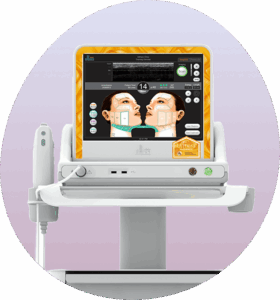


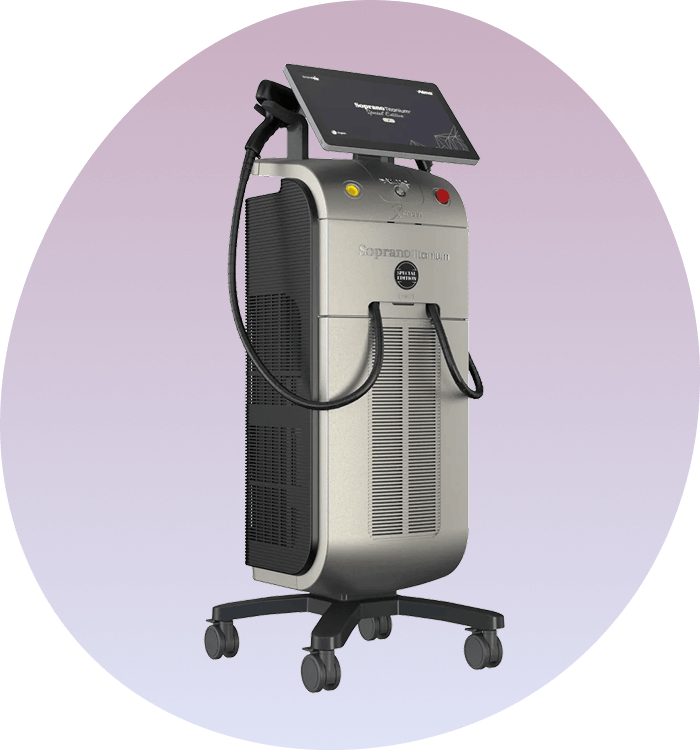
Titanium Lifting is generally worth it for people with mild-to-moderate laxity who want a comfortable, low-downtime refresh and accept gradual results, since its triple-wavelength diode laser stimulates collagen over weeks rather than instantly. It is less worthwhile for advanced sagging, where surgical or thread-based options fit better. A consultation confirms whether it matches your goals and expectations.
“Is it actually worth it?” is the honest question behind most non-surgical lifting research, and it deserves an honest answer rather than a sales pitch. Titanium Lifting has become a popular laser option in Seoul because it is comfortable, has little downtime and produces a natural, gradual result. None of that makes it right for everyone. Whether it is worth it for you depends on your concern, your expectations and how it compares to the alternatives for your specific situation.
This guide is built as a decision aid. It walks through who tends to benefit most, what realistic results look like and how long they take, where the limitations lie, how Titanium Lifting compares to other lifting options, and how to weigh its value. The aim is to help you arrive at a consultation able to ask sharper questions, so the conversation focuses on your skin rather than on generic claims.
What “Worth It” Really Means for a Laser Lift
Worth depends on matching the right tool to the right concern, not on whether a treatment is powerful in the abstract. Titanium Lifting uses a triple-wavelength diode laser, emitting around 755nm, 810nm and 1064nm together, to warm several skin layers and stimulate your own collagen. That mechanism is excellent for tone, texture and mild-to-moderate firmness, and underwhelming if your real concern is significant sagging that needs structural correction.
So the value question is really two questions. First, does your concern fall within what a collagen-stimulating laser can realistically address? Second, do your expectations match a gradual, natural result rather than an instant, dramatic one? When both answers are yes, people tend to feel the treatment was worthwhile. When either is no, even a technically perfect session can disappoint, which is why honest framing matters more than enthusiasm.
It also helps to separate “worth it” from “cheapest.” A lower-priced treatment that does not address your concern is poor value, while a well-matched plan that delivers a visible, lasting-for-its-category improvement is good value. You can read the technical overview of Titanium Lifting on its treatment page, then use the rest of this guide to judge fit honestly.
One more useful lens is your tolerance for downtime and discomfort, which carries real value for many people even though it never appears on a price list. A treatment that lets you return to work or sightseeing the same day, and that feels like a warm facial rather than something you have to endure, can be worth a great deal to a busy person or a traveler on a tight schedule. Weighing that convenience alongside the result is part of an honest assessment, because value is not only about the visible change but also about what the experience costs you in time and comfort.
Who Benefits Most From Titanium Lifting
The people who benefit most have mild-to-moderate skin laxity and want a non-surgical refresh with little downtime. This often includes those in roughly their late thirties through fifties who are noticing early looseness, a softening jaw contour, dull or uneven tone and enlarged-looking pores, but who are not ready for surgery. For this group, a collagen-stimulating laser fits their concern and their tolerance for recovery very well.
It also suits people who specifically value comfort and convenience. Because the sensation is usually a warming glow rather than anything sharp, and because most people return to daily life immediately, it appeals to busy individuals and to travelers who cannot afford meaningful downtime. Those who prefer a gradual, natural-looking change over a sudden transformation tend to be the most satisfied, since that is exactly what the treatment delivers.
Finally, it benefits people who think in terms of maintenance rather than a one-time fix. Skin keeps aging, so those who are comfortable with a short course and occasional upkeep, treating skin quality as an ongoing routine, generally feel they got their money’s worth. The checklist below summarizes who tends to find Titanium Lifting worthwhile.
It is just as useful to recognize who tends to feel let down, because that is the mirror image of the question. People who arrive hoping a single laser session will reproduce a surgical result, who have significant sagging that needs structural correction, or who measure success in the first few days rather than over weeks, are the ones most likely to feel the treatment was not worth it. None of that reflects a failure of the technology; it reflects a mismatch between the concern and the tool. Being honest with yourself about which group you fall into is one of the most valuable things you can do before a consultation.
- You have mild-to-moderate laxity or dull, uneven tone, not advanced sagging.
- You want a comfortable treatment with minimal downtime and no surgery.
- You are comfortable with gradual, natural-looking results that build over weeks.
- You are open to a short course and occasional maintenance rather than a single fix.
- You prefer a subtle refresh over a dramatic, surgical-level change.
Realistic Expectations and the Results Timeline
Realistic expectations are the single biggest factor in whether people feel Titanium Lifting was worth it. The result is gradual, not instant. Many people feel a temporary tightening right after a session, but that early sensation is largely a thermal response; the genuine improvement comes as your skin produces new collagen over the following weeks, a process that typically continues for around two to three months.
This timeline causes a common misunderstanding worth naming. As any initial swelling settles in the first days, the immediate tightening sensation fades, and it is easy to mistake that for the effect disappearing. In reality, collagen building tends to begin roughly two to three weeks after treatment and keeps developing, with the fuller effect often most visible around eight to twelve weeks. Patience is part of the experience, not a sign something went wrong.
Equally important, the result is a refinement rather than a reversal of significant aging. Titanium Lifting improves tone, texture and mild-to-moderate firmness; it does not remove substantial sagging or replace a surgical lift. People who expect a subtle, natural improvement are usually pleased, while those expecting a dramatic overnight change are not. Setting expectations honestly before booking is the surest protection against disappointment.
It also helps to think about how you will judge the outcome. Because the change is gradual and subtle, side-by-side day-to-day comparison can make progress hard to perceive, even when it is genuinely occurring. Standardized photographs taken before treatment and again after the collagen response has developed give a fairer picture than memory or a quick mirror check, which tends to anchor on the immediate post-session look. Framing your assessment around the eight-to-twelve-week window, rather than the first few days, is the most reliable way to judge whether the treatment delivered what it realistically can.
Limitations and When It May Not Be Worth It
Titanium Lifting is not the right choice for every concern, and naming its limits is part of an honest value assessment. Its biggest limitation is depth of effect: for advanced or pronounced sagging, a collagen-stimulating laser will likely feel underwhelming, and a clinician may instead discuss surgical consultation or structural options. Choosing it for a problem it cannot solve is the most common reason people feel a treatment was not worth it.
Certain people should also approach with caution or avoid energy-based tightening. Pregnancy, an active skin infection or recent procedures in the area, and specific medical histories are all reasons to disclose details and let the clinician decide. For radiofrequency-based alternatives in particular, implanted electronic devices such as pacemakers are an important consideration. A proper consultation screens for these so the plan is safe and appropriate.
The gradual timeline is a limitation for some goals too. If you need a visible change for a specific event next week, a treatment that works over weeks to months may not suit that timing, and a clinician can suggest alternatives. For more pronounced laxity where a laser is not enough, options such as a thread lift may be raised. Knowing these limits up front keeps your expectations and your spending aligned.
How Titanium Lifting Compares to Other Lifting Options
Titanium Lifting is one tool among several, and its value is clearest when set beside the alternatives. Compared with radiofrequency treatments such as Thermage FLX, which heat the deeper dermis to firm moderate laxity, the diode laser leans more toward tone, glow and a subtle lift across multiple depths, and is often noted for comfort. RF tends to be chosen when firmness in the deeper layers is the priority.
Compared with focused-ultrasound options such as Ultherapy Prime, which reaches the deeper SMAS layer that a surgical lift addresses, Titanium Lifting works more on skin quality and surface-to-mid-depth firmness. Ultrasound can deliver a more structural lift for suitable candidates, while the diode laser offers a gentler, more comfortable experience aimed at overall refresh. Some clinics also discuss mid-dermis ultrasound such as Sofwave as another route.
None of these is universally superior, and the most productive question is which matches your concern. For pronounced sagging, surgical or thread-based approaches outperform any energy device. For tone, comfort and mild-to-moderate firmness with little downtime, Titanium Lifting is frequently the better-suited choice. A clinician can map your specific goal to the right energy, which is far more useful than ranking devices in the abstract.
The Session Experience and Comfort
Comfort is a real part of the value equation for Titanium Lifting, and it is one reason many people consider it worthwhile. A session begins with a consultation and skin analysis, then a cleanse, with a topical numbing cream sometimes applied for sensitive areas. The clinician selects settings suited to your skin before treating, so the plan is tailored rather than generic.
During treatment, the handpiece passes across the skin delivering warmth while an integrated cooling tip protects the surface. Most people describe the feeling as a comfortable, warming glow, often likened to a warm facial massage, rather than anything sharp, and many find it more comfortable than some other energy-based lifts. A typical session runs roughly thirty to forty-five minutes depending on the area, after which the skin is soothed and protected.
That comfortable, low-downtime experience is part of why people feel the treatment delivers good value for what it sets out to do. Most return to daily activities immediately, which makes a session easy to fit around work or travel. Because settings and area vary, the exact duration and intensity are decided on the day, which is one more reason a personal assessment matters before you commit.
Comfort matters beyond the appointment itself, because a treatment you find tolerable is one you are more likely to complete as a course. Some lifting options are effective but demanding enough that people hesitate to return for follow-up sessions, which can undercut the result they were hoping for. The gentler profile of a diode laser makes a planned series feel manageable, and finishing the recommended course is often what separates a satisfying outcome from a disappointing one. In that sense, comfort is not a cosmetic detail but a practical contributor to whether the overall plan proves worthwhile.
Scientific evidence
Peer-reviewed evidence supports the core premise that a triple-wavelength diode laser can improve skin tightness and quality, while also confirming that the effect is gradual and individual rather than dramatic, which is exactly the honest framing this decision rests on. A preliminary study on a triple-wavelength diode laser combining 755nm, 810nm and 1064nm, the same wavelength family Titanium Lifting uses, evaluated thirteen patients with a mean age of 50.9 years in Korea who received five successive sessions and reported the integrated laser to be a favorable, well-tolerated candidate for skin-tightening.
A separate preliminary study on a combined triple-wavelength (755nm, 810nm and 1064nm) laser likewise documented a skin-rejuvenating effect, reinforcing that delivering several wavelengths together can address tone and tightness across multiple depths. These results match the patient experience of improvement building over weeks to a few months, and they underline why expectations should be set around gradual change rather than an instant lift.
Wider laser-tightening research adds useful context for judging value. In a study of thirty patients with facial skin laxity treated with a diode laser at 810nm and 940nm over four sessions, objective Cutometer measurements showed significant improvement in skin elasticity at one and three months, with physician-assessed laxity improving at one and six months and only mild, infrequent adverse events. Separately, an objective assessment of near-infrared 1064-nm Nd:YAG rejuvenation in fifty Asian patients, measured with standardized VISIA imaging, documented improvement in pores, texture and fine wrinkles from gradual dermal heating. None of these studies describes a permanent result or an identical outcome for everyone, which is precisely why a realistic, individual assessment determines whether the treatment is worth it for you.
Kim JH, et al. Triple-wavelength diode laser (755 nm, 810 nm, and 1064 nm): Preliminary efficacy and safety for skin-tightening. Journal of the American Academy of Dermatology. 2022;87(3 Suppl):AB144. doi:10.1016/j.jaad.2022.06.893
Lee GY, et al. Skin rejuvenating effect of a combined triple-wavelength (755 nm, 810 nm, and 1064 nm) laser: a preliminary study. Lasers in Medical Science. 2024;39:14. doi:10.1007/s10103-023-03936-6
Voravutinon N, Rojanamatin J, Sadhwani D, et al. Efficacy of diode laser (810 and 940 nm) for facial skin tightening. Journal of Cosmetic Dermatology. 2015;14(4):310-315. doi:10.1111/jocd.12165
Negishi K, Tezuka Y, Kushikata N, Wakamatsu S. Objective assessment of skin rejuvenation using near-infrared 1064-nm neodymium:YAG laser in Asians. Clinical, Cosmetic and Investigational Dermatology. 2011;4:123-130. doi:10.2147/CCID.S22841
Judging the Value: How to Decide
To decide whether Titanium Lifting is worth it for you, weigh fit, expectations and plan rather than price alone. Start with fit: does your concern fall within tone, texture and mild-to-moderate laxity, the things a collagen-stimulating laser addresses well? If your main issue is significant sagging, the honest answer is that another route is likely better value, and a good clinic will tell you so.
Next, weigh expectations against the timeline. If you are comfortable with a gradual result that builds over weeks to a few months, and you understand that the early tightening sensation is not the final outcome, you are far more likely to feel satisfied. If you need an instant, dramatic change, the treatment is unlikely to meet that, and managing this before booking protects both your expectations and your budget.
Finally, factor in the plan and upkeep. Many people are advised a short course rather than a single session, and occasional maintenance helps prolong the effect, so think of value across that arc rather than per visit. A consultation that assesses your skin in person, confirms candidacy and outlines a realistic plan is the most reliable way to judge whether the cost maps to a result you will value.
A simple way to structure the decision is to write down what specifically bothers you, what you are hoping to see, and by when, then bring those notes to your consultation. If your concern is tone, texture or mild firmness, your expectations are gradual, and you can accommodate a short course, the pieces line up in favor of the treatment. If your concern is heavy sagging, you want an immediate transformation, or you cannot return for follow-up, the honest conclusion may be that another route, or a different timing, serves you better. A clinic that is willing to tell you when the answer is no is the kind of place worth trusting when the answer is yes.
Considering Titanium Lifting in Seoul as an International Patient
Seoul is a practical place to weigh this decision, partly because clinics are used to international visitors and partly because a comfortable, low-downtime laser fits easily into a trip. Reberry Clinic supports international patients with multilingual staff (English, Simplified Chinese, Traditional Chinese, Japanese and Spanish), which makes it easier to discuss candidacy, realistic expectations and aftercare clearly when you are away from home and want to make a confident decision.
The clinic operates three Seoul-area locations (Gangnam, Myeongdong and Incheon Airport), so you can often choose the branch that suits your route, whether a central Seoul visit or a stop tied to your arrival or departure. During a consultation the clinic’s doctors review your concerns, explain honestly whether Titanium Lifting suits your goals or whether another option fits better, and outline a realistic plan and timeline.
If you are deciding during a short stay, share your travel window early. Because Titanium Lifting is often done as a course, the team can advise whether to start a series you continue later or focus a single session within your visit, and its minimal downtime means a session is easy to fit around other plans. An honest, in-person conversation is the surest way to judge whether the treatment is genuinely worth it for you.
Influencers with Reberry




















Planning a visit? A short consultation can give you an honest read on whether Titanium Lifting suits your skin and goals, or whether a different option would offer better value, along with a realistic timeline and aftercare. Our multilingual team at Reberry Clinic is happy to walk you through the decision before you commit.
Dr. Yoon-Gon Ryu
Frequently Asked Questions
Is Titanium Lifting worth it?
It is generally worth it for mild-to-moderate laxity, dull tone and people wanting a comfortable, low-downtime refresh with gradual results. It is less worthwhile for advanced sagging, where surgical or thread-based options fit better. A consultation at Reberry Clinic confirms whether Titanium Lifting matches your specific goals and expectations honestly.
Who benefits most from Titanium Lifting?
People with mild-to-moderate laxity who want a non-surgical refresh with little downtime benefit most, often those in their late thirties through fifties noticing early looseness, dull tone or enlarged pores. Those valuing comfort, convenience and gradual, natural-looking results tend to be the most satisfied. A consultation confirms whether your concern fits the treatment.
What results should I realistically expect?
Expect a gradual, natural refinement of tone, texture and mild-to-moderate firmness, not a dramatic or instant change. New collagen builds over weeks, with remodeling continuing about two to three months and fuller results often visible around eight to twelve weeks. It refines skin rather than removing significant sagging, so realistic expectations matter most.
Why do my results seem to fade after a few days?
The early tightening right after treatment is largely a thermal response, and as initial swelling settles it can look like the effect is fading. In reality, collagen building usually begins roughly two to three weeks later and keeps developing. This is normal, so judge Titanium Lifting over weeks, not days.
When is Titanium Lifting NOT worth it?
It is less worthwhile for advanced or pronounced sagging, where a collagen-stimulating laser feels underwhelming and surgical or thread-based options suit better. It also may not fit if you need a visible change within days for an event, since results are gradual. A clinician can suggest more appropriate alternatives during your consultation in Seoul.
How does Titanium Lifting compare to Thermage?
Titanium Lifting uses a triple-wavelength diode laser leaning toward tone, glow and a subtle lift across several depths, and is often noted for comfort. Thermage FLX uses radiofrequency to firm moderate laxity in the deeper dermis. Neither is universally better; the right choice depends on whether tone or deeper firmness is your priority.
How does Titanium Lifting compare to Ultherapy?
Ultherapy uses focused ultrasound to reach the deeper SMAS layer for a more structural lift in suitable candidates, while Titanium Lifting works more on tone and surface-to-mid-depth firmness with a gentler experience. For a comfortable refresh, the laser often suits; for deeper lifting, Ultherapy Prime may be discussed at Reberry Clinic.
Is Titanium Lifting painful?
Most people find it comfortable, describing a warming glow often likened to a warm facial massage rather than anything sharp, helped by an integrated cooling tip. A topical numbing cream may be applied for sensitive areas. Many consider it more comfortable than some other energy-based lifts, though sensation varies by person and the settings used.
How many sessions does it take to make it worthwhile?
Many people are advised a short course, commonly around three to six sessions spaced weeks to a couple of months apart, rather than a single visit, since collagen builds across treatments. Some benefit from fewer. Thinking of value across the course and occasional maintenance, not per visit, gives a fairer picture of worth.
How long do the results last?
Results typically last in the range of several months to about a year, though this varies with age, skin condition, sun exposure and skincare habits. Because skin keeps aging, optional maintenance sessions help prolong the effect. A clinician’s personalized estimate after assessing your skin is more meaningful than a single fixed number that applies to everyone.
Is Titanium Lifting safe?
It is widely used and generally well tolerated, with side effects usually limited to transient warmth, redness or occasional mild swelling, and clinicians adjust settings to your skin. Certain situations, such as pregnancy, active skin infection or specific histories, warrant caution and disclosure. A consultation reviewing your skin and history confirms a safe, suitable protocol at Reberry Clinic.
Is Titanium Lifting good value for the cost?
Value depends on fit rather than price alone. A well-matched plan that improves tone and mild-to-moderate firmness with little downtime is good value for the right candidate, while choosing it for advanced sagging is not. A transparent quote and honest candidacy assessment at Reberry Clinic help you judge value before committing.
Does Titanium Lifting replace a facelift?
No. It works with controlled heat and your own collagen response, so it refines skin quality and mild-to-moderate laxity rather than removing significant sagging the way surgery can. For pronounced sagging, a clinician may discuss surgical or thread-based options such as a thread lift as a more suitable route during your consultation.
Is it worth it for younger skin as prevention?
It can be, for those with early, mild laxity or dull tone who prefer a gradual, maintenance-style approach rather than waiting for more advanced aging. Because it stimulates collagen, some view it as upkeep for skin quality. A consultation helps decide whether starting now is sensible for your skin or whether to wait.
Can I combine Titanium Lifting with other treatments for better value?
Yes, at separate, properly spaced visits. Some patients pair it with treatments addressing volume or deeper firmness, such as Ultherapy Prime, to cover several concerns. Any combination should be planned by a qualified clinician at Reberry Clinic, who tailors the order and intervals to your skin, history and recovery preferences.
How do I decide if Titanium Lifting is right for me?
Weigh fit, expectations and plan rather than price alone. Check that your concern is tone or mild-to-moderate laxity, accept a gradual timeline, and think in terms of a course plus upkeep. An in-person consultation at Reberry Clinic that assesses your skin and confirms candidacy is the most reliable way to decide honestly.