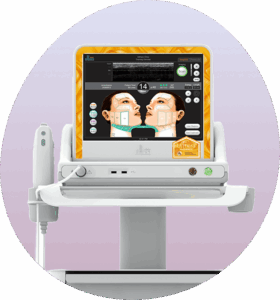


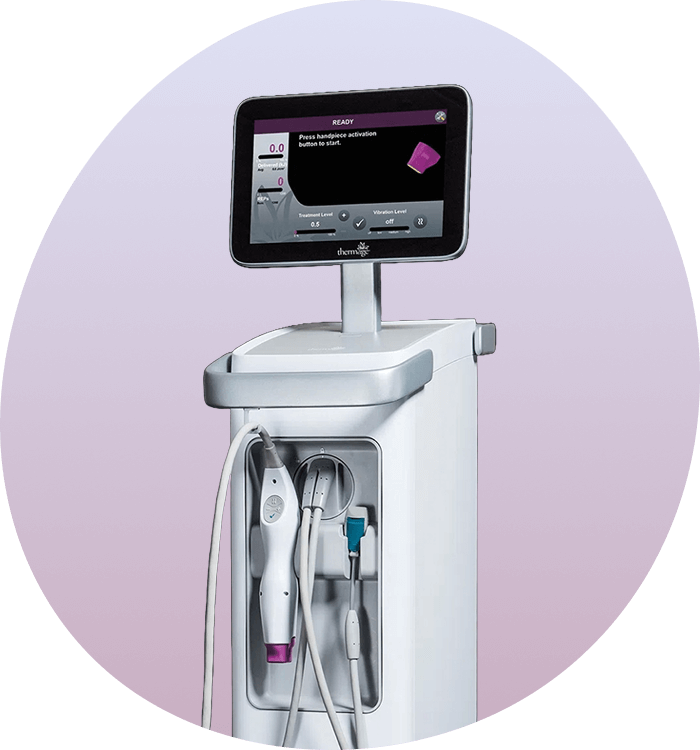
Thermage FLX in Korea is a single, non-invasive monopolar radiofrequency session with minimal downtime; the cost depends mainly on the number of pulses delivered and the area treated rather than a fixed price. Most people resume normal activities the same day, while the firming develops gradually over about two to six months. A consultation confirms your individualized plan and a transparent quote.
If you are weighing Thermage FLX in Seoul, three practical questions usually matter most: what it actually costs, what the appointment is like, and how long recovery takes. This guide answers all three in plain language, without inventing prices, and sets realistic expectations for the result. Thermage FLX is a well-established radiofrequency tightening treatment, and understanding how its cost and recovery work helps you plan a visit that fits your skin and your travel schedule.
Below you will find how the technology works, what drives the price, the step-by-step session experience, the recovery timeline, when results appear and how long they last, plus a section on planning the treatment as an international patient. It closes with the long-tail questions visitors most often ask before booking, so you arrive at your consultation already knowing which details to confirm for your own case.
How Thermage FLX Works
Thermage FLX uses monopolar radiofrequency to heat the deeper dermis without breaking the skin surface. A single electrode in the treatment tip sends radiofrequency energy into the skin while a return pad elsewhere on the body completes the circuit, so the energy spreads broadly and bulk-heats the dermis rather than treating it in fractional points. This even, area-wide heating is what makes Thermage a fully non-invasive option with little recovery.
The heat does two things. First, existing collagen contracts, which can give a subtle early tightening. More importantly, the controlled thermal signal prompts fibroblasts to produce fresh collagen over the following months, gradually firming and improving skin quality. Because this is a biological remodeling process rather than a mechanical change, the meaningful result builds slowly rather than appearing on the day of treatment.
The FLX generation pairs each pulse with cryogen cooling and a gentle vibration. The cooling protects the skin surface and the vibration helps mask the heat sensation, both of which improve comfort compared with older radiofrequency. You can read a fuller technology overview on the Thermage FLX treatment page, which the clinic keeps aligned with its current protocol and the areas it commonly treats.
One detail that helps with both cost and recovery expectations is that Thermage works by bulk heating rather than fractional treatment. Devices that fractionate energy treat the skin in many small columns, leaving untreated tissue between them to speed healing but often requiring a series of sessions. Thermage instead aims to heat a whole area to a target depth in one pass-based session, which is why it is typically done once rather than as a repeated course, and why the firming is assessed over months rather than session by session.
What Affects the Cost in Korea
The single biggest driver of Thermage FLX cost is the number of pulses, or shots, delivered. Thermage tips are sold with a set number of pulses, and a larger area such as full face plus neck uses more pulses than the lower face alone. Because the tip is a real consumable, clinics generally price around how many pulses your plan needs, which is why a quote is tied to your specific treatment design rather than a flat rate.
Several other factors influence the total. The area or areas treated, whether the eyes or body are included with a dedicated tip, the clinician’s protocol, and any combination with other treatments all play a part. Prices are confirmed during consultation rather than assumed, so the most reliable figure comes after a clinician assesses your skin and maps out the pulses and areas your goals require. Generic online figures rarely match an individual plan.
It is worth knowing why many international patients consider Korea for this treatment. Seoul has a high concentration of clinics performing radiofrequency tightening, which tends to make pricing competitive relative to many other markets, while the treatment protocol itself is the same globally. That said, the right comparison is not the lowest number but the plan that suits your concern, since under-treating a large area to save on pulses can leave you underwhelmed.
A practical way to think about value is the relationship between pulses and coverage. If a quote looks unusually low, it is reasonable to ask how many pulses it includes and which areas it covers, because a small pulse allocation spread thinly over a large face may not deliver the response you are hoping for. Conversely, a thorough plan with adequate coverage tends to give a more even, satisfying firming. Asking these questions during consultation puts you in a better position than comparing headline prices alone, and a good clinic will explain the trade-offs openly.
The Treatment Process, Step by Step
A Thermage FLX appointment follows a clear sequence. It begins with a consultation and quick skin analysis so the clinician can understand your concern, confirm you are a suitable candidate, and design the treatment, including which areas to cover and roughly how many pulses that will take. This is also when realistic expectations are set, since the plan and the result depend on your starting skin condition.
Next the skin is cleansed and a treatment grid is marked on the area so coverage is even and nothing is missed. A topical numbing cream may be applied for comfort, and the return pad is placed. The clinician then moves the handpiece across the grid, delivering brief pulses of heat each paired with cooling and vibration. You feel a deep warmth that peaks briefly with each pulse, and the clinician adjusts energy to keep it within a comfortable range, often checking in as they go.
A typical session runs roughly forty-five to ninety minutes depending on the area and pulse count. Afterward the skin is soothed, and the clinician applies or recommends a calming product and sunscreen and explains aftercare. Most people are ready to leave and resume their day right away. Because the protocol is individualized, the exact duration and pulse count are decided on the day rather than fixed in advance, which is why a personal assessment matters.
Several smaller details of the process are worth anticipating. The grid marking can look surprisingly methodical, but it exists precisely so the clinician can track coverage and deliver the planned number of pulses evenly across the area, rather than over-treating one zone and missing another. You may also be asked for feedback on the heat level throughout, since your comfort directly informs the energy settings. Treating the session as a collaboration, where you speak up if a pulse feels too intense, tends to produce both a more comfortable experience and a well-distributed result.
Recovery and Downtime Timeline
Thermage FLX is designed for minimal downtime, which is a large part of its appeal for travelers. In the first few hours after treatment, mild redness or a feeling of warmth is the most common experience, and it usually settles on its own. Most people can apply makeup and return to normal activities the same day, sometimes after a short wait the clinic advises, which is why sightseeing or meetings the same afternoon are often realistic.
Over the following days, occasional mild swelling or tenderness can occur but typically resolves quickly. A gentle approach helps: keep the skin moisturized, use sunscreen diligently, and it is commonly advised to avoid saunas, very hot showers and intense exercise for a couple of days while the skin calms. These are general comfort measures the clinic tailors to you rather than strict universal rules, and most people find they need little special care.
The clinic’s own aftercare instructions take priority over anything general, because they are tailored to your skin and the settings used. If anything feels unusual, such as prolonged swelling, persistent discomfort or any reaction you did not expect, contact the clinic promptly so they can advise. Following the guidance closely is the simplest way to support a smooth recovery and protect the result as collagen begins to remodel.
For travelers, the practical upshot is that recovery rarely disrupts a trip. Because the skin surface is not broken and there are no needle channels to heal, you are not waiting on visible wounds to close. The main considerations are giving any redness a few hours to fade before an evening out and being diligent with sun protection, which matters more in a sunny destination. Many people schedule the treatment early in a visit so they can enjoy the rest of the trip while the gradual firming quietly begins in the background.
When Results Appear and How Long They Last
Results from Thermage FLX develop gradually rather than instantly. A subtle tightening is sometimes visible soon after the session as existing collagen contracts, but the meaningful firming emerges over roughly two to six months as new collagen forms and remodels. This slow curve is normal and expected, so judging the outcome a week after treatment gives an incomplete picture; the result is best assessed over those months.
How long the improvement holds varies with the individual. Many people find a single session’s effect lasts for a period before a maintenance treatment is considered, though the exact timeline depends on age, baseline skin condition, sun exposure, skincare habits and lifestyle. Because skin continues to age, the result is a meaningful improvement and slowing rather than a permanent change, and realistic framing helps you feel the treatment was worthwhile.
The checklist below summarizes what supports a good, lasting result, and it doubles as a useful set of points to confirm at your consultation. None of these guarantee a specific outcome, but together they reflect the habits and conditions that tend to help the firming develop and endure.
- Diligent daily sun protection, which is one of the strongest factors in preserving any tightening result.
- A consistent skincare routine and good general skin health going into the treatment.
- A plan with enough pulses and coverage for your area, rather than under-treating to save cost.
- Realistic expectations and a willingness to assess the result over two to six months, not days.
- Following the clinic’s aftercare and attending any follow-up check the clinic recommends.
How Thermage FLX Compares on Cost and Effort
Understanding Thermage FLX cost is easier when you place it next to other tightening approaches and consider the total effort, not just the headline number. Because it is usually a single, no-downtime session, the time cost is low: one appointment and a same-day return to activities, with the result developing on its own afterward. Treatments delivered as a multi-session series can carry a comparable or higher total even when each visit looks cheaper, since the price and time add up across the course.
The comparison also depends on what you are treating. For broad, non-invasive firming with no needles, monopolar radiofrequency is a natural fit, and its single-session format suits people who value convenience. For texture, pores or scarring, a clinician might point toward InMode RF microneedling, which is typically a short series with some downtime, so the cost and effort profile is different. For deeper structural lifting, ultrasound options like Ultherapy Prime may be discussed.
None of this means one treatment is universally better value; it means value depends on your concern, your tolerance for downtime and how a plan is designed. A consultation that maps your goals to the right modality, with a clear pulse count and quote, gives a far more useful picture than comparing prices across treatments that do different jobs. That is why a transparent, individualized quote matters more than a generic figure when planning Thermage FLX in Korea.
Scientific evidence
Peer-reviewed studies support the idea that monopolar radiofrequency can produce measurable collagen change and objective tightening, which matches the gradual result patients experience with Thermage FLX. A histometric analysis by Suh and colleagues examined facial laxity treatment and found objective increases in dermal collagen density. Papillary dermal collagen density rose from 0.736 before treatment to 0.773 afterward (P = .018), and lower reticular dermal density rose from 0.652 to 0.686 (P = .045), alongside improved collagen and elastic fiber architecture.
A prospective study of temperature-controlled monopolar radiofrequency for submental laxity reinforced that a single session can produce objective tightening that lasts. In that study, subjects with mild-to-moderate laxity received one treatment at a controlled average subdermal temperature near 63°C, and a meaningful proportion showed measurable surface-area reduction sustained for at least six months. This aligns with the single-session, gradual-result profile of Thermage FLX, where firming builds over roughly two to six months rather than appearing on the day.
Earlier work on a monopolar radiofrequency device with a vibration handpiece reported that a majority of patients achieved at least mild correction of facial skin laxity with a favorable safety profile, and that comfort improved with the vibration feature, consistent with the cooling-and-vibration design of the FLX generation. Across these studies the shared principle holds: controlled dermal heating prompts a gradual, individual collagen response. None describe a permanent result or a fixed outcome that applies to everyone, which is why clinicians frame Thermage FLX around realistic timelines and individualized plans.
Suh DH, Choi JH, Lee SJ, et al. Monopolar radiofrequency treatment for facial laxity: Histometric analysis. Journal of Cosmetic Dermatology. 2020;19(9):2317-2324. doi:10.1111/jocd.13449
Tanzi EL, Williams RM, Hornfeldt CS. Temperature-Controlled Monopolar Radiofrequency in the Treatment of Submental Skin Laxity: A Prospective Study. Aesthetic Surgery Journal. 2021;41(11):NP1647-NP1655. doi:10.1093/asj/sjab127
Edwards AF, Massaki ABN, Fabi S, Goldman M. Clinical efficacy and safety evaluation of a monopolar radiofrequency device with a new vibration handpiece for the treatment of facial skin laxity. Dermatologic Surgery. 2013;39(1pt1):104-110. doi:10.1111/dsu.12010
Who Is a Good Candidate
Thermage FLX generally suits people with mild-to-moderate skin laxity who want a non-surgical, no-needle option with little downtime. People in their thirties through fifties noticing early looseness, a softer jaw contour or under-chin laxity often see a single session as a sensible step, and the no-downtime profile appeals to busy schedules and travel. Realistic expectations matter, since the treatment works with your collagen over months rather than producing an instant surgical change.
Some people are better served by other routes or need extra caution. Those with very advanced sagging may find energy-based tightening underwhelming and may be guided toward surgical consultation instead. Radiofrequency is typically avoided with certain implanted electronic devices and during pregnancy, and any active skin infection, recent procedures or specific skin conditions in the treatment area should be disclosed beforehand. Your clinician reviews medical history to confirm suitability before recommending the treatment.
If your main concern is texture, pores or acne scarring rather than firmness, a clinician may discuss radiofrequency microneedling such as InMode RF instead, or alongside Thermage as part of a longer plan. For deeper structural lifting, ultrasound-based options like Ultherapy Prime may come up. Matching the tool to your concern is exactly what the consultation is for.
Planning Thermage FLX in Seoul as an International Patient
Seoul is a practical place to have Thermage FLX, partly because the single-session, no-downtime format fits neatly into a trip and partly because clinics are used to international visitors. Reberry Clinic supports international patients with multilingual staff (English, Simplified Chinese, Traditional Chinese, Japanese and Spanish), which makes the consultation, candidacy review, pricing discussion and aftercare instructions far easier to follow when you are away from home.
The clinic operates three Seoul-area locations (Gangnam, Myeongdong and Incheon Airport), so you can often choose the branch that suits your route, whether that means a central Seoul visit or a stop tied to your arrival or departure. During your consultation the clinic’s doctors review your concerns, design the pulse count and coverage for your goals, explain the expected timeline, and outline aftercare relevant to your travel dates.
Because Thermage FLX is usually a single session with minimal downtime, it often fits one visit, with the firming unfolding gradually after you return home. It is still worth sharing your travel window with the clinic early so the team can schedule the appointment with enough buffer, confirm any pre-care, and ensure you have time for a same-day recovery before onward plans. A short, well-planned visit is generally all this treatment requires.
A few logistics make the visit smoother. Scheduling the consultation and treatment close together, or even on the same day where the clinic agrees it is appropriate, saves time on a short trip, though some people prefer a separate consultation first. Bringing notes on your skincare and any medical history speeds the candidacy review, and asking the clinic in advance about parking, the nearest station or airport access helps you plan the day. Because the clinic supports several languages, you can raise these practical questions before you arrive and have a clear plan for the appointment.
Influencers with Reberry



















Planning a visit? A short consultation can clarify your pulse count, coverage, expected timeline and a transparent quote for Thermage FLX, and confirm whether it suits your skin and travel schedule. Our multilingual team at Reberry Clinic is happy to walk you through the process, recovery and aftercare before you decide.
Dr. Yoon-Gon Ryu
Frequently Asked Questions
How much does Thermage FLX cost in Korea?
Prices are confirmed during consultation rather than assumed, because the cost depends mainly on the number of pulses and the area treated. A larger zone such as full face plus neck uses more pulses than lower face alone. A transparent quote after your skin assessment at Reberry Clinic is more reliable than any generic online figure.
Why is Thermage FLX priced by pulses or shots?
Thermage tips come with a set number of pulses and are a real consumable, so the total reflects how many pulses your plan needs. A larger or more comprehensive treatment uses more pulses than a small area. That is why a quote is tied to your specific treatment design rather than a flat rate, and is confirmed after a clinician assesses your skin.
Is there downtime after Thermage FLX?
Downtime is minimal. Most people resume normal activities and apply makeup the same day, sometimes after a short wait the clinic advises. Mild redness or warmth in the first hours, and occasional brief swelling, usually settle on their own. Follow the clinic’s aftercare and contact Reberry Clinic if anything feels unusual or lasts longer than expected.
How long does a Thermage FLX session take?
A typical session runs about forty-five to ninety minutes, depending on the area covered and the pulse count in your plan. This includes consultation, marking a treatment grid, optional numbing, the pulses themselves and a soothing finish. Because the protocol is individualized, the exact duration is decided on the day at Reberry Clinic rather than fixed in advance.
Does Thermage FLX hurt?
Most people find it manageable. Each pulse delivers a brief deep warmth that peaks momentarily, paired with cryogen cooling and a gentle vibration that ease the sensation. A topical numbing cream may be used for comfort, and the clinician adjusts energy to keep it within a comfortable range, often checking in as they treat each part of the grid.
Is Thermage FLX a single session or a course?
Thermage FLX is commonly a single session, repeated periodically for maintenance rather than done as a back-to-back course. Because the firming builds over two to six months after one treatment, the result is assessed over those months. A clinician at Reberry Clinic confirms whether one session suits your goals during your consultation.
When will I see results after Thermage FLX?
A subtle tightening is sometimes visible soon after as existing collagen contracts, but the meaningful firming develops over about two to six months as new collagen forms. Judging the result a week later gives an incomplete picture. You can review Thermage FLX details and confirm a realistic timeline during a consultation at Reberry Clinic in Seoul.
How long do Thermage FLX results last?
Many people find a single session’s effect holds for a period before a maintenance treatment is considered. How long it lasts depends on age, baseline skin condition, sun exposure and skincare habits rather than the device alone. Because skin keeps aging, the result is a meaningful improvement and slowing rather than a permanent change.
How should I recover after the treatment?
Keep the skin moisturized, use sunscreen diligently, and it is commonly advised to avoid saunas, very hot showers and intense exercise for a couple of days while the skin calms. Most people need little special care. The clinic’s own aftercare guidance takes priority, since it is tailored to your skin and the settings used during your session.
Who is a good candidate for Thermage FLX in Korea?
It generally suits people with mild-to-moderate laxity who want a non-surgical, no-needle option with little downtime. Very advanced sagging may respond better to surgical consultation. Radiofrequency is typically avoided with certain implanted electronic devices and during pregnancy. A consultation at Reberry Clinic reviews your skin and history to confirm suitability.
How should I prepare before my Thermage FLX appointment?
Arrive with clean skin and tell the clinic about recent procedures, active skin conditions, pregnancy or any implanted electronic device, since these affect candidacy. Avoiding strong actives or harsh exfoliation shortly before may be advised. A consultation at Reberry Clinic confirms the right pre-care for your skin and outlines what to expect on the day of treatment.
Can I treat my eyes or body with Thermage FLX?
Thermage offers dedicated tips for different areas, including a smaller tip suited to the eye region and tips for body zones, and including these affects the pulse count and therefore the cost. Whether they suit you depends on your concern and skin assessment. A clinician at Reberry Clinic will advise which areas and tips fit your goals during consultation.
Can I combine Thermage FLX with other treatments?
Often yes, as part of a planned sequence. Some patients pair it with texture-focused options such as InMode RF microneedling, or with deeper lifting such as Ultherapy Prime, spaced appropriately. Any combination should be planned by a qualified clinician who factors in your skin, history and recovery preferences before recommending intervals.
Is Thermage FLX safe for Asian skin?
Thermage FLX is widely used on Asian skin, and clinicians adjust settings to skin type to support comfort and a careful result. As with any energy-based device there are general considerations such as transient redness or swelling, and any reaction should be raised promptly. A consultation reviewing your skin type and history confirms a suitable, individualized protocol at Reberry Clinic.
Can I have Thermage FLX during a short trip to Seoul?
Usually yes. Because it is typically a single session with minimal downtime, Thermage FLX often fits one visit, with firming unfolding after you return home. It still helps to share your travel dates with Reberry Clinic early so the team can schedule with enough buffer, confirm pre-care and allow time for a same-day recovery before onward plans.